
A U.S. military strike on an oil tanker in the Gulf of Oman has sparked international concern, strained diplomatic relations between Washington and New Delhi, and left three Indian sailors missing as rescue teams continue searching the waters off Oman’s coast.
The incident highlights the growing dangers facing commercial shipping in the Gulf region, where escalating tensions between the United States and Iran are increasingly drawing civilian vessels into a wider geopolitical confrontation.
While the U.S. military insists the operation was a targeted action against a ship allegedly violating sanctions and blockade restrictions, India has strongly objected to the strike, emphasizing that civilian mariners should never be placed in harm’s way.
For the families of the missing crew members, however, the broader political dispute is secondary to a more urgent concern: whether their loved ones will be found alive.
U.S. Says Tanker Ignored Orders
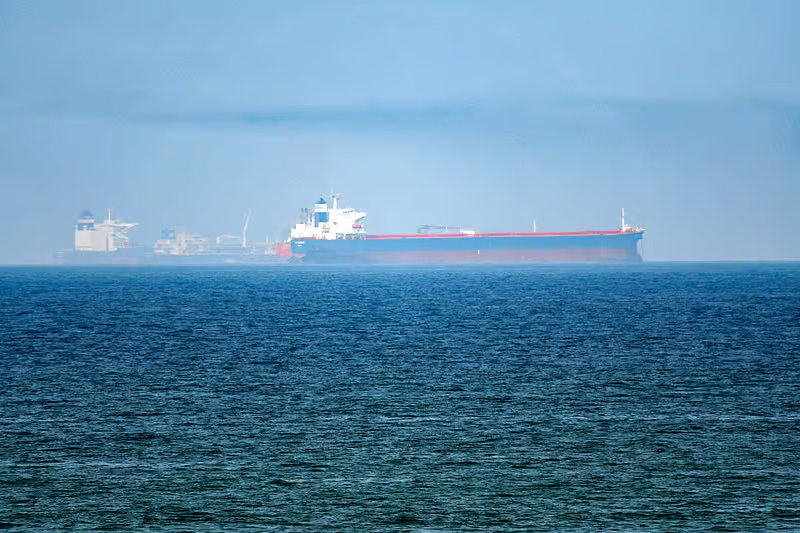
According to the U.S. military’s Central Command (CENTCOM), the vessel, identified as the Settebello, was carrying Iranian oil and attempting to move through regional waters in violation of the American-led blockade imposed on Iran-related shipping.
Military officials said U.S. forces repeatedly instructed the tanker to stop and comply with orders but received no satisfactory response.
After multiple warnings, an American aircraft carried out what officials described as a “precision strike” targeting the vessel’s engine room.
The goal, according to CENTCOM, was to disable the ship rather than destroy it.
American officials maintain that the action was necessary to enforce sanctions and prevent prohibited cargo from reaching international markets.
The tanker was left immobilized in the Gulf of Oman after the strike.
Three Sailors Missing as Rescue Effort Continues
The most immediate human cost of the incident has been the fate of the crew.
Indian authorities confirmed that 21 crew members were rescued, but three Indian sailors remain missing.
Search-and-rescue teams from Oman and other regional partners have been combing the area since the vessel sent distress signals.
For relatives waiting anxiously in India, every passing hour increases uncertainty.
India’s Ministry of External Affairs said its embassy in Oman is working closely with local authorities and monitoring the operation around the clock.
The ministry stressed that protecting civilian seafarers must remain a priority regardless of political or military disputes.
Officials have not released details about the identities of the missing crew members, but reports indicate that all three are Indian nationals.
India Lodges Strong Protest
The incident has also created diplomatic friction between two countries that maintain close strategic ties.
Indian officials summoned the U.S. deputy chief of mission in New Delhi and lodged what sources described as a strong protest over the attack.
Earlier, the foreign ministry publicly condemned the strike and called for an end to actions that threaten commercial shipping and civilian infrastructure.
India’s response reflects growing concern about the safety of thousands of Indian seafarers working aboard international vessels worldwide.
Indian nationals make up one of the largest groups of maritime workers globally, serving on cargo ships, tankers, and container vessels that transport goods across international waters.
Any increase in military activity around major shipping routes directly affects those workers and their families.
Fire and Chaos Aboard the Vessel
Details emerging from maritime monitoring agencies paint a picture of confusion and urgency in the moments following the strike.
The United Kingdom Maritime Trade Operations agency reported that the vessel suffered an engine room fire after the attack.
Located about 20 nautical miles northeast of Sohar, a major Omani port, the tanker issued distress calls as crew members attempted to manage the emergency.
Earlier reports indicated at least one casualty aboard the ship, though authorities have yet to clarify whether that individual was rescued or among those still missing.
The Omani Navy quickly responded after receiving the distress signal, joining rescue efforts alongside regional maritime agencies.
The incident once again demonstrated how rapidly commercial vessels can become vulnerable when military operations unfold nearby.
Shipping Routes Becoming Increasingly Dangerous
The Gulf of Oman and the nearby Strait of Hormuz are among the most strategically important waterways in the world.
Every day, massive quantities of crude oil, natural gas, and commercial goods pass through the region.
For decades, shipping companies have viewed the route as essential to global trade.
Today, however, those same waters are becoming increasingly dangerous.
The United States launched its blockade of Iran-related shipping in April after Tehran imposed severe restrictions on traffic through the Strait of Hormuz.
Since then, military patrols, inspections, and enforcement operations have become a routine part of maritime activity in the area.
Shipping companies are now operating under heightened security risks, while crews face growing uncertainty whenever geopolitical tensions rise.
U.S. Expands Maritime Crackdown
The Settebello strike is only the latest action in a broader U.S. campaign targeting vessels suspected of helping Iran circumvent sanctions.
According to CENTCOM, American forces have disabled eight ships since the blockade began.
Officials say more than 130 vessels have complied with instructions and changed course when challenged by U.S. forces.
Another tanker, the Marivex, was disabled earlier this week after allegedly attempting to sail toward an Iranian port.
Washington argues that these operations are necessary to restrict Iranian oil exports and increase economic pressure on Tehran.
Critics, however, warn that the aggressive enforcement strategy increases the risk of incidents involving civilian crews and commercial shipping.
Global Maritime Community Voices Concern
The strike has also drawn attention from international maritime organizations.
Arsenio Dominguez, Secretary-General of the International Maritime Organization, issued a rare and strongly worded statement condemning actions that place seafarers at risk.
He emphasized that the safety of maritime workers must remain a priority regardless of political disputes.
His comments reflect growing unease within the global shipping industry, where concerns about security have intensified in recent months.
Industry leaders fear that continued confrontations could disrupt global supply chains, raise shipping costs, and expose civilian crews to greater danger.
Human Cost Overshadows Political Dispute
While governments debate sanctions, blockades, and regional security, the events in the Gulf of Oman serve as a reminder that ordinary people often bear the greatest risks.
For the families of the missing sailors, the focus is not on diplomacy or military strategy but on receiving news from rescue teams.
For fellow seafarers working across the Gulf, the incident is another stark example of how quickly commercial voyages can become life-threatening.
And for the international community, it raises a broader question: how can global trade continue safely when some of the world’s busiest shipping lanes are increasingly becoming theatres of geopolitical conflict?
As search operations continue and diplomatic tensions simmer, that question remains unanswered.