

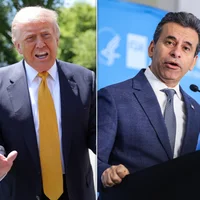
The resignation of former Food and Drug Administration Commissioner Dr. Marty Makary has intensified concerns among public health experts about growing political influence within America’s top health agencies under President Donald Trump’s administration.
Makary stepped down on Tuesday, becoming the fifth Senate-confirmed federal health official to leave office since early 2025. His departure adds to a widening leadership vacuum across several key institutions responsible for overseeing public health, medical research, vaccine regulation and disease prevention in the United States.
Legal scholars and health policy experts warn that the increasing reliance on temporary “acting” officials — many of whom have not undergone Senate confirmation — could weaken scientific independence at agencies traditionally designed to operate with bipartisan oversight and professional autonomy.
Growing Turnover Across Federal Health Agencies
Makary’s resignation is part of a broader reshaping of the federal health system that has accelerated over the past year. Several senior officials at agencies including the FDA, Centers for Disease Control and Prevention (CDC), and National Institutes of Health (NIH) have either resigned, been dismissed or replaced amid policy disagreements with the administration.
Under the Federal Vacancies Reform Act, President Trump has increasingly appointed acting officials to temporarily fill leadership positions. Unlike Senate-confirmed appointees, these officials can assume authority without congressional approval.
Critics argue the trend risks concentrating more control within the White House and reducing independent oversight over public health decisions that affect millions of Americans.
Lawrence Gostin, a professor of global health law at Georgetown University, said the growing number of acting leaders raises serious concerns about accountability and scientific integrity.
“If you don’t have Senate-confirmed leadership, those officials become far more vulnerable to political pressure,” Gostin said. “The traditional checks and balances designed to protect science-based decision-making are weakened.”
Why Senate Confirmation Matters
The Senate confirmation process has long served as a safeguard intended to ensure that top federal officials possess the expertise, independence and credibility required to lead critical public institutions.
Confirmed officials typically undergo public hearings, extensive background reviews and questioning from lawmakers before assuming office. Once confirmed, they also enjoy greater legal protections and cannot be removed as easily as temporary appointees.
By contrast, acting officials often serve at the direct discretion of the administration and can be replaced quickly if disagreements emerge.
Experts say this dynamic may discourage acting leaders from challenging politically sensitive decisions, particularly on issues involving vaccines, pharmaceuticals, environmental safety and public health regulations.
“There is a fundamental difference between someone confirmed by the Senate and someone temporarily installed,” Gostin explained. “One can resist political interference. The other often cannot.”
Under federal law, acting officials also face a 210-day limit on their authority unless formally nominated by the president for permanent appointment.
Leadership Vacancies Raise Alarm
Several key federal health agencies are now operating under temporary leadership arrangements.
Kyle Diamantas currently serves as acting FDA commissioner, while Katherine Szarama leads the FDA’s Center for Biologics Evaluation and Research in an acting capacity. Neither has undergone Senate confirmation.
Similarly, Rear Admiral Denise Hinton served as acting U.S. surgeon general in 2025 without Senate approval.
Although Dr. Jay Bhattacharya was confirmed as NIH director, he is simultaneously serving as acting CDC director without a separate confirmation process for that role.
President Trump has since nominated Dr. Nicole Saphier for surgeon general and Dr. Erica Schwartz to permanently lead the CDC, though both nominations remain politically contentious.
Public health observers say the instability has created uncertainty across agencies responsible for responding to disease outbreaks, regulating medical products and issuing health guidance.
Clashes Over Science and Policy
Many of the recent departures appear linked to growing tensions between scientific officials and the administration’s political priorities.
Former CDC Director Susan Moranz was reportedly dismissed after disagreements over the administration’s “Make America Healthy Again” agenda. Former National Institute of Allergy and Infectious Diseases Director Dr. Jeanne Marrazzo also reportedly clashed with Health and Human Services Secretary Robert F. Kennedy Jr. over vaccine research policies before leaving her role.
Dr. Peter Marks, who headed the FDA’s vaccine division, resigned earlier this year following disputes over vaccine approvals and public health recommendations.
Observers say these exits suggest an increasingly difficult environment for career scientists and health administrators attempting to maintain evidence-based policymaking.
“Having this constant turnover sends a message that political loyalty matters more than scientific expertise,” Gostin said.
Questions Surround Makary’s Departure
Makary’s resignation has attracted particular attention because it followed reports of tensions between the White House and the FDA over electronic cigarette regulation.
According to reports, Trump had grown frustrated after the FDA delayed approval of certain fruit-flavored vaping products. The president had publicly pledged during the 2024 campaign to protect vaping products and maintain support from portions of the tobacco and vaping industries.
The FDA later approved several flavored vaping products despite Makary previously signaling a tougher stance on illegal e-cigarettes.
Days after those approvals, Makary stepped down.
The episode has fueled broader concerns among critics who argue economic and political interests are increasingly influencing public health decisions.
Controversial Health Policies Spark Debate
Several recent administration actions have already generated intense debate within the medical and scientific communities.
Earlier this year, the administration released revised dietary guidelines that significantly altered long-standing federal nutrition recommendations. Critics argued the changes contradicted decades of established research and could impact school meals, military nutrition programs and federal food assistance policies.
The administration has also faced scrutiny over environmental health policies, particularly after President Trump declared glyphosate — a controversial herbicide ingredient used in Roundup weedkiller — critical to national agriculture despite ongoing legal disputes linking the chemical to cancer risks.
That decision reportedly came after meetings between White House officials and executives from Bayer, the company facing thousands of lawsuits related to glyphosate exposure.
The move even drew criticism from members of the “Make America Healthy Again” movement, including some aligned with Kennedy, who had previously criticized the chemical’s safety.
Experts Fear Long-Term Consequences
Public health experts warn the erosion of independent scientific leadership could have long-term consequences for trust in federal institutions.
Agencies like the FDA and CDC play central roles in approving medications, regulating vaccines, responding to outbreaks and issuing public safety guidance. Their credibility depends heavily on public confidence that decisions are grounded in scientific evidence rather than political pressure.
Health policy analysts worry that continued reliance on acting officials may further politicize agencies already operating in an increasingly polarized environment.
“There’s a danger when science becomes secondary to politics,” one former federal health adviser said. “Public health decisions affect every American family. They require stability, expertise and independence.”
A Changing Public Health Landscape
The Trump administration maintains that its changes are part of a broader effort to reform what it views as an overly bureaucratic and politically biased federal health system.
Supporters argue the administration is prioritizing transparency, consumer choice and accountability. Critics, however, say the rapid turnover and concentration of authority threaten the independence that has historically guided U.S. public health policy.
As more agencies operate under temporary leadership and new nominations face uncertain confirmation battles, the future direction of America’s federal health infrastructure remains increasingly uncertain.
For now, Makary’s resignation stands as the latest sign of a public health system undergoing one of its most significant political transformations in decades.