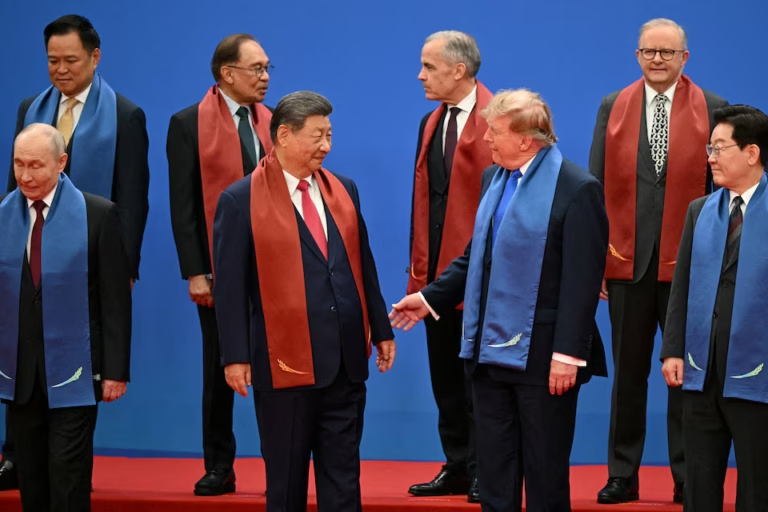

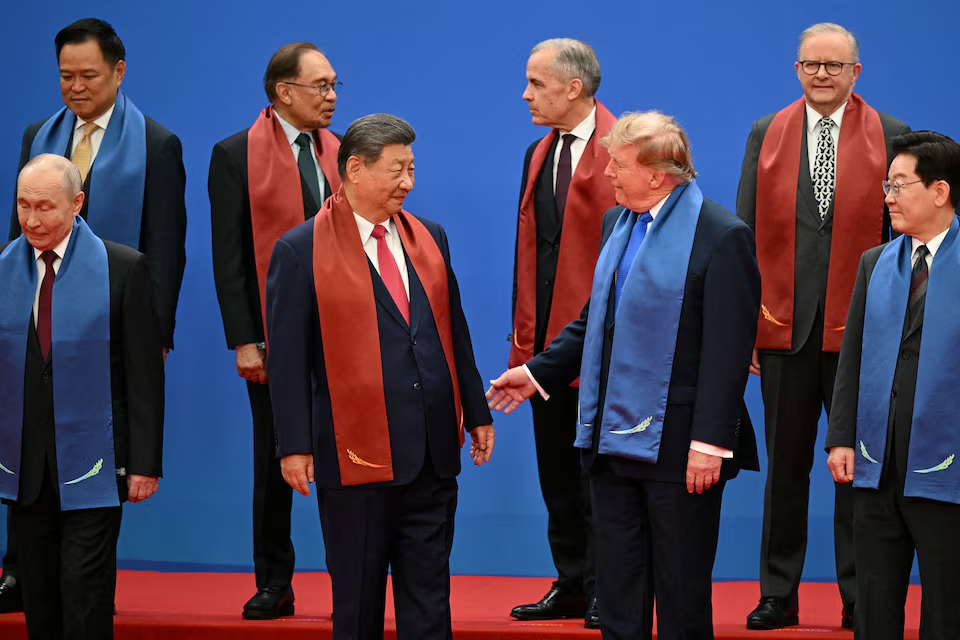
SHENZHEN, China, Nov 19, 2026: The presidents of the United States, China and Russia met together for the first time on Thursday and agreed on a “peace declaration.” In it they restated that a nuclear war should never be fought, according to statements from Beijing and Moscow.
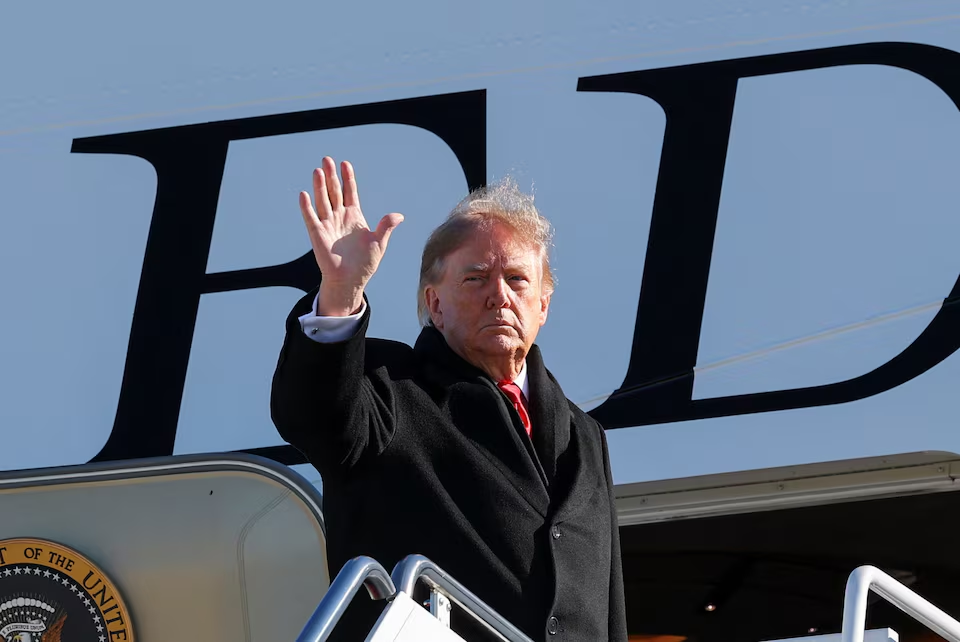
The three-way meeting took place on the sidelines of the Asia-Pacific Economic Cooperation (APEC) summit in the southern Chinese city. It ended a three-day Asian tour by U.S. President Donald Trump. The trip delivered little in concrete results, despite his repeated claims that he was making history and brokering peace. It also gave U.S. allies fresh reason to ask how close Trump has grown to Russian President Vladimir Putin, whose country is still at war with Ukraine.
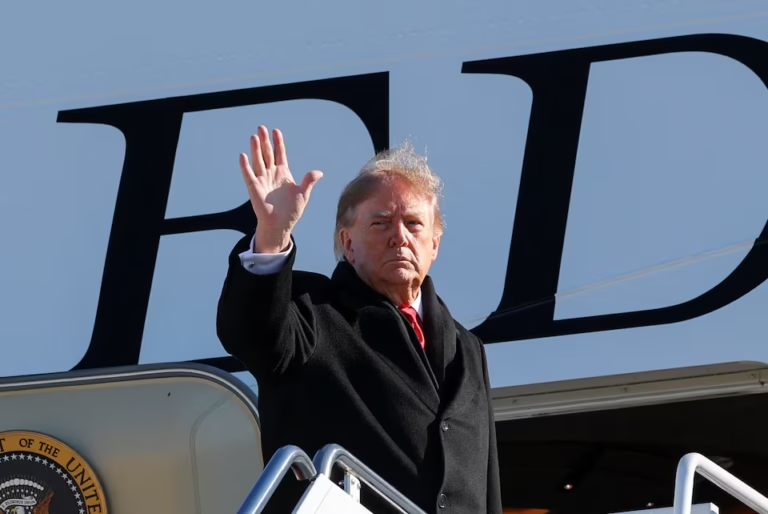
Chinese state news agency Xinhua and the Kremlin both published the text of the declaration. Trump boarded his flight home after the meeting without making any public comment.
What the declaration says
Beyond the line on nuclear war, the three leaders committed to several other goals:
- Reforming the United Nations. The statement pledges to push for changes to the world body, though it gives no detail on what those changes would be.
- Boosting refined fuel supplies. The leaders said they would work to increase supplies of refined petroleum products to all countries.
- Protecting official immunity. They pledged to uphold the immunity that state officials enjoy before international courts.
That last point drew the most attention from analysts, because of Putin’s legal position. The International Criminal Court in The Hague has issued arrest warrants for him and five other Russian officials. Putin and Maria Lvova-Belova, Russia’s children’s commissioner, are accused of unlawfully deporting and transferring Ukrainian children. The remaining warrants concern alleged war crimes and crimes against humanity during Russia’s full-scale invasion of Ukraine. Moscow rejects all of the accusations.
Jonathan Eyal, international director at the London-based think tank RUSI, said the challenge to international norms and courts was the most revealing part of the text. In his view it reflects a world in which major powers set the rules while smaller states bear the consequences.
Eyal also assessed who gained most. Putin, he said, came away with added credibility and a way out of pariah status. Trump, in his words, received a photo opportunity he had no need for.
A meeting in a lakeside villa
The leaders sat around a round table at the Kylin Villa, a retreat set among wooded hills beside a lake. The venue has hosted sensitive diplomacy before. Past visitors include the late North Korean leader Kim Jong-il, Xi’s father Xi Zhongxun, and envoys of the Dalai Lama.
Before reporters were ushered out, all three called the occasion historic. Trump told his counterparts the group was making history, and argued that peace has never been achieved by turning down chances to talk. Earlier in the day he held separate meetings with Xi and Putin and described both men as friends.
Putin’s diplomatic win

For Putin, the sit-down was a clear diplomatic success. Russia’s economy is only about a tenth the size of China’s, and sanctions have shut most Russian businesses out of trade with the West. Appearing as an equal alongside the American and Chinese presidents was therefore of real value to Moscow.
The timing was awkward for the Kremlin on the battlefield. Putin arrived just after a setback in the war with Ukraine, in which a key bridge linking Crimea to Russia was crippled. He said the three countries share many interests in settling regional conflicts, and he named the war in Ukraine explicitly.
Xi did not mention Ukraine directly. He instead offered a general principle: when major powers live in harmony the world is at peace, and when they clash it falls into turmoil.
The summit also ended only hours before a separate gathering in Berlin. Ukraine and the leaders of its main European allies were due to meet Trump’s envoys Steve Witkoff and Jared Kushner there, a reminder of how divided Western and Russian positions on the war remain.
Deep differences remain
Despite the show of unity, the three countries disagree sharply on Ukraine, Iran, nuclear weapons and trade. Those gaps cast doubt on whether the declaration can produce anything lasting. The meeting has also unsettled smaller countries, which worry that the three giants could settle matters among themselves while ignoring everyone else’s interests.
Pageantry in Shenzhen
Trump had made his own reception a talking point before the trilateral took place. In a Fox News interview he dwelt on the ceremony that greeted him in China, which contrasted with the quieter welcomes given to other leaders, Putin among them.
Xi personally met Trump at the airport. It was the first time he has done so for any visiting leader since becoming president, and it returned a gesture Trump made at Joint Base Andrews in September, when the two men last met. The two leaders also shared a brief embrace.
Trump called Xi one of China’s great presidents and noted that he had never gone to an airport to greet anyone before. He described the gesture as a win for both countries. He also praised the crowds, the children, the soldiers and the overall spectacle.
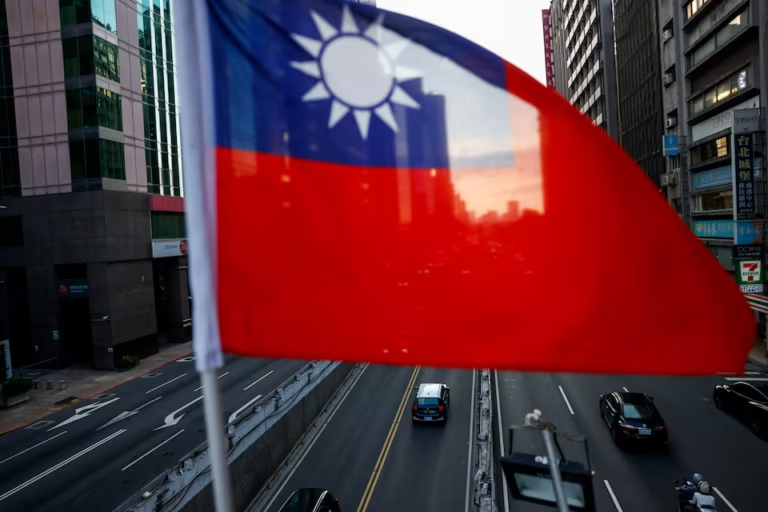
Japanese Prime Minister Sanae Takaichi had a very different experience. She arrived with no official welcoming ceremony and appeared isolated through much of the summit. Tokyo’s relations with Beijing have been strained since 2025, when she said Japan might use its military if a Chinese move against Taiwan also endangered Japanese territory. Takaichi said this week that Japan’s position on Taiwan has not changed since 1972.
Taiwan also featured in the Trump–Xi talks. Xi told his American counterpart that Washington must “do the right thing” if it wants to avoid serious damage to the relationship.
Nuclear arms: a hard sell

Trump had insisted that nuclear arms control be a central topic. That was a difficult ask, because China has repeatedly refused to join arms-control negotiations with the United States and Russia. Beijing’s usual argument is that its arsenal is far smaller than those of the other two, which hold the vast majority of the world’s nuclear warheads.
At the start of the meeting, Trump acknowledged the difficulty, saying that giving up such weapons is not easy. The declaration they ultimately produced reaffirms the principle that nuclear war must be avoided. As described in the Chinese and Russian readouts, it does not appear to include any binding limits or a framework for talks.
Trade tensions in the background
The summit also took place against a mixed backdrop in U.S.–China economic relations. Trump and Xi met after the two countries extended their trade truce earlier this month. But new friction has emerged over reports that Nvidia chips are being diverted to China via Southeast Asia. Those reports raise doubts about how well U.S. export controls are working and about whether China will keep access to advanced technology.
Why it matters
The Shenzhen declaration is mostly symbolic. It sets out broad principles without enforcement mechanisms, and the three signatories disagree on most of the issues that drive global tension. The agreement on nuclear restraint repeats a position that has been stated before, and the pledge to protect state officials’ immunity in international courts will be read by many as a direct response to the warrants against Putin.
What the meeting does change is the optics. Putin appeared at the same table as the leaders of the world’s two largest economies, a few hours after a military setback. Xi showed that Beijing can host the American and Russian presidents together. Trump, who has made personal diplomacy the centerpiece of his foreign policy, got the image of a historic summit, though not a deal on Ukraine, Iran or arms control.
For U.S. allies in Europe and Asia, the main question is what comes next. The Berlin meeting on Ukraine, scheduled for the same day, will test whether Washington’s engagement with Moscow and Beijing translates into anything for Kyiv. For smaller states, the concern is simpler: that major powers are increasingly willing to settle global questions among themselves.