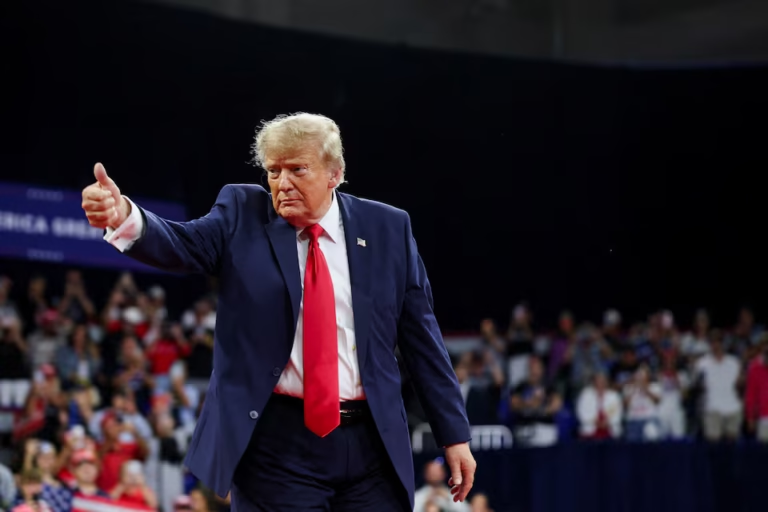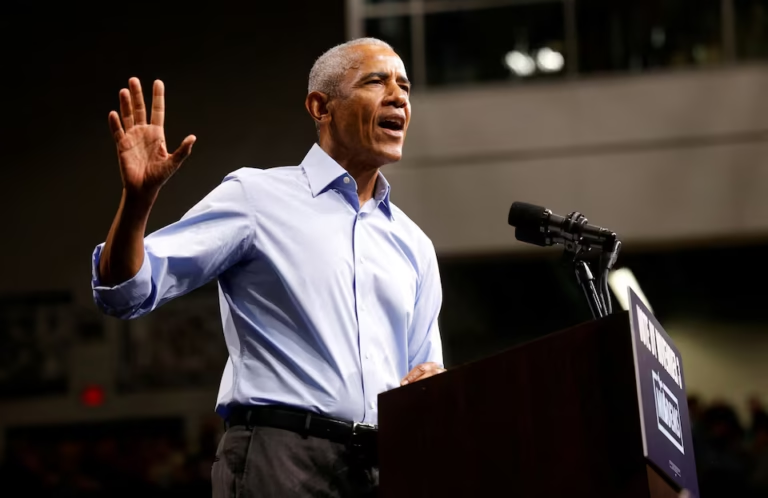

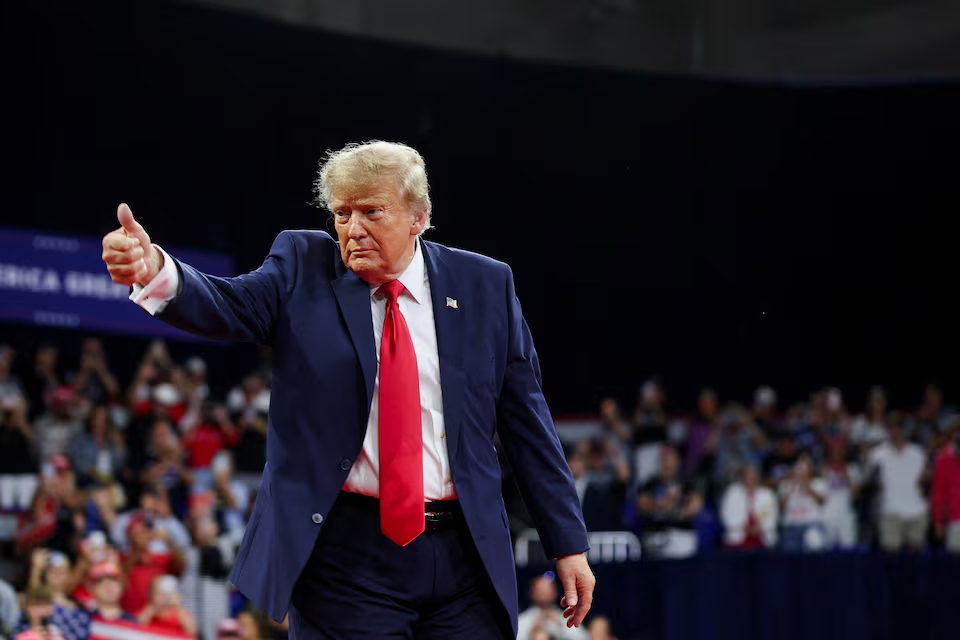
President Donald Trump will hold a rally in Port Huron, eastern Michigan, on Sunday, one day after former President Barack Obama campaigned for Democrats in the state. The back-to-back visits come a little more than a week before the November 3 midterm elections, and they land in one of the most competitive US Senate races in the country.
The contest is an open-seat race between Republican Mike Rogers, a former US representative, and Democratic candidate Abdul El-Sayed. The result will help decide which party controls the Senate. Trump has attacked El-Sayed repeatedly from the Oval Office and at rallies in other states, yet he had not campaigned in Michigan at all this year before Sunday.
A First Michigan Visit of 2026
Port Huron sits in an area of Michigan that Trump won in the 2024 presidential election with more than 66% of the vote. That makes it friendly ground for a president who has stayed away from the state until now. His audience on Sunday will be made up largely of voters who already support him, so the rally is more likely to raise turnout among Republicans than to change minds.
The rally will also bring attention to the US-Canada tariff standoff. The trade fight has affected the Detroit-based US auto industry, and Rogers has distanced himself from the president’s policy. Reuters has reported on how automakers were affected by the tariff dispute with Canada.
That puts Rogers in a delicate position on Sunday. He needs Trump’s supporters to vote for him, and he has publicly split from the president on a policy that has hit the state’s auto industry. Whether he appears alongside Trump in Port Huron, and what he says about tariffs if he does, will show how far that split goes.
The Attacks on El-Sayed

El-Sayed, if he wins, would become the first Muslim elected to the US Senate. Trump has tried to paint him as a Muslim extremist. He has also mocked El-Sayed’s middle name, Mohamed, which is a common Muslim name.
El-Sayed has dismissed the accusation. In a recent advertisement he defended his religion directly, saying, “faith is a thing there’s just too little of in Washington.”
Rogers has taken a related line. He has alleged, without evidence, that El-Sayed has ties to the Muslim Brotherhood, one of the Arab world’s oldest and most influential Islamist groups. At a debate last week he put the question to El-Sayed in these words:
“If you are going to go to the United States Senate, we need to know: Are you for America or are you for these terrorist groups overseas?” Rogers said.
El-Sayed has denied any affiliation with the group. He says it is “shameful” for Rogers to question his allegiance to the United States.
Obama Answers in Detroit
On Saturday, Obama took the issue head on at a rally in Detroit. He described the attacks on El-Sayed as an attempt by his opponents to make him look “less patriotic and less American than they are.”
Obama drew on his own experience. He was the target of false claims that he was born in Kenya, a story Reuters has fact-checked.
“We have seen this movie before,” Obama said. “I starred in it … This stuff didn’t work on me. Not in Michigan. It’s not going to work on Abdul.”
The comparison was deliberate. Obama was telling the crowd that he had faced questions about his loyalty and his place in the country, and that voters rejected those questions. He was asking Michigan voters to reach the same conclusion about El-Sayed.
The Kenya reference gave the speech a personal edge. Obama argued that the pattern was familiar, and that Michigan voters had already shown they could see through it when it was aimed at him. El-Sayed has taken a similar position on his own, denying the Muslim Brotherhood affiliation and calling Rogers’ questions about his loyalty shameful.
Trump Responds Within Hours

Trump did not let the Detroit event pass. In an early Sunday morning post on Truth Social, he dismissed Obama’s work on behalf of the Democratic candidate.
“Now he’s campaigning for a Muslim Brotherhood Jihadist, who hates Jews and Blacks and AMERICANS and TRUMP, and he is going to lose, also,” Trump wrote.
The post repeats the claim about the Muslim Brotherhood that Rogers made at the debate, and that El-Sayed has denied. Reuters has reported that Rogers made the allegation without evidence. Trump’s post offered none.
What the Two Visits Show
Taken together, the Saturday and Sunday events give the clearest picture so far of how each party sees Michigan. Democrats sent their most popular former president to Detroit on the weekend before the final full week of campaigning. Republicans answered by sending the sitting president to a part of the state he won by a wide margin in 2024.
Each choice reflects a need. Democrats want to fire up their supporters in a tight race. Republicans want to make sure their own base turns out, and they want El-Sayed’s religion and background to stay in the conversation until Election Day. Rogers has to manage both a president whose tariff policy has hurt Michigan automakers and a campaign message about El-Sayed that Trump is pushing harder than he is.
The attacks on El-Sayed carry a risk for Republicans that is separate from the tariff issue. Rogers made an allegation about terrorist groups without presenting evidence, and El-Sayed answered by calling it “shameful.” Trump’s post goes further than Rogers’ language, which puts pressure on the Republican nominee to say whether he agrees with it.
For Democrats, the risk comes from the same dispute. A race that becomes a debate about El-Sayed’s faith and name leaves less room for other subjects, including the tariff fight that Rogers has already stepped away from. Obama tried to turn the discussion in a different direction by calling the attacks a repeat of what he faced, and the El-Sayed campaign may find that framing useful for the next ten days.
The Tariff Fight Complicates the Republican Pitch
The Port Huron rally will also feature the tariff standoff with Canada. That is a subject on which Trump’s own party’s Senate nominee has distanced himself from him. In Michigan, Rogers has moved a short distance away from the president on one issue that touches a major employer in the state.
This gives El-Sayed an opening that does not depend on religion or identity. He can say that Rogers backs a president whose trade policy has hurt Detroit’s automakers, and Rogers has to answer by pointing to the distance he has already put between himself and Trump on tariffs. Voters who care mainly about the auto industry will hear a different argument from voters who respond to the Muslim Brotherhood claims.
The Senate Math
The Michigan race matters beyond the state because the Senate is closely divided. Democrats need a net gain of four seats in both the US Senate and the US House of Representatives to overturn the Republicans’ narrow majorities, which stand at 53-47 in the Senate and 218-214 in the House.
A four-seat gain in the Senate would give Democrats a 51-49 majority. That leaves almost no room for error. Democrats cannot afford to lose an open seat that they hope to win, and Republicans cannot afford to lose one they hope to hold. An open seat has no incumbent, so neither party can lean on an established record, and the nominees are judged on their campaigns, their party labels and the national mood.
Michigan fits that description. Rogers and El-Sayed are both new to the Senate, the race has no incumbent to defend, and voters have received a steady stream of national figures telling them how to see it. In the last 48 hours alone they have heard from a former Democratic president and a sitting Republican one.
Rogers is the one candidate in the race whose name Trump did not use in his Sunday post. The president named Obama and El-Sayed, and the Republican nominee’s own message on tariffs sits apart from the one Trump is bringing to Port Huron.
What Comes Next
Trump’s rally in Port Huron is the first test of how he talks about Michigan when he is physically in the state. Voters and reporters will be watching for three things: whether he repeats his language about El-Sayed, how he defends the tariff standoff with Canada in a state with a large auto industry, and whether Rogers shares the stage.
After Sunday, both campaigns have little more than a week to turn the weekend’s attention into votes. El-Sayed has one claim to rebut and one historic first to argue for. Rogers has one president to stand behind on most issues and one policy to separate himself from. Michigan voters will settle both questions on November 3.