Clicxpost

Opinion

To reclaim its sovereignty, Senegal must approach debt differently

Senegal sovereignty debt

Senegal and the International Monetary Fund agreed on September 1 to a three-year loan programme worth about $2.2 billion. The deal comes with a condition: Senegal must seek relief from its creditors through the G20 Common Framework. A recent opinion article argues that the government is making a mistake by treating the IMF as its only option, and it lays out a different plan built around a citizen debt audit, new limits on borrowing and a coalition of African debtors.

The agreement is a staff-level deal, so the IMF’s executive board still has to approve it. Here is what the deal covers, what the author proposes instead, and what the evidence says about both.

What the IMF agreement covers

The programme is a 36-month Extended Credit Facility worth roughly $2.2 billion, according to Credendo. Final approval depends on corrective action on debt management and fiscal reforms, and on firm financing assurances from Senegal’s creditors. The IMF must also finish a debt sustainability analysis to decide how much relief the country needs.

The new deal replaces a $1.8 billion programme that the IMF suspended after the hidden debt came to light, Africanews reported. Senegal’s finance ministry said that reducing debt-related vulnerabilities was urgent and necessary to restore the state’s ability to fund its priorities. Eurobonds fell after the announcement, Bloomberg reported, and Credendo said the drop shows markets expect creditor losses.

How the hidden debt surfaced

A state audit in 2024 revealed that the government of former President Macky Sall had misreported loans. Public debt rose beyond 130 percent of GDP. Senegal’s Court of Auditors later put end-2023 debt at 99.7 percent of GDP against the 74.41 percent reported earlier, CNBC Africa reported. The IMF estimated total public sector debt at 132 percent of GDP at the end of 2024.

The size of the hidden borrowing is still debated. AllAfrica reported that more than $11 billion of borrowing had gone unreported, and that some estimates reach $13 billion, which would exceed a quarter of Senegal’s roughly $40 billion economy.

What the commentary argues

The author calls the discovery a betrayal of voters, who had been told their country was a model of stability. The outrage helped the governing Pastef party win 80 percent of parliamentary seats in November 2024, the author writes. Now, the author says, the sovereignty agenda behind that vote is slipping away, not through a formal break but through a change in vocabulary and goals.

The author points to history. Senegal has used IMF programmes since 1979, and the commentary says the structural adjustment that followed brought stagnation and rising poverty. After the country qualified for debt relief under the Heavily Indebted Poor Countries Initiative in 2004, the author says, $488 million of its debt was cancelled, but it had to accept privatisation and deregulation. The author also cites Zambia, where IMF-backed policies shrank the economy, and Ethiopia, where a restructuring request made in February 2021 was not settled until March 2025. The author says austerity under Ethiopia’s $3.4 billion IMF agreement brought rising poverty and inequality.

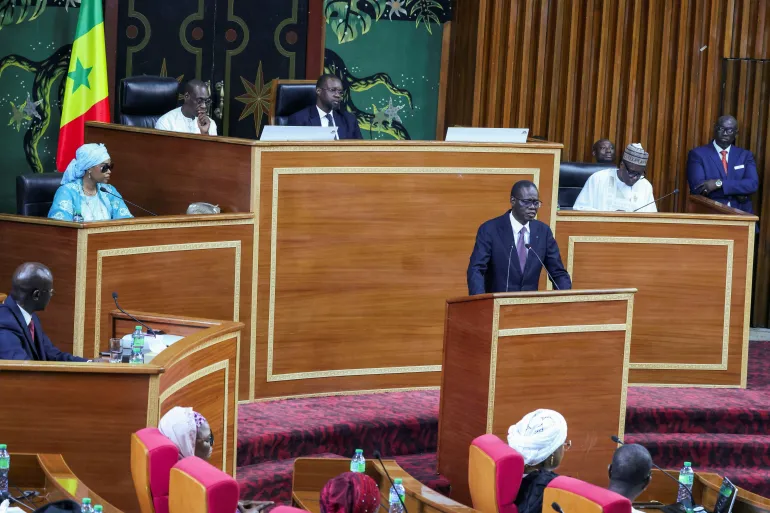
On the 2023 debt figures, the author says a gap of 25 percentage points of GDP held over several years was no accident and that the IMF’s own oversight failed. The author concludes that Senegalese voters deserve better than “a better-managed version of structural adjustment,” and says parliament must hold to the mandate it received in 2024.

What the author proposes

The commentary calls for a sequence that puts audits before new conditions:

  • A citizen debt audit of all borrowing from 2019 to 2024, run by parliament and civil society, testing whether each debt was legal, legitimate and useful to the public. It would cover arrangers, creditors and the IMF’s surveillance, with payments on disputed debt suspended while it runs.
  • A tax push aimed at extractive industries and wealthy individuals, rather than across-the-board increases paired with social spending cuts.
  • A minimum share of state investment for infrastructure, agro-industrial transformation and energy, and public caps on the Total Return Swaps tied to domestic debt.
  • Hydrocarbon revenue safeguards: a stabilisation fund, an investment envelope, active management of the costliest external debt, and parliamentary oversight.
  • A law requiring parliament to authorise and publish every public borrowing.

Beyond Senegal, the author wants a South-South coalition. The author recalls Burkinabe President Thomas Sankara telling the Organisation of African Unity in July 1987 that creditors coordinate, so borrowers should too. The Borrowers’ Platform, set up in April, would narrow the information gap between creditors and debtors and develop common positions on conditions. With the African Union, Senegal would push for a binding 20-to-30-year moratorium on debt service, with freed funds spent on development priorities set by national parliaments. The author grounds the idea in a 1962 UN General Assembly resolution affirming that peoples hold inalienable authority over their natural wealth. The author also urges regional pooling of liquidity risk in the West African Economic and Monetary Union and a process, with other CFA franc users, to create a new currency.

Where the government stands, and the counter-arguments

Senegal’s leadership has not spoken with one voice. Africanews reported that President Bassirou Diomaye Faye favours a more conciliatory approach with the IMF, while his then prime minister, Ousmane Sonko, rejected debt restructuring. Faye met IMF Managing Director Kristalina Georgieva in Washington to discuss the reform programme, according to Pan African Visions. Moody’s downgraded Senegal’s long-term foreign-currency rating to Caa2 from Caa1 during the talks.

Supporters of the IMF route point to what it unlocks. Credendo said the agreement should help release funding from multilateral lenders such as the World Bank and the African Development Bank. The IMF’s Julie Kozack said the fund could approve a programme before the debt reprofiling is finished, according to Briefs. S&P Global Ratings said on September 24 that Senegal’s plan to restructure foreign-currency debt would not hurt rated banks in sub-Saharan Africa.

The evidence also complicates one proposal. The IPS Journal reported that most of the hidden debt consists of CFA franc loans, which sits uneasily with the claim that foreign-currency borrowing is driving up debt payments. Reporting so far shows no creditor backing for a binding moratorium.

IMF data cited by Pan African Visions show who is owed money. Senegal owes about $2.98 billion to the World Bank, $4.05 billion to Eurobond investors, $1.23 billion to China Exim Bank, $991 million to the IMF and $872 million to France’s development agency. Those creditors will shape any relief terms. CNBC Africa reported in December 2025 that the IMF was continuing an internal investigation into how it failed to detect the unreported debt.

What comes next

The IMF must complete its debt sustainability analysis and secure board approval. Creditors, including China and France, which hold almost three-quarters of Senegal’s bilateral debt according to the IPS Journal, must agree to relief terms. Parliament, which the author wants to lead, will have a say in whether an audit comes before any new conditions take effect.

The two sides disagree on sequence. Senegal’s finance ministry has called reducing debt vulnerabilities urgent. The commentary’s author puts accountability first.

RECOMMENDED
Opinion

Is Trump making Latin America great again?

By George Mensah 6 min read

President Donald Trump’s foreign policy has faced sharp criticism at home over the past year. A costly and unresolved war against Iran, combined with his continued failure to restrain Israel’s military campaign, has coincided with a steep drop in his approval ratings. Public frustration with both conflicts has grown steadily among American voters.

Yet one region tells a different story about Trump’s influence abroad. Over the past eighteen months, a series of right-wing candidates has won national elections across Latin America. Trump has claimed personal credit for several of these victories, framing them as evidence of his continued sway over the hemisphere. He has given this pattern a name: the “Donroe Doctrine,” a reference that ties his approach to the historical Monroe Doctrine while stamping it with his own branding.

These newly elected leaders have shown a consistent willingness to align with Washington’s priorities. That alignment carries consequences for the people living under their governments, particularly given the historical pattern of US partnerships with right-wing security forces in the region.

Colombia’s shift to the right

Colombia’s political direction changed sharply with the inauguration of Abelardo de la Espriella, a far-right businessman and former criminal defense lawyer. De la Espriella built a significant portion of his legal career representing paramilitary commanders in court, a detail that has drawn attention given his current political positioning. During his campaign, he pledged to “disembowel” the political left, language that set the tone for his approach to governance.

Since taking office, de la Espriella has prioritized expanding fracking operations and pursuing other projects with significant environmental impact. His rise also marks a broader shift in Colombian politics away from the previous administration.

His predecessor, Gustavo Petro, spent four years pursuing policies aimed at reducing domestic inequality. Petro was also an outspoken critic of Israel’s military campaign in Gaza, a position that put him at odds with Washington. With de la Espriella now in office, Colombia has moved back into closer alignment with US foreign policy goals.

That closer relationship now has a physical headquarters. Medellin has been designated as the base for “Shield of the Americas,” a hemisphere-wide security initiative backed by the Trump administration. De la Espriella has described the partnership in expansive terms, stating that the United States and Colombia share a “shared destiny to defend Western civilisation across the Americas.”

Argentina’s austerity under Milei

In Argentina, President Javier Milei has become one of the most closely watched figures in this political shift. His party performed strongly in October’s midterm elections, a result that followed a direct intervention from Trump. The US president tied a $40 billion bailout package for Argentina to the outcome of those elections, a connection that drew criticism from observers who viewed it as an attempt to influence the vote from outside the country.

Milei’s signature policy has been the elimination of a wide range of welfare programs. The economic effects of these cuts have been significant. Millions of Argentinians have fallen into poverty since the reductions took effect, and Buenos Aires has seen a marked increase in homelessness as a direct result of the policy changes.

Honduras and the threat of lost aid

Honduras saw a similar political transition in January, when businessman Nasry Asfura assumed the presidency. His path to office was shaped in part by an explicit threat from Trump, who said he would cut off US aid to Honduras if Asfura lost the election. Asfura went on to win.

Since taking power, Asfura has pursued a crackdown on crime as a central policy priority. The results have not matched the stated goals. Violence in the country has increased following the crackdown, a pattern that mirrors the outcomes of similar enforcement-first approaches elsewhere in the region.

Chile’s turn toward Kast

Chile’s 2025 presidential election produced another win for Trump’s preferred candidates. Jose Antonio Kast, an admirer of former Chilean dictator Augusto Pinochet, secured the presidency with Trump’s public endorsement. Kast moved quickly after taking office, personally overseeing the start of a project to dig trenches along Chile’s borders as part of a broader border security push.

A regional pattern

Beyond these four countries, several other Latin American leaders have adopted comparable political approaches. Ecuador’s Daniel Noboa, El Salvador’s Nayib Bukele and Peru’s Keiko Fujimori have each pursued strict, enforcement-heavy strategies on crime. Fujimori’s political lineage adds another layer to this pattern: she is the daughter of a former Peruvian dictator, connecting her current political rise to the country’s own history of authoritarian rule.

These leaders share more than a general ideological alignment. Nearly all have embraced the position that government should prioritize the interests of wealthy citizens and businesses, a principle that runs through Trump’s own domestic agenda. Most have also adopted iron-fist crime policies that rely heavily on incarceration and lethal force rather than addressing the underlying causes of crime.

Many of these governments have also leaned on anti-immigrant rhetoric, using migrants as a political target in ways that closely resemble Trump’s own messaging in the United States. This shared approach to migration has become a defining feature of the political movement now taking hold across the region.

Domestic fallout in the United States

The immigration enforcement approach that has spread across Latin America has its roots in policies pursued domestically by the Trump administration. US Immigration and Customs Enforcement has expanded its operations significantly, with agents detaining international scholars and activists as part of broader enforcement efforts. ICE has also been connected to incidents resulting in the deaths of US citizens, according to reporting on the agency’s recent operations.

Financial data released in August adds another dimension to the picture. A report from Democratic members of the US Congress Joint Economic Committee found that Trump’s personal income reached $2.2 billion in 2025, more than tripling his earnings from the previous year. The same report found that American households collectively lost $219 billion over the same period, with families facing higher costs for everyday essentials.

A historical pattern repeats

The current alignment between Washington and right-wing Latin American governments is not without precedent. Both Republican and Democratic administrations in the United States have previously partnered with abusive governments in the region, often in the name of combating leftist politics or drug trafficking. Those partnerships have historically coincided with significant violence against civilians, particularly in countries where US-backed security forces operated alongside paramilitary groups.

Colombia’s own history illustrates this pattern directly. Decades of US funding for Colombia’s military, delivered while the armed forces maintained close ties to right-wing paramilitary organizations, contributed to substantial civilian casualties. De la Espriella’s legal work defending paramilitary leaders places him within that same historical context, even as he now leads the country as head of state.

What the shift means going forward

The current wave of elections has drawn comparisons to previous periods of US-aligned governance in Latin America, with some analysts describing the trend as a broader political realignment sweeping the region. The scale and coordination behind this shift, spanning Colombia, Argentina, Honduras, Chile and beyond, distinguishes it from earlier, more isolated instances of US influence in individual countries.

Trump’s continued engagement with the region shows no sign of slowing. Financial incentives, public endorsements and now a dedicated security initiative headquartered in Medellin all point toward deeper US involvement across the hemisphere. For the people living under these newly elected governments, the practical effects of that involvement, from welfare cuts to expanded crime crackdowns, are already being felt.

The pattern raises questions about what comes next as these governments consolidate power. History suggests that when Washington partners closely with right-wing security forces in Latin America, the resulting policies carry significant human costs, particularly for the populations these crackdowns are ostensibly designed to protect.

Opinion

How Israel and the European far right tried to exploit Ceuta

By George Mensah 5 min read

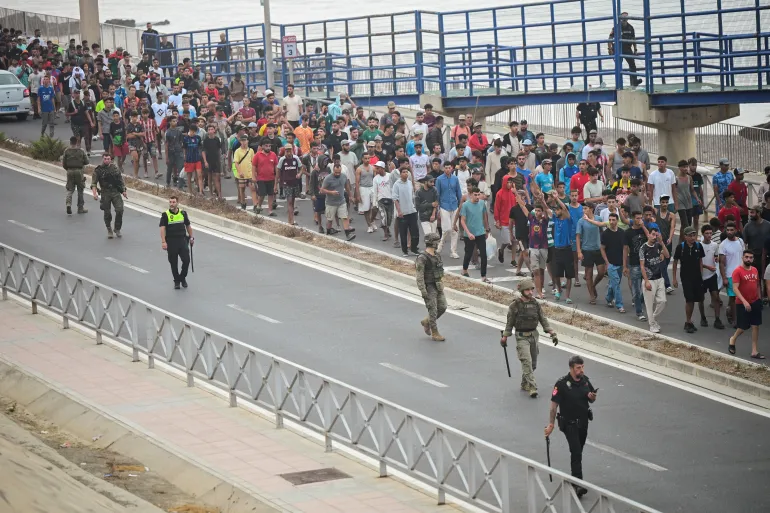
Thousands of people attempted to cross from Morocco into the Spanish enclave of Ceuta in recent days, and the crossing left dozens dead. What began as a humanitarian tragedy shifted almost immediately into a different kind of story, one dominated by political narratives rather than the deaths themselves.

Within hours of the crossings, social media filled with warnings of an “Islamic invasion.” The hashtag #StopIslam spread quickly across far-right networks. Politicians who have campaigned against immigration for years pointed to the events in Ceuta as evidence that Europe faces a civilizational challenge rather than a border management problem. Calls for stricter border enforcement followed, and Italy announced it would reintroduce border checks with Spain.

Investigators had not yet established the full circumstances of the crossings. Many of those who died had not yet been identified. Even so, prominent politicians, commentators and online campaigners had already settled on an interpretation of what happened.

Who benefits from the narrative

That speed of interpretation raises a straightforward question: who benefited from how Ceuta was framed in its immediate aftermath.

Europe’s nationalist parties gained fresh material to support existing warnings about migration and Islam. Anti-Muslim campaigners found another opportunity to present Muslim communities as an internal security threat. The events also fed into a broader argument advanced by the Israeli government and echoed by its political allies across Europe, one that links Muslim immigration, criticism of Israel and concerns about anti-Semitism together as a single interconnected issue.

That argument has grown more prominent since the war in Gaza began. As public criticism of Israel’s military campaign has intensified across Europe, Israeli officials have argued that shifting European attitudes stem less from the scale of destruction in Gaza and more from demographic change and the expanding political influence of Muslim communities.

Israeli Prime Minister Benjamin Netanyahu has advanced this position in public remarks, describing Israel and Europe as partners facing a shared threat from radical Islam, mass migration and what he calls a broader challenge to Western civilization. In that framing, Israel is not only defending itself but defending Europe as well.

Political consequences

This framing carries significant political weight. It moves the conversation away from Israel’s conduct in Gaza and toward the identity of the people criticizing that conduct. Opposition to Israeli policy stops being treated primarily as a response to humanitarian catastrophe, occupation or violations of international law, and instead gets framed as a byproduct of demographic change and Muslim political influence.

Political leaders including Viktor Orban, Geert Wilders and Marine Le Pen have adopted this narrative, combining strong support for Israel with hardline anti-immigration platforms. In Britain, figures such as Tommy Robinson have made a similar argument, presenting Israel as the front line in a wider civilizational struggle against Islam. Support for Israel has increasingly become tied to a broader political project built around opposition to immigration, multiculturalism and Islam.

The overlap between these movements is notable. For segments of Europe’s nationalist right, backing Israel offers a way to present themselves as defenders of Jewish communities while pursuing policies targeting Muslim minorities and migrants. For Israel’s current government, these same movements provide consistent diplomatic support and reinforce a narrative connecting criticism of Israel to broader public anxiety about migration and security. The two sets of political interests differ, but they reinforce each other in practice.

Security framing spreads

The effects extend beyond electoral politics. Across Europe, discussions about Palestine increasingly get filtered through the language of security. Demonstrations against the war in Gaza are sometimes treated less as political dissent and more as potential public order concerns. Muslim organizations get evaluated through a counter-extremism lens. Campaigns for Palestinian rights are, in some cases, presented not as movements rooted in human rights or international law but as vehicles for imported anti-Semitism.

None of this diminishes anti-Semitism as a real and persistent form of racism that requires ongoing attention wherever it appears. But there is a meaningful distinction between combating anti-Semitism and expanding its definition to include criticism of Israeli government policy. When that line blurs, legitimate political debate narrows, and a tool meant to identify genuine anti-Semitism risks losing effectiveness through overuse.

Viewed through this lens, Ceuta represents more than a migration story. The speed with which politicians, commentators and activists converged on the same interpretation suggests the political framework for understanding such events was already in place before Ceuta happened.

Whether that convergence was coordinated or emerged independently across separate political movements, the practical effect is the same. Fear of migration fuels hostility toward Muslim communities. That hostility makes solidarity with Palestinians appear suspect by association. Once support for Palestinian rights gets recast as a security concern rather than a political or humanitarian position, scrutiny of Israel’s actions becomes easier to dismiss.

A question of legitimacy

The stakes go beyond border policy. The underlying question concerns legitimacy: whose voices count as credible, whose suffering gets acknowledged, and which political causes are treated as legitimate. If solidarity with Palestinians can be attributed to demographic change rather than a response to conditions in Gaza, attention shifts away from the actions of governments and toward the identities of the people raising concerns.

Ceuta should have been remembered as a humanitarian tragedy first. Instead, it became another episode in Europe’s ongoing culture wars, with the deaths of those attempting the crossing receiving less sustained attention than the political narratives built around the event.

When humanitarian disasters get understood primarily through the political narratives they can support rather than the lives lost, the underlying facts risk becoming secondary to political usefulness. Fear stops functioning as a reaction to specific events and starts operating as a standing political framework.

ADVERTISEMENT
Scroll to Top