Clicxpost

World News

G7 Releases 100 Million Barrels as Diesel Pain Hits Drivers

G7 oil release

The G7 countries said Friday, October 2, that they will draw 100 million barrels of diesel and other fuels from their reserves over four months, with the International Energy Agency coordinating the release. President Donald Trump announced the deal first on social media. A White House official said he reached it through calls with French President Emmanuel Macron on Thursday night and with the G7 leaders on Friday morning.

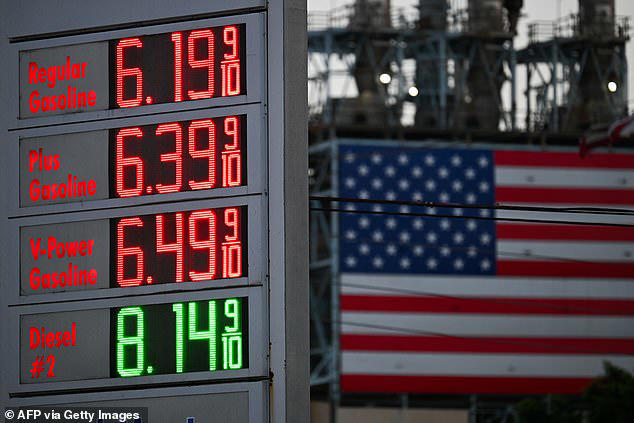
The agreement lands about a month before the November 3 midterm elections. US diesel prices set a record of $6.53 per gallon on September 22, according to AAA, after hostilities in the Strait of Hormuz pushed global oil prices higher.

What Trump and the G7 announced

Trump wrote Friday morning that Europe had agreed to release “a massive amount of their heavily stocked Diesel Oil.” A second post said: “The process will begin immediately.”

The G7 statement came out moments later, after a video conference that Macron chaired. France holds the rotating G7 presidency this year. According to the statement, the release starts immediately and opens with a large diesel release within the first 20 days. Because it is a G7 commitment, it covers the group’s members and partners. It is not limited to European countries.

The Trump administration had been pressing Europe to release its diesel stocks before the call, The National reported. The result is a joint release, announced by Macron, rather than a set of separate national decisions.

The statement also went after Iran. The leaders condemned Iran’s hostile actions and said they harm international trade, energy security and the global economy. They called for the “immediate and full restoration of navigational rights and principles” in the Strait of Hormuz. NPR reported that Macron said G7 members would also coordinate to raise production, bring down tanker insurance costs and get more tankers moving through the strait.

What the numbers show

A release of 100 million barrels over four months averages about 25 million barrels a month. The G7 has not said how much of the total will be diesel rather than crude or other products, and no daily schedule has been published, Newsweek reported. That gap matters because the front-loaded diesel portion is the part drivers and truckers will feel first.

The starting point is thin. Al Jazeera reported that US diesel inventories fell to a record low of 107.9 million barrels as of September 11. The record price on September 22 came eleven days later.

There is also a precedent. In March, the IEA’s 32 member countries agreed to release about 400 million barrels, the largest release in the agency’s history. Reuters reported at the time that this was more than double the 182.7 million barrels released after Russia invaded Ukraine in 2022. Euronews reported that IEA members held more than 1.2 billion barrels of public emergency oil stocks in March, before that release. Friday’s 100 million barrels equals about 8 percent of that figure and a quarter of the March volume, and diesel still set a price record six months after that release.

What drivers and truckers are paying

The record diesel price hurt truckers and raised delivery costs. Gasoline has eased only slightly. As of Friday, the national average for a gallon of regular is $4.40, about 10 cents lower than last week. It is still 20 cents above last month and roughly $1.20 above this point last year. A driver who fills a 15-gallon tank pays about $18 more per fill-up than a year ago.

Putting more supply on the market could ease global prices. Nobody has published a forecast for when that would reach the pump, or by how much. A trucking company buying diesel by the thousand gallons will watch the AAA diesel number, not the national gasoline average, and that number sits at its all-time high. At $6.53 a gallon, every 1,000 gallons of diesel costs $6,530, and the fuel bill is one of the costs a trucking company passes on in its delivery rates.

The export ban dispute

A Reuters report, based on sources, alleged that US officials threatened a diesel export ban aimed at the European nations that did not release their stockpiles. Other reports said the administration was weighing a ban to keep supply on American shores amid heightened energy insecurity.

The threat would have carried weight. The IEA said the US supplied roughly half of the EU’s diesel imports in August, according to The National. US energy companies pushed back anyway, warning that a ban would drive prices higher.

The accounts of the calls differ. Macron said Trump did not threaten an embargo on US diesel and called the discussion a constructive one. ThePrint, citing a French statement shared by AFP, reported that Macron also spoke overnight with Canadian Prime Minister Mark Carney and stressed that G7 countries share an interest in acting together without export restrictions. The White House official credited Trump’s calls with producing the deal.

The G7 statement also says there will be no diesel export bans among the group’s members, according to ABC News. That pledge answers the concern US energy companies raised. Whatever role the reported threat played, it is now off the table among the seven countries.

Iran, the war and the campaign

Trump has promised repeatedly that gas prices will come down after the midterms. It is unclear whether he wants to escalate or reduce hostilities with Iran, so how long the conflict will weigh on the global economy is also unclear. Recent negotiations with Iranian officials have not produced breakthroughs.

Pressure is building inside his own party. Republicans have increasingly urged him to end the war, which has become a sore subject for GOP candidates on the campaign trail. Lara Trump, the president’s daughter-in-law and a former RNC co-chair, said this week that the war “could cost” Republicans the midterms.

The G7 statement puts shipping through the Strait of Hormuz at the center of the crisis, while Republican candidates want the war over before voters decide. Those two goals do not point to the same action, and Trump has not said which he will pursue.

The Daily Mail asked Trump about her remarks on Thursday. He answered: “Well, it’s possible.”

What comes next

Trump says the release begins immediately, and the G7 statement says the same. If it runs evenly, about three-quarters of the 100 million barrels would be scheduled after Election Day, since the four months stretch into February 2027. The front-loaded diesel in the first 20 days is the part that could land before voters cast ballots. Twenty days from Friday is October 22, twelve days before Election Day. Whether diesel falls from $6.53 by then will be the first public test of the deal.

ThePrint reported that France is also working with the IEA on a broader response, so more announcements could come before the first barrels move. Al Jazeera reported that the G7 will meet again through the IEA in the coming days to discuss additional diesel releases if needed. Three things will show whether the deal works: the diesel share of the 100 million barrels, the AAA diesel price once the first barrels move, and whether any member revives export restrictions.

RECOMMENDED
World News

Flydubai Co-Pilot Accused of Trying to Crash Jet Bound for Israel

By George Mensah 4 min read

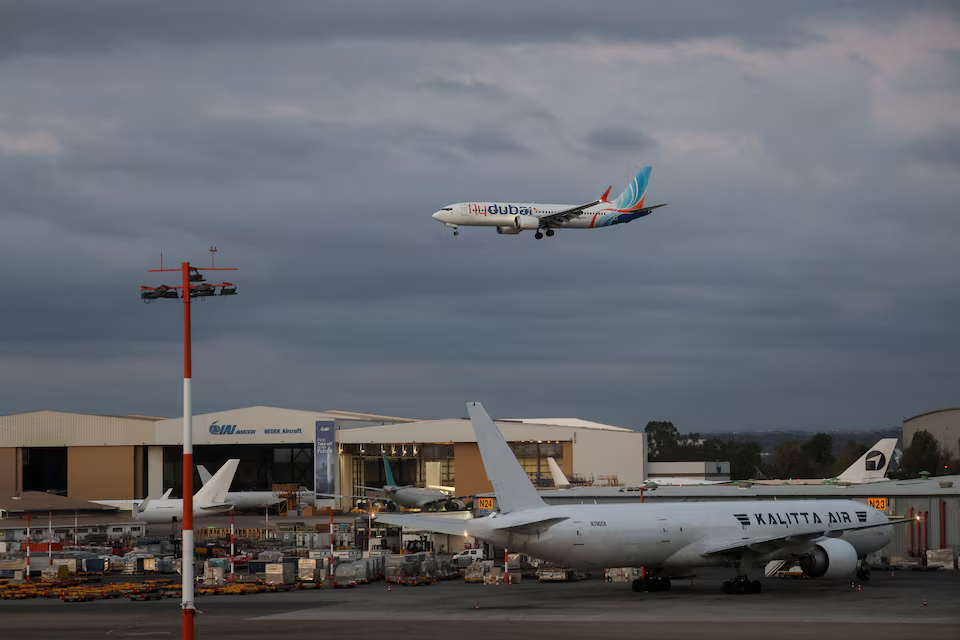
Questions remained on Thursday about the motives and background of a co-pilot who stabbed the captain of a passenger jet bound for Israel. Israeli officials say it was an apparent attempt to crash the plane, which had more than 170 people on board. Flydubai flight FZ1073 was flying from Dubai to Tel Aviv on Wednesday when the attack happened. The wounded captain managed to unlock the cockpit door, passengers subdued the attacker, and a reserve crew on board landed the plane in Saudi Arabia.

What Happened on Flight FZ1073

The flight dropped nearly 14,000 feet in less than 30 seconds while over Saudi Arabia. Passengers and crew then managed to subdue the attacker and land the aircraft at Tabuk airport.

Tabuk airport said both pilots were taken to hospital with injuries. Flydubai said the underlying reasons for the event remained unknown and warned against “premature speculation.” The airline confirmed an altercation in the flight deck and sent two replacement aircraft to Tabuk for the passengers and crew. Passengers were later flown back to Israel.

One of the men who helped overpower the attacker, Yaniv Hayun, described running to the cockpit as the plane nosedived. “We pulled the assailant out, I pulled him out,” he told reporters on his return to Israel on Wednesday. “After I pulled him out we took control of the plane, I pulled up the yoke (steering control of the plane), I straightened the plane out a bit.”

What Israeli Officials Says

Israeli Defense Minister Israel Katz said on Wednesday that Israel’s preliminary information indicated the co-pilot aimed to crash the plane. He described him as a terrorist. Prime Minister Benjamin Netanyahu used softer words and called it only “a serious security incident.”

Netanyahu said in a Fox News interview that the attacker was being investigated in Saudi Arabia and that he believed he would be taken to the United Arab Emirates. “We’ll be following and possibly also participating in this investigation,” he said.

Asked about Iran, Netanyahu said it was too early to tell. “We’ll get to the root of this attacker, whether he had accomplices, whether Iran was behind it,” he said. “I think we’ll find out very soon.” Israel has made no official suggestion of Iranian involvement.

The motive remains unestablished. Investigators have not said publicly whether the aim was to crash the plane or to take hostages.

Who Is Investigating

The UAE has opened investigations to establish the circumstances and motives. The UAE state news agency said they would seek to determine “whether the incident was linked to any terrorist activity or purpose, or involved prior planning or direction.”

UAE judicial authorities have jurisdiction because the aircraft is registered in the UAE and flies under its flag. The statement said UAE law applies to crimes committed on board even if they occur outside the country’s territory. Saudi Arabia has issued no statements on its own investigation.

Questions About the Co-Pilot

An Israeli official identified the attacker on Wednesday as an Omani national. Omani authorities have not commented on the report.

Israel Hayom reported that the co-pilot had worked for Flydubai for about nine months. Multiple Israeli agencies are examining how he was cleared to fly an Israel-bound service, what security checks came before his hiring and whether aviation-security arrangements were followed. His name has not been released.

The Captain

Netanyahu and Indian Prime Minister Narendra Modi have called the captain, Indian national Smit Machchhar, a hero. Netanyahu said Machchhar had apparently been stabbed or hit with an axe by the other pilot and had bled heavily. India’s ambassador to the UAE met Machchhar’s family and briefed him on the captain’s health and recovery, the Indian consulate in the UAE said.

Israel has also praised the passengers who subdued the attacker.

A Tense Backdrop

The incident raised security fears in Israel weeks before an election. It is the first since the Hamas-led attacks of October 7, 2023, and security features heavily in the campaign.

The United States and Israel launched strikes on Iran in February in a conflict that quickly spread to the Gulf and to Lebanon. Israel has been fighting Iran-backed Hezbollah there. That context is why Netanyahu was asked about Iran and why officials in several countries are treating the case carefully.

What Happens Next

Several questions are open. Authorities have not published a motive. They have not said whether he acted alone, or why he is thought to have tried to crash the aircraft. Accounts of exactly what happened in the cockpit differ, including which weapon was used.

The UAE inquiry will test whether the incident had a link to terrorist activity or to planning or direction by others. Saudi Arabia and Israel are running their own investigations. Netanyahu said on Thursday that answers could come “very soon,” but no official timetable has been given.

World News

US Troops Leave Iraq as Iran’s Guards Tell Americans to Vote Out Trump’s Allies

By George Mensah 5 min read

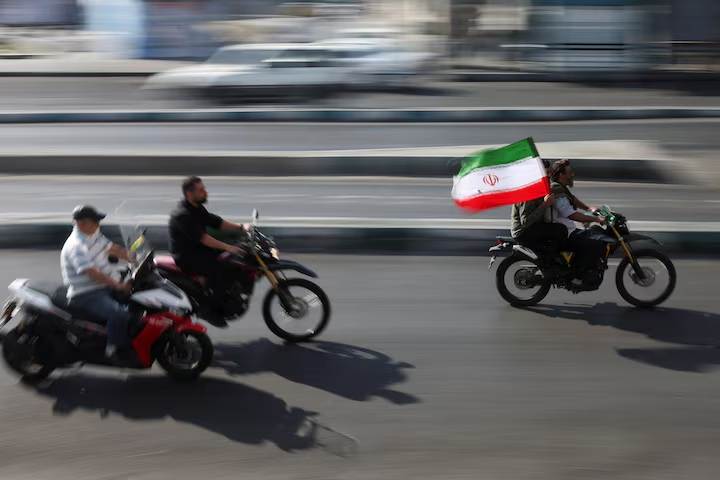
Iran’s Islamic Revolutionary Guard Corps told Americans on Tuesday to vote out President Donald Trump’s allies in Congress. The message came a day before US forces were due to leave their last remaining bases in Iraq. The Guards published a 26-page letter through Iranian media, and it reached the public as the war between Iran and the United States entered its seventh month. Qatar, for its part, kept carrying messages between the two governments in an effort to end it.

Tehran sees the Iraq exit, scheduled for Wednesday, September 30, as a victory. Washington has not described it that way. The timing puts three things in one news cycle: a foreign military force appealing directly to US voters, the end of a US presence in Iraq that began in 2003, and a war with no settlement in sight.

What the Guards’ letter asks of Americans

The letter, published Tuesday, tells Americans to use their votes to remove the leaders now in office. It also asks them to reject US backing for Israel and American military action abroad. In one passage, the Guards tell readers to make sure their politicians understand the world has changed.

Few US voters are likely to read it. Iranian outlets carried the text, and it was not aimed at American media. Still, the subjects it raises are ones already dominating the campaign. Congressional elections take place on November 3, and the opposition Democrats have a chance to win back one or both chambers. A Democratic Congress could slow Trump’s agenda.

The polling behind the timing

Trump ran in 2024 promising to avoid new wars, end the ones already under way and bring down inflation. The war with Iran, which he started together with Israel, has pushed up fuel prices worldwide and spread fighting across the Middle East.

A Reuters/Ipsos poll released September 21 gives a sense of how that is landing. Only 17% of respondents approved of how Trump is handling the cost of living, which Americans name as the top issue for their vote in November. Just 34% approved of the strikes on Iran. Those are the same two subjects the Guards chose to press.

The last American troops in Iraq

The final pullout follows an agreement reached in 2024 under then-President Joe Biden. Trump let it go ahead. That fits a position he has held since 2016, when he broke with Republican orthodoxy by calling the US invasion of Iraq a major mistake.

The withdrawal arrives 23 years after US-led forces removed Saddam Hussein. The upheaval that followed eventually produced the rise of Islamic State.

Iran reads the departure through its own goals. Officials there say their ultimate aim is to force American troops out of the entire Middle East. They present Iraq as a win for the “axis of resistance,” their name for allied armed groups across the region.

Those groups are involved in the current war. The Houthis in Yemen, Hezbollah in Lebanon and militias in Iraq have all been drawn in. Saudi Arabia blamed the Iraqi militias for the September 10 attack that knocked the East-West Pipeline offline.

Qatar tries to broker a deal

Qatar is again acting as mediator. Its earlier role was smaller: it helped produce a June memorandum of understanding that led to a short ceasefire. Since then, rounds of talks and several ceasefires have failed to end the fighting.

US and Iranian officials spoke separately with Qatari mediators on Monday. It was not clear whether more exchanges took place Tuesday. Qatari Foreign Ministry spokesperson Majed al-Ansari described the process to reporters. “We are exchanging messages between the parties,” he said, adding that Qatar is working toward common ground for a deal.

Negotiations appeared to pick up last week around the UN General Assembly in New York. They have not produced an agreement to reopen the Strait of Hormuz. Before the war began in February, 20% of the world’s oil and liquefied natural gas moved through it. Its closure to normal traffic is a main reason energy prices have climbed.

Iran’s seven-day proposal and Trump’s answer

At the General Assembly, Iran put forward a plan that would start a seven-day countdown to reopening the strait and pause the fighting. Trump rejected it on Saturday.

Iranian Foreign Minister Abbas Araqchi said on Sunday that Washington had not formally passed a rejection through the mediators. The two sides therefore disagree on whether the proposal is dead or simply unanswered, and that gap is one of the more useful things to watch in the coming days.

Trump spoke to reporters on Tuesday and again predicted Iran would give up. He said he did not know when, but that it would happen, and that Iran is doing very poorly. He also repeated two positions: Iran must not obtain a nuclear weapon, and the war will end soon.

He has named three goals for the war. The first is weakening Iran’s nuclear capabilities. The second is ending its ability to attack neighbouring countries. The third is creating conditions in which Iranians could overthrow their leadership.

On the nuclear question, Iran does not have nuclear weapons and denies trying to build them. The United States is nuclear-armed. Tehran says that as a party to the Non-Proliferation Treaty it has the right to develop nuclear technology for peaceful purposes.

What the war has cost so far

The fighting has degraded Iran’s conventional forces and damaged an economy that was already struggling. Iran has not stopped responding. It has hit US allies in the Gulf with missiles and drones and has restricted oil tanker traffic through the strait.

Each side can point to something that supports its claim to be winning. Washington can cite damaged Iranian forces and a weaker economy. Tehran can cite a closed strait, higher prices for countries far from the fighting, and an American withdrawal from Iraq that it did not have to negotiate.

What happens next

The Iraq withdrawal is due to be complete Wednesday, which ends the US military presence there that began in 2003. Qatar’s message-passing continues, and the most immediate question is whether Washington gives a formal answer to the seven-day plan or lets it lapse.

The larger test is on November 3. If voters respond to prices and to the war the way the Reuters/Ipsos numbers suggest, Trump could face a Congress able to block his plans. Iran’s Guards are betting on that outcome. Whether their letter has any effect is uncertain, but the polling it points to is public and easy to check.

ADVERTISEMENT
Scroll to Top