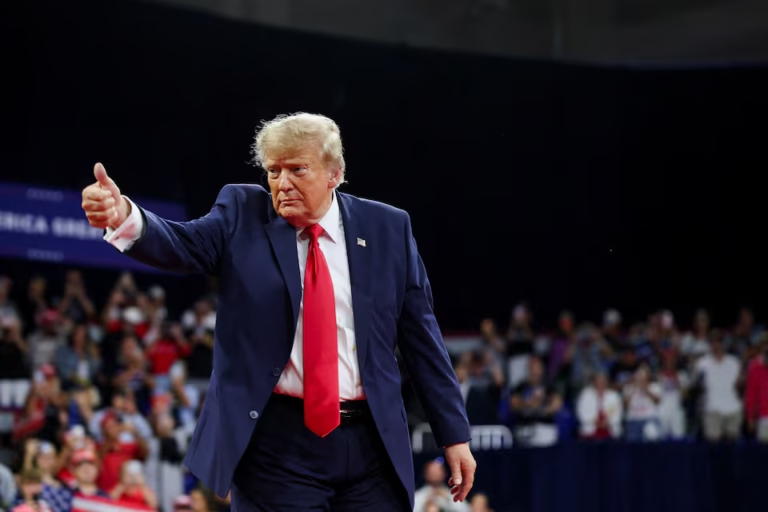

President Donald Trump has announced plans to hand control of the Kennedy Center to Congress following a federal court ruling that blocked efforts to rename the renowned performing arts institution and halted a controversial proposal to temporarily close the venue for extensive renovations.
The development marks the latest chapter in a growing legal and political dispute over the future direction of one of America’s most recognizable cultural landmarks.
In a statement posted on social media Friday, Trump said he had instructed the U.S. Commerce Department to begin coordinating with lawmakers to facilitate what he described as a “full and complete transfer” of the institution’s management responsibilities to Congress.
The proposal would place oversight of the Kennedy Center’s operations, maintenance, and long-term administration directly under congressional authority, although legal experts note that the process for implementing such a change remains uncertain.
Judge Rejects Renaming of National Cultural Institution
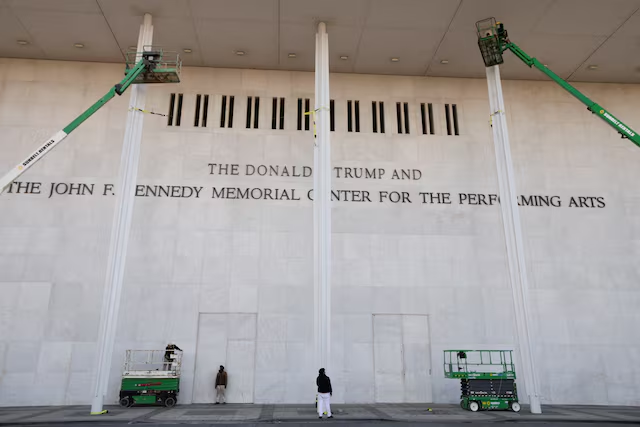
Trump’s announcement came just hours after a federal judge ruled that the Kennedy Center could not legally be renamed without explicit authorization from Congress.
U.S. District Judge Christopher Cooper determined that the center’s name is protected under federal law and cannot be altered through administrative action or by decisions made solely by its board of trustees.
In his ruling, Cooper emphasized that Congress established the institution and specifically designated it as a memorial to President John F. Kennedy. As a result, any effort to formally change the name would require new legislation approved by lawmakers.
The judge ordered the removal of all signage and official references that identified the venue as the “Trump Kennedy Center,” giving the administration two weeks to comply with the directive.
According to the ruling, Congress alone possesses the authority to change the institution’s official name.
Renovation Plans Face Major Setback
The court also temporarily blocked plans to close the Kennedy Center for two years while major renovations were carried out.
The administration had argued that extensive repairs and modernization efforts required a full shutdown of the facility. However, the judge concluded that the proposed closure had not been adequately justified and could not proceed under the current plan.
Cooper clarified that routine maintenance and necessary structural improvements could continue, provided they did not require a complete suspension of operations.
His decision stopped short of dictating how the institution should be managed in the future, instead focusing narrowly on the legality of the renaming effort and closure proposal.
“The court is not directing the day-to-day operations of the Kennedy Center,” the ruling stated. “It is addressing only the legal authority under which these actions were taken.”
Trump Defends Renovation Vision
President Trump responded forcefully to the ruling, arguing that major construction work could not be safely completed while the facility remained open to the public.
In comments posted online, he suggested that continuing operations during large-scale renovations could create safety concerns for visitors, performers, and employees.
Trump maintained that modernization of the aging complex remains necessary and described the project as part of a broader effort to upgrade key landmarks across Washington.
The president has repeatedly promoted plans to reshape parts of the nation’s capital, presenting the projects as investments in America’s cultural and civic infrastructure.
Congressional Lawsuit Sparks Court Challenge
The lawsuit was filed by Democratic Representative Joyce Beatty of Ohio, who challenged the administration’s authority to rename the institution and alter its governance structure.
Beatty argued that the move violated federal law and undermined the constitutional role of Congress in overseeing national institutions created through legislation.
Following the court’s decision, she welcomed the ruling as a victory for legal accountability and institutional independence.
“The Kennedy Center belongs to the American people,” Beatty said in a statement. “Its mission and identity should not be altered through executive action.”
Attorneys representing Beatty also praised the judgment, describing it as an important affirmation of congressional authority and the rule of law.
A Broader Vision for Washington
The dispute over the Kennedy Center is part of a wider effort by Trump to leave a lasting mark on Washington’s physical landscape during his second term.
Among the administration’s proposed projects are a massive ballroom adjacent to the White House and a large ceremonial arch intended to become a new national landmark.
Supporters argue that these initiatives would modernize public spaces, improve infrastructure, and create new venues for official events and cultural activities.
Critics, however, have questioned both the cost and necessity of the projects, arguing that they prioritize symbolism over pressing national concerns.
Several of the proposals have already become the subject of court challenges and congressional scrutiny.
Questions Remain About Future Governance
Despite Trump’s call to transfer control of the Kennedy Center to Congress, significant questions remain about how such a transition could occur.
The center was established through congressional legislation in 1958 and currently operates under a board of trustees. While presidents traditionally appoint members of the board, major structural changes to governance would likely require legislative approval.
Legal analysts note that Congress could choose to assume a larger oversight role, but any transfer of operational authority would involve a complex legislative process.
Meanwhile, the court ruling leaves open the possibility that the board itself could revisit renovation plans in the future, provided any new decisions are made independently and comply with federal law.
Future of the Kennedy Center Remains Uncertain
The latest legal battle highlights the tension between presidential influence and congressional authority over federally chartered institutions.
For supporters of the administration, the dispute reflects an effort to modernize and reimagine Washington’s cultural landmarks. For opponents, it raises concerns about executive overreach and the preservation of historical institutions.
As legal appeals and political debates continue, the Kennedy Center remains at the center of a broader national conversation about heritage, governance, and the role of public institutions in American life.
Whether Congress ultimately assumes greater control or the current governance structure remains intact, the controversy has ensured that the future of the iconic performing arts center will remain under intense public and political scrutiny in the months ahead.