
House Democrats on Wednesday unveiled a new batch of emails that they say raise serious questions about former President Donald Trump’s relationship with Jeffrey Epstein, the late financier and convicted sex offender accused of abusing underage girls.
The release of the documents, which Democrats say expose inconsistencies in Trump’s denials, is reviving a long-simmering political controversy about Epstein’s network and its alleged ties to powerful figures in politics, business, and entertainment.
The White House immediately labeled the Democrats’ move as a “fake narrative” manufactured to smear Trump ahead of his re-election bid next year.
Democrats Cite Emails Linking Trump to Epstein’s Inner Circle
Democrats on the House Oversight Committee said the emails include correspondence between Epstein, British socialite Ghislaine Maxwell, and author Michael Wolff — who has written extensively about Trump and his inner circle.
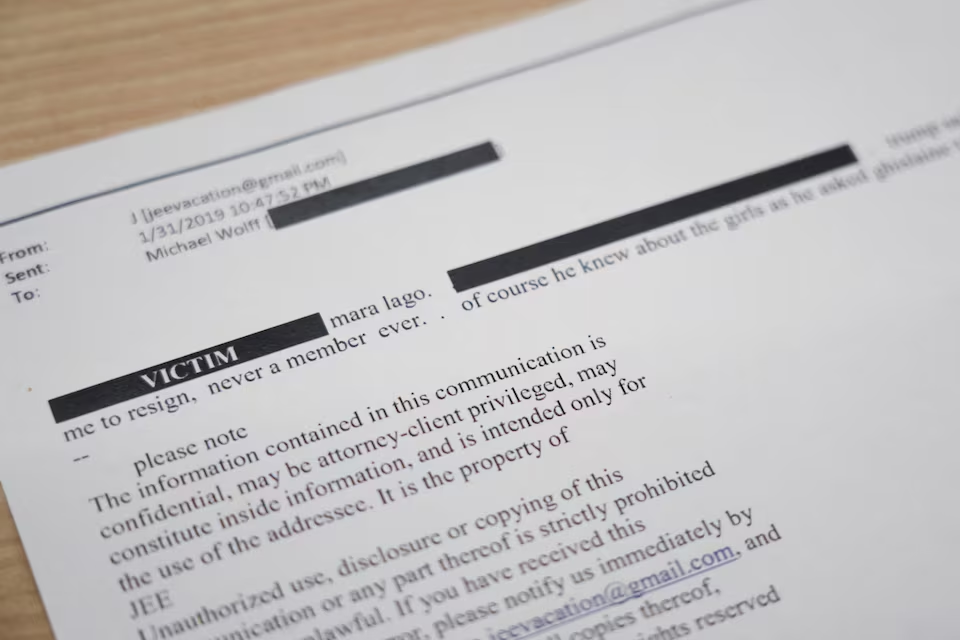
In one 2019 email to Wolff, Epstein reportedly wrote that Trump “knew about the girls,” though the meaning of the phrase remains unclear. In another, from 2011, Epstein refers to Trump as “that dog that hasn’t barked,” suggesting he had been unusually silent about their past relationship.
Epstein also claimed that Trump had “spent hours at my house” with one of the alleged victims whose name has been redacted from the released documents.
The emails were made public on the same day that a newly elected Democrat, Adelita Grijalva, was sworn into the House — giving Democrats the final signature needed to force a vote to release all unclassified Epstein-related files. The move could reignite public interest in one of America’s most scandalous criminal cases and put fresh pressure on Trump’s administration to open the remaining records.
White House Pushes Back, Denounces ‘Selective Leak’
The White House press secretary, Karoline Leavitt, immediately pushed back on the Democratic claims that the emails were taken out of context.
“The Democrats selectively leaked emails to the liberal media to create a fake narrative to smear President Trump,” Leavitt said in a statement.
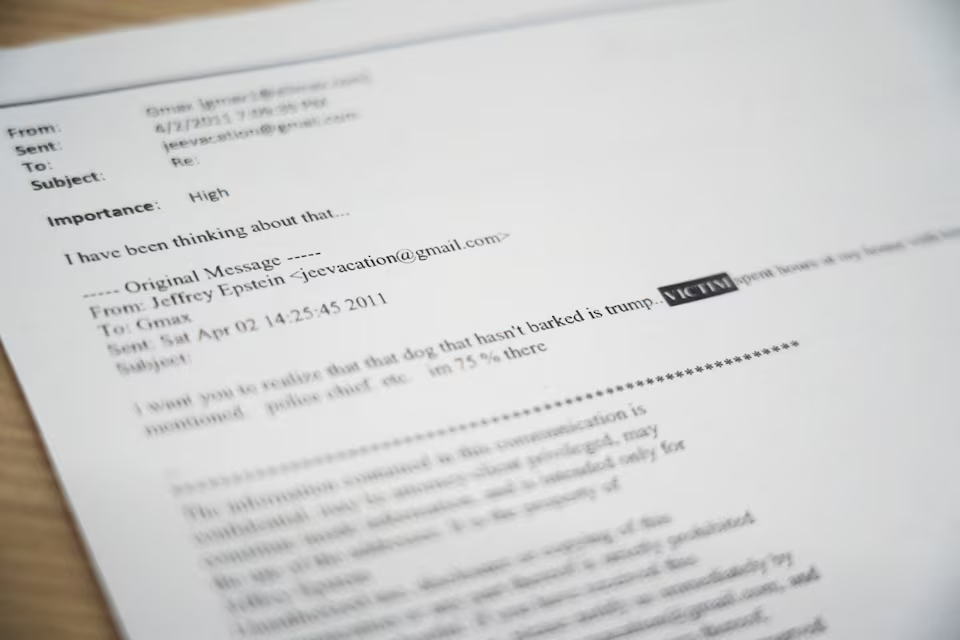
She continued by saying that the redacted victim mentioned in the messages was the late Virginia Giuffre, who said on numerous occasions, publicly, that Trump was “not involved in any wrongdoing whatsoever.”
Trump has consistently claimed that he was unaware of Epstein’s criminal behavior, although he has acknowledged in past interviews that the two men were friends who later had a “falling out.” Epstein died in a New York jail cell in 2019 while awaiting trial on federal sex trafficking charges – an event that has fueled years of public skepticism and conspiracy theories.
Rifts Within Trump’s Own Support Base
The Epstein scandal ignited not only outrage among those critical of Trump but also divided his supporters, with some questioning whether the president’s Justice Department was covering up evidence of Epstein’s powerful connections.
Only 4 in 10 Republicans approved of Trump’s handling of the Epstein files, an October Reuters/Ipsos poll found – a far cry from the 9 in 10 who support his presidency.
Many conservative voters, including those aligned with Trump’s “America First” movement, have demanded full transparency, arguing that both parties have an interest in keeping the Epstein records sealed.
Democrats push for full disclosure.
Democrats say Wednesday’s release is only the beginning. Representative Robert Garcia, D-Calif., the top Democrat on the House Oversight Committee, urged the Justice Department to make all Epstein-related materials public.
“The more Donald Trump tries to cover up the Epstein files, the more we uncover,” Garcia said in a statement.
These latest emails raise glaring questions about what the White House knew — and when — about the relationship between Epstein and the former president.
Full disclosure is essential for restoring public trust and holding the right people accountable for their actions, say Garcia and other Democrats, as the Epstein case has continued to reveal links with influential political leaders.
Political Fallout and Next Steps
The push to declassify the Epstein files comes at a politically sensitive moment. Trump, who remains the frontrunner for the 2026 Republican presidential nomination, has faced mounting scrutiny over his past associations — including renewed media attention on his social and business ties to Epstein in the early 2000s.
House Speaker Mike Johnson, R-La., a Trump ally, has resisted calls for a full release of the files, citing privacy and national security concerns. But Democrats say that with Grijalva’s swearing-in, they now have enough votes to compel action through a discharge petition.
If it succeeds, the House could soon debate a measure to make all unclassified Epstein-related documents public, potentially exposing more details about one of the most infamous criminal networks of the 21st century — and deepening the political storm surrounding Trump’s legacy.
Public Demands Transparency
Within hours of the release of the documents, the hashtag #EpsteinFiles was trending across social media, with Americans on all sides of the political divide demanding transparency. Analysts say the issue crosses party lines — tapping into broader frustration about secrecy, elite privilege, and lack of accountability around Epstein’s death and the alleged cover-up that followed. For now, the political fight over the Epstein files is far from finished. What started as a criminal case against a single man has morphed into a national reckoning about power, privilege, and the limits of justice in Washington.