

Mexico is gearing up for another round of trade talks with the United States after Washington declined to fully renew the U.S.-Mexico-Canada Agreement during its scheduled six-year review. Instead, the three countries agreed to keep the pact running for another decade while holding annual reviews that could rewrite key provisions before it eventually expires.
That outcome has pushed Mexican officials into a more active diplomatic push to settle long-running disputes with Washington over manufacturing, trade imbalances, tariffs and the rules that govern regional production.
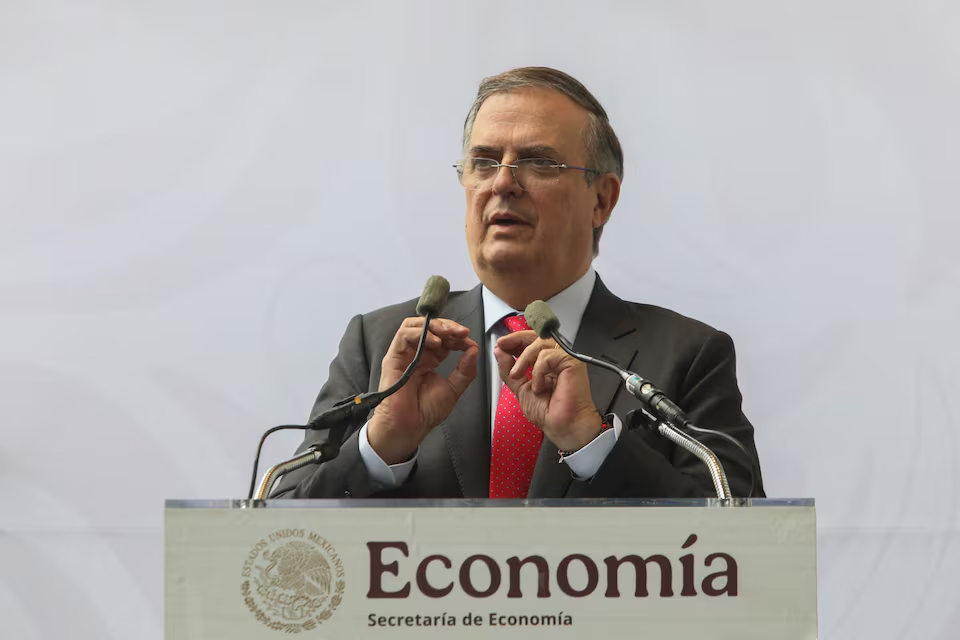
Mexico’s Economy Minister Marcelo Ebrard addressed the situation at a news conference on Wednesday, saying that while gaps remain between the three countries, none of them are large enough to block a deal that works for everyone.
“There is no disagreement between Mexico, the United States, and Canada that cannot be addressed through negotiation,” Ebrard said.
The review covers one of the largest free trade areas in the world, supporting trillions of dollars in annual commerce and supply chains that run deep across all three countries.
A decade-long review replaces full renewal
U.S. officials passed on a full renewal and instead chose a framework that keeps the current deal intact while adding yearly evaluations over the next ten years. That gives businesses some short-term certainty, but it also keeps pressure on all three governments to work out their disagreements before the agreement’s eventual expiration, unless they agree on new terms first.
Washington has spent the review period pushing to strengthen domestic manufacturing, cut reliance on foreign imports and close trade deficits with major partners. Those priorities have shaped much of the U.S. negotiating position. Mexico says it understands the concerns and is willing to discuss ways to build up regional production without disrupting an economy that’s already tightly linked across the continent.
Manufacturing jobs at the center of US concerns
Ebrard said one of Mexico’s immediate priorities is responding to U.S. worries about manufacturing jobs moving outside the country. The U.S. administration has framed keeping industrial employment at home as a strategic goal, particularly in sectors it considers important for competitiveness.
Mexico wants to address that through cooperation instead of new barriers. Officials point out that factories in all three countries already depend on parts and materials that cross borders repeatedly during production. Rather than treating regional manufacturing as a fight over a fixed number of jobs, Mexico argues that stronger supply chains help all three countries by cutting reliance on suppliers outside North America. Ebrard said keeping an integrated North American manufacturing base intact remains one of Mexico’s main goals heading into the next round of talks.
Steel and aluminum tariffs stay unresolved
One of the sharpest points of disagreement is Washington’s continued use of Section 232, a provision that lets the U.S. impose tariffs on imports it considers a threat to national security. The U.S. has used it repeatedly to levy duties on steel and aluminum, including shipments from Mexico and other major trading partners.
Mexico says those tariffs cut against the free-trade principles USMCA is built on. Ebrard said his government has pressed Washington to scale back its use of Section 232, calling the tariffs a real obstacle to smoother trade relations. Mexican officials argue that dropping the tariffs would help manufacturers across North America compete and lower costs for industries that depend on steel and aluminum. No agreement has been reached yet.
Auto rules remain a sticking point
The rules of origin governing automobiles and auto parts are another major source of friction. Under USMCA, vehicles have to meet strict regional content thresholds to qualify for tariff-free treatment, rules meant to push more manufacturing inside North America instead of relying on components made elsewhere.
Mexico says those requirements are already among the toughest in the world. “We haven’t reached an agreement on rules of origin,” Ebrard said, adding that the current system is already strict and complicated enough. Mexican officials worry that tightening the rules further would raise production costs, hurt competitiveness and pile on administrative burdens for manufacturers working across the region. The automotive sector is one of Mexico’s biggest export industries and supports hundreds of thousands of jobs, which is why protecting it remains a top priority for Mexico City.
Auto plants anchor Mexico’s manufacturing economy

Global automakers run dozens of assembly plants across Mexico, producing millions of vehicles a year, most bound for the United States. Those plants rely on supply chains that cross the U.S., Mexican and Canadian borders multiple times before a finished vehicle reaches a dealer lot. Even small changes to trade rules can carry major financial consequences for manufacturers and their suppliers. Ebrard said protecting the auto industry will stay a central focus for Mexico in future USMCA talks, and officials plan to keep pushing for rules that protect regional manufacturing while leaving room for companies to compete globally.
Agriculture still up for discussion
Agricultural trade remains another source of friction. Mexico has raised concerns about seasonal tariffs and other measures affecting farm products traded between the two countries. Farmers on both sides of the border rely on steady access to each other’s markets, which makes agricultural policy a significant piece of the broader talks. Mexican officials say stable agricultural trade helps keep food supplies reliable and prices predictable across North America. Future annual reviews are expected to take up these issues again.
Canada’s position still taking shape
Canada remains a full partner in USMCA, and Ebrard said Ottawa’s role in the next phase of talks should become clearer in the coming weeks. Mexico doesn’t have major bilateral trade disputes with Canada the way it does with the United States, but any major changes to USMCA need agreement from all three countries, so Canada’s involvement will stay essential throughout the review process.
Businesses watch for signs of stability
Extending USMCA with annual reviews gives businesses some certainty, but it also means North American trade policy will stay under constant negotiation for years. Manufacturers, exporters, investors and agricultural producers are watching closely, since future changes could affect production costs, investment plans and supply chain decisions.
For Mexico, the goal is holding onto strong access to its biggest export market while working through U.S. concerns at the negotiating table rather than through confrontation. Officials from all three countries now have to balance domestic political pressures against the economic benefits of one of the most integrated trade partnerships in the world, with real disagreements still on the table over tariffs, auto rules and agricultural trade.