
The Democratic Republic of Congo does not expect major disruptions to its copper and cobalt production this year despite chemical supply constraints tied to conflict in the Middle East, a senior mining official told Reuters.
The U.S.-Iran conflict, which began on February 28 and has largely calmed since last month’s interim peace treaty, disrupted global supplies of sulfuric acid, a chemical essential to processing copper and cobalt ore.
Zambia, one of Congo’s main suppliers of the chemical, has curbed its sulfuric acid exports to prioritize domestic users. That decision has pushed some Congolese mining companies to evaluate whether they’ll need to scale back output, according to earlier Reuters reporting, particularly after Congo posted record copper exports in the first quarter.
Congo holds the title of the world’s top cobalt producer and ranks as the second-largest copper miner globally. Official data show the country exported 823,887 metric tons of copper during the first quarter, an increase of 4.8% compared with the same period last year.
Cobalt hydroxide exports climbed even faster, rising 24.5% to 51,940 tons, equivalent to roughly 17,054 tons of cobalt metal. Gold exports for the quarter reached 6.3 tons, valued at $732 million.
Grace Mabaya, a senior official at Congo’s Mines Ministry, said the country has not yet seen the supply constraints translate into real production losses.
“At this stage, we have not observed any major impact on national production related to the supply of mining inputs,” Mabaya said.
Mabaya described the outlook for the rest of 2026 as broadly positive, pointing to strong global demand for copper and stable operations across the country’s mining sector. Most mining companies operating in Congo hold long-term supply contracts, keep strategic inventories on hand, or source chemicals from regional suppliers, all of which reduce the risk of significant production losses tied to the sulfuric acid shortage.
Mabaya stopped short of ruling out consequences entirely. If the supply disruptions continue, she said, mining companies could face higher costs and longer delivery times, even without major cuts to output.
Government tightens control over cobalt exports
Congo’s cobalt exports are increasingly governed by government quotas and export controls, Mabaya said, part of a broader push by Kinshasa to gain more influence over global cobalt markets. Congo supplies the majority of the world’s cobalt, a metal used heavily in electric vehicle batteries and other rechargeable technologies, giving the government significant leverage as it works to capture more value from the resource.
The push toward tighter export controls reflects a shift in strategy for Congo, which has historically allowed foreign mining companies broad access to extract and export its cobalt with limited government intervention. Recent policy changes suggest Kinshasa wants a larger role in setting prices and managing supply, rather than functioning purely as a raw material exporter.
Major players in Congo’s mining sector
China’s CMOC held the position of Congo’s largest exporter during the first quarter. Glencore also ranked among the top contributors to the country’s copper and cobalt shipments during the same period.
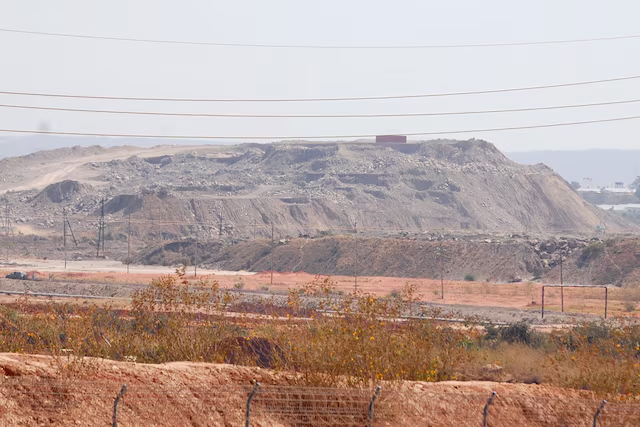
Both companies operate large-scale mining projects in Congo’s copper belt, a region in the country’s southeast that holds some of the world’s richest copper and cobalt deposits. Their continued output during the first quarter, despite the emerging chemical supply concerns, supports Mabaya’s assessment that Congo’s mining sector has so far absorbed the disruption without significant damage to production volumes.
Whether that holds for the rest of the year will depend largely on how the Middle East conflict’s aftereffects continue to ripple through regional chemical supply chains, and whether Zambia maintains its current restrictions on sulfuric acid exports or loosens them as domestic demand stabilizes.