
Andy Burnham is increasingly expected to become the next UK prime minister without facing a serious challenge, according to allies of the Makerfield MP, as Labour moves quickly to stabilise its leadership after Keir Starmer’s abrupt resignation.
Starmer stepped down on Monday after conceding that the Parliamentary Labour Party no longer supported his leadership heading into the next general election. He said he accepted the decision “with good grace” and signalled he would allow a smooth transition.
His departure triggered immediate repositioning inside Labour. Burnham quickly emerged as the dominant figure in the race to replace him. Formal nominations for the leadership contest won’t open until 9 July, but Burnham is the only senior figure so far to publicly confirm he’s standing.
Support Builds Rapidly Inside Westminster
Momentum behind Burnham has grown fast. Party insiders say backing for the former Greater Manchester mayor spread through Labour ranks over the weekend, including among some senior figures in government.
Shortly after Starmer’s resignation, former health secretary Wes Streeting, who had previously been considered a potential contender himself, publicly aligned with Burnham. That shift has added weight to expectations that the leadership contest may not develop into a full-scale race.
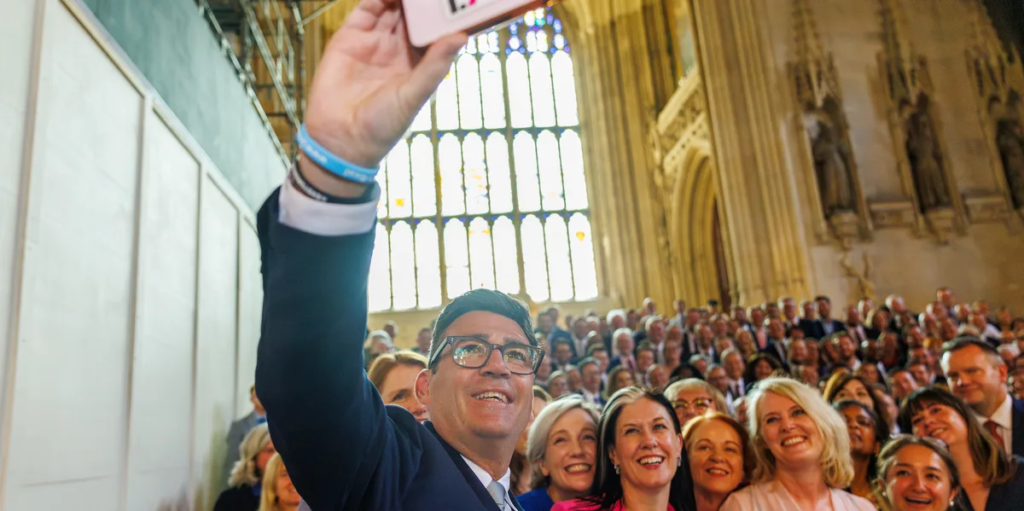
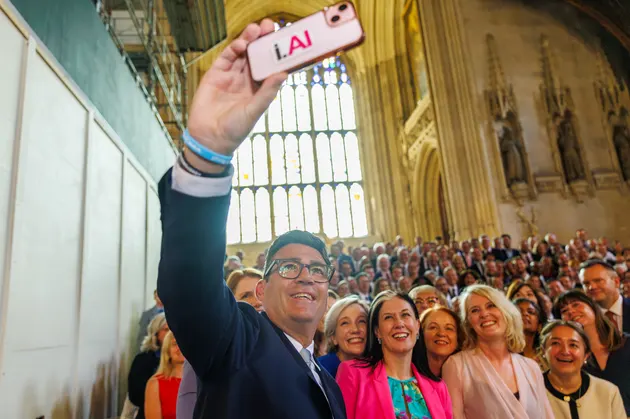
By Monday afternoon, Burnham was seen posing for photographs with dozens of Labour MPs inside Westminster Hall, a display of support that reinforced his strong position within the Parliamentary Labour Party.
One Labour source said Burnham could already command a commanding share of MPs. “There is no serious appetite for division,” the source said. “Most MPs want stability and a clear transition.”
Starmer and Burnham Meet After Leadership Shift
According to reporting from The Times, Starmer met Burnham in Westminster on Tuesday for the first time since his resignation and the by-election victory that brought Burnham back into Parliament.
Burnham, who previously served as MP for Leigh from 2001 to 2017, returned to the Commons after winning the Makerfield by-election last week. During his earlier parliamentary career, he served in senior cabinet roles under Gordon Brown, building a reputation as one of Labour’s most experienced political operators. Party insiders say that experience, combined with his strong local electoral performance, has helped cement his position as the preferred successor among many MPs.
Labour MPs Rally Around a Single Figure
Labour rules require a leadership candidate to secure at least 81 MP nominations to enter the contest. Burnham supporters believe he could clear that threshold comfortably.
One source close to Burnham’s campaign said support within the Parliamentary Labour Party could be overwhelming. “We are looking at potentially two-thirds of MPs already leaning towards Andy,” the source said. “For many of them, there is simply no point in a drawn-out contest.”
The same source said informal lobbying between MPs is helping consolidate that support, with colleagues encouraging each other to back Burnham to avoid a prolonged leadership battle. Another supporter described the situation as one focused on “orderly transition rather than internal conflict.”
Rivals Struggle to Gain Momentum
Despite speculation about possible challengers, no alternative candidate has secured significant public backing yet.
Cabinet minister Darren Jones has been mentioned in Westminster circles as a potential contender, but allies say he hasn’t built sufficient support to mount a formal challenge. “He has been testing opinion among MPs,” one Labour insider said, “but there is no indication that he can reach the nomination threshold.”
Former armed forces minister Al Carns has also been discussed as a possible candidate. He previously suggested he might enter the race but hasn’t formally confirmed his participation, and his level of parliamentary support remains unclear.
Candidates must secure 81 nominations from MPs to appear on the ballot, a hurdle many observers believe only Burnham is currently positioned to clear.
Concerns Over a Divisive Leadership Contest
Some Labour figures are warning against a drawn-out leadership contest, arguing it could destabilise the party at a critical moment.
One Burnham ally said a prolonged race could extend internal divisions into the autumn. “If this becomes a contest, it drags everything into September,” the source said. “The party does not need that right now.”
They pointed to Labour’s recent history of internal leadership battles, referencing the factional tensions of the Jeremy Corbyn era. “We cannot afford to turn inward again,” the source said.
Policy Questions Still Unanswered
Despite his strong position, Burnham hasn’t yet set out a detailed national policy programme or confirmed key cabinet appointments. He’s expected to deliver a major speech next week outlining his economic and governance priorities.
Early signals suggest he’ll maintain Labour’s fiscal rules and avoid breaking manifesto commitments on income tax, VAT, and National Insurance. At the same time, Burnham has previously advocated for greater public control over utilities, expanded council housing programmes, and a stronger industrial strategy focused on rebuilding domestic manufacturing. Supporters say his approach combines economic caution with more interventionist social policy, though critics argue his agenda remains underdeveloped at national level.
Divisions Remain Within the Party
Not all Labour MPs are fully aligned behind Burnham’s rapid rise.
Nadia Whittome, MP for Nottingham East, said leadership selection shouldn’t bypass democratic competition. “Elections are a normal part of political life,” she said, cautioning against a coronation-style transition.
Speculation continues about whether Foreign Secretary Yvette Cooper could still enter the race, with some MPs reportedly favouring her as a potential first female Labour leader. No formal campaign has emerged from her camp, though.
Timeline Toward a New Prime Minister
If Burnham remains unopposed, Labour could complete its leadership transition within weeks. Nominations open July 9 and close July 16. Burnham could become leader by July 18 if unopposed. If a contest occurs, a formal transition period would run through August and September, with a new prime minister potentially installed by September 1, after the parliamentary recess.
If a challenger emerges, Labour members would vote over the summer using a preferential ballot system, which could push the process into September.
A Defining Moment for Labour
The coming weeks will determine whether Labour experiences a contested leadership race or a swift transfer of power to Andy Burnham.
For many MPs, the priority is avoiding further instability after Starmer’s sudden exit. For others, questions remain about policy direction, internal democracy, and long-term electoral strategy. Burnham now stands at the centre of British politics, with the strongest position of any Labour figure in years to take control of the party and possibly the country.