
Microsoft has shut at least 15 branch offices and joint ventures in China over the past five years, corporate filings show, as the company pursues what five people familiar with the matter described as a strategy of gradual retreat from the world’s second-largest economy.
The technology giant considered leaving the Chinese market entirely in 2023, according to one of the sources, after some executives concluded the geopolitical risk outweighed the economic return. Microsoft currently has no plans to exit, the source stressed. China generated just 1.5% of Microsoft’s global revenue in 2024, the company said.
The internal deliberations, which have not been previously reported, reflect a broader unraveling of trust between Washington and Beijing that has reshaped how American tech firms operate in China. Since 2017, Chinese authorities have pushed government agencies and state-linked firms toward domestic software, which officials consider more secure and which has grown increasingly competitive with Windows and Office. At the same time, U.S. export controls on advanced technology have limited Microsoft’s ability to expand its artificial intelligence and cloud computing operations inside China.
Microsoft is not alone in reassessing its China exposure. Apple intends to manufacture most iPhones sold in the United States in India by the end of 2026. Tesla chief executive Elon Musk last month denied reports that his company was considering splitting off its China business.
Why Microsoft stayed
Microsoft ultimately chose to remain in China because it had built a profitable niche serving Chinese companies that need Western technology to run their overseas operations, according to three people familiar with the matter. TikTok owner ByteDance is among the clients relying on Microsoft’s services for that purpose. The company also views its China presence as essential to recruiting from the country’s deep pool of engineering talent, two of the sources said.
Alain Crozier, who led Microsoft’s China operations until 2021, said the company has cultivated one of the deepest government relationships of any American tech firm. “Because of the geopolitics … some days it’s a little bit harder, but we never had a crisis,” Crozier said.
A Microsoft spokesperson did not directly address questions about the company’s internal deliberations but said Microsoft operates within a regulatory environment that applies to every international supplier and remains committed to the Chinese market. The company said the current state of its China business reflects market competition, regulatory pressure and broader technological trends. ByteDance did not respond to requests for comment.
A relationship dating to the 1990s
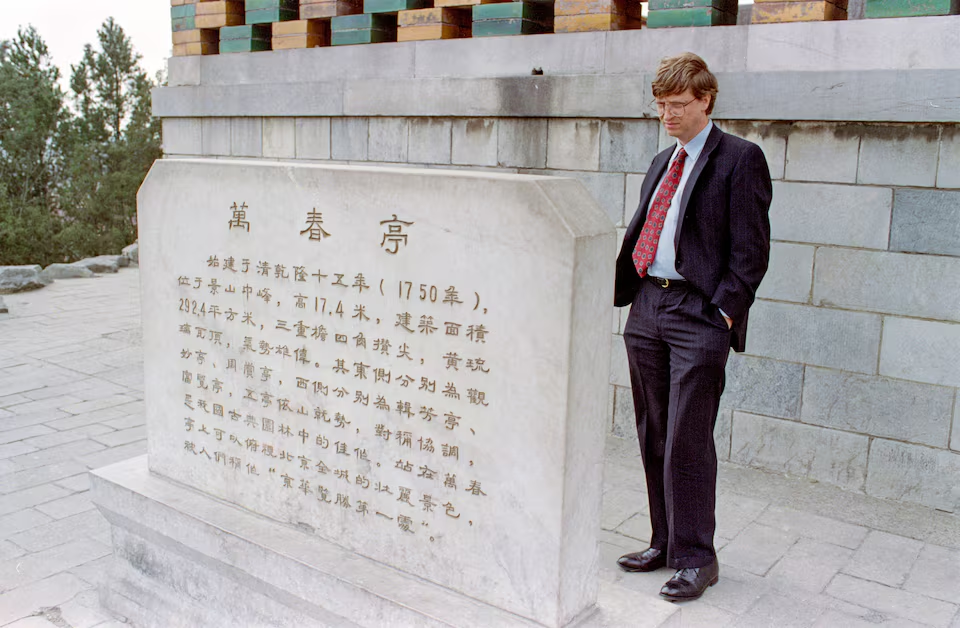
Microsoft’s ties to Chinese leadership stretch back more than three decades. Co-founder Bill Gates made the first of many visits to China in 1994, when he met President Jiang Zemin, who reportedly urged him to study Chinese history. Over the following years, Microsoft co-invested in government-backed startup incubators and complied with censorship rules that Google, now part of Alphabet, refused to accept when it scaled back its China operations in 2010.
That decision by Google drew praise from democracy activists but criticism from Bill Gates and then-Microsoft chief executive Steve Ballmer, who argued the search giant was overreacting to censorship and cyberattack concerns.
By the mid-2010s, China had grown wary of Western technology following revelations that U.S. companies had assisted American intelligence agencies in surveillance operations. That suspicion posed a particular challenge for Microsoft, since most of China’s largest companies are state-owned or maintain close government ties.
Microsoft’s answer was Windows 10 China Government Edition, a product whose release chief executive Satya Nadella personally negotiated with Chinese finance ministry officials, according to a person familiar with the talks. Several government agencies adopted the software, but it never achieved the broader traction Microsoft had hoped for, Crozier said.
Around the time of that 2017 announcement, Beijing introduced procurement guidelines requiring government purchases to meet “safe and reliable” standards. No foreign operating system, including Windows, has been deemed compliant with those rules, Microsoft said. Non-compliance does not amount to an outright ban, but it subjects Chinese technology administrators using foreign software to added scrutiny, including extra security checks and approval requirements, said Paul Triolo, a Washington-based China tech policy analyst at DGA-Albright Stonebridge Group.
A review of six Chinese government procurement guides published between December 2023 and May 2026 found that five did not recommend Microsoft products. The sixth listed Windows 10 China Government Edition but noted its use was subject to unspecified “additional management requirements.” China’s tech and finance ministries did not respond to questions about the impact of these regulations on Microsoft.
A second wind in the private sector
American businesses in China, long frustrated by an uneven regulatory playing field, have grown more cautious as U.S.-China relations have soured. Just 52% of respondents to the American Chamber of Commerce in China’s most recent business climate survey named China a top global investment priority, down from 62% in 2019.
While Microsoft’s push to become Beijing’s preferred technology vendor stalled, the company found new momentum with private companies. Firms such as ByteDance and fast-fashion retailer Shein depend on Microsoft’s Azure cloud platform to manage data in ways that satisfy foreign regulatory requirements, according to two company sources. Microsoft also gives Chinese enterprise clients exclusive access through Azure to Western AI models from providers such as OpenAI, which do not otherwise serve the Chinese market.
By the mid-2020s, helping Chinese companies expand internationally had become Microsoft’s largest China-linked business line, according to three sources, though two cautioned that overall sales remain modest compared with the company’s global operations. Analysts have questioned the durability of that AI-driven business, since it depends on third-party suppliers like OpenAI and faces competition from cheaper domestic Chinese AI models such as Kimi. OpenAI and Shein did not respond to requests for comment.
Losing the talent battle
Microsoft has played a central role in developing China’s technology workforce since the 1990s, hiring commercially focused engineers and establishing Microsoft Research China to work on advanced technologies. Alumni of that lab now hold senior positions at Chinese AI firms SenseTime and DeepSeek.
Recent political pressure has made it harder for Microsoft to hold onto that talent. U.S. export controls on chips and AI models have cut off Microsoft’s China-based engineers from cutting-edge technology. Microsoft president Brad Smith told U.S. lawmakers in 2023 that the company does not conduct research on quantum computing or other sensitive technologies in China.
Microsoft weighed closing the research lab entirely but instead chose to relocate some of its top researchers, according to two people familiar with the decision. Since U.S. AI export restrictions took hold, the lab, now called Microsoft Research Asia, has opened new outposts in Vancouver, Singapore and Tokyo.
Convincing engineers to leave China altogether has proven difficult. In 2024, Microsoft offered relocation packages to 1,000 top engineers, moving them to the United States or three other Western countries. Only about a third accepted, according to the sources. Microsoft confirmed it made relocation offers that year but declined to provide further details.
Most of the engineers who turned down relocation instead moved to Chinese universities or domestic tech companies, where they can continue high-level research while staying close to family, the two sources said.
Microsoft has faced talent poaching from domestic rivals before. The company’s attrition rate in China hovered around 17% in the mid-2010s, Crozier said, before Microsoft brought it below 10% by expanding new business lines, including its work with ByteDance, and offering staff opportunities to work abroad.
“There is up and down in terms of the number of people and maybe some of the things that were developed over there,” Crozier said. “But we never change one inch of the fact that we will bring technology into China … for China, for Chinese companies.”