
President Donald Trump turned his sights on two of America’s largest oil companies this week, accusing ExxonMobil and Chevron of pocketing excessive profits while ordinary drivers pay more at the pump. The rebuke marks an unusual rift between the president and an industry he has otherwise championed since returning to the White House.
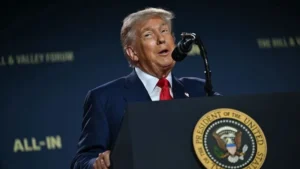
Speaking to reporters on Monday, Trump singled out both companies by name just days after they posted strong second-quarter results. “I don’t like it,” he said. “Chevron, too much money. ExxonMobil, too much. Too much money.” The comments came as the war in Iran continues to push oil prices upward, squeezing consumers even as producers report some of their best quarters in years.
Neither Exxon nor Chevron responded immediately to requests for comment following Trump’s remarks.
A familiar tactic, an unfamiliar target

Public pressure on corporate America is nothing new for Trump. During his first term, he leaned on automakers to keep factories running domestically, criticized defense contractors over pricing, and pushed pharmaceutical firms to bring down drug costs. He has revived that playbook since taking office again, frequently using his platform, whether at press briefings or on social media, to shape corporate behavior without resorting to formal regulatory action.
What sets this episode apart is the target. Oil and gas producers have largely benefited from Trump’s energy agenda, which has favored expanded drilling and looser permitting. Now the same administration pushing companies to pump more is also demanding they charge less, a contradiction that has started to show.
Earlier in the day, Trump took aim at Chevron chief executive Mike Wirth directly, criticizing his Sunday appearance on Fox News for failing to credit the administration’s role in supporting the oil sector. In a post on Truth Social, Trump wrote that Wirth had “conveniently forgot to mention” the administration’s contribution, adding: “without the genius, foresight, strength, and stability, of the TRUMP Administration, the Oil Industry, and our Country itself, would be DEAD!” He also referenced Chevron’s return to Venezuela, writing that the company was “thrown out” of the country before coming back “far bigger and stronger than ever before, expecting to make a fortune!”
Chevron’s long history in Venezuela
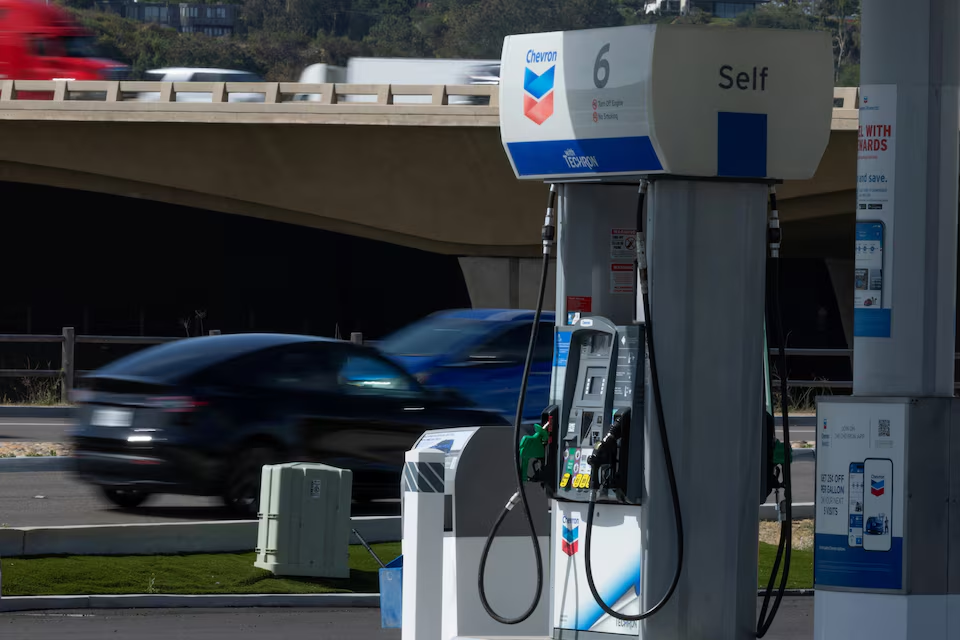
Trump’s Venezuela comments touch on a relationship stretching back more than a hundred years. Chevron kept its operations running in the country even after former President Hugo Chavez nationalized oil assets in 2007, a period when rivals including ExxonMobil and ConocoPhillips chose to withdraw entirely. That decision to stay has shaped Chevron’s position in Venezuela’s oil sector for nearly two decades, one that has alternated between sanctions, waivers, and renewed access depending on shifts in Washington’s foreign policy.
Industry representatives, meanwhile, have pushed back on the idea that individual companies are to blame for rising prices. A spokesperson for the American Petroleum Institute said current price pressures stem from broader market forces rather than corporate decision-making. “Today’s higher prices are driven by global supply, demand and continued uncertainty around the Strait of Hormuz and other critical shipping lanes, not by any one company,” the spokesperson said.
Pressure builds ahead of the midterms
Trump’s frustration comes at a politically sensitive moment. Retail gasoline prices are now averaging around $4.10 a gallon nationwide, up more than 30 percent since the United States and Israel struck Iran earlier this year. That increase has landed just months before the November midterm elections, when Republicans are fighting to hold their congressional majority. Rising costs at the pump, layered on top of broader concerns about the cost of living, could become a liability for the party heading into the vote.
Trump told reporters he expects relief once tensions with Iran ease. “They better cut the retail price, the consumer price,” he said, predicting that oil prices would “drop through the floor” once the conflict winds down. Global crude prices did fall after Trump called off what he had described as a planned “massive attack” on Iran over the weekend. But retail gas prices typically lag behind shifts in crude markets, meaning drivers may not see relief as quickly as the president suggests.
Record earnings tell a different story
The numbers behind Trump’s frustration are hard to ignore. Last week’s earnings reports from ExxonMobil, Chevron, Valero Energy, and Marathon Petroleum all pointed to the same trend: higher crude prices and wider refining margins have translated into stronger profits since the war began in February. Valero posted its best quarterly profit since the 2022 energy crisis that followed Russia’s invasion of Ukraine. Chevron, for its part, reported its highest quarterly earnings in at least six years.
That earnings strength puts oil executives in an awkward position. The same market conditions driving up costs for consumers, a tightening Strait of Hormuz, sustained conflict in the Middle East, and constrained supply, are the ones fattening company balance sheets. For an administration that has staked much of its economic messaging on lowering costs for everyday Americans, the optics of record oil profits arriving alongside a 30 percent jump in gas prices are difficult to reconcile.
Whether Trump’s public criticism translates into any policy action remains unclear. His administration has not signaled plans for windfall taxes, price controls, or other formal measures against the industry. For now, the pressure remains rhetorical, a continuation of the same public-shaming strategy Trump has used against other sectors in the past. But with gas prices weighing on voters and an election on the horizon, the gap between his energy expansion policy and his profit complaints may only grow harder to paper over.