
Air raid sirens sounded across Bahrain and Kuwait on Wednesday as tensions in the Gulf escalated sharply following fresh US strikes on Iran.
The United States struck dozens of targets inside Iran in response to Iranian attacks on three commercial vessels transiting the Strait of Hormuz. Shortly afterward, reports emerged of Tehran’s retaliatory actions across the region, prompting both Bahrain and Kuwait to activate emergency warning systems.
Kuwait confirms missile, drone attack
Kuwait said it was responding to “hostile missile and drone attacks” as the conflict in the Gulf continued to worsen. The Kuwaiti army issued a statement appealing to residents to remain calm and follow all safety and security instructions. According to the military, the blasts heard across the country came from successful interceptions carried out by its air defense systems. The confirmation followed air raid sirens sounding nationwide as the regional situation deteriorated rapidly.
Air raid sirens blaze in Bahrain
Bahrain activated air raid sirens as well. The country’s Ministry of Interior urged residents to move to the nearest safe location. “The siren has been sounded,” the ministry said on X, without detailing the specific threat. “Citizens and residents are urged to remain calm and head to the nearest safe place.”
Iran claims it struck 85 US military targets in Bahrain and Kuwait
Iran’s Islamic Revolutionary Guard Corps said its naval and aerospace forces carried out a joint missile and drone attack against 85 US military-linked facilities across Bahrain and Kuwait. The IRGC said the strikes hit the US Fifth Fleet headquarters in Bahrain and Kuwait’s Ali Al-Salem Air Base.
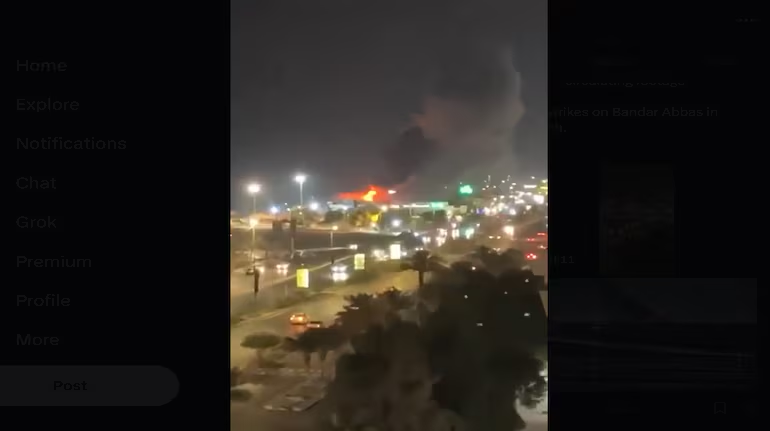
The IRGC described the operation as an “initial response” to what it called a violation of the ceasefire by Washington under the Islamabad agreement, pointing to US air strikes earlier Wednesday on coastal bases and non-military sites in Mahshahr and Hormozgan. The force also alleged that the United States timed its strikes to overshadow the funeral procession of former Iranian Supreme Leader Ayatollah Ali Khamenei.
The rapid exchange marks one of the most volatile stretches in the Gulf since the interim ceasefire took hold, with air defense systems in two countries now engaged directly against incoming Iranian fire. Bahrain and Kuwait both host significant US military infrastructure, including the Fifth Fleet’s regional headquarters in Manama and multiple air bases used to support American operations throughout the Gulf. That proximity has left both nations exposed as Iran widens its retaliatory response beyond direct strikes on US forces inside Iranian territory or at sea.
Kuwaiti officials have not yet confirmed casualties or damage from the interceptions, and the government has not said how many missiles or drones were involved in the barrage. The army’s statement focused on reassuring the public that its defense systems functioned as intended, without offering further detail on the scale of the attack or the specific facilities targeted.
Bahrain’s government likewise withheld specifics on the nature of the threat that triggered its sirens. The Ministry of Interior’s message emphasized public safety instructions rather than confirming any strikes had landed or been intercepted, leaving open questions about what prompted the alert.
Iran’s account of the strikes, delivered through the IRGC, offered more specificity than either Gulf state’s initial statements. The claim that forces hit the Fifth Fleet headquarters directly would represent a significant escalation, given the site’s role as the primary US naval command post for the region. Kuwait’s Ali Al-Salem Air Base has similarly served as a staging point for American air operations in the Gulf for years.
The timing tied to Khamenei’s funeral adds another layer to the standoff. Iranian officials have framed the US strikes as an attempt to diminish the significance of the funeral proceedings, which have drawn large crowds and included ceremonies in Iraq ahead of final rites planned in Mashhad. The IRGC’s characterization of its own strikes as an “initial response” suggests Tehran may consider further retaliatory action, though the group did not specify what additional steps might follow.
The broader conflict traces back to the collapse of maritime security in the Strait of Hormuz, where three tankers came under attack this week, triggering the US strikes that set off the current chain of events. That waterway carries a substantial share of global oil shipments, and any sustained disruption there carries implications well beyond the immediate military exchange between Washington and Tehran.
Neither the US nor Iran has indicated a willingness to de-escalate in the hours since the sirens sounded. Diplomatic talks aimed at a permanent settlement between the two countries had already been paused amid the funeral proceedings for Khamenei, and officials have given no indication of when, or whether, those negotiations might resume given the latest strikes.
For residents of Bahrain and Kuwait, the immediate concern remains safety rather than diplomacy. Both governments have prioritized public messaging around shelter locations and calm compliance with official instructions, a signal that authorities in both countries anticipate the possibility of further incoming fire in the near term.