
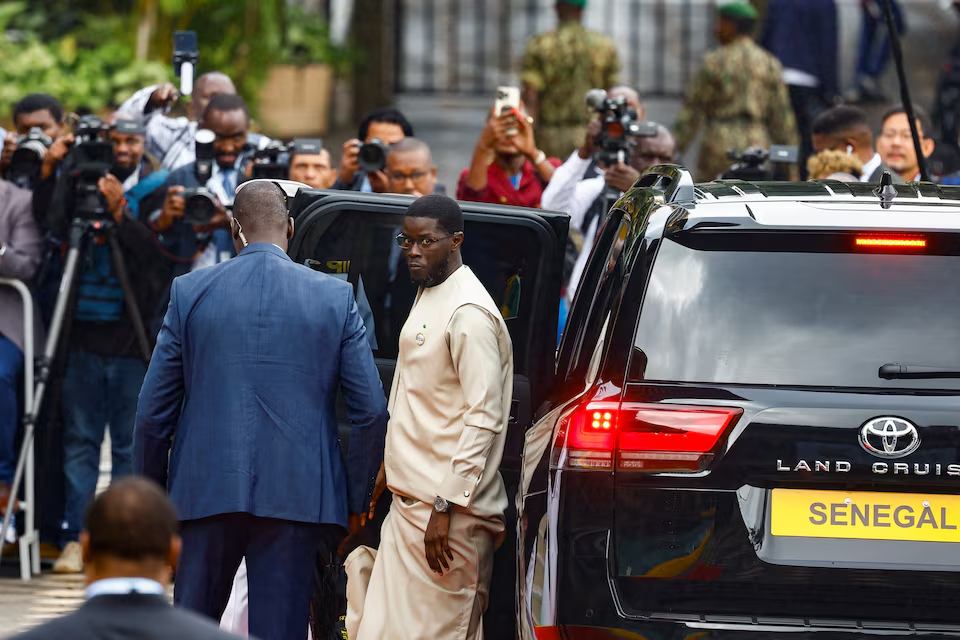
Senegalese President Bassirou Diomaye Faye is preparing to launch his own political party, according to a coalition backing him, a move that confirms a lasting rift with the prime minister he removed from office earlier this year.
Faye has directed senior adviser Aminata Toure to set up a task force responsible for building the new party, the pro-Faye coalition said in a statement issued late Friday. The announcement marks the clearest signal yet that Faye intends to separate himself politically from Pastef, the ruling party he has belonged to throughout his presidency.
Pastef is led by Ousmane Sonko, who served as prime minister until Faye removed him from that role in May. The dismissal capped months of rising tension between the two men, who had governed together since Faye’s election.
Sonko has since taken on a new role as speaker of Senegal’s National Assembly. From that position, he has pushed for constitutional changes that would bar a sitting president from also serving as the leader of a political party, a rule that would directly affect Faye’s current standing within Pastef.
Lawmakers approved those constitutional changes last week. Faye responded by deciding to send the measure to a public referendum rather than allow it to take effect through the legislature alone. Officials have not said when that referendum will take place.
A rift years in the making
The split between Faye and Sonko has been building for months, even as the two men once presented a unified front. Sonko had been widely viewed as the political force behind Faye’s rise to the presidency, and their alliance shaped the direction of Pastef’s agenda after they took power. The decision to remove Sonko as prime minister in May broke that partnership publicly, though tensions had clearly been building well before then.
Faye’s move to form a separate party goes further than simply distancing himself from Sonko. It signals an intent to build an independent political base rather than continue operating within a party still led by his former prime minister and current rival. Establishing a new party would give Faye direct control over its structure, funding and messaging, rather than sharing influence within Pastef’s existing leadership.
The task force led by Toure will be responsible for working out the details of how the new party takes shape, though the coalition’s statement did not specify a timeline for when it might formally launch or begin recruiting members.
A referendum with high stakes
The constitutional amendment passed by lawmakers last week would have immediate consequences for Faye if it takes effect. Barring a sitting president from leading a political party would force him to either step back from party leadership or abandon plans to build his own political vehicle ahead of the 2027 local elections.
By sending the amendment to a referendum instead of letting the legislative vote stand, Faye has given himself more time and a direct path to challenge the measure before voters rather than accept it through the National Assembly, where Sonko now presides. The move also shifts the fight from an institution where Sonko holds influence to a public vote where Faye can appeal to the broader electorate.
No date has been set for the referendum, leaving open the question of how quickly this standoff will be resolved.
Debt crisis complicates the political fight
The power struggle between Faye and Sonko is playing out against the backdrop of a separate crisis in Senegal, one tied to the discovery of misreported debt figures under the previous government. The revelation has forced the current administration to confront financial and credibility problems left over from its predecessors, adding pressure to a government already dealing with internal division at the top.
Managing that debt crisis while also navigating an open rivalry between the president and the speaker of parliament puts Faye’s administration in a difficult position. Any instability at the leadership level could complicate the country’s ability to respond to the financial fallout, particularly if international lenders or investors are watching how the government handles both issues simultaneously.
Looking toward 2027
Both Faye and Sonko are positioning themselves ahead of local elections scheduled for 2027, a vote that will offer the clearest indication yet of how much support each man commands across Senegal. Local elections often serve as a proxy for national sentiment, and a strong showing for either leader could reshape the balance of power heading into future national contests.
For Faye, launching a new party ahead of those elections would give him a distinct platform to campaign on, separate from Pastef and free of the tensions that have defined his relationship with Sonko this year. For Sonko, retaining control of Pastef and his position as speaker gives him institutional standing and a base to counter Faye’s efforts.
How the referendum plays out, and how each leader performs in the 2027 elections, will likely determine which of the two men holds more lasting influence over Senegalese politics in the years ahead.