
Three sons of Iran’s slain supreme leader, Ayatollah Ali Khamenei, prayed beside his coffin and the coffins of four other family members on Sunday. Mojtaba, the son who took over as supreme leader after his father’s death, did not appear.
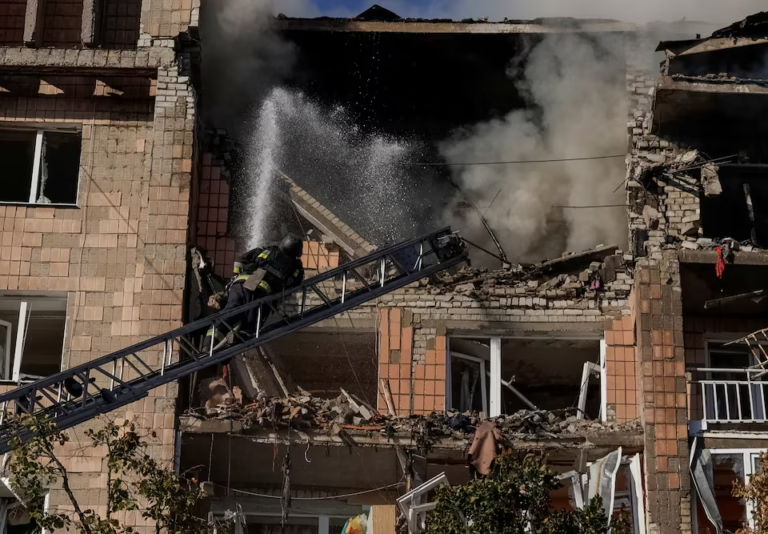
State television showed Mostafa, Meysam and Masoud Khamenei praying behind the coffins, laid out in the courtyard of Tehran’s Imam Khomeini Grand Mosalla, a sprawling religious complex that has become the center of the country’s mourning. Their father died alongside several other family members in an airstrike when the United States and Israel launched a war on Iran on February 28. The strike marked the opening moment of a conflict that would reshape the leadership of the Islamic Republic and test the durability of its clerical system.
The war lasted several weeks before both sides agreed to a shaky ceasefire. It caused death and destruction across the region and left Iran’s theocratic government, backed by the Islamic Revolutionary Guards Corps, in power despite the loss of its top cleric. The Islamic Republic is now staging a week of mass funeral processions for Khamenei, including transporting his remains to Shi’ite religious sites in neighboring Iraq, in what officials are treating as a show of public devotion to the state and to the revolutionary system Khamenei led for more than three decades.
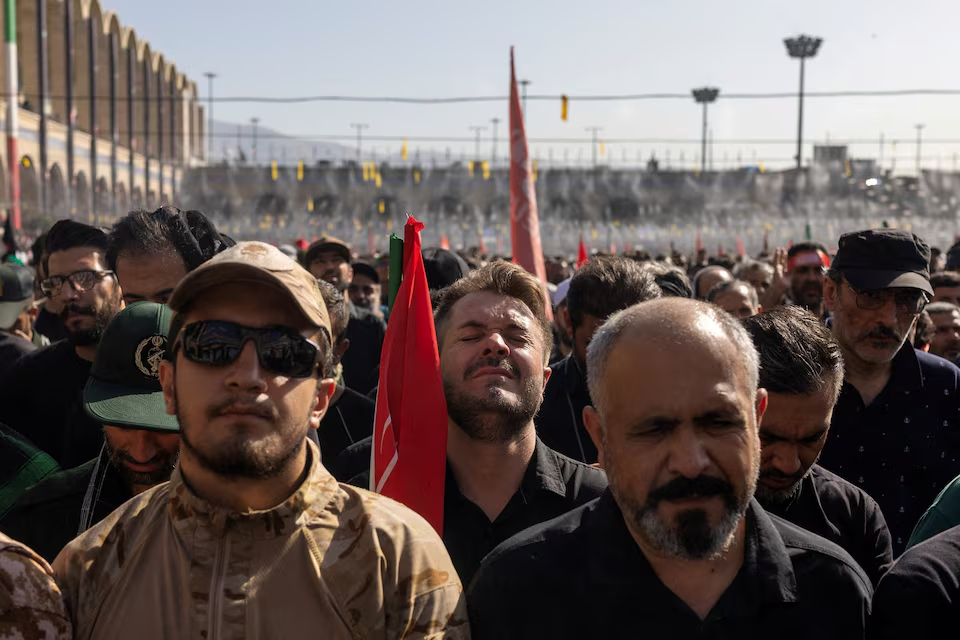
Khamenei’s coffin lay indoors for a day so senior Iranian leaders and foreign officials could pay their respects. On Saturday, it was moved outdoors and displayed under glass alongside the coffins of his daughter, son-in-law, daughter-in-law and 14-month-old granddaughter, all killed in the same strike. The scene drew large crowds who gathered around the courtyard to view the caskets before the formal prayers began.
no sightings of mojtaba
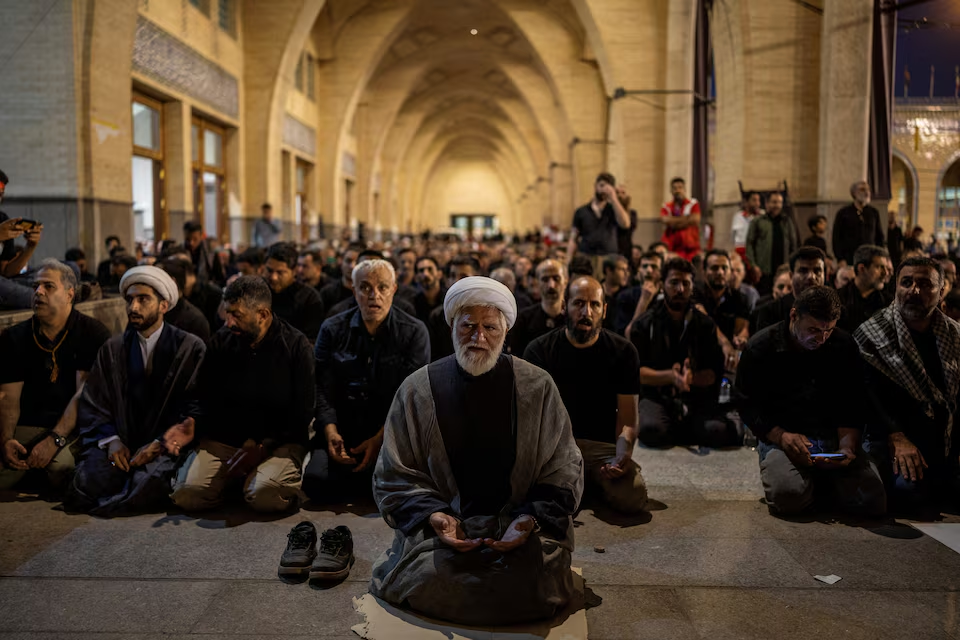
There has been no public sighting or image of Mojtaba Khamenei since the February 28 attack that killed his father and other family members. People close to his inner circle told Reuters his face was disfigured and he suffered a serious injury to one or both legs. His continued absence from public events has fueled speculation in Tehran about the extent of his injuries and when, or whether, he will appear before the public in his new role.
One mourner said she had hoped to see the new supreme leader during the funeral events.
“Until the last moment, before the prayer began, I kept telling those around me that I hoped (Mojtaba Khamenei) himself would come. That was our only wish,” a young woman told the semi-official Tasnim news agency in an interview near the mosalla grounds.
Her comment reflects a broader curiosity among Iranians about their new leader, who has spent decades operating largely behind the scenes compared with his father’s public role as the face of the Islamic Republic. Mojtaba built influence over years within clerical and security circles rather than through public appearances, and his sudden elevation to supreme leader under wartime conditions has left many citizens without a clear picture of him.
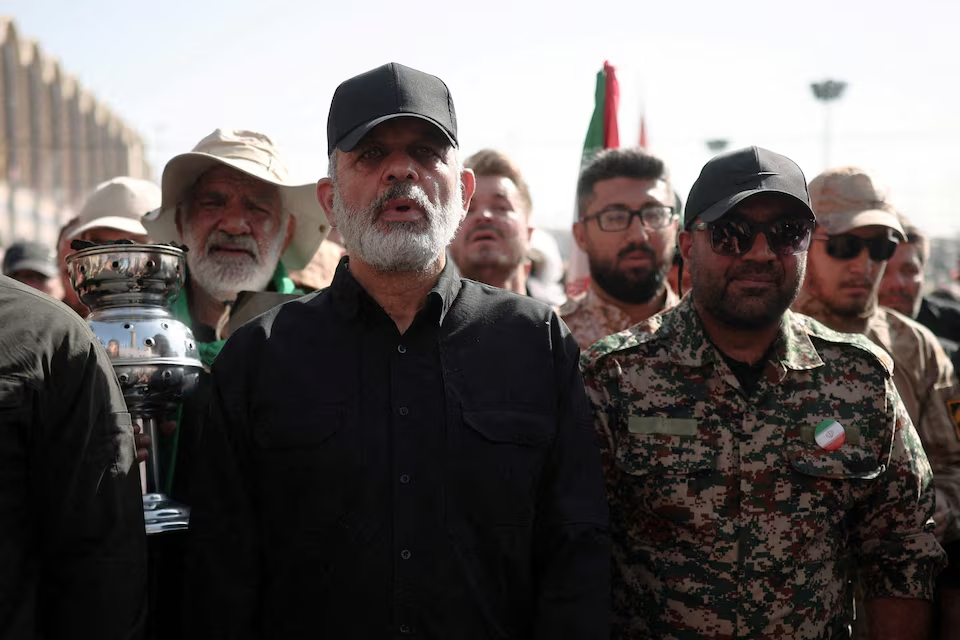
The ceasefire has paused the four-month war under an agreement with Washington that Iranian authorities say will eventually deliver major economic benefits, describing the outcome as a victory over a superpower rather than a defeat. Iranian officials have used state media in recent days to frame the ceasefire and the funeral processions together, presenting both as evidence that the government and its institutions survived the war intact. President Donald Trump told the Axios news website that peace talks between the two countries had been paused for a week to allow for the funeral events to take place without interruption.
On Sunday, Iranian President Masoud Pezeshkian and Parliament Speaker Mohammad Baqer Qalibaf prayed behind the coffins alongside Khamenei’s surviving sons. Masoud Khamenei was seen crying and wiping his tears with a keffiyeh, the checkered scarf that symbolizes militant revolutionary ideals and solidarity with Palestinians in Iran, as an imam recited funeral prayers over the caskets. The presence of the country’s top civilian and legislative officials at the prayers underscored the effort by the state to project unity in the aftermath of the war and the loss of its longtime leader.
iranians flock to central tehran
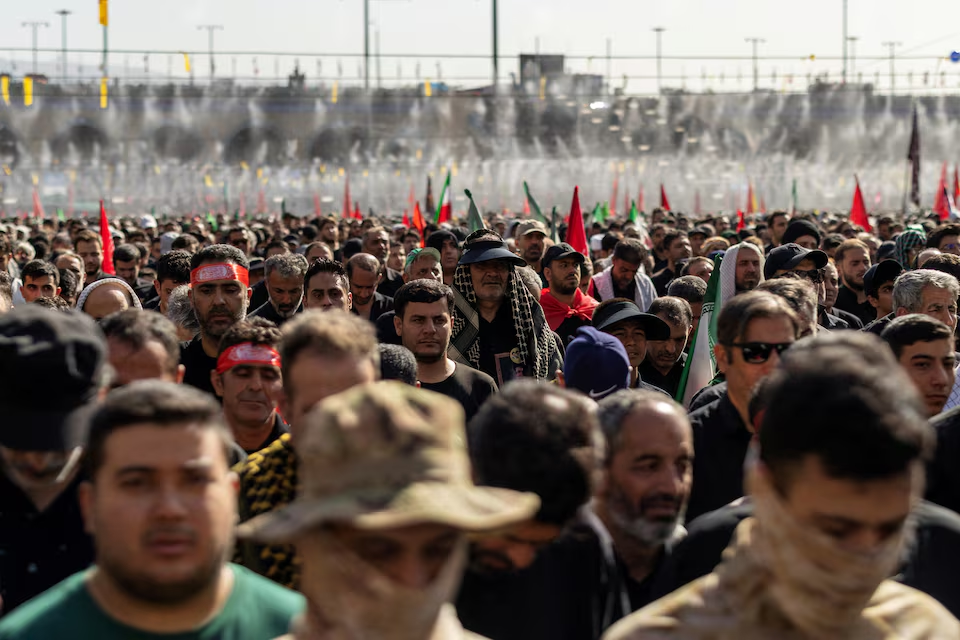
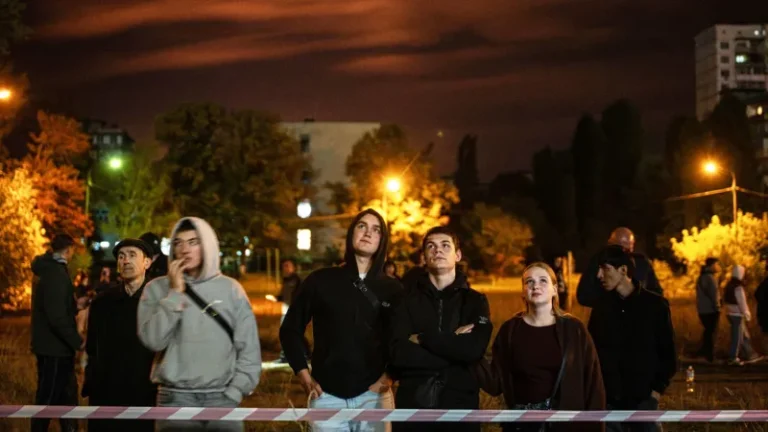
Crowds have packed the Mosalla complex over the past two days, many weeping and some beating their chests in a traditional display of mourning, with large numbers arriving overnight to secure a place near the coffins. Iran’s metro system recorded 7 million trips from late Saturday through Sunday morning as people converged on the city center from across Tehran and surrounding areas, according to the network’s own count. The scale of the turnout has been cited by state media as proof of continued loyalty to the Islamic Republic and to the clerical leadership Khamenei represented for more than 30 years.
Authorities are planning a large procession through central Tehran on Monday, the next stage in a funeral itinerary that will carry Khamenei’s remains well beyond the capital. From Tehran, the remains will travel to Qom, the center of Iran’s Shi’ite religious hierarchy and home to many of the country’s most senior clerics, for ceremonies on Tuesday. The body will then be flown to Iraq for ceremonies at the Shi’ite holy shrine cities of Najaf and Karbala on Wednesday, sites that draw pilgrims from across the Shi’ite world and hold deep religious significance tied to the faith’s early imams. Khamenei will return to Iran on Thursday for another procession in Mashhad before being buried near the tomb of another medieval Shi’ite imam, a burial site chosen for its religious weight within Shi’ite tradition.
Authorities plan to mobilize millions of people for the processions over the coming days, offering transportation, food and lodging to encourage turnout at each stop along the route. The logistics involved, spanning two countries and five cities over the course of a week, reflect the scale authorities are aiming for as they seek to cement Khamenei’s legacy and manage the transition to his son’s leadership at a moment of heightened uncertainty following the war.