
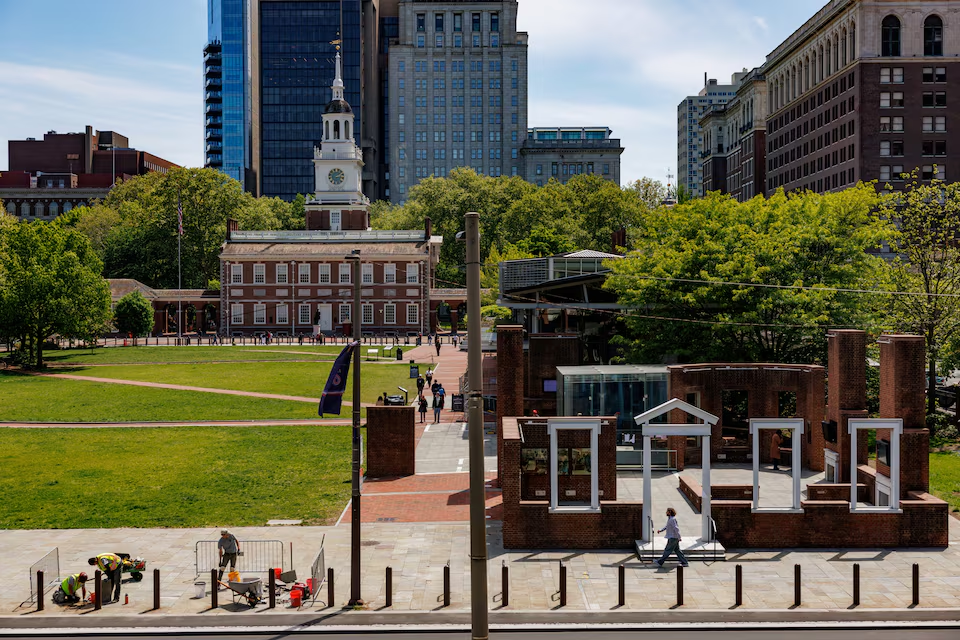
A short walk from Independence Hall, where delegates once argued over the nation’s founding, a different piece of American history is caught in a legal and political fight.
At the President’s House site in Philadelphia, an early residence used by George Washington and John Adams, an outdoor exhibit examines what the National Park Service calls “the paradox between slavery and freedom.” The display centers on the lives of enslaved people, including Oney Judge, a woman enslaved by George and Martha Washington who escaped in 1796 and stayed free despite the Washingtons’ efforts to track her down.
In January, the Park Service removed slavery-related panels from the site. The move followed an executive order President Donald Trump signed last year directing federal agencies and cultural institutions to review programs the order describes as promoting “divisive ideology.” Administration officials say the changes restore balance to institutions they believe focused too heavily on the country’s injustices. Opponents say the changes cut short honest discussion of slavery and race.
The dispute landed in court. A federal judge ordered the panels restored in February, but a federal appeals court ruled last month that the Trump administration could remove and replace the exhibit.
Alan Spears, senior director of cultural resources at the National Parks Conservation Association, said the fight reaches past Philadelphia and raises a broader question: whether historic sites can present history without political interference.
“When you take down those panels, you are sanitizing, softening, whitewashing and erasing American history,” Spears said.
a 250th anniversary caught in a national argument
The dispute comes as the United States approaches its 250th anniversary, a milestone that has sharpened a long-running argument over how the country should tell its own story. One camp wants a focus on founding ideals and national achievement. Another wants an account that includes slavery, the displacement of Indigenous nations, immigration restrictions, exclusion and the fight by marginalized groups to secure the rights the founding documents promised.
Museums, historic sites and parks across the country spent years building programming meant to draw large crowds for the anniversary. Much of that planning has since gotten pulled into fights over historical memory, patriotism and political power.
stonewall museum faces funding losses
In Florida, the Stonewall National Museum Archives and Library, one of the country’s largest LGBTQIA+ archives, is dealing with its own funding problems. President Robert Kesten said corporate and private donors have grown more cautious about backing organizations they see as politically controversial, and the museum expects to lose between $70,000 and $90,000 in county grant funding by the end of the year. Kesten blamed the cuts on Florida Republican officials he said have opposed LGBTQ+ inclusion.
“That’s a hell of a lot of money for an organization like ours to make up,” he said.
The museum’s current exhibit features Baron Friedrich von Steuben, the Prussian officer who helped train George Washington’s Continental Army during the Revolutionary War. Historians have long debated von Steuben’s sexuality, and some scholars and LGBTQ+ advocates point to him as a possible gay figure among the nation’s founders.
Kesten said American history has long favored the stories of white, Christian, heterosexual men. “And if you are anything else, you are expendable,” he said.
museums drawing crowds despite the pressure
Historians, museum leaders and cultural advocates told Reuters the federal push could narrow the range of stories museums and historic sites are able to tell, even as fuller accounts of American history continue to draw large audiences. Last year, the Smithsonian’s National Museum of African American History and Culture in Washington drew 1.4 million visits. The National Museum of the American Indian drew more than 620,000.
The Smithsonian Institution did not respond to a request for comment on whether its museums had changed exhibits or curatorial work in response to Trump’s order, titled “Restoring Truth and Sanity to American History.” The National Museum of African American History and Culture said its programming for the 250th anniversary will focus on the nation’s pursuit of “a more perfect union.”
“History is remembering the full scope of the past, whether it supports or undermines a political goal,” said Howard University history professor Ibram X. Kendi.
grant language shifts, applications drop
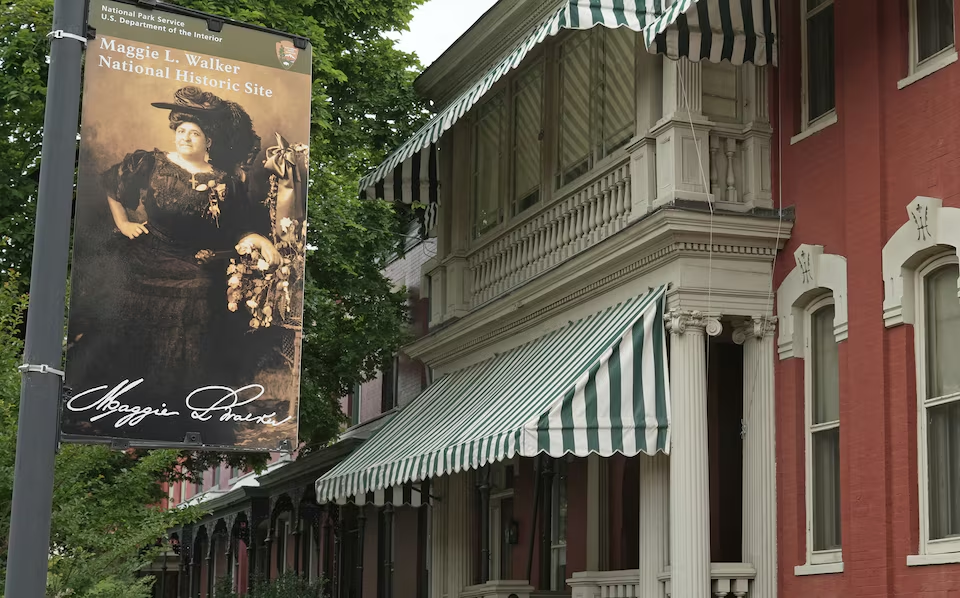
New application language for federal grants tied to African American history and culture led many museums to skip applying this year, according to John Dichtl, president and CEO of the American Association for State and Local History. That shift could leave some longstanding museums facing uncertain finances. The Institute of Museum and Library Services, the small federal agency that distributes the grants, now says it welcomes projects that “foster in all generations a greater appreciation…through uplifting and positive narratives of our shared American experience.”
“It makes one wonder what was pushed out of the way to make room for that,” Dichtl said. The agency did not provide comment.
administration pushback
Administration officials reject the idea that any of this amounts to erasing history. They say the goal is to restore emphasis on the nation’s founding ideals, including freedom of religion and speech, without eliminating difficult chapters of the American story.
The White House-backed Freedom 250 initiative has organized patriotic education programs and public events tied to the anniversary through a public-private partnership. Its “Freedom Trucks,” mobile museums built into tractor-trailers, have toured the country with exhibits on the Declaration of Independence, George Washington and the Revolutionary War, with limited coverage of slavery or the experiences of minorities during the founding era.
“Our role is to integrate different initiatives so Americans can celebrate through one connected experience,” Keith Krach, CEO of Freedom 250, said in a May interview with Reuters.
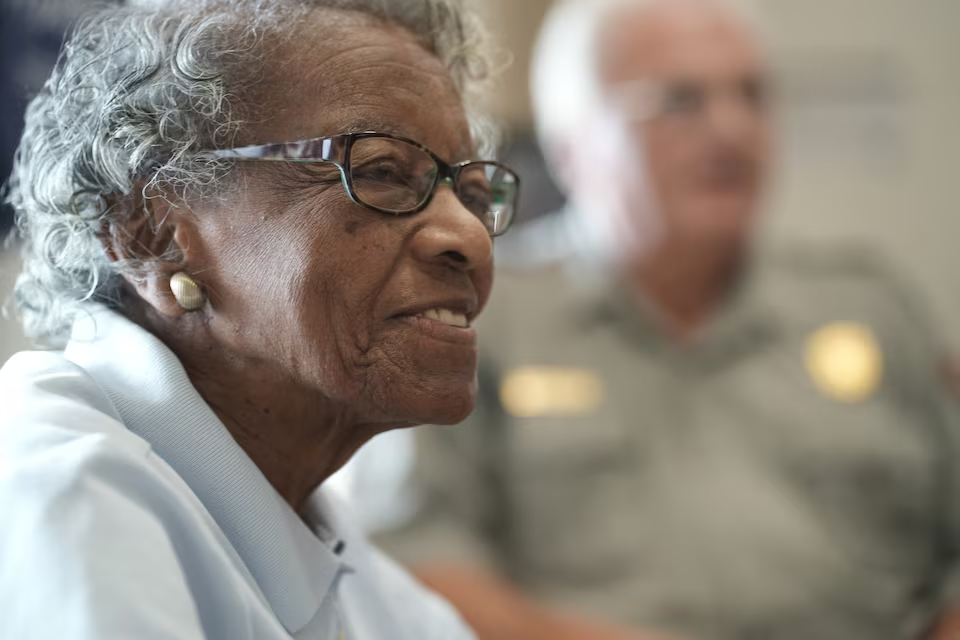
Clifford Murphy, director of the Smithsonian Center for Folklife and Cultural Heritage, said the institution’s work on the 250th anniversary treats American history as both celebration and reflection, even as the broader debate over historical erasure continues.
Kimberlé Crenshaw, a law professor who helped develop critical race theory, said public institutions risk celebrating the founding era while downplaying the harm caused by policies and systems that shaped the country.
“If our mainstream institutions are not going to critically engage with our past, then we have to ask: What is your role in this democracy?” Crenshaw said.
‘a very dark part’ of the past
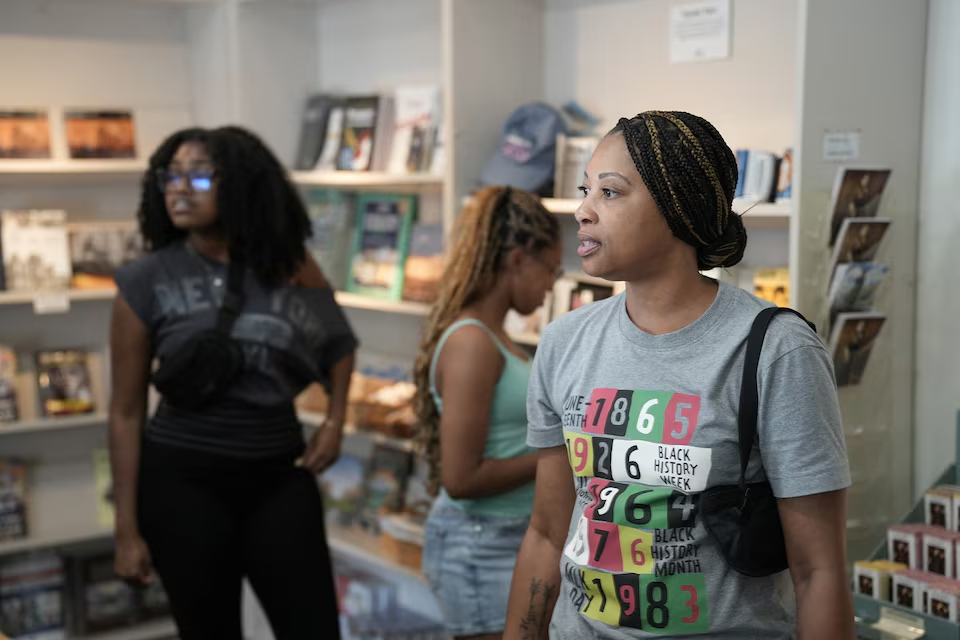
Ann Burroughs, president of the Japanese American National Museum, said preserving difficult history matters. More than 120,000 people of Japanese ancestry, most of them U.S. citizens, were incarcerated during World War II. Burroughs called the camps “a very dark part of American history” and said her museum hasn’t changed its programming under Trump’s order. The museum has since stopped applying for federal grants.
“It (Japanese American history) tells the story of confronting the truth about race and why it’s important for us to stand up against authoritarianism,” she said.
Indigenous advocates say their history has long been left out of American classrooms and public memory, often reduced to a mention around Thanksgiving.
“This has been a continuum of failure, but even more so now,” said Joshua Arce, president of the Partnership With Native Americans nonprofit.