
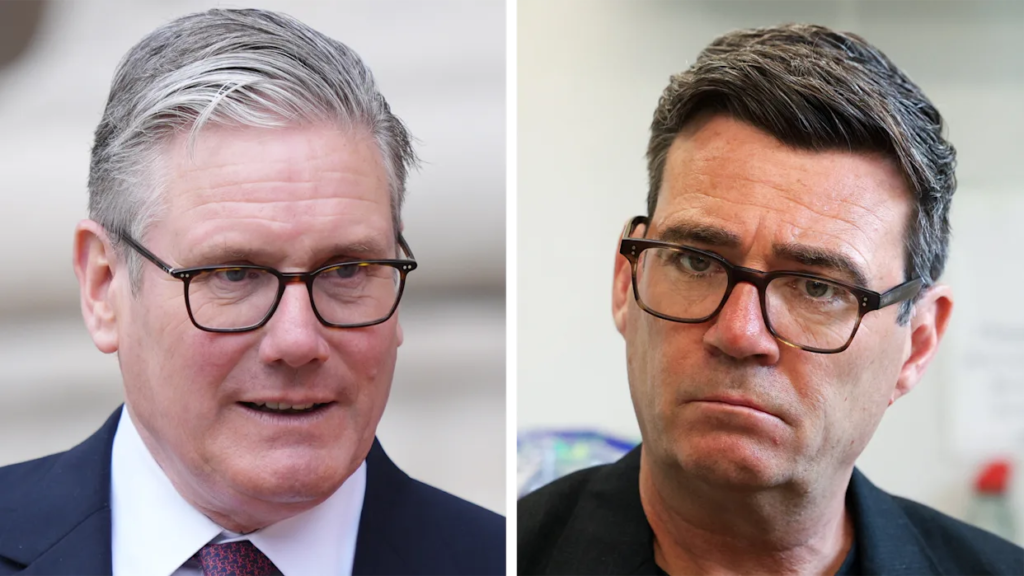
Outgoing British Prime Minister Sir Keir Starmer held private talks with Labour MP Andy Burnham on Tuesday as the governing party begins preparing for a leadership transition that could reshape British politics less than two years after Labour’s landslide election victory.
The meeting, which lasted around an hour, marks the first formal discussion between the two politicians since Burnham returned to Parliament after winning last week’s Makerfield by-election. It comes amid growing expectations that the former Greater Manchester mayor could become Britain’s next prime minister if no serious challenger emerges in the Labour leadership race.
Starmer’s government, already weakened by declining approval ratings and internal divisions, is now focused on ensuring what the outgoing prime minister has described as an “orderly and stable transition of power.”
A Crucial Meeting at a Pivotal Moment
The discussions between Starmer and Burnham took place just one day after the prime minister announced his intention to step down, acknowledging that he no longer had sufficient support within the Parliamentary Labour Party.
According to Downing Street officials, Starmer wants to avoid a prolonged leadership battle that could further damage Labour’s standing with voters and create uncertainty at a difficult economic and political moment for the country.
The meeting is widely viewed as a sign that Burnham is emerging as the frontrunner to succeed Starmer. If no rival secures enough nominations to challenge him, Burnham could officially become Labour leader and prime minister as early as July 17.
Political analysts say the speed of the transition reflects the urgency within Labour to restore stability after months of internal tension and falling public confidence in the government.
Civil Service Access Granted to Leadership Candidates
Starmer has authorised formal access talks between senior civil servants and prospective Labour leadership candidates, a notable step toward the transition. These discussions are designed to prepare potential contenders for the responsibilities of government and typically include detailed briefings on national security, economic policy, and the operation of Whitehall.
A spokesperson for the prime minister confirmed that the talks would begin “as soon as possible” and would continue before formal nominations for the leadership contest close on July 16. While Burnham is currently the only declared candidate, the move ensures that any potential challenger would also have access to government briefings.
The spokesman stressed that Starmer’s priority is to ensure his successor can “hit the ground running” and avoid unnecessary disruption to government operations.
Cabinet Reshuffle Speculation Intensifies
As attention shifts toward a possible Burnham premiership, speculation has grown over who would occupy the key positions in his administration.
One of the biggest questions surrounds the future of Chancellor Rachel Reeves, who has been a central figure in Starmer’s economic team. An ally of Burnham suggested that, should he become prime minister, Reeves could be offered a junior or mid-level cabinet role rather than remaining as chancellor.
“Andy has a great deal of respect for Rachel and values her contribution,” the ally said. “I would expect him to want her in his team.”
Representatives for Burnham have cautioned that no decisions have been made regarding cabinet appointments. Still, the uncertainty has fuelled speculation over who could become Britain’s next finance minister. Several senior Labour figures have been mentioned as potential candidates, including Ed Miliband, Wes Streeting, John Healey, and Yvette Cooper.
Financial markets and business leaders will be watching these decisions closely, given how much economic credibility matters to Labour’s electoral prospects.
James Purnell Tipped for Key Downing Street Role
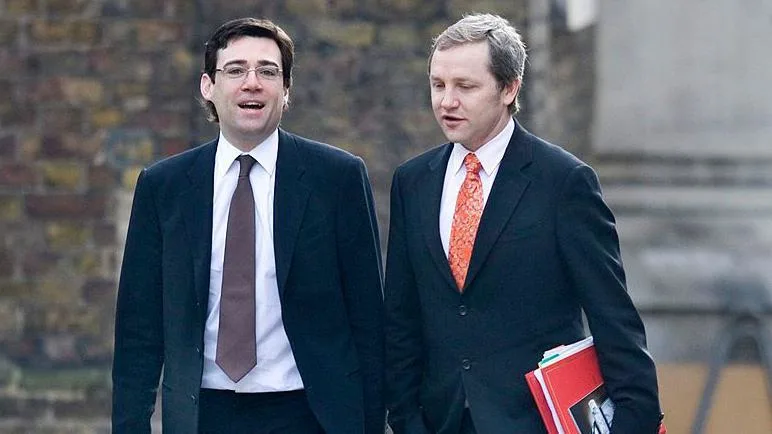
Another development concerns the future leadership of Downing Street itself. According to close allies of Burnham, former Labour cabinet minister James Purnell is expected to become chief of staff if Burnham enters Number 10.
Purnell served in several senior roles under former Prime Minister Gordon Brown, including culture secretary and work and pensions secretary. Since leaving Parliament in 2010, he has built a career outside politics, holding senior positions at the BBC, in higher education, and more recently as chief executive of the strategic consultancy firm Flint Global.
Supporters say Purnell’s experience inside and outside government could provide the managerial expertise needed to stabilise a Labour administration that has struggled to maintain a coherent message.
Starmer Suspends Major Decisions
Starmer has reportedly agreed to postpone major policy announcements and significant spending commitments until a new leader is in place. During Tuesday morning’s cabinet meeting, the prime minister said his priority was ensuring the success of whoever succeeds him.
According to his spokesman, Starmer told ministers he intended to resolve outstanding issues wherever possible and make the transition “as easy as possible.” The delay is designed to prevent the incoming leader from inheriting controversial commitments or being forced to reverse decisions made during the final days of the Starmer administration.
Burnham Yet to Reveal Full Agenda
Despite his growing status as favourite to become prime minister, Burnham has yet to unveil a detailed programme for government. He is expected to deliver a series of speeches over the coming weeks outlining how his leadership would differ from Starmer’s. The first speech is expected to focus on devolution and economic renewal, two issues that have long been central to Burnham’s political philosophy.
The former Greater Manchester mayor has already made several commitments: maintaining Labour’s fiscal rules, avoiding major increases in government borrowing, and honouring the party’s manifesto pledge not to raise the main rates of income tax, VAT, or National Insurance. These positions suggest a Burnham administration would try to reassure financial markets by maintaining fiscal discipline.
At the same time, Burnham has spoken repeatedly about the need for greater public ownership of utilities, expanded council housing programmes, and a strategy to “reindustrialise” Britain. Supporters argue these priorities could help reconnect Labour with working-class voters who have drifted toward populist alternatives.
Possibility of a Leadership Contest Remains
Although Burnham currently appears to have a clear path to the leadership, some Labour MPs remain reluctant to install him as prime minister without a competitive contest.
Cabinet minister Darren Jones and former armed forces minister Al Carns have both been mentioned as potential candidates. Jones has indicated he is not presently inclined to run but wants greater clarity on Burnham’s economic policies before offering support. Carns said he was still considering his options.
“We need to see exactly what policies he intends to pursue before decisions are made,” Carns said in a television interview.
Neither figure has yet shown enough support among MPs to mount a serious challenge.
Labour Faces a Defining Moment
The coming weeks may prove decisive for Labour and for Britain’s political future. Starmer’s resignation has brought an abrupt end to a premiership that began with enormous expectations but gradually lost momentum amid economic challenges, policy reversals, and declining public confidence.
Andy Burnham now stands on the brink of becoming Britain’s next prime minister, with the task of restoring stability, rebuilding trust, and giving the country a renewed sense of direction. Whether he can succeed where Starmer struggled remains one of the biggest questions in British politics. For now, Labour’s focus is clear: manage the transition smoothly and prepare for a new chapter in government.