
The fragile diplomatic opening between the United States and Iran ran into fresh trouble Tuesday after both countries gave sharply different accounts of what was actually agreed during their first round of talks in Switzerland.
President Donald Trump said Iran had accepted unlimited international inspections of its nuclear facilities, calling it a major breakthrough in efforts to prevent Tehran from acquiring nuclear weapons.
“Iran has fully and completely agreed to the highest level nuclear inspections long into the future,” Trump wrote on social media.
Iran rejected the claim almost immediately. Iranian officials said no new commitments had been made on international monitoring of nuclear sites and insisted nuclear issues weren’t formally discussed during the talks at all. The contradiction points to the deep mistrust still shaping relations between Washington and Tehran, even with a recent framework agreement aimed at ending months of conflict in place.
The dueling statements have raised doubts about whether the two sides can turn the preliminary deal into a lasting peace arrangement.
Switzerland Talks Mark First Step Toward Broader Agreement
Negotiators from both countries met in Switzerland on Monday for their first direct talks since the ceasefire agreement was reached last week.
The framework deal, signed after months of escalating tensions and military confrontations, sets a 60-day window for negotiations on several contentious issues: Iran’s nuclear program, sanctions relief, maritime security in the Strait of Hormuz, and regional conflicts involving Iranian-backed groups.
Both sides called the talks constructive. But they left Switzerland with very different readings of the deal’s key provisions.
Trump told supporters at a rally in Pennsylvania that discussions were progressing smoothly. “We’re getting along quite well,” he said.
Iranian officials struck a far more cautious tone, stressing that major disagreements remain unresolved.
Nuclear Programme Remains the Biggest Challenge
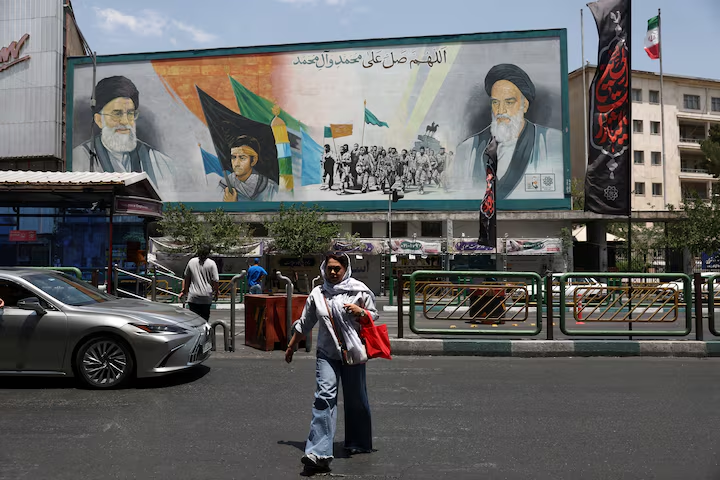
The future of Iran’s nuclear activities is the most sensitive issue on the table.
The preliminary agreement doesn’t impose immediate restrictions on Iran’s nuclear program. Instead, both countries agreed to spend the next 60 days negotiating a more comprehensive framework. Washington believes international inspections are essential to rebuilding trust and stopping Iran from developing nuclear weapons. Tehran maintains, as it has for years, that its nuclear program is peaceful, and says any future inspections must respect its sovereignty and security concerns.
Iran also denied reports that it had invited inspectors from the International Atomic Energy Agency back into the country.
The condition of Iran’s nuclear facilities has grown harder to assess since military strikes reportedly damaged several sites during the recent conflict. International observers say the lack of inspector access makes it difficult to determine the current state of Iran’s nuclear infrastructure.
Disagreement Over Frozen Assets
The two countries also clashed over access to Iranian funds frozen abroad.
Under the framework agreement, the United States agreed to ease certain financial restrictions and allow Iran access to some of its overseas assets. Trump said the released money would go toward humanitarian supplies, including food and medical products from the United States.
Iran’s ambassador to the United Nations in Geneva, Ali Bahreini, rejected that claim. He said Iran would decide independently how any unfrozen assets would be spent, and that no conditions had been attached to the funds.
Washington worries that financial relief could strengthen Tehran’s regional influence. Iranian officials counter that access to their own money shouldn’t come with political strings attached.
Strait of Hormuz Reopens, But Concerns Remain
One immediate effect of the agreement has been the reopening of the Strait of Hormuz, one of the world’s most strategically important shipping routes. The narrow waterway carries around 20 percent of global oil and liquefied natural gas shipments, and any disruption there can send energy prices sharply higher.
The reopening has already moved global markets. Oil prices fell Tuesday to their lowest levels since before the conflict began in late February. The United Nations’ shipping agency said it was helping evacuate roughly 11,000 seafarers stranded during the period of heightened tensions.
Uncertainty remains, though. The current agreement guarantees free navigation through the strait for 60 days, and Iran has signaled it could consider imposing fees or other charges on shipping traffic once that window closes.
Iran and neighboring Oman, which shares control of the waterway, released a joint statement reaffirming their sovereign rights and pledging to cooperate on managing maritime traffic. U.S. Secretary of State Marco Rubio rejected any suggestion that Iran could charge tolls in the future, saying such measures would be unacceptable in any final agreement.
Lebanon Remains a Major Obstacle
Another source of tension is the ongoing conflict involving Hezbollah in Lebanon.
The framework agreement calls for an immediate end to hostilities throughout the region, including Lebanon. Both sides understand that requirement very differently. Iranian officials say the deal requires Israel to withdraw its forces from Lebanese territory. Israel rejects that interpretation outright. Israeli leaders insist they will maintain a security zone in southern Lebanon and reserve the right to act against threats from Hezbollah.
Tensions stayed high Tuesday after Lebanese state media reported that Israeli gunfire killed two people in southern Lebanon. Hezbollah condemned the incident and accused Israel of violating the ceasefire. Continued fighting in Lebanon could quickly undermine the broader diplomatic process between Washington and Tehran.
American Public Divided Over the Deal
Public opinion in the United States appears deeply divided over the agreement. A Reuters/Ipsos poll found that 35 percent of Americans believe the United States is now in a weaker position with Iran than before the conflict, while only 23 percent think Washington has emerged stronger.
The divide has surfaced in Congress too. The Republican-controlled Senate recently voted in favor of a largely symbolic measure seeking to halt the conflict, exposing disagreements within Trump’s own party over the costs and direction of U.S. policy toward Iran.
A Fragile Path Forward
For now, both Washington and Tehran remain committed to continuing negotiations. The reopening of the Strait of Hormuz and the easing of immediate military tensions have brought some optimism. But the conflicting statements over nuclear inspections, frozen assets, and regional security show just how fragile the diplomatic process still is.
The next two months will likely determine whether the framework agreement grows into a lasting settlement or becomes another failed chapter in the long, troubled relationship between the United States and Iran.