
Vice President JD Vance said Monday that Iran had agreed to let international nuclear inspectors back into the country, following the first round of direct talks in Switzerland. Washington frames this as part of a broader push to turn a shaky ceasefire into something more permanent.
Iran’s foreign ministry pushed back almost immediately, saying no new commitments had been made. The International Atomic Energy Agency, the UN’s nuclear watchdog, didn’t confirm Vance’s version either.
That disagreement adds another layer of uncertainty to talks that are already fragile, talks meant to settle Iran’s nuclear programme, regional security, and the future of sanctions.
Vance Calls Inspector Access a Breakthrough
At a news conference in Switzerland, Vance called the reported agreement an important step. He said Iran’s decision to invite inspectors back would mark a major milestone and the start of what Washington sees as a path toward ending any nuclear weapons development in Iran.
He tied the move to the wider talks underway in Switzerland between Iranian and US officials, talks aimed at converting a temporary ceasefire into a structured peace process.
Iranian officials rejected that reading outright. They say the talks produced no new obligations on nuclear inspections.
Iran Says Nothing Has Changed
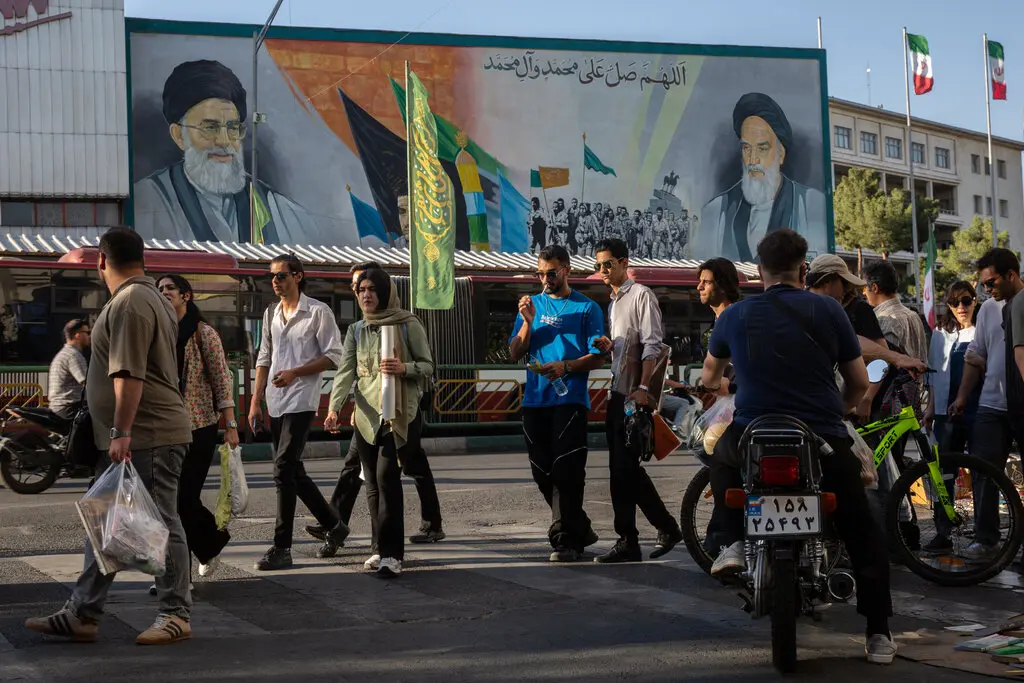
Tehran maintains its position is the same as before the Swiss meetings. Officials say the discussions centered on immediate political and security matters, not technical nuclear access.
Iranian negotiators had walked into the talks expecting to cover several issues: keeping the Israel-Hezbollah ceasefire in Lebanon intact, setting up a framework for continued negotiations, unfreezing Iranian financial assets held abroad, and securing safe shipping through the Strait of Hormuz.
Iran has not confirmed any deal to let inspectors back in or resume monitoring inside the country.
The IAEA Won’t Give a Timeline
The IAEA hasn’t responded directly to Vance’s claim. The agency hasn’t said when, or whether, inspectors will get back into Iranian facilities.
That access has been cut off since last year, when a 12-day conflict between Israel, the United States, and Iran ended with strikes on multiple nuclear sites. Since then, the agency has had to rely on limited monitoring data and remote reporting. No one has set foot inside the facilities to check.
The Uranium Question Nobody Can Answer
One of the thorniest issues on the table is what happened to Iran’s stockpile of highly enriched uranium. Its status has been unclear since last year’s strikes.
Iran says the material was destroyed or buried in the attacks. Independent analysts aren’t so sure, and some warn parts of the stockpile could still be sitting somewhere undisclosed.
Without inspectors on the ground, nobody can verify either version. Rafael Grossi, who heads the IAEA, has said before that most of Iran’s enriched uranium likely survived the strikes, but he’s been clear that this can’t be confirmed without physical access.
A Relationship Already Under Strain
Iran and the IAEA haven’t gotten along well since the war. The agency was already facing pressure after passing a resolution stating Iran wasn’t meeting its nonproliferation obligations in full. Iranian officials accused the watchdog of effectively backing the military strikes that came afterward.
Before the conflict, Iran let inspectors in regularly under earlier international agreements. That cooperation fell apart after the US pulled out of the 2015 nuclear deal under the Trump administration, a move Tehran says broke trust in the whole arrangement.
An Earlier Attempt Already Failed
Late last year, Iran and the IAEA tried to restart cooperation through a new agreement. It didn’t work. Iran said it couldn’t safely let inspectors into facilities that had been damaged or hit in previous strikes, citing security concerns.
With no agreement on terms, monitoring stayed suspended, leaving international oversight with a real gap in it.
Switzerland Talks Cover More Than Inspections
The current round of talks in Switzerland isn’t just about nuclear access. Negotiators are also working through regional stability, sanctions relief, and economic terms tied to the ceasefire.
Officials involved say things are still in early stages, and no final agreement has been reached. A preliminary draft outlines international oversight of uranium processing, including “down blending” enriched material, but Washington and Tehran still disagree on the details.
Two Stories, One Set of Talks
The conflicting statements from Washington and Tehran say a lot about how fragile this process still is. The US is presenting the talks as proof of progress toward dismantling Iran’s weapons capability. Iran says it hasn’t given up anything new and is still focused on regional issues.
Diplomats worry that even if both sides reach a deal, this gap in how they describe it could make actually carrying it out difficult.
The next round of talks is expected to dig into technical details: inspection mechanisms, conditions for sanctions relief, and how to verify Iran’s uranium stockpile.
If inspectors do get back in, it’ll be the first physical access since last year’s conflict. If not, the uncertainty over Iran’s nuclear programme will keep dragging on.
Both sides say they’re still committed to talks. But they can’t even agree on what was said in the room, and that alone shows how far apart they are on the things that actually matter.