Clicxpost

News

The Secret Service reports that a suspect was shot and killed close to the White House security checkpoint

The Secret Service reports

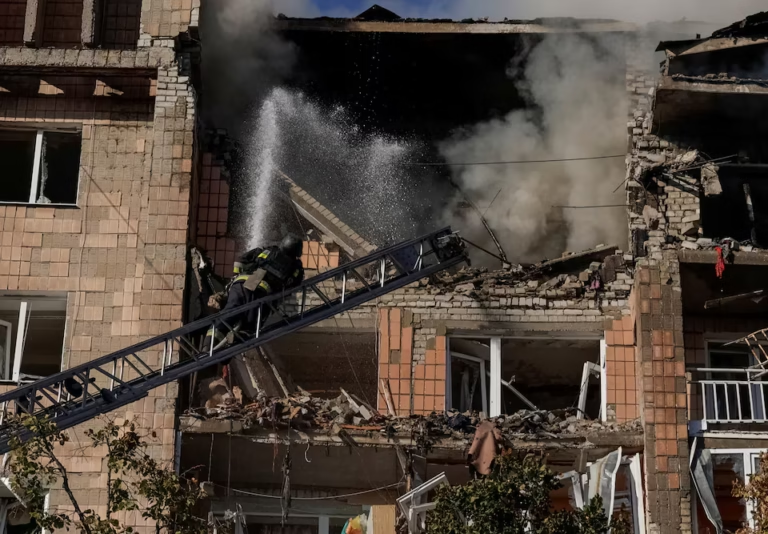
A man who opened fire near a security checkpoint close to the White House on Saturday evening was shot and killed by U.S. Secret Service officers after an exchange of gunfire, marking the latest in a series of security incidents occurring near President Donald Trump in recent weeks.

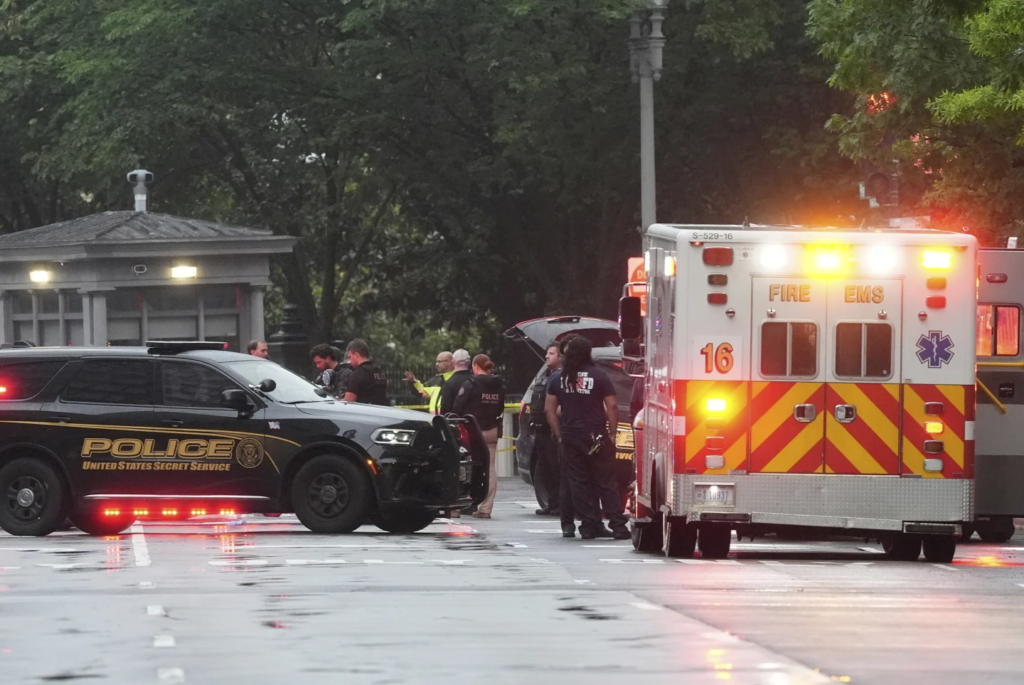
According to the Secret Service, the shooting unfolded shortly after 6 p.m. local time near the intersection of 17th Street and Pennsylvania Avenue, an area situated steps from the White House complex and heavily monitored by federal security personnel.

Authorities said the suspect removed a firearm from a bag and began firing near the checkpoint, prompting officers to respond immediately.

Secret Service agents returned fire, striking the suspect. He was transported to a hospital, where he later died from his injuries.

Officials confirmed that no Secret Service personnel were wounded during the incident and emphasized that President Trump, who was inside the White House at the time, was not harmed.

The event has renewed concerns over the growing number of armed incidents occurring around areas connected to the president.


Suspect Identified as Man Previously Arrested Near White House

Law enforcement officials later identified the suspect as 21-year-old Nasire Best.

Investigators reviewing court records found that Best had previously been arrested in July 2025 after attempting to enter another White House checkpoint without authorization.

According to court documents, officers at the time said he ignored commands to stop and reportedly made unusual statements, including identifying himself as Jesus Christ and expressing a desire to be arrested.

Following that incident, the court issued a pretrial stay-away order — a legal measure intended to prevent a defendant from approaching certain locations or individuals while awaiting further proceedings.

However, records indicate a bench warrant was later issued after Best allegedly failed to comply with court requirements.

Authorities have not yet publicly disclosed whether any ongoing investigations or mental health concerns were linked to Saturday’s shooting.

Federal agencies continue to review the suspect’s background and potential motives.


Third Gunfire Incident Near Trump in One Month
Saturday’s shooting represents the third gun-related security incident connected to areas near President Trump within roughly a month.

The frequency of such events has intensified scrutiny over security arrangements surrounding presidential movements and federal facilities in Washington.

Recent incidents include:

White House Correspondents’ Dinner Shooting Attempt

In late April, authorities reported what investigators described as an attempted attack linked to President Trump during the annual White House Correspondents’ Association Dinner.

Prosecutors allege a suspect breached a security checkpoint inside a Washington hotel and fired a shotgun toward law enforcement personnel.

The accused later pleaded not guilty.


Washington Monument Gunfire Incident

Days later, another shooting occurred near the Washington Monument, only blocks from the White House.

Authorities said officers exchanged fire with a suspect in that case as well.

A teenage bystander was injured during the incident.

These repeated events have placed federal security agencies under pressure as they respond to an increasingly volatile environment.


Bystander Injured During Saturday Shooting
Authorities confirmed that a civilian was also injured during Saturday’s exchange of gunfire.

However, investigators have not determined whether the person was struck by bullets fired by the suspect or during the return fire by officers.

The victim’s condition has not been fully detailed.

Forensic teams are reviewing ballistic evidence and surveillance footage to reconstruct the sequence of events.

Officials stressed that determining the exact origin of the injury remains a key part of the investigation.


Crime Scene Transformed Into Major Investigation Site

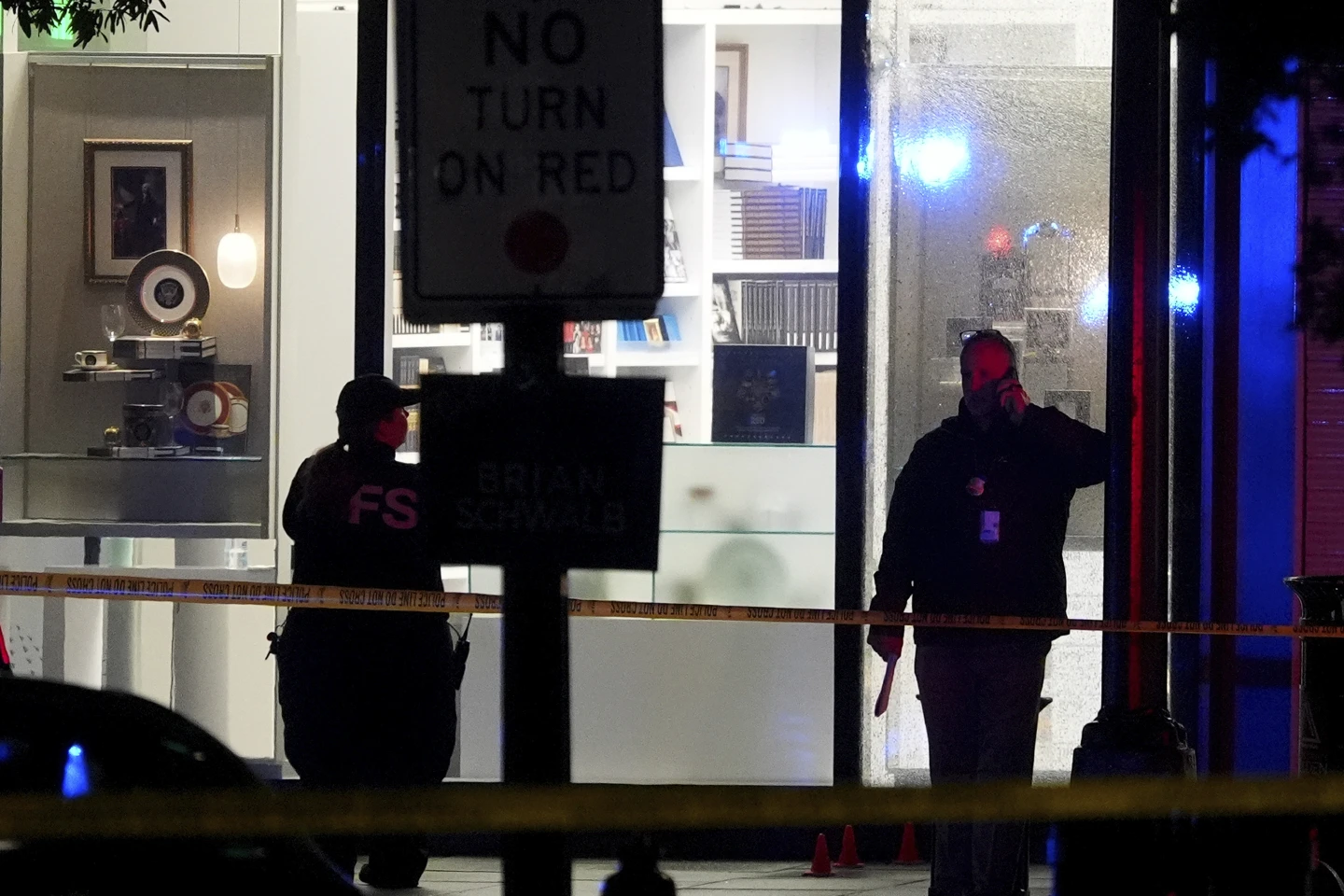
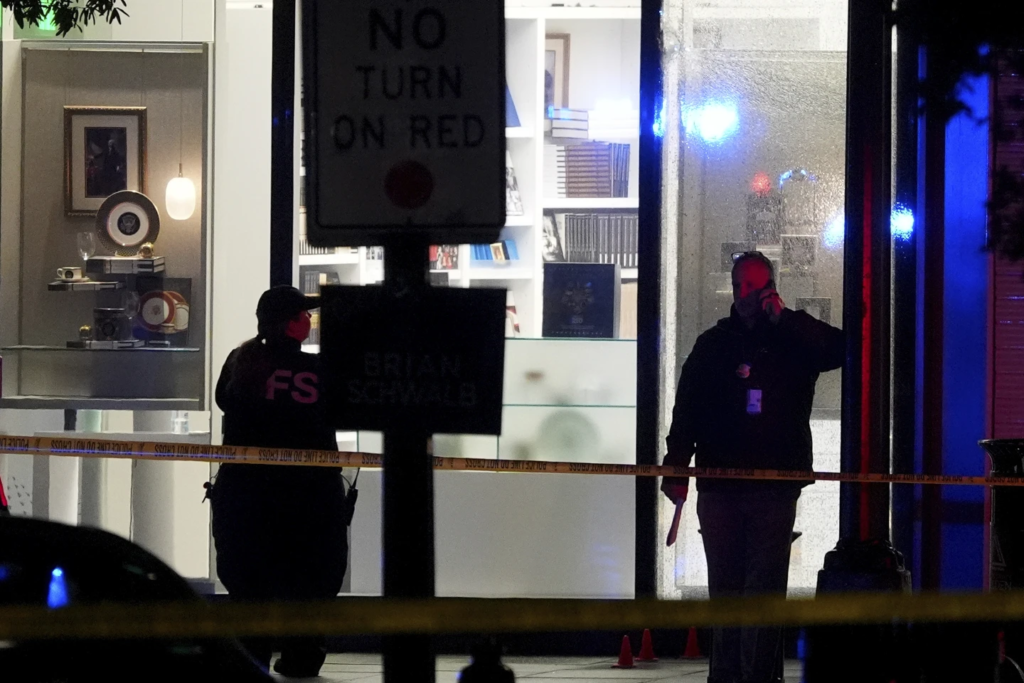
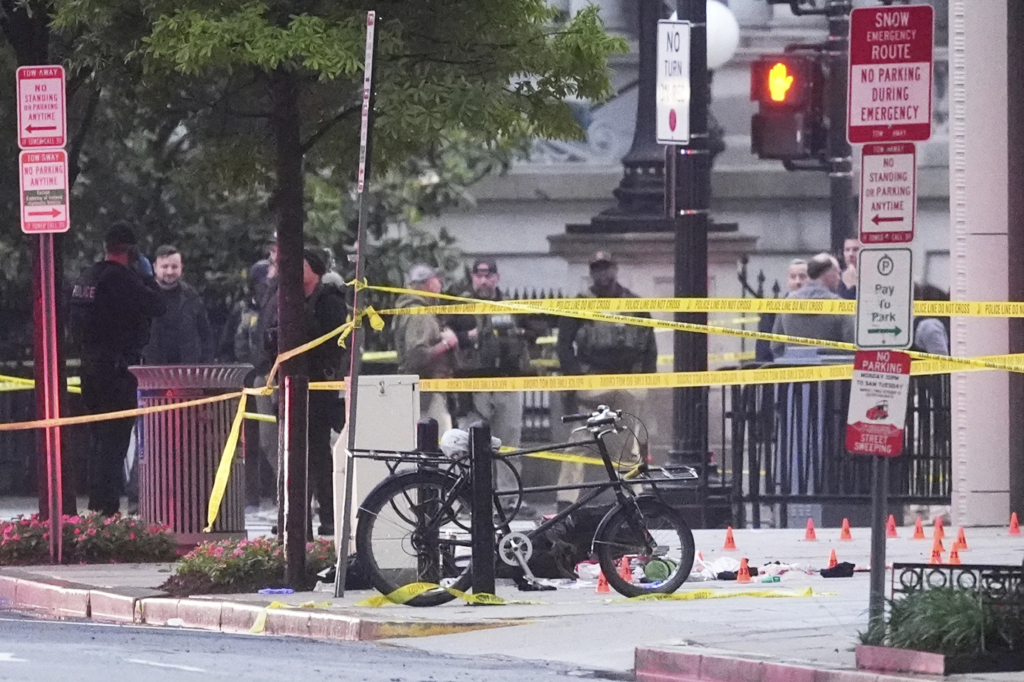
Hours after the shooting, the area outside the White House remained sealed off as investigators processed evidence.

Witnesses described an extensive crime scene stretching across sidewalks near the White House perimeter.

Yellow police tape surrounded the area while investigators marked evidence locations with dozens of orange markers.

Medical supplies and emergency response equipment remained visible at the scene, indicating the scale of the response.

Security personnel and forensic specialists continued working late into the evening collecting shell casings, reviewing trajectories and documenting evidence.

The incident temporarily disrupted pedestrian movement around parts of the White House grounds.


Journalists Forced Into Shelter as Gunfire Rang Out
Members of the White House press corps working nearby experienced the shooting firsthand.

Journalists stationed in media tents along the White House driveway reported hearing multiple gunshots and were instructed to immediately seek shelter.

Several correspondents described moments of confusion as the sound of rapid gunfire echoed across the complex.

One widely circulated video posted online captured a television journalist filming a routine update when gunfire suddenly erupted in the background.

The footage showed the reporter quickly ducking for cover as shots continued.

The video gained millions of views within hours, highlighting how quickly security incidents around the White House can unfold in full public view.


Shooting Occurred Near Site of Previous Deadly Attack
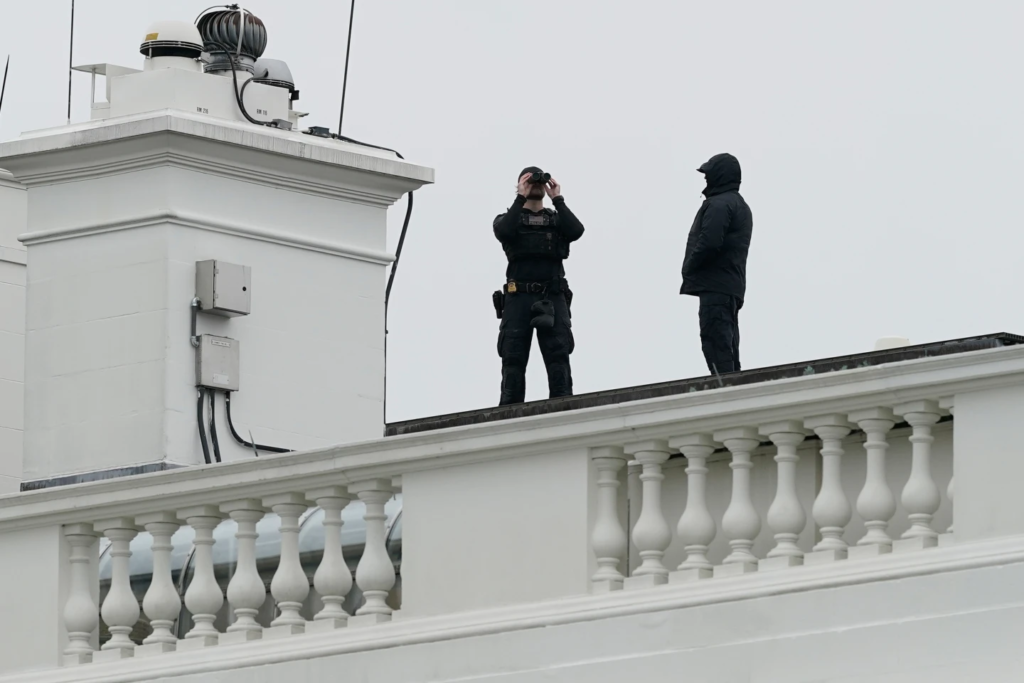
Saturday’s violence occurred within walking distance of another high-profile shooting that shook Washington last year.

In November, two members of the West Virginia National Guard were ambushed nearby.

Twenty-year-old Army Specialist Sarah Beckstrom died from injuries sustained in the attack, while Staff Sergeant Andrew Wolfe was critically wounded.

The suspect in that case was later charged.

The proximity of the latest shooting to previous incidents has intensified concerns about security in areas surrounding federal institutions.


Trump Remained at White House After Weekend Plans Changed

President Trump was reportedly inside the White House during Saturday’s incident.

Officials stated he was not directly affected.

The president had originally planned to spend the weekend at his golf property in New Jersey but changed those plans a day earlier and remained in Washington.

The reason for the scheduling adjustment was not publicly linked to the shooting.

Nonetheless, the timing has drawn attention as security agencies continue managing a series of incidents near locations connected to the president.


Rising Security Challenges Around the Presidency

The latest shooting underscores the increasingly complex security environment facing federal authorities.

While the White House remains one of the most heavily protected sites in the world, repeated incidents involving firearms near presidential events and landmarks have highlighted evolving threats.

Security analysts note that modern protective operations must account not only for organized plots but also unpredictable lone actors operating in highly public spaces.

Saturday’s shooting ended within minutes due to the rapid response of Secret Service officers, but it added another chapter to a month marked by heightened security tensions around the presidency.

Federal investigators are expected to continue reviewing evidence, witness accounts and the suspect’s history as they work to determine what led to the latest gunfire incident outside America’s most protected address.
RECOMMENDED
News

Trump–Xi State Dinner: What Happened and Why It Matters

By George Mensah 7 min read

When and Where the State Dinner Took Place

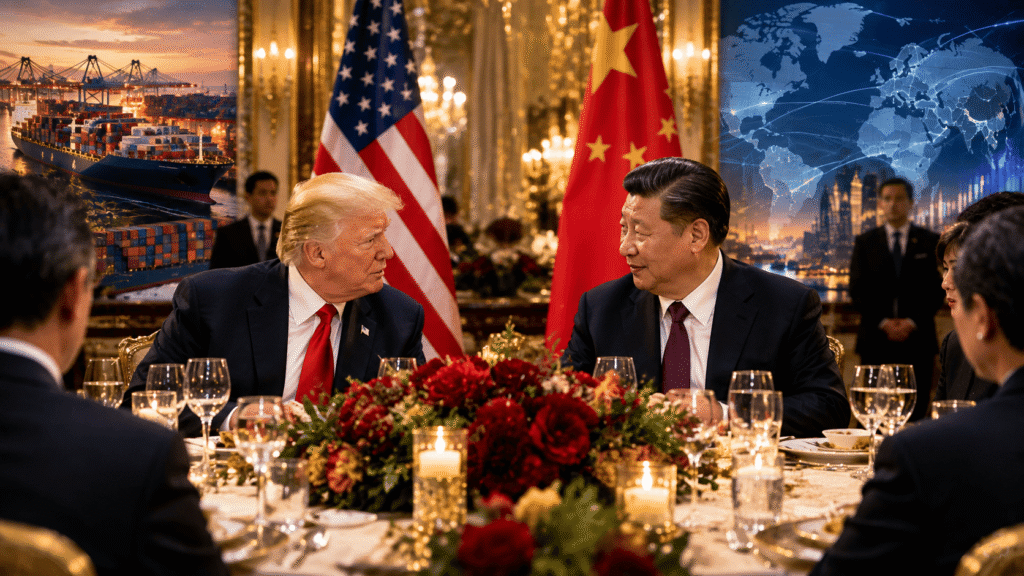
The Trump–Xi state dinner is scheduled to be held in the East Room of the White House in Washington, D.C on September 24, 2026. It followed a day of ceremony which had already been very full — military review in the Rose Garden, flyover, and a closed door meeting of the two leaders of about 90 minutes duration. At nightfall, the atmosphere shifted from tight-fisted diplomatic to candle-lit toasts and fine china.

Who Hosted the Dinner

The evening was hosted by President Donald Trump and his wife Melania Trump. Chinese President Xi Jinping and his wife, Peng Liyuan, attended. The office of Melania Trump said it was her who planned the entire thing, even choosing the wine and the flatware. The red china set used at the table was the one that was often used during Ronald Reagan’s presidency — a slight nod to White House practice.

Why Xi Jinping Was Honored With a State Dinner

It was not simply an ordinary dinner, as it was Xi’s first visit to Washington in 11 years and his second official U.S. state visit ever. It was also convenient, as Trump’s visit to the Chinese capital had come only a few months earlier, in May 2026, after Xi had been the host at the Great Hall of the People. Washington wanted to let him know that the relationship, despite its complexity, was taken seriously by rolling out a state dinner in his honor.

What Was on the Menu for the Trump–Xi State Dinner?

The White House described the menu as one that showcases “American ingredients with subtle Chinese influence.” Notably, there wasn’t a scrap of red meat on the table — the entire meal was pescatarian.

First Course

The menu began with a yellow squash velouté, smoothened and served with a wild mushroom fricassée, fresh herbs, crispy pancetta and a little scallion oil. It seems like a fancy dish on paper, but because it’s a classic and comforting dish, it’s actually just plain old comfort food, this time for company!

Main Course

Next, sesame-crusted sea bass, which has a thin layer of toasted sesame growing on its sides.Then, sea bass with a thin crust of sesame, which is toasted just enough to give the fish a crunch that doesn’t overpower it. It was served over braised baby bok choy and roasted garden eggplant, drizzled with a verdant sauce verde from fresh green herbs.

Dessert

For dessert, the kitchen served a vanilla crémeux with a sour cherry confit center, set on a walnut frangipane and shaped to look like a piece of fruit. Alongside it came a scoop of ice cream made with honey harvested from the White House’s own beehives — a detail Melania Trump introduced back in April when she unveiled the hive on the grounds.

Drinks and Wine Served

The evening opened with a toast of Schramsberg “Blanc de Noir,” a sparkling American wine. That choice wasn’t random — it was the same wine served during the historic 1972 “Toast to Peace” between President Nixon and Chinese Premier Zhou Enlai in Beijing, and it’s become something of a fixture at White House functions involving China ever since.

How the Menu Blended American and Chinese Influences

American Ingredients With Chinese-Inspired Elements

The kitchen leaned on homegrown American produce — squash, mushrooms, eggplant, sea bass — but cooked it with techniques and flavors that nod to China: sesame crusts, bok choy, scallion oil. It’s a small culinary handshake, really, meeting in the middle rather than picking a side.

The Significance of the Menu’s Flavors and Ingredients

Skipping red meat entirely was a quiet statement in itself. Fish-forward menus are common at high-level diplomatic dinners because they’re lighter, easier to pair with wine, and less likely to clash with any dietary customs among guests. It also let the kitchen show restraint instead of going for the classic American steak-and-potatoes approach.

Historical Connections Behind the Meal

The Nixon-era wine reference wasn’t just trivia for the menu card — it tied the entire evening back to the moment that first cracked open U.S.–China relations more than fifty years ago. Whether or not every guest at the table caught the reference, it was clearly meant to frame the dinner as part of a much longer story.

Who Attended the State Dinner?

Trump and Xi Jinping

Both leaders gave toasts during the evening. Trump gifted Xi a gold sculpture of a bald eagle, calling it a symbol of America’s “free and soaring spirit.” Xi, speaking through a translator, described their earlier talks as producing a shared understanding on multiple fronts.

First Lady Melania Trump and Peng Liyuan

Melania Trump and Peng Liyuan had their own separate program earlier in the day while the two presidents met privately, then joined together for the dinner itself.

Notable Political, Business and Diplomatic Guests

The attendees included a who’s-who of American tech. Among the guests were Jeff Bezos, Elon Musk, Mark Zuckerberg, Sundar Pichai, Michael Dell, Jensen Huang, Sam Altman, former Apple CEO Tim Cook, and Citigroup’s Jane Fraser and AMD’s Lisa Su. Tim Cook, Jensen Huang and his wife sat right beside the two presidential couples. Also in attendance were Trump’s extended family, including Melania’s father. Notably, no Anthropic representatives were on the guest list, and reports suggested that the Chinese business leaders who were earlier expected to join the delegation were not a part of the delegation.

Entertainment and Events During the Evening

Musical Performances

Tenor Christopher Macchio, a longtime fixture at Trump events, provided musical entertainment for the evening, backed by a military ensemble.

Special Presentations or Ceremonial Events

Trump used part of the evening to show off ongoing construction on a new White House ballroom, telling guests he wished it had been finished in time to fit even more people into the celebration.

The Evening’s Program and Atmosphere

Between the toasts, the gift exchange, and the music, the night carried the feel of a carefully choreographed performance — equal parts genuine diplomacy and photo opportunity, with both sides clearly aware the cameras were rolling.

State Dinner Protocol and White House Traditions

How a U.S. State Dinner Is Organized

A state dinner is the most formal type of White House social event, reserved for visiting heads of state. Planning usually spans months and covers everything from the guest list to the specific pattern on the china.

Seating Arrangements and Formal Etiquette

Seating at these dinners is never accidental. Placing tech executives like Cook, Huang, and Musk right alongside the two presidents signaled how central the tech and AI relationship is to the broader U.S.–China conversation.

The Role of the First Lady in Planning the Event

Traditionally, the first lady oversees the finer details — menu, flowers, table settings — and this dinner was no exception. Melania Trump’s office was the one that released the official menu details to the press, underscoring just how much of the event fell under her direction.

Trump and Xi’s Broader U.S.–China Meeting

Key Issues Discussed by the Two Leaders

Behind closed doors earlier that day, Trump and Xi covered a lot of ground: artificial intelligence safety, Taiwan, trade, the Iran war, and critical minerals. None of these are small topics, and none of them get fully resolved over a 90-minute meeting — but putting them all on the agenda at once shows how tangled U.S.–China relations have become.

Trade and Economic Relations

Trade remained a central thread, with Trump noting that both countries have been working toward what he called a more balanced trading relationship. Given the tariff battles and tech restrictions of recent years, even modest progress here counts as newsworthy.

Other Areas of U.S.–China Cooperation and Disagreement

Taiwan and AI safety remain the trickiest sticking points, areas where the two governments see the stakes very differently. Critical minerals, meanwhile, have become an increasingly practical concern, since so much of the global tech supply chain depends on materials China controls.

Why This State Dinner Is Significant for U.S.–China Relations

Diplomatic Symbolism of Hosting Xi Jinping

Rolling out a full state dinner for Xi, complete with military pageantry, sent a clear signal: Washington wanted this visit to be seen as a big deal, not a routine meeting.

How State Dinners Are Used in International Diplomacy

Dinners like this exist for a reason beyond good food. They give leaders a lower-pressure setting to build rapport, and they let both governments broadcast a message of stability to their own publics and to the rest of the world.

What the Event Signals About the Relationship

Between the toasts, the gift-giving, and the friendly language from both sides, the dinner suggested a period of cautious warmth — even if the underlying disagreements over trade, Taiwan, and technology haven’t gone anywhere.

Trump–Xi State Dinner: Key Details at a Glance

Detail Information
Date and Location September 24, 2026, East Room, White House
Menu Yellow squash velouté, sesame-crusted sea bass, vanilla crémeux with White House honey ice cream
Hosts and Honored Guest Hosted by Donald and Melania Trump; honoring Xi Jinping and Peng Liyuan
Major Attendees and Entertainment Bezos, Musk, Zuckerberg, Pichai, Cook, Huang, Altman, Su; performance by Christopher Macchio
News

Trump and Xi Meet at the White House, Trade Symbolism for Substance

By George Mensah 5 min read

President Donald Trump hosted Chinese President Xi Jinping at the White House on Thursday for a state visit built around pageantry, but the closed-door talks produced no visible breakthroughs on Taiwan, artificial intelligence, trade, or the war involving Iran.

Xi pressed Washington to oppose “Taiwan independence” during the afternoon meeting, according to a readout issued by China’s state news agency Xinhua shortly after the session ended. The White House had not released its own account of the discussion by Thursday evening.

Taiwan Arms Sales Remain in Question

Xi had been expected to push Trump this week to halt US arms sales to Taiwan. After his trip to Beijing in May, Trump said he was holding back a $14 billion arms package to the island, describing it at the time as a “very good negotiating chip.”

That decision unsettled some US allies in Asia and drew quiet concern from Republicans who worry Trump could trade away support for Taipei to secure economic concessions from Beijing. China claims Taiwan as its own territory and has not ruled out taking it by force.

The summit followed Trump’s speech at the United Nations earlier this week, where he defended his willingness to use military force and said he could “annihilate” Iran. His tone with Xi on Thursday was noticeably different. Analysts point to a shift in leverage between the two leaders since a trade standoff earlier this year that ended with Washington backing down on tariffs.

Trump Emphasizes Personal Ties, Xi Talks Policy

Greeting Xi on Thursday, Trump spoke of a “truly great friendship” between the two men rather than dwelling on policy disputes. He said trade relations had improved since his May visit to China.

“During this visit, we will also discuss pressing issues concerning security, technology, and ‘super intelligence,'” Trump told reporters, using his preferred term for artificial intelligence.

Xi’s remarks carried a different tone. He said the two countries’ interests are closely linked and that competition between them should stay “healthy.” He added that US companies remain welcome in China and said he hopes “Chinese companies are treated fairly here in the United States.” Xi also called for regular military-to-military dialogue between the two nations to reduce the risk of miscalculation.

Edgard Kagan, a former senior White House official for East Asia now at the Center for Strategic and International Studies, said the contrast in approach reflects two different strategies.

“The president is casting it very much as about his personal relationship with Xi,” Kagan said. “What I found interesting was Xi is being much more cautious and suggesting that it’s less about the personal relationship than the national relationship.”

Thursday marked Xi’s first visit to Washington in more than a decade and the second meeting this year between the leaders of the world’s two largest economies.

A Visit Built for Spectacle

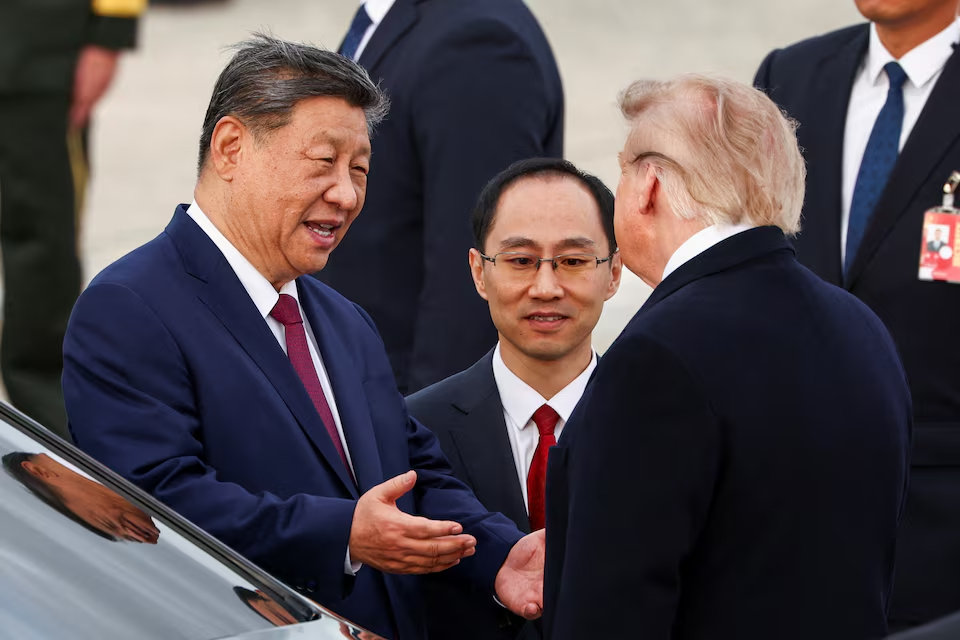
US President Donald Trump welcomes China's President Xi Jinping at Joint Base Andrews

Trump, who has long favored ceremony in his dealings with world leaders, treated the visit as a matter of national prestige as much as diplomacy. Yet the remarks from both leaders were not broadcast live by any major US television network. The networks declined to carry the footage after the White House barred CNN, MS Now, and Politico from the event.

Trump welcomed Xi on Wednesday evening with a red carpet reception at Joint Base Andrews, the first time a US president has greeted a foreign leader there since Barack Obama met Pope Francis in 2015, according to C-SPAN.

On Thursday, the two leaders watched a military ceremony that included a flyover at the Rose Garden. After their private meeting, Trump gave Xi a tour of a newly built helipad on the South Lawn.

“He loves good granite,” Trump told reporters afterward, calling the meeting “great” without offering further detail.

The optics carry political risk for Trump at home. With midterm elections approaching in November and Republicans defending narrow majorities in Congress, voters are already anxious about inflation and the ongoing conflict with Iran. Trump has spent months branding Democrats as “communists,” yet on Thursday he welcomed the head of the Chinese Communist Party as a personal friend, with Chinese flags hung alongside American ones above the Oval Office.

Analysts See Few Real Breakthroughs

Despite the ceremony, few expect the visit to produce major policy shifts. Treasury Secretary Scott Bessent told Fox News on Wednesday, after talks with Chinese Vice Premier He Lifeng, that the two sides had agreed to extend a pause in their trade dispute until January 10.

Trump wrote in a Truth Social post Thursday morning that AI, which he calls “super intelligence,” would be a major topic but signaled little appetite for new regulation, despite warnings from industry figures about the technology’s risks.

“Super Intelligence (SI) will be a big topic of discussion, but I want to leave it exactly where it is,” Trump wrote. “That is China’s position also.”

Xi struck a more cautious note on the same subject, saying both countries must “ensure that the development of AI is always under human control.”

Analysts expect the rivalry between the two nations in AI development to limit any cooperation beyond symbolic statements.

Behind the Scenes, Deeper Disputes Persist

People familiar with the discussions say the talks could yield agreements on lowering some tariffs, curbing drug trafficking, and expanding military dialogue. Trump is also expected to press for the release of Americans detained in China.

Xi holds a stronger hand than he did in earlier rounds of talks. China has posted strong trade growth this year, and Beijing controls much of the global supply of rare earth minerals, giving Xi added leverage in negotiations.

Both leaders have reasons to want stability. Trump remains tied down by an unpopular war involving Iran, while Xi is managing economic pressures at home. Still, disagreements over Taiwan, export controls, artificial intelligence, and the Iran conflict could resurface at any point.

Beijing has shown little willingness to pressure Iran, a longtime ally, into meeting US demands. During Thursday’s meeting, Xi voiced support for a ceasefire between the US and Iran and said he hopes the two sides eventually reach a peace agreement, according to Xinhua.

A Dinner Guest List Heavy With Tech Power

Thursday’s state dinner drew a list of attendees that included Apple’s Tim Cook, Amazon’s Jeff Bezos, Alphabet’s Sundar Pichai, OpenAI’s Sam Altman, Tesla’s Elon Musk, and Nvidia’s Jensen Huang.

Despite the presence of executives eager for looser trade rules, people familiar with US planning say Trump intends to keep existing export controls on American technology in place, controls that Beijing has pushed to have eased.

The state visit closes with both sides claiming progress on narrow issues like tariffs and trade timelines, but with the core disputes over Taiwan, technology, and the broader US-China rivalry left largely where they started.

ADVERTISEMENT
Scroll to Top