
The U.S. Justice Department said Friday it would pursue President Donald Trump’s request to investigate Jeffrey Epstein’s connections to former President Bill Clinton and banking giant JPMorgan Chase – a decision that immediately fueled concerns about political interference inside federal law enforcement.
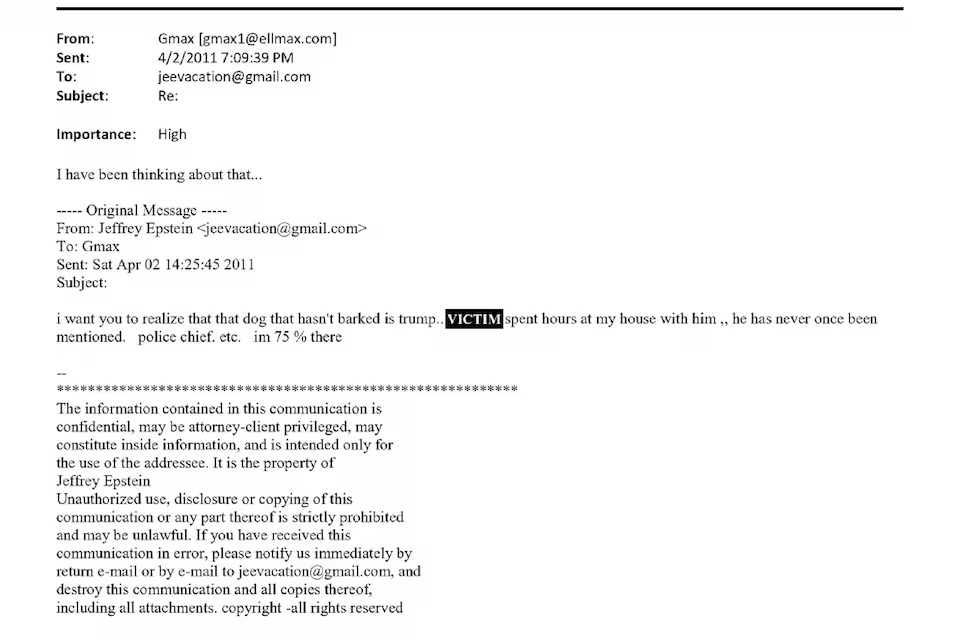
The move comes just 48 hours after a congressional committee released a massive trove of more than 20,000 pages of documents related to the Epstein case. The release revived scrutiny of Trump’s own past interactions with the disgraced financier and appeared to prompt an effort by the White House to redirect public attention.
The new investigation will be overseen by Jay Clayton, the former chair of the SEC and now the top federal prosecutor in Manhattan, Attorney General Pam Bondi said.
A Politically Charged Investigation
The new probe is the latest example of Trump’s pressuring the Justice Department to prosecute high-profile targets he considers political foes. In past cases, former FBI Director James Comey and New York Attorney General Letitia James were indicted only after Trump removed the prosecutors originally overseeing investigations involving them – a sequence critics say undermines the department’s independence.
Legal scholars say the tactic risks backfiring. Courts have the power to dismiss cases deemed to be “vindictive prosecution,” meaning charges brought primarily to punish political opponents rather than pursue justice. Both Comey and James have already raised that argument in motions to dismiss.
Patrick J. Cotter, a former federal prosecutor, denounced Trump’s instruction as “outrageously inappropriate.” “That’s not how it’s supposed to work,” he added.
Trump Widens Targets as New Documents Are Released

Trump’s call to investigate Clinton was just the beginning. He also ordered the Justice Department to investigate:
Larry Summers, former Treasury Secretary,
Meet Reid Hoffman, billionaire founder of LinkedIn and major Democratic donor.
JPMorgan Chase, which counted Epstein as a client from 1998 through 2013.
All three were referenced in the newly released House Oversight Committee documents.
On social media, Trump distanced himself from Epstein and tried to frame the scandal as one that belonged to Democrats:
“Epstein was a Democrat, and he is the Democrat’s problem, not the Republican’s!”
“Don’t waste your time with Trump. I have a country to run.”
But the timing of the directive raised eyebrows. For months, Trump has dodged questions about new revelations surrounding his friendship with Epstein during the 1990s and early 2000s — a period in which the two men frequently socialized in elite circles.
Responses from Clinton, JPMorgan, and Hoffman
JPMorgan, which paid a $290 million settlement to Epstein victims in 2023, said in a statement Friday it regrets its association with Epstein but insisted it did not enable him to commit any of his crimes.
Clinton’s former deputy chief of staff, Angel Urena, dismissed Trump’s accusations:
These emails prove Bill Clinton did nothing and knew nothing. The rest is noise meant to distract from election losses, backfiring shutdowns, and who knows what else.
Hoffman, for his part, publicly demanded full transparency:
“I want this full release because it will show that these calls for baseless investigations are political persecution.
Summers declined to comment.
DOJ Reverses Previous Position
The announcement comes specifically on the back of a July memo by the DOJ-FBI, concluding that no evidence existed to warrant further investigations into uncharged third parties in connection with Epstein.
The memo provided the following information:
There was no “client list” documenting illegal activity.
No credible evidence was found that Epstein blackmailed prominent figures.
Despite those findings, the Justice Department will now pursue Trump’s renewed directive.
Pressure Mounts on Trump Over His Epstein Past
For years, Trump and Epstein were social friends, attending numerous parties and events together. Trump has said he long ago broke off contact with Epstein ahead of the financier’s conviction in 2008 on charges of soliciting a minor.
Still, new revelations have generated unrest even among Trump’s core base. A Reuters/Ipsos poll from October found:
Only 4 in 10 Republicans approved of Trump’s handling of the Epstein files.
Yet 9 in 10 Republicans approved of his overall job performance.
Trump, for his part, has refused to answer reporter questions about Epstein in recent days-a remarkable silence from a president who usually speaks with reporters every day.
Congress Moves to Force Full Disclosure
The political pressure is about to increase. The Republican-controlled House is expected to vote, as early as next week, on a bill that would force the Justice Department to release all Epstein-related documents in its possession.
The measure has wide bipartisan support and is likely to pass despite repeated efforts by House Speaker Mike Johnson to delay or block it.
Then it would need approval from the Senate and a Trump signature to make the mandate take effect, if it clears the House.
Epstein’s Elite Network Under Renewed Scrutiny
While no credible evidence has thus far linked Clinton, Summers, or Hoffman to Epstein’s criminal activities, all three – like many powerful figures – had varying degrees of interaction with him over the years:
Bill Clinton flew on Epstein’s private jet multiple times before 2008.
Larry Summers took donations from Epstein during his tenure at Harvard University.
Reid Hoffman met with Epstein several times for philanthropic and academic fundraising purposes.
Epstein’s connections internationally included ties to high-profile figures such as Prince Andrew, who was stripped of his royal duties in the fallout from his association with Epstein.
A High-Stakes Investigation Led by a Familiar Figure Jay Clayton, who was tapped to helm the new investigation, is a political independent but was chairman of the Securities and Exchange Commission during the first year of Trump’s presidency. His choice is seen as a way to provide a veneer of political neutrality to the investigation. Critics say any investigation opened as a result of pressure from the president carries the risk of being seen as politically motivated. As the controversy deepens, the Epstein case-long considered one of America’s most explosive and disturbing scandals-is again upending the political landscape, raising questions not only about Epstein’s vast network but also about the independence and integrity of federal law enforcement.