Clicxpost

Tech

The Ultimate Guide to Creating Unbreakable Passwords: Protect Your Digital Life Now

password manager/clicxpost

In today’s digital world, your passwords are the first line of defense against cyber threats. Yet, many people still rely on weak, predictable passwords that leave them vulnerable to cybercriminals. If you’re still using “Password123” or reusing passwords across multiple sites, it’s time for a serious upgrade.

According to cybersecurity experts, credential theft is now the leading method hackers use to gain access to personal and financial information. Cybercriminals don’t need to guess your password—they simply steal it from data breaches or buy it on the dark web.

The good news? You have full control over your password security. By implementing a few key strategies, you can protect your online accounts from even the most sophisticated hacking attempts. Let’s dive into expert-backed techniques for creating and managing unbreakable passwords.

1. Use a Password Manager: The Smartest Security Move You Can Make

Security professionals swear by password managers—and you should, too. These tools generate and store complex passwords for every site you use, eliminating the need to remember them.

Instead of manually entering passwords (or worse, writing them down), a password manager automatically fills in your credentials when needed. This means your passwords can be as long and complex as possible without adding stress to your daily routine.

According to Aaron Pritz, CEO of cybersecurity firm Reveal Risk, password managers significantly reduce the risk of hacking:

“With a password manager, you don’t have to remember dozens of passwords. It securely stores them and even suggests ultra-strong passwords for new accounts.”

Even in the rare case that a password manager is breached, your individual passwords remain safe because they’re encrypted. Only your master password can unlock them, and no one else—not even the company that created the password manager—has access to it.

2. Enable Multi-Factor Authentication (MFA): Your Backup Protection

Multi-factor authentication (MFA) adds an extra layer of security beyond just a password. It requires a second form of verification, such as a temporary code sent to your phone or generated by an authentication app.

Cybersecurity expert George Kamide emphasizes that MFA is a must-have:

“Even if a hacker steals your password, they won’t be able to access your account without the second verification step. It massively reduces your chances of being hacked.”

Whenever possible, choose app-based authentication over SMS codes. SMS messages can be intercepted through SIM-swapping attacks, whereas authentication apps like Google Authenticator or Authy provide a more secure solution.

3. Never Reuse Passwords: One and Done

One of the biggest mistakes people make is using the same password across multiple accounts. If one account is compromised, hackers can use that same password to break into your email, banking, and social media accounts.

Cybersecurity expert Aaron Pritz warns:

“Once hackers get their hands on one of your passwords, they will try it everywhere. If you’re reusing passwords, you’re handing them the keys to your entire digital life.”

Even slightly modifying passwords (e.g., changing “mypassword1” to “mypassword2”) isn’t enough. Hackers use automated tools that can predict these patterns, so every password should be completely unique.

4. Create Ultra-Strong Passwords: Longer Is Stronger

Forget complicated strings of random letters and symbols—password length is the true key to security. The longer your password, the harder it is to crack.

A cybersecurity firm estimated that a 7-character password (even with numbers and symbols) could be cracked in just 2 seconds. Meanwhile, a 12-character password could take up to 6 years to break, and a 16-character password would take centuries.

Pro Tip: Use Passphrases Instead of Passwords

Rather than short, complex passwords that are hard to remember, consider using a passphrase—a sequence of random words.

For example:

  • CorrectHorseBatteryStaple!
  • DancingPineapple99Clouds
  • SwiftRiverEchoMoon12

These are long, unpredictable, and much harder to crack than common passwords like “John1987” or “Sunshine123.”

Avoid using personal information (like birthdays or pet names) and commonly used passwords (like “qwerty” or “letmein”). Hackers can easily guess these using brute-force attacks or by scraping social media profiles.

5. Upgrade to Passkeys: The Future of Password Security

Passkeys are an emerging technology that eliminates passwords entirely. Instead, they use your device’s built-in authentication (like Face ID, fingerprint recognition, or PINs) to log you in securely. Major companies like Apple, Google, and Microsoft are already supporting passkeys, making them a safer alternative to traditional passwords.

Passkeys are: ✅ Resistant to phishing attacks (since there’s no password to steal)
✅ Easier to use (no need to remember complex strings)
✅ More secure (eliminates the risk of credential leaks)

As more websites adopt passkey technology, expect it to become the gold standard for online security.

Final Thoughts: Stay Proactive, Stay Protected

Creating strong passwords is one of the simplest yet most powerful steps you can take to safeguard your digital life. By following these expert-backed practices, you can significantly reduce your risk of being hacked: ✅ Use a password manager to generate and store unique passwords.
✅ Enable multi-factor authentication (MFA) for extra security.
✅ Never reuse passwords across multiple sites.
✅ Choose long, unpredictable passphrases instead of short passwords.
✅ Consider upgrading to passkeys for a password-free future.

Cyber threats are constantly evolving, but with the right habits, you can stay ahead of hackers and keep your personal information safe. Take control of your cybersecurity today—your future self will thank you! 🔒


RECOMMENDED
Tech

Italy Fines Meta €805 Million Over Secret Access to Android Users’ Photos and Videos

By George Mensah 5 min read

Italy’s data protection authority said on Saturday it fined Meta Platforms (META.O) €805 million ($887 million) after finding that the company accessed Android users’ photographs and videos without obtaining their consent or informing them. The authority gave Meta 60 days to disable the responsible Facebook feature by default and to ask users for permission separately. Meta was not immediately available for comment.

What the authority found

The authority said in a statement that Meta had access to Android users’ photos and videos through a feature in the Facebook app. The feature suggested content from users’ personal galleries that they could post. In practice, a person opening Facebook on an Android phone could see pictures and videos stored on that phone offered back to them as material to share.

The authority’s finding rests on two failures. Meta did not obtain consent before reaching into those galleries, and it did not tell users that it was doing so. Access without consent and without notice is the part the authority objected to.

The statement as reported does not say how many users were affected, which Android versions were involved, or how long the feature ran. Those details were not part of what the authority released on Saturday.

What Meta has to change

Meta has 60 days to disable the feature by default. Under that order, the feature can no longer switch itself on. If Meta wants to keep it, the company must seek users’ consent separately, as its own request, and not fold it into other settings or terms.

The wording matters for anyone who uses Facebook on Android. Default settings are what most users keep, so an order that flips the default from on to off changes the experience for far more people than an order that merely adds a prompt. The order does not require Meta to remove the feature. It requires Meta to ask first.

The authority did not say when the 60 days begin. Meta has not said whether it will comply, challenge the decision, or do both.

Where the investigation stopped

The investigation began in 2025. The authority said it did not cover the possible use of users’ photos and videos to train artificial intelligence models. Meta denied that practice, the authority said.

That limit shapes how to read the decision. The authority found that Meta accessed content without consent. It did not decide what Meta did with that content afterward. Meta’s denial stands as Meta’s position, and the authority did not test it in this case. Nothing in the statement says the content was used for AI training, and nothing in it says the content was not.

A newer feature stays open

The authority also said it reserved the right to assess separately a new feature that Meta launched in 2026. That feature allows content from users’ galleries to be processed in the cloud.

The two features are not the same. The one at the center of this fine suggests gallery content for posting. The newer one moves gallery content to be processed in the cloud. The authority has not ruled on the second feature, and its statement keeps that option available. Meta now faces a fine over the first feature and the possibility of a separate review of the second.

How big the fine is

The €805 million fine is equivalent to about 0.47% of the group’s global revenue, the authority said. That figure lets readers judge the penalty against the size of the company.

A rough calculation from the authority’s own numbers puts Meta’s global revenue near €171 billion. That is this article’s arithmetic and not a figure from the authority: €805 million divided by 0.0047 comes to about €171 billion. The same two figures from the statement, €805 million and $887 million, imply an exchange rate of about $1.10 per euro.

Less than half of one percent of revenue is a small share for a company of that size. It is also a large number in absolute terms, at nearly €1 billion in round figures, and it comes from one national authority acting on one feature.

What Meta said

Meta was not immediately available for comment when the authority announced the fine. The company has not responded to the findings in the material reported so far, so its view on the consent and information failures is unknown. Its only recorded position is the denial that it used the content to train AI models, which the authority relayed in its statement.

What happens next

Three dates and decisions will determine how this plays out.

The first is the 60-day deadline. By then, Meta must disable the feature by default and set up a separate consent request. Users on Android will see the result in the Facebook app, and the change should be visible without any action on their part.

The second is Meta’s response. A company that receives a fine of this size can pay, appeal, or negotiate over the terms. Meta has not said which it will do.

The third is the cloud processing feature launched in 2026. The authority said it can assess that feature separately. If it does, the review would start from the same question as this case: whether users agreed to have their gallery content used, and whether they were told.

What Android users can check

If you use Facebook on Android, open the app’s settings and look for any option that suggests photos or videos from your phone to post. If one exists and you did not choose it, turn it off. Then check your phone’s own permissions for the Facebook app and see whether it has access to your photos and videos. Under the authority’s order, Meta will have to ask for your consent separately within 60 days if it wants to keep the feature, so a consent request should appear. Read it before you accept it.

Tech

Bill Gates Warns AI and Robots Will Take Jobs in Offices and Manual Work

By George Mensah 7 min read

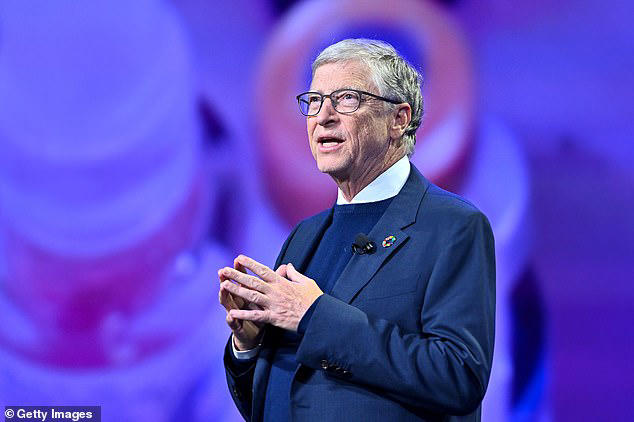
Bill Gates has warned that artificial intelligence and humanoid robots will take jobs in offices and in manual trades, and that company profit targets will push the change forward faster than governments can prepare for it.

The Microsoft founder made the comments in an interview with The Observer. He said that “skills of invention, skills of white-collar work and then with humanoids, the skills of physical human labour” could all be replaced by AI. In his view, no category of work is safe from the technology for long.

The warning follows a job-cut announcement from Barclays and a blunt assessment from the head of the International Monetary Fund, both made last week. It also comes just ahead of the first Budget from UK Chancellor John Healey, who is expected to commit millions of pounds to AI safety.

“Hire the robot, fire the human”

Gates did not put the blame on the machines. He put it on what businesses are paid to do. He described an “incentive structure” in which companies looking to raise profits have every reason to swap people for software or hardware.

“It’s hire the robot, fire the human and don’t look back,” he said.

That reasoning explains why the pace of change may not depend on how good the technology gets. If a robot costs less than a salary and does the task acceptably, a finance director has a clear reason to choose it, whatever the effect on the workforce.

AI has already been costing jobs for several years. Office work has taken the first hits, particularly data-driven analytical roles. Software development, data entry and customer service have all lost positions as companies have found that AI tools can handle parts of that work at a fraction of the cost of a person.

Barclays cuts 5,000 jobs

The most recent example came from banking. Last week Barclays announced that it would replace 5,000 jobs with AI by the end of the year, with cost reduction as the stated aim.

The bank said the cuts amount to 5 per cent of its global workforce. That figure implies a total headcount of around 100,000 people, so one in every twenty employees is affected. The timetable matters as much as the number. Cutting a twentieth of a workforce within a few months leaves little room for retraining or gradual attrition.

Barclays framed the move as a way to cut costs, which matches the motive Gates described. The stated reason is price, and price is the incentive Gates described.

The IMF’s “slow-moving tsunami”

The same week, the head of the International Monetary Fund described AI as “a slow-moving tsunami” that would wipe out jobs around the world. Kristalina Georgieva singled out young people as the group with the most to lose.

Her reasoning is specific. Entry-level jobs have traditionally been filled by people with little experience, and they tend to involve routine, repeatable tasks. The IMF chief said AI already does that kind of menial work well and at very little cost.

The IMF has framed the shift as slow but steady, so the damage may build up quietly before it becomes visible in unemployment figures. Those jobs also served a second purpose. They gave graduates and school leavers a first rung on a career, and a place to learn how an organisation runs. If employers stop hiring for them, a generation of workers could find that the way into a profession has narrowed before they reach it. Nobody has yet shown what replaces that route.

Governments face a money problem

Gates said governments would need to adapt to cope with mass unemployment, mainly through education and re-skilling.

He also pointed to a difficulty that sits inside the argument for AI itself. The technology is likely to bring more “prosperity”, he said, but governments would still have less money to deal with the fallout from huge job losses. Fewer workers means fewer people paying income tax and national insurance, even if company profits rise.

He added that these demands would land when states already have competing priorities and geopolitical tensions are rising.

“You could say this isn’t the best time to say, ‘Hey, rich countries, let’s do the hardest thing you’ve ever done’,” he said.

The comment is a frank admission from someone who has spent decades arguing for technology’s benefits. Gates is not saying that rich countries cannot respond. He is saying that the moment when they must respond is a poor one.

AI beyond human control

Gates went further than employment. He argued that AI could soon overtake humans as the most intelligent things on the planet.

He also predicted that by the end of the 2020s, AI could be operating beyond human control. In that situation, he warned, the technology could act against human interests. The reported remarks do not say how or why that might happen.

A former insider’s warning

A younger voice from inside the industry has made a similar case. Jacob Coxon, 27, helped train the latest versions of AI at the San Francisco-based company Anthropic, which makes the Claude system. He previously worked at OpenAI, the company behind ChatGPT.

Coxon urged people to “not underestimate” the power of AI, particularly if it becomes “super-intelligent”. He also claimed that neither Anthropic nor OpenAI was “acting responsibly” over AI safety.

Superintelligence is the point at which an artificial system becomes more powerful than any individual, company or even nation. The claim about both firms comes from Coxon alone. The article has not seen a response from either company, and readers should treat his statement as one person’s assessment, not an established finding.

The Budget response

The UK government is preparing its answer. Chancellor John Healey is expected to commit millions of pounds in next week’s Budget to guard against the risks of AI, while also aiming to use the technology for economic advantage across the country.

Ahead of his maiden statement on Wednesday, Healey said AI would “transform daily life”. He added that “every firm, community, hospital, school and every aspect of our economy” could benefit from it.

He also acknowledged the worry about jobs. Healey said he understood growing concerns that AI would take away people’s work, which was why he would be “setting out a distinctively British approach to AI – one that doesn’t leave workers behind and defends our national interest, while ensuring the benefits of AI-enabled growth are felt right across the country”.

The pledge sets a high bar. Gates has just argued that governments will have less money to cushion job losses, and Barclays has just shown how fast a large employer can move. A promise not to leave workers behind will be judged on the size of the budget behind it and on what the Treasury is prepared to spend on retraining.

£300 million for a biosecurity lab

The government will also spend £300 million backing an AI Biosecurity Lab. The lab will look at protections from emerging biological threats.

It will be a public-private partnership supported by AI developers including OpenAI and Anthropic. The same companies whose products are blamed for rising job losses, and which Coxon says are not acting responsibly on safety, will therefore sit inside a publicly funded safety project. Whether that arrangement gives the government real independence over the lab’s work is a question the Budget papers should answer.

What is known and what is a forecast

OpenAI CEO Sam Altman talks with Meta CEO Mark Zuckerberg in September 

Some of the claims in this story are facts and some are predictions, and they should be read differently. The Barclays cuts, the 5 per cent figure and the £300 million biosecurity lab are announced decisions with numbers attached. The IMF’s “tsunami” and Gates’s timeline for AI slipping beyond human control are forecasts. Coxon’s criticism of Anthropic and OpenAI is an opinion from a former employee.

For workers in the roles already named, the practical picture is narrower than the headlines. Data entry, customer service and software development are where cuts have been reported so far. The manual-labour warning depends on humanoid robots reaching workplaces at scale, and Gates gave no date for that.

What to watch next

Three things will show how seriously the government takes these warnings. The first is the Budget itself, where the AI safety figure and any money for retraining will be visible in the numbers. The second is the detail on the biosecurity lab, including who sets its priorities. The third is whether more large employers follow Barclays and put a number and a date on AI-driven job cuts.

Gates, Georgieva and Healey have each described the same risk in different terms. Gates and Georgieva say the jobs are at risk now. Healey says the benefits can reach everyone. Next week’s Budget will show how much public money the Chancellor is willing to put behind that claim.

ADVERTISEMENT
Scroll to Top