
The British government has launched a diplomatic effort to reassure Ukraine after a controversial adjustment to its sanctions regime on Russian energy triggered criticism in Kyiv and sparked political controversy at home.
The dispute emerged after the UK introduced temporary exemptions allowing limited imports of certain Russian-derived fuel products despite unveiling what officials described as a broader and tougher sanctions package against Moscow.
Ukrainian officials warned the move could provide Russia with additional financial resources at a critical stage of the war, while British ministers acknowledged communication failures surrounding the announcement.
Temporary Energy Exemptions Trigger Diplomatic Tension
At the center of the controversy is the UK’s updated sanctions framework targeting Russian energy exports.
The new measures, which came into force this week, were initially designed to tighten restrictions on Russian oil products processed through third countries — a route Moscow has increasingly relied upon to maintain export revenues despite Western sanctions.
However, amid growing global energy pressures linked to the conflict involving Iran and disruptions to international fuel markets, London introduced temporary exemptions covering certain products.
Under the revised arrangement, imports of jet fuel and diesel refined from Russian crude may continue on a limited basis. The package also permits fossil gas shipments from two Russian export terminals.
British officials said the exemptions would remain in place for three months before undergoing review.
The government argues the step is intended to protect domestic energy stability while broader sanctions continue to target Russia’s economy.
Kyiv Voices Concern Over Timing
The British government has launched a diplomatic effort to reassure Ukraine after a controversial adjustment to its sanctions regime on Russian energy triggered criticism in Kyiv and sparked political controversy at home.
The dispute emerged after the UK introduced temporary exemptions allowing limited imports of certain Russian-derived fuel products despite unveiling what officials described as a broader and tougher sanctions package against Moscow.
Ukrainian officials warned the move could provide Russia with additional financial resources at a critical stage of the war, while British ministers acknowledged communication failures surrounding the announcement.
Temporary Energy Exemptions Trigger Diplomatic Tension
At the center of the controversy is the UK’s updated sanctions framework targeting Russian energy exports.
The new measures, which came into force this week, were initially designed to tighten restrictions on Russian oil products processed through third countries — a route Moscow has increasingly relied upon to maintain export revenues despite Western sanctions.
However, amid growing global energy pressures linked to the conflict involving Iran and disruptions to international fuel markets, London introduced temporary exemptions covering certain products.
Under the revised arrangement, imports of jet fuel and diesel refined from Russian crude may continue on a limited basis. The package also permits fossil gas shipments from two Russian export terminals.
British officials said the exemptions would remain in place for three months before undergoing review.
The government argues the step is intended to protect domestic energy stability while broader sanctions continue to target Russia’s economy.
Kyiv Voices Concern Over Timing
The policy shift quickly drew concern from Ukrainian officials, who have repeatedly urged allies to intensify economic pressure on Moscow rather than soften restrictions.
Volodymyr Zelenskyy confirmed that Ukrainian representatives had already raised concerns directly with British officials.
Speaking publicly, Zelenskyy emphasized that long-term sanctions remain one of the most effective tools for influencing Russia’s strategic decisions.
He noted that Ukraine had communicated its position to London and expected further discussions on the matter.
Ukrainian officials fear any easing of energy restrictions, even temporary, risks strengthening Russian finances at a time when Kyiv is increasing pressure on Moscow through battlefield operations and strikes on energy infrastructure.
One Ukrainian sanctions official argued that additional revenue generated by Russian exports could ultimately be redirected toward military operations.
British Officials Defend the Policy
Prime Minister Keir Starmer defended the sanctions package, insisting that the temporary licences do not represent a retreat from Britain’s support for Ukraine.
Government officials stressed that the broader package significantly expands restrictions beyond previous measures and includes new limits on maritime services connected to Russian liquefied natural gas and refined petroleum products.
According to Downing Street, temporary licences are a standard mechanism used to manage market transitions and avoid supply disruptions.
Officials argued that similar approaches have been adopted by previous governments and allied countries.
Later discussions between Starmer and Zelenskyy reportedly focused on reaffirming Britain’s commitment to weakening Russia’s war capabilities.
Following the call, British officials reiterated that their objective remains reducing Moscow’s economic strength and limiting Russian energy revenues.
Government Admits Communication Failures
Despite defending the substance of the policy, ministers admitted the rollout had been mishandled.
Trade minister Chris Bryant publicly apologized in Parliament, saying the announcement created an inaccurate impression that Britain was weakening sanctions rather than strengthening them.
Bryant acknowledged coordination issues between departments and accepted responsibility for the confusion.
He argued the intention was always to reinforce restrictions while managing short-term market challenges.
The admission reflected growing pressure on the government as criticism emerged from both opposition politicians and some Labour lawmakers.
Opposition and Allies Criticize Decision
Conservative leader Kemi Badenoch strongly attacked the policy in Parliament, accusing the government of effectively reopening the door to Russian energy.
She argued that any purchases linked to Russian oil could indirectly support Moscow’s military campaign.
Criticism also came from within Labour ranks.
Emily Thornberry said the move risked damaging trust with Ukraine, noting that Britain had long been viewed as one of Kyiv’s strongest allies.
She argued Ukrainian officials felt disappointed after earlier commitments to close loopholes involving Russian oil products.
The backlash highlights the delicate balancing act facing Western governments: maintaining pressure on Moscow while protecting domestic economies from global energy shocks.
Energy Markets and War Pressures Intersect
The controversy comes as geopolitical tensions continue reshaping global energy markets.
Conflict involving Iran has disrupted fuel supplies and pushed prices higher, forcing several countries to reconsider energy security measures.
Britain’s temporary licences appear aimed at preventing further market volatility while broader sanctions remain intact.
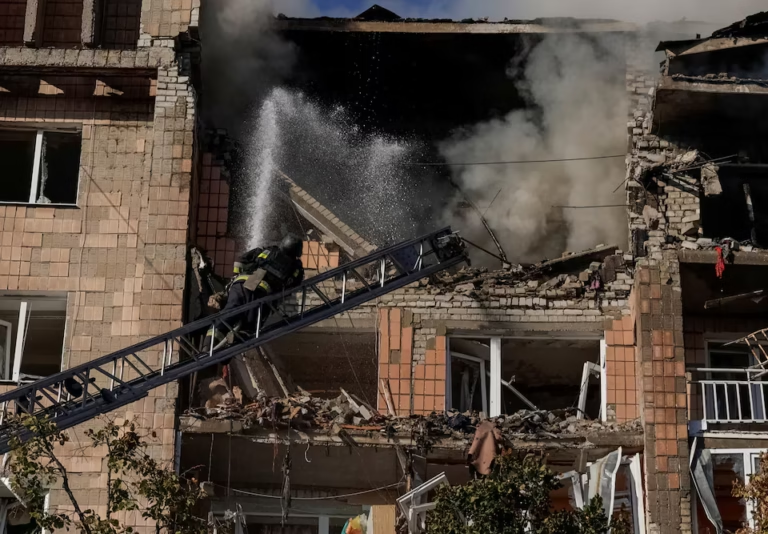
At the same time, Ukraine has intensified attacks against Russian energy infrastructure, targeting ports, refineries and logistics hubs deep inside Russian territory.
Kyiv argues these operations are essential to reducing Moscow’s ability to finance the war.
Zelenskyy recently said strikes on Russian oil assets were producing tangible effects and helping pressure Russia economically.
A Test of Allied Unity
The episode underscores the challenges facing Ukraine’s allies as they navigate wartime diplomacy, sanctions enforcement and energy stability simultaneously.
While Britain insists the revised measures strengthen its overall sanctions architecture, the diplomatic fallout shows how sensitive any adjustment involving Russian energy has become.
For Kyiv, sustained economic pressure remains central to weakening Moscow.
For London, the challenge now is ensuring temporary market measures do not undermine confidence in its long-standing support for Ukraine.
The coming weeks — including further discussions between British and Ukrainian officials — may determine whether the dispute remains a communications issue or evolves into a broader disagreement over sanctions strategy.The British government has launched a diplomatic effort to reassure Ukraine after a controversial adjustment to its sanctions regime on Russian energy triggered criticism in Kyiv and sparked political controversy at home.
The dispute emerged after the UK introduced temporary exemptions allowing limited imports of certain Russian-derived fuel products despite unveiling what officials described as a broader and tougher sanctions package against Moscow.
Ukrainian officials warned the move could provide Russia with additional financial resources at a critical stage of the war, while British ministers acknowledged communication failures surrounding the announcement.
Temporary Energy Exemptions Trigger Diplomatic Tension
At the center of the controversy is the UK’s updated sanctions framework targeting Russian energy exports.
The new measures, which came into force this week, were initially designed to tighten restrictions on Russian oil products processed through third countries — a route Moscow has increasingly relied upon to maintain export revenues despite Western sanctions.
However, amid growing global energy pressures linked to the conflict involving Iran and disruptions to international fuel markets, London introduced temporary exemptions covering certain products.
Under the revised arrangement, imports of jet fuel and diesel refined from Russian crude may continue on a limited basis. The package also permits fossil gas shipments from two Russian export terminals.
British officials said the exemptions would remain in place for three months before undergoing review.
The government argues the step is intended to protect domestic energy stability while broader sanctions continue to target Russia’s economy.
Kyiv Voices Concern Over Timing
The policy shift quickly drew concern from Ukrainian officials, who have repeatedly urged allies to intensify economic pressure on Moscow rather than soften restrictions.
Volodymyr Zelenskyy confirmed that Ukrainian representatives had already raised concerns directly with British officials.
Speaking publicly, Zelenskyy emphasized that long-term sanctions remain one of the most effective tools for influencing Russia’s strategic decisions.
He noted that Ukraine had communicated its position to London and expected further discussions on the matter.
Ukrainian officials fear any easing of energy restrictions, even temporary, risks strengthening Russian finances at a time when Kyiv is increasing pressure on Moscow through battlefield operations and strikes on energy infrastructure.
One Ukrainian sanctions official argued that additional revenue generated by Russian exports could ultimately be redirected toward military operations.
British Officials Defend the Policy
Prime Minister Keir Starmer defended the sanctions package, insisting that the temporary licences do not represent a retreat from Britain’s support for Ukraine.
Government officials stressed that the broader package significantly expands restrictions beyond previous measures and includes new limits on maritime services connected to Russian liquefied natural gas and refined petroleum products.
According to Downing Street, temporary licences are a standard mechanism used to manage market transitions and avoid supply disruptions.
Officials argued that similar approaches have been adopted by previous governments and allied countries.
Later discussions between Starmer and Zelenskyy reportedly focused on reaffirming Britain’s commitment to weakening Russia’s war capabilities.
Following the call, British officials reiterated that their objective remains reducing Moscow’s economic strength and limiting Russian energy revenues.
Government Admits Communication Failures
Despite defending the substance of the policy, ministers admitted the rollout had been mishandled.
Trade minister Chris Bryant publicly apologized in Parliament, saying the announcement created an inaccurate impression that Britain was weakening sanctions rather than strengthening them.
Bryant acknowledged coordination issues between departments and accepted responsibility for the confusion.
He argued the intention was always to reinforce restrictions while managing short-term market challenges.
The admission reflected growing pressure on the government as criticism emerged from both opposition politicians and some Labour lawmakers.
Opposition and Allies Criticize Decision
Conservative leader Kemi Badenoch strongly attacked the policy in Parliament, accusing the government of effectively reopening the door to Russian energy.
She argued that any purchases linked to Russian oil could indirectly support Moscow’s military campaign.
Criticism also came from within Labour ranks.
Emily Thornberry said the move risked damaging trust with Ukraine, noting that Britain had long been viewed as one of Kyiv’s strongest allies.
She argued Ukrainian officials felt disappointed after earlier commitments to close loopholes involving Russian oil products.
The backlash highlights the delicate balancing act facing Western governments: maintaining pressure on Moscow while protecting domestic economies from global energy shocks.
Energy Markets and War Pressures Intersect
The controversy comes as geopolitical tensions continue reshaping global energy markets.
Conflict involving Iran has disrupted fuel supplies and pushed prices higher, forcing several countries to reconsider energy security measures.
Britain’s temporary licences appear aimed at preventing further market volatility while broader sanctions remain intact.
At the same time, Ukraine has intensified attacks against Russian energy infrastructure, targeting ports, refineries and logistics hubs deep inside Russian territory.
Kyiv argues these operations are essential to reducing Moscow’s ability to finance the war.
Zelenskyy recently said strikes on Russian oil assets were producing tangible effects and helping pressure Russia economically.
A Test of Allied Unity
The episode underscores the challenges facing Ukraine’s allies as they navigate wartime diplomacy, sanctions enforcement and energy stability simultaneously.
While Britain insists the revised measures strengthen its overall sanctions architecture, the diplomatic fallout shows how sensitive any adjustment involving Russian energy has become.
For Kyiv, sustained economic pressure remains central to weakening Moscow.
For London, the challenge now is ensuring temporary market measures do not undermine confidence in its long-standing support for Ukraine.
The coming weeks — including further discussions between British and Ukrainian officials — may determine whether the dispute remains a communications issue or evolves into a broader disagreement over sanctions strategy.The British government has launched a diplomatic effort to reassure Ukraine after a controversial adjustment to its sanctions regime on Russian energy triggered criticism in Kyiv and sparked political controversy at home.
The dispute emerged after the UK introduced temporary exemptions allowing limited imports of certain Russian-derived fuel products despite unveiling what officials described as a broader and tougher sanctions package against Moscow.
Ukrainian officials warned the move could provide Russia with additional financial resources at a critical stage of the war, while British ministers acknowledged communication failures surrounding the announcement.
Temporary Energy Exemptions Trigger Diplomatic Tension
At the center of the controversy is the UK’s updated sanctions framework targeting Russian energy exports.
The new measures, which came into force this week, were initially designed to tighten restrictions on Russian oil products processed through third countries — a route Moscow has increasingly relied upon to maintain export revenues despite Western sanctions.
However, amid growing global energy pressures linked to the conflict involving Iran and disruptions to international fuel markets, London introduced temporary exemptions covering certain products.
Under the revised arrangement, imports of jet fuel and diesel refined from Russian crude may continue on a limited basis. The package also permits fossil gas shipments from two Russian export terminals.
British officials said the exemptions would remain in place for three months before undergoing review.
The government argues the step is intended to protect domestic energy stability while broader sanctions continue to target Russia’s economy.
Kyiv Voices Concern Over Timing
The policy shift quickly drew concern from Ukrainian officials, who have repeatedly urged allies to intensify economic pressure on Moscow rather than soften restrictions.
Volodymyr Zelenskyy confirmed that Ukrainian representatives had already raised concerns directly with British officials.
Speaking publicly, Zelenskyy emphasized that long-term sanctions remain one of the most effective tools for influencing Russia’s strategic decisions.
He noted that Ukraine had communicated its position to London and expected further discussions on the matter.
Ukrainian officials fear any easing of energy restrictions, even temporary, risks strengthening Russian finances at a time when Kyiv is increasing pressure on Moscow through battlefield operations and strikes on energy infrastructure.
One Ukrainian sanctions official argued that additional revenue generated by Russian exports could ultimately be redirected toward military operations.
British Officials Defend the Policy
Prime Minister Keir Starmer defended the sanctions package, insisting that the temporary licences do not represent a retreat from Britain’s support for Ukraine.
Government officials stressed that the broader package significantly expands restrictions beyond previous measures and includes new limits on maritime services connected to Russian liquefied natural gas and refined petroleum products.
According to Downing Street, temporary licences are a standard mechanism used to manage market transitions and avoid supply disruptions.
Officials argued that similar approaches have been adopted by previous governments and allied countries.
Later discussions between Starmer and Zelenskyy reportedly focused on reaffirming Britain’s commitment to weakening Russia’s war capabilities.
Following the call, British officials reiterated that their objective remains reducing Moscow’s economic strength and limiting Russian energy revenues.
Government Admits Communication Failures
Despite defending the substance of the policy, ministers admitted the rollout had been mishandled.
Trade minister Chris Bryant publicly apologized in Parliament, saying the announcement created an inaccurate impression that Britain was weakening sanctions rather than strengthening them.
Bryant acknowledged coordination issues between departments and accepted responsibility for the confusion.
He argued the intention was always to reinforce restrictions while managing short-term market challenges.
The admission reflected growing pressure on the government as criticism emerged from both opposition politicians and some Labour lawmakers.
Opposition and Allies Criticize Decision
Conservative leader Kemi Badenoch strongly attacked the policy in Parliament, accusing the government of effectively reopening the door to Russian energy.
She argued that any purchases linked to Russian oil could indirectly support Moscow’s military campaign.
Criticism also came from within Labour ranks.
Emily Thornberry said the move risked damaging trust with Ukraine, noting that Britain had long been viewed as one of Kyiv’s strongest allies.
She argued Ukrainian officials felt disappointed after earlier commitments to close loopholes involving Russian oil products.
The backlash highlights the delicate balancing act facing Western governments: maintaining pressure on Moscow while protecting domestic economies from global energy shocks.
Energy Markets and War Pressures Intersect
The controversy comes as geopolitical tensions continue reshaping global energy markets.
Conflict involving Iran has disrupted fuel supplies and pushed prices higher, forcing several countries to reconsider energy security measures.
Britain’s temporary licences appear aimed at preventing further market volatility while broader sanctions remain intact.
At the same time, Ukraine has intensified attacks against Russian energy infrastructure, targeting ports, refineries and logistics hubs deep inside Russian territory.
Kyiv argues these operations are essential to reducing Moscow’s ability to finance the war.
Zelenskyy recently said strikes on Russian oil assets were producing tangible effects and helping pressure Russia economically.
A Test of Allied Unity
The episode underscores the challenges facing Ukraine’s allies as they navigate wartime diplomacy, sanctions enforcement and energy stability simultaneously.
While Britain insists the revised measures strengthen its overall sanctions architecture, the diplomatic fallout shows how sensitive any adjustment involving Russian energy has become.
For Kyiv, sustained economic pressure remains central to weakening Moscow.
For London, the challenge now is ensuring temporary market measures do not undermine confidence in its long-standing support for Ukraine.
The coming weeks — including further discussions between British and Ukrainian officials — may determine whether the dispute remains a communications issue or evolves into a broader disagreement over sanctions strategy.The British government has launched a diplomatic effort to reassure Ukraine after a controversial adjustment to its sanctions regime on Russian energy triggered criticism in Kyiv and sparked political controversy at home.
The dispute emerged after the UK introduced temporary exemptions allowing limited imports of certain Russian-derived fuel products despite unveiling what officials described as a broader and tougher sanctions package against Moscow.
Ukrainian officials warned the move could provide Russia with additional financial resources at a critical stage of the war, while British ministers acknowledged communication failures surrounding the announcement.
Temporary Energy Exemptions Trigger Diplomatic Tension
At the center of the controversy is the UK’s updated sanctions framework targeting Russian energy exports.
The new measures, which came into force this week, were initially designed to tighten restrictions on Russian oil products processed through third countries — a route Moscow has increasingly relied upon to maintain export revenues despite Western sanctions.
However, amid growing global energy pressures linked to the conflict involving Iran and disruptions to international fuel markets, London introduced temporary exemptions covering certain products.
Under the revised arrangement, imports of jet fuel and diesel refined from Russian crude may continue on a limited basis. The package also permits fossil gas shipments from two Russian export terminals.
British officials said the exemptions would remain in place for three months before undergoing review.
The government argues the step is intended to protect domestic energy stability while broader sanctions continue to target Russia’s economy.
Kyiv Voices Concern Over Timing
The policy shift quickly drew concern from Ukrainian officials, who have repeatedly urged allies to intensify economic pressure on Moscow rather than soften restrictions.
Volodymyr Zelenskyy confirmed that Ukrainian representatives had already raised concerns directly with British officials.
Speaking publicly, Zelenskyy emphasized that long-term sanctions remain one of the most effective tools for influencing Russia’s strategic decisions.
He noted that Ukraine had communicated its position to London and expected further discussions on the matter.
Ukrainian officials fear any easing of energy restrictions, even temporary, risks strengthening Russian finances at a time when Kyiv is increasing pressure on Moscow through battlefield operations and strikes on energy infrastructure.
One Ukrainian sanctions official argued that additional revenue generated by Russian exports could ultimately be redirected toward military operations.
British Officials Defend the Policy
Prime Minister Keir Starmer defended the sanctions package, insisting that the temporary licences do not represent a retreat from Britain’s support for Ukraine.
Government officials stressed that the broader package significantly expands restrictions beyond previous measures and includes new limits on maritime services connected to Russian liquefied natural gas and refined petroleum products.
According to Downing Street, temporary licences are a standard mechanism used to manage market transitions and avoid supply disruptions.
Officials argued that similar approaches have been adopted by previous governments and allied countries.
Later discussions between Starmer and Zelenskyy reportedly focused on reaffirming Britain’s commitment to weakening Russia’s war capabilities.
Following the call, British officials reiterated that their objective remains reducing Moscow’s economic strength and limiting Russian energy revenues.
Government Admits Communication Failures
Despite defending the substance of the policy, ministers admitted the rollout had been mishandled.
Trade minister Chris Bryant publicly apologized in Parliament, saying the announcement created an inaccurate impression that Britain was weakening sanctions rather than strengthening them.
Bryant acknowledged coordination issues between departments and accepted responsibility for the confusion.
He argued the intention was always to reinforce restrictions while managing short-term market challenges.
The admission reflected growing pressure on the government as criticism emerged from both opposition politicians and some Labour lawmakers.
Opposition and Allies Criticize Decision
Conservative leader Kemi Badenoch strongly attacked the policy in Parliament, accusing the government of effectively reopening the door to Russian energy.
She argued that any purchases linked to Russian oil could indirectly support Moscow’s military campaign.
Criticism also came from within Labour ranks.
Emily Thornberry said the move risked damaging trust with Ukraine, noting that Britain had long been viewed as one of Kyiv’s strongest allies.
She argued Ukrainian officials felt disappointed after earlier commitments to close loopholes involving Russian oil products.
The backlash highlights the delicate balancing act facing Western governments: maintaining pressure on Moscow while protecting domestic economies from global energy shocks.
Energy Markets and War Pressures Intersect
The controversy comes as geopolitical tensions continue reshaping global energy markets.
Conflict involving Iran has disrupted fuel supplies and pushed prices higher, forcing several countries to reconsider energy security measures.
Britain’s temporary licences appear aimed at preventing further market volatility while broader sanctions remain intact.
At the same time, Ukraine has intensified attacks against Russian energy infrastructure, targeting ports, refineries and logistics hubs deep inside Russian territory.
Kyiv argues these operations are essential to reducing Moscow’s ability to finance the war.
Zelenskyy recently said strikes on Russian oil assets were producing tangible effects and helping pressure Russia economically.
A Test of Allied Unity
The episode underscores the challenges facing Ukraine’s allies as they navigate wartime diplomacy, sanctions enforcement and energy stability simultaneously.
While Britain insists the revised measures strengthen its overall sanctions architecture, the diplomatic fallout shows how sensitive any adjustment involving Russian energy has become.
For Kyiv, sustained economic pressure remains central to weakening Moscow.
For London, the challenge now is ensuring temporary market measures do not undermine confidence in its long-standing support for Ukraine.
The coming weeks — including further discussions between British and Ukrainian officials — may determine whether the dispute remains a communications issue or evolves into a broader disagreement over sanctions strategy.The British government has launched a diplomatic effort to reassure Ukraine after a controversial adjustment to its sanctions regime on Russian energy triggered criticism in Kyiv and sparked political controversy at home.
The dispute emerged after the UK introduced temporary exemptions allowing limited imports of certain Russian-derived fuel products despite unveiling what officials described as a broader and tougher sanctions package against Moscow.
Ukrainian officials warned the move could provide Russia with additional financial resources at a critical stage of the war, while British ministers acknowledged communication failures surrounding the announcement.
Temporary Energy Exemptions Trigger Diplomatic Tension
At the center of the controversy is the UK’s updated sanctions framework targeting Russian energy exports.
The new measures, which came into force this week, were initially designed to tighten restrictions on Russian oil products processed through third countries — a route Moscow has increasingly relied upon to maintain export revenues despite Western sanctions.
However, amid growing global energy pressures linked to the conflict involving Iran and disruptions to international fuel markets, London introduced temporary exemptions covering certain products.
Under the revised arrangement, imports of jet fuel and diesel refined from Russian crude may continue on a limited basis. The package also permits fossil gas shipments from two Russian export terminals.
British officials said the exemptions would remain in place for three months before undergoing review.
The government argues the step is intended to protect domestic energy stability while broader sanctions continue to target Russia’s economy.
Kyiv Voices Concern Over Timing
The policy shift quickly drew concern from Ukrainian officials, who have repeatedly urged allies to intensify economic pressure on Moscow rather than soften restrictions.
Volodymyr Zelenskyy confirmed that Ukrainian representatives had already raised concerns directly with British officials.
Speaking publicly, Zelenskyy emphasized that long-term sanctions remain one of the most effective tools for influencing Russia’s strategic decisions.
He noted that Ukraine had communicated its position to London and expected further discussions on the matter.
Ukrainian officials fear any easing of energy restrictions, even temporary, risks strengthening Russian finances at a time when Kyiv is increasing pressure on Moscow through battlefield operations and strikes on energy infrastructure.
One Ukrainian sanctions official argued that additional revenue generated by Russian exports could ultimately be redirected toward military operations.
British Officials Defend the Policy
Prime Minister Keir Starmer defended the sanctions package, insisting that the temporary licences do not represent a retreat from Britain’s support for Ukraine.
Government officials stressed that the broader package significantly expands restrictions beyond previous measures and includes new limits on maritime services connected to Russian liquefied natural gas and refined petroleum products.
According to Downing Street, temporary licences are a standard mechanism used to manage market transitions and avoid supply disruptions.
Officials argued that similar approaches have been adopted by previous governments and allied countries.
Later discussions between Starmer and Zelenskyy reportedly focused on reaffirming Britain’s commitment to weakening Russia’s war capabilities.
Following the call, British officials reiterated that their objective remains reducing Moscow’s economic strength and limiting Russian energy revenues.
Government Admits Communication Failures
Despite defending the substance of the policy, ministers admitted the rollout had been mishandled.
Trade minister Chris Bryant publicly apologized in Parliament, saying the announcement created an inaccurate impression that Britain was weakening sanctions rather than strengthening them.
Bryant acknowledged coordination issues between departments and accepted responsibility for the confusion.
He argued the intention was always to reinforce restrictions while managing short-term market challenges.
The admission reflected growing pressure on the government as criticism emerged from both opposition politicians and some Labour lawmakers.
Opposition and Allies Criticize Decision
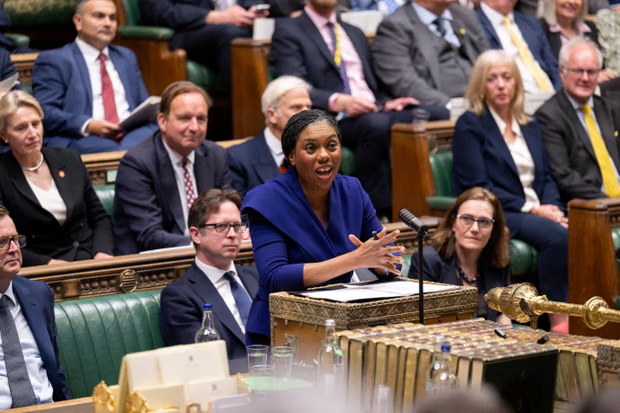
Conservative leader Kemi Badenoch strongly attacked the policy in Parliament, accusing the government of effectively reopening the door to Russian energy.
She argued that any purchases linked to Russian oil could indirectly support Moscow’s military campaign.
Criticism also came from within Labour ranks.
Emily Thornberry said the move risked damaging trust with Ukraine, noting that Britain had long been viewed as one of Kyiv’s strongest allies.
She argued Ukrainian officials felt disappointed after earlier commitments to close loopholes involving Russian oil products.
The backlash highlights the delicate balancing act facing Western governments: maintaining pressure on Moscow while protecting domestic economies from global energy shocks.
Energy Markets and War Pressures Intersect
The controversy comes as geopolitical tensions continue reshaping global energy markets.
Conflict involving Iran has disrupted fuel supplies and pushed prices higher, forcing several countries to reconsider energy security measures.
Britain’s temporary licences appear aimed at preventing further market volatility while broader sanctions remain intact.
At the same time, Ukraine has intensified attacks against Russian energy infrastructure, targeting ports, refineries and logistics hubs deep inside Russian territory.
Kyiv argues these operations are essential to reducing Moscow’s ability to finance the war.
Zelenskyy recently said strikes on Russian oil assets were producing tangible effects and helping pressure Russia economically.
A Test of Allied Unity
The episode underscores the challenges facing Ukraine’s allies as they navigate wartime diplomacy, sanctions enforcement and energy stability simultaneously.
While Britain insists the revised measures strengthen its overall sanctions architecture, the diplomatic fallout shows how sensitive any adjustment involving Russian energy has become.
For Kyiv, sustained economic pressure remains central to weakening Moscow.
For London, the challenge now is ensuring temporary market measures do not undermine confidence in its long-standing support for Ukraine.
The coming weeks — including further discussions between British and Ukrainian officials — may determine whether the dispute remains a communications issue or evolves into a broader disagreement over sanctions strategy.The British government has launched a diplomatic effort to reassure Ukraine after a controversial adjustment to its sanctions regime on Russian energy triggered criticism in Kyiv and sparked political controversy at home.
The dispute emerged after the UK introduced temporary exemptions allowing limited imports of certain Russian-derived fuel products despite unveiling what officials described as a broader and tougher sanctions package against Moscow.
Ukrainian officials warned the move could provide Russia with additional financial resources at a critical stage of the war, while British ministers acknowledged communication failures surrounding the announcement.
Temporary Energy Exemptions Trigger Diplomatic Tension
At the center of the controversy is the UK’s updated sanctions framework targeting Russian energy exports.
The new measures, which came into force this week, were initially designed to tighten restrictions on Russian oil products processed through third countries — a route Moscow has increasingly relied upon to maintain export revenues despite Western sanctions.
However, amid growing global energy pressures linked to the conflict involving Iran and disruptions to international fuel markets, London introduced temporary exemptions covering certain products.
Under the revised arrangement, imports of jet fuel and diesel refined from Russian crude may continue on a limited basis. The package also permits fossil gas shipments from two Russian export terminals.
British officials said the exemptions would remain in place for three months before undergoing review.
The government argues the step is intended to protect domestic energy stability while broader sanctions continue to target Russia’s economy.
Kyiv Voices Concern Over Timing
The policy shift quickly drew concern from Ukrainian officials, who have repeatedly urged allies to intensify economic pressure on Moscow rather than soften restrictions.
Volodymyr Zelenskyy confirmed that Ukrainian representatives had already raised concerns directly with British officials.
Speaking publicly, Zelenskyy emphasized that long-term sanctions remain one of the most effective tools for influencing Russia’s strategic decisions.
He noted that Ukraine had communicated its position to London and expected further discussions on the matter.
Ukrainian officials fear any easing of energy restrictions, even temporary, risks strengthening Russian finances at a time when Kyiv is increasing pressure on Moscow through battlefield operations and strikes on energy infrastructure.
One Ukrainian sanctions official argued that additional revenue generated by Russian exports could ultimately be redirected toward military operations.
British Officials Defend the Policy
Prime Minister Keir Starmer defended the sanctions package, insisting that the temporary licences do not represent a retreat from Britain’s support for Ukraine.
Government officials stressed that the broader package significantly expands restrictions beyond previous measures and includes new limits on maritime services connected to Russian liquefied natural gas and refined petroleum products.
According to Downing Street, temporary licences are a standard mechanism used to manage market transitions and avoid supply disruptions.
Officials argued that similar approaches have been adopted by previous governments and allied countries.
Later discussions between Starmer and Zelenskyy reportedly focused on reaffirming Britain’s commitment to weakening Russia’s war capabilities.
Following the call, British officials reiterated that their objective remains reducing Moscow’s economic strength and limiting Russian energy revenues.
Government Admits Communication Failures
Despite defending the substance of the policy, ministers admitted the rollout had been mishandled.
Trade minister Chris Bryant publicly apologized in Parliament, saying the announcement created an inaccurate impression that Britain was weakening sanctions rather than strengthening them.
Bryant acknowledged coordination issues between departments and accepted responsibility for the confusion.
He argued the intention was always to reinforce restrictions while managing short-term market challenges.
The admission reflected growing pressure on the government as criticism emerged from both opposition politicians and some Labour lawmakers.
Opposition and Allies Criticize Decision
Conservative leader Kemi Badenoch strongly attacked the policy in Parliament, accusing the government of effectively reopening the door to Russian energy.
She argued that any purchases linked to Russian oil could indirectly support Moscow’s military campaign.
Criticism also came from within Labour ranks.
Emily Thornberry said the move risked damaging trust with Ukraine, noting that Britain had long been viewed as one of Kyiv’s strongest allies.
She argued Ukrainian officials felt disappointed after earlier commitments to close loopholes involving Russian oil products.
The backlash highlights the delicate balancing act facing Western governments: maintaining pressure on Moscow while protecting domestic economies from global energy shocks.
Energy Markets and War Pressures Intersect
The controversy comes as geopolitical tensions continue reshaping global energy markets.
Conflict involving Iran has disrupted fuel supplies and pushed prices higher, forcing several countries to reconsider energy security measures.
Britain’s temporary licences appear aimed at preventing further market volatility while broader sanctions remain intact.
At the same time, Ukraine has intensified attacks against Russian energy infrastructure, targeting ports, refineries and logistics hubs deep inside Russian territory.
Kyiv argues these operations are essential to reducing Moscow’s ability to finance the war.
Zelenskyy recently said strikes on Russian oil assets were producing tangible effects and helping pressure Russia economically.
A Test of Allied Unity
The episode underscores the challenges facing Ukraine’s allies as they navigate wartime diplomacy, sanctions enforcement and energy stability simultaneously.
While Britain insists the revised measures strengthen its overall sanctions architecture, the diplomatic fallout shows how sensitive any adjustment involving Russian energy has become.
For Kyiv, sustained economic pressure remains central to weakening Moscow.
For London, the challenge now is ensuring temporary market measures do not undermine confidence in its long-standing support for Ukraine.
The coming weeks — including further discussions between British and Ukrainian officials — may determine whether the dispute remains a communications issue or evolves into a broader disagreement over sanctions strategy.vvvThe British government has launched a diplomatic effort to reassure Ukraine after a controversial adjustment to its sanctions regime on Russian energy triggered criticism in Kyiv and sparked political controversy at home.
The dispute emerged after the UK introduced temporary exemptions allowing limited imports of certain Russian-derived fuel products despite unveiling what officials described as a broader and tougher sanctions package against Moscow.
Ukrainian officials warned the move could provide Russia with additional financial resources at a critical stage of the war, while British ministers acknowledged communication failures surrounding the announcement.
Temporary Energy Exemptions Trigger Diplomatic Tension
At the center of the controversy is the UK’s updated sanctions framework targeting Russian energy exports.
The new measures, which came into force this week, were initially designed to tighten restrictions on Russian oil products processed through third countries — a route Moscow has increasingly relied upon to maintain export revenues despite Western sanctions.
However, amid growing global energy pressures linked to the conflict involving Iran and disruptions to international fuel markets, London introduced temporary exemptions covering certain products.
Under the revised arrangement, imports of jet fuel and diesel refined from Russian crude may continue on a limited basis. The package also permits fossil gas shipments from two Russian export terminals.
British officials said the exemptions would remain in place for three months before undergoing review.
The government argues the step is intended to protect domestic energy stability while broader sanctions continue to target Russia’s economy.
Kyiv Voices Concern Over Timing
The policy shift quickly drew concern from Ukrainian officials, who have repeatedly urged allies to intensify economic pressure on Moscow rather than soften restrictions.
Volodymyr Zelenskyy confirmed that Ukrainian representatives had already raised concerns directly with British officials.
Speaking publicly, Zelenskyy emphasized that long-term sanctions remain one of the most effective tools for influencing Russia’s strategic decisions.
He noted that Ukraine had communicated its position to London and expected further discussions on the matter.
Ukrainian officials fear any easing of energy restrictions, even temporary, risks strengthening Russian finances at a time when Kyiv is increasing pressure on Moscow through battlefield operations and strikes on energy infrastructure.
One Ukrainian sanctions official argued that additional revenue generated by Russian exports could ultimately be redirected toward military operations.
British Officials Defend the Policy
Prime Minister Keir Starmer defended the sanctions package, insisting that the temporary licences do not represent a retreat from Britain’s support for Ukraine.
Government officials stressed that the broader package significantly expands restrictions beyond previous measures and includes new limits on maritime services connected to Russian liquefied natural gas and refined petroleum products.
According to Downing Street, temporary licences are a standard mechanism used to manage market transitions and avoid supply disruptions.
Officials argued that similar approaches have been adopted by previous governments and allied countries.
Later discussions between Starmer and Zelenskyy reportedly focused on reaffirming Britain’s commitment to weakening Russia’s war capabilities.
Following the call, British officials reiterated that their objective remains reducing Moscow’s economic strength and limiting Russian energy revenues.
Government Admits Communication Failures
Despite defending the substance of the policy, ministers admitted the rollout had been mishandled.
Trade minister Chris Bryant publicly apologized in Parliament, saying the announcement created an inaccurate impression that Britain was weakening sanctions rather than strengthening them.
Bryant acknowledged coordination issues between departments and accepted responsibility for the confusion.
He argued the intention was always to reinforce restrictions while managing short-term market challenges.
The admission reflected growing pressure on the government as criticism emerged from both opposition politicians and some Labour lawmakers.
Opposition and Allies Criticize Decision
Conservative leader Kemi Badenoch strongly attacked the policy in Parliament, accusing the government of effectively reopening the door to Russian energy.
She argued that any purchases linked to Russian oil could indirectly support Moscow’s military campaign.
Criticism also came from within Labour ranks.
Emily Thornberry said the move risked damaging trust with Ukraine, noting that Britain had long been viewed as one of Kyiv’s strongest allies.
She argued Ukrainian officials felt disappointed after earlier commitments to close loopholes involving Russian oil products.
The backlash highlights the delicate balancing act facing Western governments: maintaining pressure on Moscow while protecting domestic economies from global energy shocks.
Energy Markets and War Pressures Intersect
The controversy comes as geopolitical tensions continue reshaping global energy markets.
Conflict involving Iran has disrupted fuel supplies and pushed prices higher, forcing several countries to reconsider energy security measures.
Britain’s temporary licences appear aimed at preventing further market volatility while broader sanctions remain intact.
At the same time, Ukraine has intensified attacks against Russian energy infrastructure, targeting ports, refineries and logistics hubs deep inside Russian territory.
Kyiv argues these operations are essential to reducing Moscow’s ability to finance the war.
Zelenskyy recently said strikes on Russian oil assets were producing tangible effects and helping pressure Russia economically.
A Test of Allied Unity
The episode underscores the challenges facing Ukraine’s allies as they navigate wartime diplomacy, sanctions enforcement and energy stability simultaneously.
While Britain insists the revised measures strengthen its overall sanctions architecture, the diplomatic fallout shows how sensitive any adjustment involving Russian energy has become.
For Kyiv, sustained economic pressure remains central to weakening Moscow.
For London, the challenge now is ensuring temporary market measures do not undermine confidence in its long-standing support for Ukraine.
The coming weeks — including further discussions between British and Ukrainian officials — may determine whether the dispute remains a communications issue or evolves into a broader disagreement over sanctions strategy.
The British government has launched a diplomatic effort to reassure Ukraine after a controversial adjustment to its sanctions regime on Russian energy triggered criticism in Kyiv and sparked political controversy at home.
The dispute emerged after the UK introduced temporary exemptions allowing limited imports of certain Russian-derived fuel products despite unveiling what officials described as a broader and tougher sanctions package against Moscow.
Ukrainian officials warned the move could provide Russia with additional financial resources at a critical stage of the war, while British ministers acknowledged communication failures surrounding the announcement.
Temporary Energy Exemptions Trigger Diplomatic Tension
At the center of the controversy is the UK’s updated sanctions framework targeting Russian energy exports.
The new measures, which came into force this week, were initially designed to tighten restrictions on Russian oil products processed through third countries — a route Moscow has increasingly relied upon to maintain export revenues despite Western sanctions.
However, amid growing global energy pressures linked to the conflict involving Iran and disruptions to international fuel markets, London introduced temporary exemptions covering certain products.
Under the revised arrangement, imports of jet fuel and diesel refined from Russian crude may continue on a limited basis. The package also permits fossil gas shipments from two Russian export terminals.
British officials said the exemptions would remain in place for three months before undergoing review.
The government argues the step is intended to protect domestic energy stability while broader sanctions continue to target Russia’s economy.
Kyiv Voices Concern Over Timing
The policy shift quickly drew concern from Ukrainian officials, who have repeatedly urged allies to intensify economic pressure on Moscow rather than soften restrictions.
Volodymyr Zelenskyy confirmed that Ukrainian representatives had already raised concerns directly with British officials.
Speaking publicly, Zelenskyy emphasized that long-term sanctions remain one of the most effective tools for influencing Russia’s strategic decisions.
He noted that Ukraine had communicated its position to London and expected further discussions on the matter.
Ukrainian officials fear any easing of energy restrictions, even temporary, risks strengthening Russian finances at a time when Kyiv is increasing pressure on Moscow through battlefield operations and strikes on energy infrastructure.
One Ukrainian sanctions official argued that additional revenue generated by Russian exports could ultimately be redirected toward military operations.
British Officials Defend the Policy
Prime Minister Keir Starmer defended the sanctions package, insisting that the temporary licences do not represent a retreat from Britain’s support for Ukraine.
Government officials stressed that the broader package significantly expands restrictions beyond previous measures and includes new limits on maritime services connected to Russian liquefied natural gas and refined petroleum products.
According to Downing Street, temporary licences are a standard mechanism used to manage market transitions and avoid supply disruptions.
Officials argued that similar approaches have been adopted by previous governments and allied countries.
Later discussions between Starmer and Zelenskyy reportedly focused on reaffirming Britain’s commitment to weakening Russia’s war capabilities.
Following the call, British officials reiterated that their objective remains reducing Moscow’s economic strength and limiting Russian energy revenues.
Government Admits Communication Failures
Despite defending the substance of the policy, ministers admitted the rollout had been mishandled.
Trade minister Chris Bryant publicly apologized in Parliament, saying the announcement created an inaccurate impression that Britain was weakening sanctions rather than strengthening them.
Bryant acknowledged coordination issues between departments and accepted responsibility for the confusion.
He argued the intention was always to reinforce restrictions while managing short-term market challenges.
The admission reflected growing pressure on the government as criticism emerged from both opposition politicians and some Labour lawmakers.
Opposition and Allies Criticize Decision
Conservative leader Kemi Badenoch strongly attacked the policy in Parliament, accusing the government of effectively reopening the door to Russian energy.
She argued that any purchases linked to Russian oil could indirectly support Moscow’s military campaign.
Criticism also came from within Labour ranks.
Emily Thornberry said the move risked damaging trust with Ukraine, noting that Britain had long been viewed as one of Kyiv’s strongest allies.
She argued Ukrainian officials felt disappointed after earlier commitments to close loopholes involving Russian oil products.
The backlash highlights the delicate balancing act facing Western governments: maintaining pressure on Moscow while protecting domestic economies from global energy shocks.
Energy Markets and War Pressures Intersect
The controversy comes as geopolitical tensions continue reshaping global energy markets.
Conflict involving Iran has disrupted fuel supplies and pushed prices higher, forcing several countries to reconsider energy security measures.
Britain’s temporary licences appear aimed at preventing further market volatility while broader sanctions remain intact.
At the same time, Ukraine has intensified attacks against Russian energy infrastructure, targeting ports, refineries and logistics hubs deep inside Russian territory.
Kyiv argues these operations are essential to reducing Moscow’s ability to finance the war.
Zelenskyy recently said strikes on Russian oil assets were producing tangible effects and helping pressure Russia economically.
A Test of Allied Unity
The episode underscores the challenges facing Ukraine’s allies as they navigate wartime diplomacy, sanctions enforcement and energy stability simultaneously.
While Britain insists the revised measures strengthen its overall sanctions architecture, the diplomatic fallout shows how sensitive any adjustment involving Russian energy has become.
For Kyiv, sustained economic pressure remains central to weakening Moscow.
For London, the challenge now is ensuring temporary market measures do not undermine confidence in its long-standing support for Ukraine.
The coming weeks — including further discussions between British and Ukrainian officials — may determine whether the dispute remains a communications issue or evolves into a broader disagreement over sanctions strategy.The British government has launched a diplomatic effort to reassure Ukraine after a controversial adjustment to its sanctions regime on Russian energy triggered criticism in Kyiv and sparked political controversy at home.
The dispute emerged after the UK introduced temporary exemptions allowing limited imports of certain Russian-derived fuel products despite unveiling what officials described as a broader and tougher sanctions package against Moscow.
Ukrainian officials warned the move could provide Russia with additional financial resources at a critical stage of the war, while British ministers acknowledged communication failures surrounding the announcement.
Temporary Energy Exemptions Trigger Diplomatic Tension
At the center of the controversy is the UK’s updated sanctions framework targeting Russian energy exports.
The new measures, which came into force this week, were initially designed to tighten restrictions on Russian oil products processed through third countries — a route Moscow has increasingly relied upon to maintain export revenues despite Western sanctions.
However, amid growing global energy pressures linked to the conflict involving Iran and disruptions to international fuel markets, London introduced temporary exemptions covering certain products.
Under the revised arrangement, imports of jet fuel and diesel refined from Russian crude may continue on a limited basis. The package also permits fossil gas shipments from two Russian export terminals.
British officials said the exemptions would remain in place for three months before undergoing review.
The government argues the step is intended to protect domestic energy stability while broader sanctions continue to target Russia’s economy.
Kyiv Voices Concern Over Timing
The policy shift quickly drew concern from Ukrainian officials, who have repeatedly urged allies to intensify economic pressure on Moscow rather than soften restrictions.
Volodymyr Zelenskyy confirmed that Ukrainian representatives had already raised concerns directly with British officials.
Speaking publicly, Zelenskyy emphasized that long-term sanctions remain one of the most effective tools for influencing Russia’s strategic decisions.
He noted that Ukraine had communicated its position to London and expected further discussions on the matter.
Ukrainian officials fear any easing of energy restrictions, even temporary, risks strengthening Russian finances at a time when Kyiv is increasing pressure on Moscow through battlefield operations and strikes on energy infrastructure.
One Ukrainian sanctions official argued that additional revenue generated by Russian exports could ultimately be redirected toward military operations.
British Officials Defend the Policy
Prime Minister Keir Starmer defended the sanctions package, insisting that the temporary licences do not represent a retreat from Britain’s support for Ukraine.
Government officials stressed that the broader package significantly expands restrictions beyond previous measures and includes new limits on maritime services connected to Russian liquefied natural gas and refined petroleum products.
According to Downing Street, temporary licences are a standard mechanism used to manage market transitions and avoid supply disruptions.
Officials argued that similar approaches have been adopted by previous governments and allied countries.
Later discussions between Starmer and Zelenskyy reportedly focused on reaffirming Britain’s commitment to weakening Russia’s war capabilities.
Following the call, British officials reiterated that their objective remains reducing Moscow’s economic strength and limiting Russian energy revenues.
Government Admits Communication Failures
Despite defending the substance of the policy, ministers admitted the rollout had been mishandled.
Trade minister Chris Bryant publicly apologized in Parliament, saying the announcement created an inaccurate impression that Britain was weakening sanctions rather than strengthening them.
Bryant acknowledged coordination issues between departments and accepted responsibility for the confusion.
He argued the intention was always to reinforce restrictions while managing short-term market challenges.
The admission reflected growing pressure on the government as criticism emerged from both opposition politicians and some Labour lawmakers.
Opposition and Allies Criticize Decision
Conservative leader Kemi Badenoch strongly attacked the policy in Parliament, accusing the government of effectively reopening the door to Russian energy.
She argued that any purchases linked to Russian oil could indirectly support Moscow’s military campaign.
Criticism also came from within Labour ranks.
Emily Thornberry said the move risked damaging trust with Ukraine, noting that Britain had long been viewed as one of Kyiv’s strongest allies.
She argued Ukrainian officials felt disappointed after earlier commitments to close loopholes involving Russian oil products.
The backlash highlights the delicate balancing act facing Western governments: maintaining pressure on Moscow while protecting domestic economies from global energy shocks.
Energy Markets and War Pressures Intersect
The controversy comes as geopolitical tensions continue reshaping global energy markets.
Conflict involving Iran has disrupted fuel supplies and pushed prices higher, forcing several countries to reconsider energy security measures.
Britain’s temporary licences appear aimed at preventing further market volatility while broader sanctions remain intact.
At the same time, Ukraine has intensified attacks against Russian energy infrastructure, targeting ports, refineries and logistics hubs deep inside Russian territory.
Kyiv argues these operations are essential to reducing Moscow’s ability to finance the war.
Zelenskyy recently said strikes on Russian oil assets were producing tangible effects and helping pressure Russia economically.
A Test of Allied Unity
The episode underscores the challenges facing Ukraine’s allies as they navigate wartime diplomacy, sanctions enforcement and energy stability simultaneously.
While Britain insists the revised measures strengthen its overall sanctions architecture, the diplomatic fallout shows how sensitive any adjustment involving Russian energy has become.
For Kyiv, sustained economic pressure remains central to weakening Moscow.
For London, the challenge now is ensuring temporary market measures do not undermine confidence in its long-standing support for Ukraine.
The British government has launched a diplomatic effort to reassure Ukraine after a controversial adjustment to its sanctions regime on Russian energy triggered criticism in Kyiv and sparked political controversy at home.
The dispute emerged after the UK introduced temporary exemptions allowing limited imports of certain Russian-derived fuel products despite unveiling what officials described as a broader and tougher sanctions package against Moscow.
Ukrainian officials warned the move could provide Russia with additional financial resources at a critical stage of the war, while British ministers acknowledged communication failures surrounding the announcement.
Temporary Energy Exemptions Trigger Diplomatic Tension
At the center of the controversy is the UK’s updated sanctions framework targeting Russian energy exports.
The new measures, which came into force this week, were initially designed to tighten restrictions on Russian oil products processed through third countries — a route Moscow has increasingly relied upon to maintain export revenues despite Western sanctions.
However, amid growing global energy pressures linked to the conflict involving Iran and disruptions to international fuel markets, London introduced temporary exemptions covering certain products.
Under the revised arrangement, imports of jet fuel and diesel refined from Russian crude may continue on a limited basis. The package also permits fossil gas shipments from two Russian export terminals.
British officials said the exemptions would remain in place for three months before undergoing review.
The government argues the step is intended to protect domestic energy stability while broader sanctions continue to target Russia’s economy.
Kyiv Voices Concern Over Timing
The policy shift quickly drew concern from Ukrainian officials, who have repeatedly urged allies to intensify economic pressure on Moscow rather than soften restrictions.
Volodymyr Zelenskyy confirmed that Ukrainian representatives had already raised concerns directly with British officials.
Speaking publicly, Zelenskyy emphasized that long-term sanctions remain one of the most effective tools for influencing Russia’s strategic decisions.
He noted that Ukraine had communicated its position to London and expected further discussions on the matter.
Ukrainian officials fear any easing of energy restrictions, even temporary, risks strengthening Russian finances at a time when Kyiv is increasing pressure on Moscow through battlefield operations and strikes on energy infrastructure.
One Ukrainian sanctions official argued that additional revenue generated by Russian exports could ultimately be redirected toward military operations.
British Officials Defend the Policy
Prime Minister Keir Starmer defended the sanctions package, insisting that the temporary licences do not represent a retreat from Britain’s support for Ukraine.
Government officials stressed that the broader package significantly expands restrictions beyond previous measures and includes new limits on maritime services connected to Russian liquefied natural gas and refined petroleum products.
According to Downing Street, temporary licences are a standard mechanism used to manage market transitions and avoid supply disruptions.
Officials argued that similar approaches have been adopted by previous governments and allied countries.
Later discussions between Starmer and Zelenskyy reportedly focused on reaffirming Britain’s commitment to weakening Russia’s war capabilities.
Following the call, British officials reiterated that their objective remains reducing Moscow’s economic strength and limiting Russian energy revenues.
Government Admits Communication Failures
Despite defending the substance of the policy, ministers admitted the rollout had been mishandled.
Trade minister Chris Bryant publicly apologized in Parliament, saying the announcement created an inaccurate impression that Britain was weakening sanctions rather than strengthening them.
Bryant acknowledged coordination issues between departments and accepted responsibility for the confusion.
He argued the intention was always to reinforce restrictions while managing short-term market challenges.
The admission reflected growing pressure on the government as criticism emerged from both opposition politicians and some Labour lawmakers.
Opposition and Allies Criticize Decision
Conservative leader Kemi Badenoch strongly attacked the policy in Parliament, accusing the government of effectively reopening the door to Russian energy.
She argued that any purchases linked to Russian oil could indirectly support Moscow’s military campaign.
Criticism also came from within Labour ranks.
Emily Thornberry said the move risked damaging trust with Ukraine, noting that Britain had long been viewed as one of Kyiv’s strongest allies.
She argued Ukrainian officials felt disappointed after earlier commitments to close loopholes involving Russian oil products.
The backlash highlights the delicate balancing act facing Western governments: maintaining pressure on Moscow while protecting domestic economies from global energy shocks.
Energy Markets and War Pressures Intersect
The controversy comes as geopolitical tensions continue reshaping global energy markets.
Conflict involving Iran has disrupted fuel supplies and pushed prices higher, forcing several countries to reconsider energy security measures.
Britain’s temporary licences appear aimed at preventing further market volatility while broader sanctions remain intact.
At the same time, Ukraine has intensified attacks against Russian energy infrastructure, targeting ports, refineries and logistics hubs deep inside Russian territory.
Kyiv argues these operations are essential to reducing Moscow’s ability to finance the war.
Zelenskyy recently said strikes on Russian oil assets were producing tangible effects and helping pressure Russia economically.
A Test of Allied Unity
The episode underscores the challenges facing Ukraine’s allies as they navigate wartime diplomacy, sanctions enforcement and energy stability simultaneously.
While Britain insists the revised measures strengthen its overall sanctions architecture, the diplomatic fallout shows how sensitive any adjustment involving Russian energy has become.
For Kyiv, sustained economic pressure remains central to weakening Moscow.
For London, the challenge now is ensuring temporary market measures do not undermine confidence in its long-standing support for Ukraine.
The coming weeks — including further discussions between British and Ukrainian officials — may determine whether the dispute remains a communications issue or evolves into a broader disagreement over sanctions strategy.
The coming weeks — including further discussions between British and Ukrainian officials — may determine whether the dispute remains a communications issue or evolves into a broader disagreement over sanctions strategy.
The policy shift quickly drew concern from Ukrainian officials, who have repeatedly urged allies to intensify economic pressure on Moscow rather than soften restrictions.
Volodymyr Zelenskyy confirmed that Ukrainian representatives had already raised concerns directly with British officials.
Speaking publicly, Zelenskyy emphasized that long-term sanctions remain one of the most effective tools for influencing Russia’s strategic decisions.
He noted that Ukraine had communicated its position to London and expected further discussions on the matter.
Ukrainian officials fear any easing of energy restrictions, even temporary, risks strengthening Russian finances at a time when Kyiv is increasing pressure on Moscow through battlefield operations and strikes on energy infrastructure.
One Ukrainian sanctions official argued that additional revenue generated by Russian exports could ultimately be redirected toward military operations.
British Officials Defend the Policy
Prime Minister Keir Starmer defended the sanctions package, insisting that the temporary licences do not represent a retreat from Britain’s support for Ukraine.
Government officials stressed that the broader package significantly expands restrictions beyond previous measures and includes new limits on maritime services connected to Russian liquefied natural gas and refined petroleum products.
According to Downing Street, temporary licences are a standard mechanism used to manage market transitions and avoid supply disruptions.
Officials argued that similar approaches have been adopted by previous governments and allied countries.
Later discussions between Starmer and Zelenskyy reportedly focused on reaffirming Britain’s commitment to weakening Russia’s war capabilities.
Following the call, British officials reiterated that their objective remains reducing Moscow’s economic strength and limiting Russian energy revenues.
Government Admits Communication Failures
Despite defending the substance of the policy, ministers admitted the rollout had been mishandled.
Trade minister Chris Bryant publicly apologized in Parliament, saying the announcement created an inaccurate impression that Britain was weakening sanctions rather than strengthening them.
Bryant acknowledged coordination issues between departments and accepted responsibility for the confusion.
He argued the intention was always to reinforce restrictions while managing short-term market challenges.
The admission reflected growing pressure on the government as criticism emerged from both opposition politicians and some Labour lawmakers.
Opposition and Allies Criticize Decision
Conservative leader Kemi Badenoch strongly attacked the policy in Parliament, accusing the government of effectively reopening the door to Russian energy.
She argued that any purchases linked to Russian oil could indirectly support Moscow’s military campaign.
Criticism also came from within Labour ranks.
Emily Thornberry said the move risked damaging trust with Ukraine, noting that Britain had long been viewed as one of Kyiv’s strongest allies.
She argued Ukrainian officials felt disappointed after earlier commitments to close loopholes involving Russian oil products.
The backlash highlights the delicate balancing act facing Western governments: maintaining pressure on Moscow while protecting domestic economies from global energy shocks.
Energy Markets and War Pressures Intersect
The controversy comes as geopolitical tensions continue reshaping global energy markets.
Conflict involving Iran has disrupted fuel supplies and pushed prices higher, forcing several countries to reconsider energy security measures.
Britain’s temporary licences appear aimed at preventing further market volatility while broader sanctions remain intact.
At the same time, Ukraine has intensified attacks against Russian energy infrastructure, targeting ports, refineries and logistics hubs deep inside Russian territory.
Kyiv argues these operations are essential to reducing Moscow’s ability to finance the war.
Zelenskyy recently said strikes on Russian oil assets were producing tangible effects and helping pressure Russia economically.
A Test of Allied Unity
The episode underscores the challenges facing Ukraine’s allies as they navigate wartime diplomacy, sanctions enforcement and energy stability simultaneously.
While Britain insists the revised measures strengthen its overall sanctions architecture, the diplomatic fallout shows how sensitive any adjustment involving Russian energy has become.
For Kyiv, sustained economic pressure remains central to weakening Moscow.
For London, the challenge now is ensuring temporary market measures do not undermine confidence in its long-standing support for Ukraine.
The coming weeks — including further discussions between British and Ukrainian officials — may determine whether the dispute remains a communications issue or evolves into a broader disagreement over sanctions strategy.