
Clicxpost

Entertainment

The 400-year-old “Hamlet” thrives in the era of TikTok, from Taylor Swift to the Oscars

The 400-year-old "Hamlet

More than four centuries after it was first performed, William Shakespeare’s “Hamlet” is experiencing an extraordinary cultural revival. From major theater productions and modern film adaptations to TikTok performances and chart-topping music references, the tragedy of Denmark’s troubled prince has once again captured global attention.

The renewed fascination with Shakespeare’s masterpiece reflects more than nostalgia for classic literature. Artists, filmmakers and performers are reinventing “Hamlet” for a modern audience grappling with anxiety, identity, political unrest and emotional exhaustion. Whether staged in traditional theaters, reimagined through contemporary lenses or transformed into viral internet content, the play’s themes continue to resonate powerfully.

The current wave of “Hamlet”-inspired projects stretches across continents and mediums. Productions are drawing in younger audiences, marginalized voices are reclaiming the text, and digital creators are introducing Shakespeare to millions who may never have opened one of his books.

A New Generation Discovers “Hamlet”

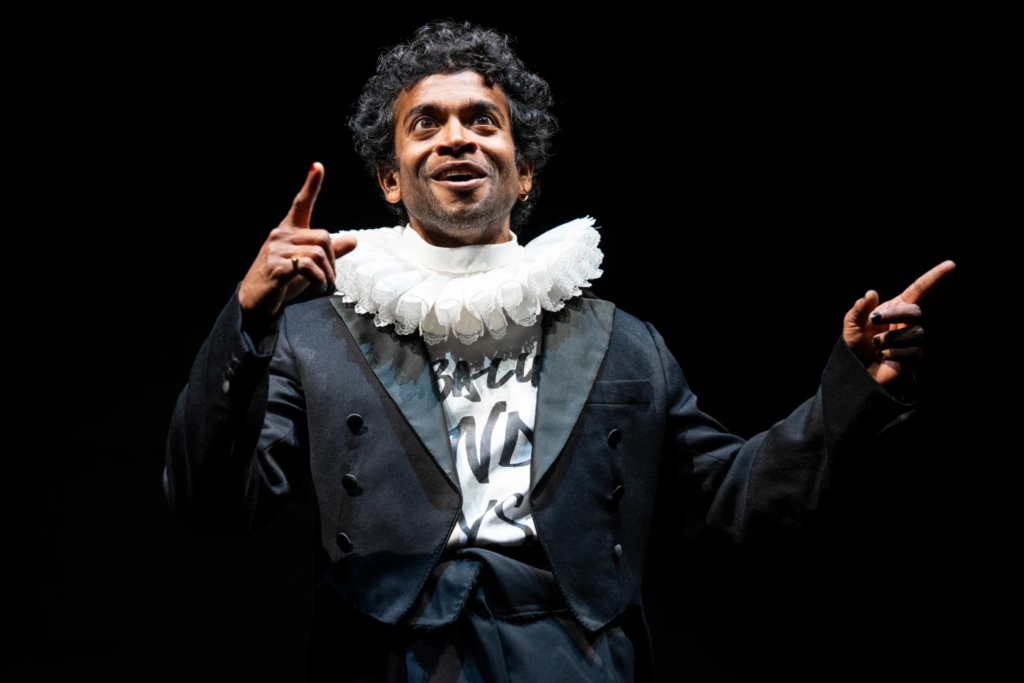
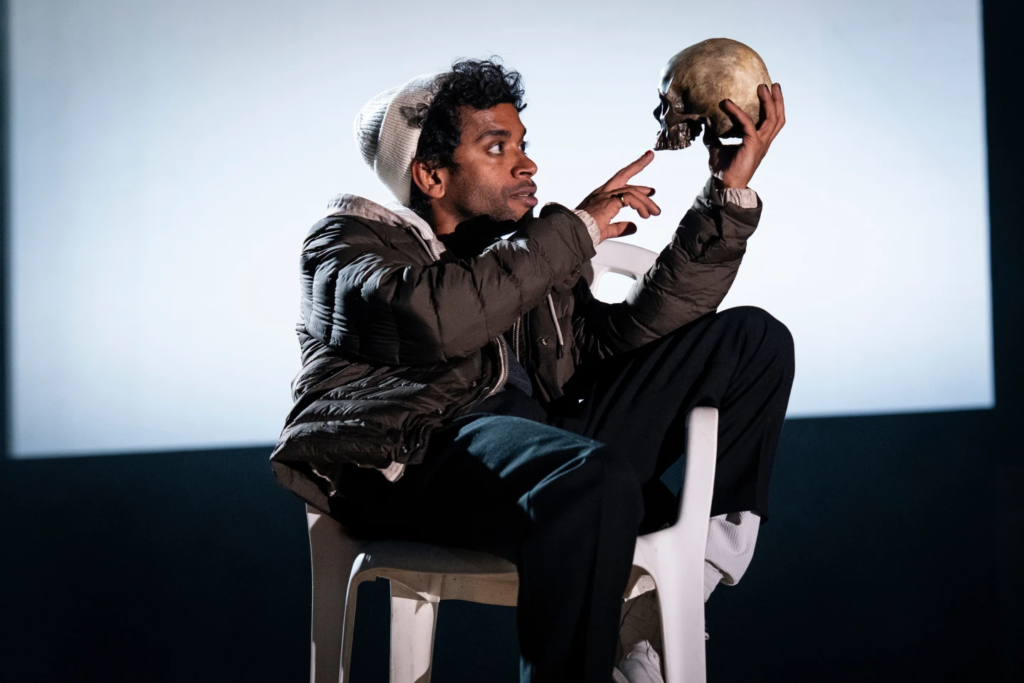
One of the most talked-about productions this year comes from the National Theatre, whose acclaimed staging of “Hamlet” recently arrived at the Brooklyn Academy of Music. The production stars Sri Lankan actor Hiran Abeysekera, whose playful and emotionally layered interpretation of the Danish prince has received widespread praise.

Unlike many traditional portrayals that emphasize Hamlet’s melancholy and philosophical weight, Abeysekera’s version brings humor, spontaneity and vulnerability to the role. Wearing casual modern clothing and frequently engaging directly with the audience, his performance makes the centuries-old text feel startlingly immediate.

Director Robert Hastie believes the play’s longevity comes from its ability to constantly evolve with each generation of actors and viewers.

“Every time new performers step into these roles, the play changes,” Hastie explained. “That’s why Shakespeare continues to survive. The words remain the same, but the emotional experience becomes something entirely new.”

Abeysekera’s interpretation focuses on Hamlet as a deeply human figure rather than an untouchable literary icon. His famous “To be, or not to be” soliloquy is delivered not as a grand theatrical moment, but as an intimate internal thought — a reflection of everyday emotional struggle.

The result is a version of Hamlet that feels more relatable to modern audiences facing uncertainty, mental stress and social instability.

Modern Film Adaptations Bring Shakespeare Into Contemporary Life

The latest cinematic adaptation of “Hamlet” also embraces modern storytelling techniques. Directed by Aneil Karia and starring actor Riz Ahmed, the film relocates Shakespeare’s tragedy into London’s South Asian community and explores themes of corruption, power and moral conflict through a contemporary lens.

The adaptation strips away royal palaces and medieval imagery in favor of modern urban settings, luxury cars and nightclub scenes. Yet despite the updated visuals, the emotional heart of the story remains unchanged.

Ahmed’s Hamlet is portrayed as a man trapped inside a corrupt system, questioning both his own morality and the world around him. One of the film’s most memorable scenes features Hamlet delivering the “To be, or not to be” speech while speeding through rain-soaked London streets in a BMW.

Director Karia said the adaptation was designed to make Shakespeare accessible to audiences who may have previously found the material intimidating.

“For many people, Shakespeare can feel distant or academic,” Karia said. “We wanted to show that these stories are still alive and still speaking directly to the world we live in today.”

The film reflects a broader trend among younger creators who view Shakespeare not as sacred material to preserve untouched, but as living art that can be reshaped for each generation.

“Hamnet” Expands the Shakespeare Universe

Another major contributor to the renewed fascination with Shakespeare is the growing popularity of “Hamnet,” the fictionalized story inspired by the death of Shakespeare’s son.
02Originally written as a bestselling novel by author Maggie O’Farrell, “Hamnet” has since been adapted into both a film and stage production. The movie adaptation recently earned actress Jessie Buckley major awards recognition, while a theatrical version by the Royal Shakespeare Company is now touring the United Kingdom.

The story explores grief, family loss and the emotional experiences believed to have influenced Shakespeare while writing “Hamlet.” By shifting focus away from the prince himself and toward the playwright’s personal life, “Hamnet” has opened a new emotional pathway into Shakespeare’s world.

Audiences appear drawn to the deeply human story behind one of literature’s most celebrated tragedies.

Neurodiverse and Inclusive Productions Redefine the Classic

Among the most innovative recent interpretations is a groundbreaking production by Peru’s Teatro La Plaza, which featured eight Spanish-speaking actors with Down syndrome.

Directed by Chela De Ferrari, the production used “Hamlet” to examine exclusion, identity and society’s treatment of people with disabilities. The performance challenged conventional ideas about who gets to tell classic stories and who belongs on major stages.

De Ferrari described the project as both artistic and deeply political.

“At its core, Hamlet is about a person trying to exist in a world that constantly misunderstands him,” she said. “That experience felt incredibly relevant for our actors.”

One of the production’s most emotional moments involved an actor attempting to recreate Laurence Olivier’s legendary version of the “To be, or not to be” speech while Olivier’s image appeared on screen behind him. The scene became a powerful statement about visibility, representation and the right to occupy cultural spaces.

The production received international praise for its originality and emotional depth, further proving the flexibility and enduring relevance of Shakespeare’s work.

Social Media Gives Shakespeare a Digital Rebirth

Beyond theaters and film festivals, “Hamlet” is also thriving online.

Social media creators are increasingly using TikTok, Instagram and YouTube to reinterpret Shakespeare for younger audiences. One group leading that movement is Mad Spirits Theatre Company, founded by performer Caitlin Cardile.

The troupe produces humorous and educational Shakespeare-themed videos using viral trends, popular songs and television references to make the material more approachable.

In one clip, dialogue from Disney’s “The Lion King” is reenacted by actors portraying Claudius and Hamlet. In another, a popular sitcom quote is humorously assigned to Ophelia.

Cardile said the goal is to remove the fear and elitism often associated with Shakespeare.

“We want people to realize Shakespeare can actually be fun,” she explained. “Once people stop feeling intimidated, they discover how emotional, funny and relatable these stories really are.”

The strategy appears to be working. Their videos have attracted large online audiences, introducing Shakespeare to viewers who might never attend a traditional theater performance.

Even legendary actor Anthony Hopkins recently joined the trend, delighting fans by reciting parts of Hamlet’s famous soliloquy on TikTok at the age of 88.

Why “Hamlet” Still Matters Today
The resurgence of “Hamlet” comes during a period of global uncertainty marked by political division, economic anxiety and social change. Many artists believe audiences are gravitating toward stories that openly confront fear, grief and existential confusion.

At its core, “Hamlet” remains a deeply psychological exploration of indecision, loss, betrayal and identity. The play asks timeless questions about morality, purpose and human suffering — themes that continue to resonate regardless of era or culture.

Critics and theater scholars argue that the play’s adaptability is precisely what has kept it alive for over 400 years. Every generation finds its own version of Hamlet, shaped by contemporary fears and experiences.

Whether performed in a grand theater, adapted into a modern film, reimagined through inclusive casting or transformed into internet comedy, Shakespeare’s tragic prince continues to evolve.

And as long as audiences keep searching for meaning in uncertain times, Hamlet’s voice — questioning existence itself — is unlikely to fade from the global stage anytime soon.

RECOMMENDED
Entertainment

Amazon Luna vs GeForce NOW vs Xbox Cloud Gaming in 2026: Pricing, Limits, Performance and Game Libraries

By George Mensah 10 min read

Amazon Luna vs GeForce NOW vs Xbox Cloud Gaming at a Glance

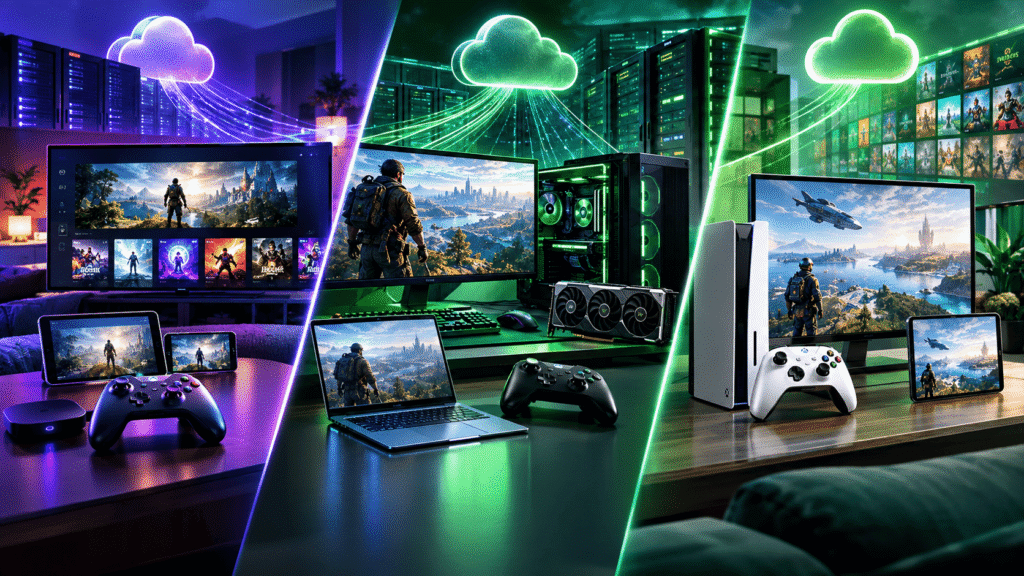
If you’ve been putting off cloud gaming because you weren’t sure which service made sense, 2026 is actually a strange year to decide. All three big players — Amazon Luna, GeForce NOW, and Xbox Cloud Gaming — changed their rules this year, and not always in the player’s favor. Luna quietly stopped selling games altogether and leaned hard into being a Prime perk. GeForce NOW introduced its first-ever monthly playtime cap. And Xbox Cloud Gaming, long the “unlimited” holdout, is about to follow suit. The core difference between them hasn’t changed though: Luna and Xbox hand you a rotating library of games to play, while GeForce NOW expects you to already own your games elsewhere and just streams them. That one distinction shapes almost everything else in this comparison.

Quick Comparison of Pricing and Playtime

Amazon Luna’s Standard tier costs nothing extra if you already pay for Prime, and Luna+ runs about $9.99 a month for a bigger rotating catalog. GeForce NOW starts free but caps you at one-hour sessions, with paid tiers at $9.99 and $19.99 a month. Xbox Cloud Gaming comes bundled inside Game Pass, which now costs $9.99 for Essential, $14.99 for Premium, and $22.99 for Ultimate.

Game Library and Ownership Models

Luna and Xbox both work like a streaming subscription for games: you get access to whatever’s in the catalog that month, and nothing more. GeForce NOW flips that model on its head — you bring your own purchased games from Steam, Epic, or other stores, and NVIDIA just supplies the horsepower to run them.

What Changed for Amazon Luna in 2026

Luna’s 2026 story is really a story about Amazon giving up on selling games directly. Starting April 10, 2026, Amazon Luna stopped offering game stores, individual game purchases, and third-party subscriptions altogether. If you’d bought games through Luna before that date, you weren’t left completely stranded, but the clock was ticking. The last day to actually play a game purchased directly through Luna’s cloud storefront was June 10, 2026.

Luna Remote Play and New Service Changes

This wasn’t Luna’s first pivot, either. Amazon had already relaunched Luna in October 2025, folding Prime Gaming into it and opening the service up to its enormous Prime subscriber base. What’s left after the April cleanup is a much simpler product: two tiers, no store, no ownership.

Monthly Gaming Hours and Membership Changes

Here’s the twist that makes Luna interesting in this Amazon Luna vs GeForce NOW vs Xbox Cloud Gaming comparison: it’s currently the only one of the three with no published monthly hour cap at all. Luna Standard remains a free perk for Prime members with a small rotating library, while Luna+ (also called Luna Premium in some regions) sells separately for roughly $9.99 a month with around 155 titles, and neither tier lets you buy or own individual games anymore. So while GeForce NOW and Xbox are busy adding limits, Luna’s free tier is going the opposite direction — at least for now.

Amazon’s Changing Gaming Strategy

Amazon also shut down its ambitious MMO New World’s cloud presence and scaled back other gaming bets earlier in the decade, and Luna’s redesign fits that same pattern. Instead of competing head-on as a marketplace, Amazon is using Luna the way it uses Prime Video: as a reason to keep paying for Prime, not as a standalone gaming business.

Amazon Luna Features, Games and Performance

Game Library and Prime Benefits

Luna Standard ships with more than 50 cloud-streamed games plus a rotating selection of downloadable PC titles that changes monthly. You’ll need an active Prime membership to unlock this tier, and the catalog rotates rather than growing, so titles you love this month might rotate out the next.

Devices and Controller Support

The Luna app works on Windows, macOS, ChromeOS, Android, iOS, Fire TV devices, Fire tablets, and recent Samsung and LG smart TVs. You can use the dedicated Luna Controller, but most Bluetooth controllers work fine too.

Streaming Quality and Latency

Streaming quality tops out at 1080p and 60 frames per second for most titles, with no published session length limit and no monthly hour cap — a genuine advantage if you hate watching a countdown timer while you play. Amazon recommends at least 10 Mbps and a 5 GHz wireless or wired connection for a smooth experience.

GeForce NOW in 2026: Plans, Performance and Game Ownership

Free and Paid Membership Options

GeForce NOW’s free tier gets you in the door with one-hour gaming sessions, ad-supported waiting periods, and the longest queue times, capped at 1080p/60fps. Paid plans remove the wait and raise the ceiling: Performance runs $9.99 a month with six-hour sessions and up to 1080p/60fps, while Ultimate costs $19.99 a month with eight-hour sessions and access to NVIDIA’s fastest servers.

The big 2026 change is the new cap. NVIDIA confirmed that all subscriptions became subject to a monthly playtime limit starting January 1, 2026, with each account getting 100 hours of gameplay per month before extra time has to be purchased. Unused time rolls over to the next month, but only up to 15 hours, so you can’t stockpile hours for a marathon session down the road.

Bring Your Own Game Library

This is where GeForce NOW genuinely stands apart. Rather than handing you a curated list, it streams games you already own from stores like Steam and the Epic Games Store, with over 4,000 supported titles across both Ready-to-Play and Install-to-Play categories. If you’ve spent years building a Steam library, that library keeps working here — you’re paying for compute, not for content.

Performance Advantages

On raw specs, GeForce NOW is hard to beat. Ultimate subscribers now run on RTX 5080-class hardware, delivering up to 5K resolution at 120fps or 1080p at a blistering 360fps, plus ray tracing and DLSS frame generation for supported titles.

Xbox Cloud Gaming and Game Pass in 2026

How Xbox Cloud Gaming Works With Game Pass

Xbox Cloud Gaming isn’t sold on its own — it rides along inside a Game Pass subscription. Game Pass Essential costs $9.99 a month, Premium runs $14.99, and Ultimate sits at $22.99 after Microsoft cut the Ultimate price in April 2026, reversing an earlier hike that had pushed it toward $30.

Game Library and Usage Limits

Right now, cloud streaming through Game Pass is unlimited for eligible subscribers, but that’s about to end. Beginning in November 2026, Xbox Game Pass subscribers will no longer receive cloud gaming without a monthly time limit — Ultimate gets 15 hours, Premium gets 10 hours, and Essential gets just 5 hours. Microsoft says the change is about rising infrastructure costs and estimates it will affect only around 4% of subscribers, but if you’re a heavy cloud-only player, 15 hours a month works out to roughly 30 minutes a day — a big drop from unlimited access.

Supported Devices

Xbox Cloud Gaming is available across 29 countries and runs on Xbox consoles, Windows PCs, mobile browsers on iOS and Android, and select smart TVs. Interestingly, non-subscribers will soon be able to buy streaming hours to play games they already own, which is a small step toward the GeForce NOW model.

Full Amazon Luna vs GeForce NOW vs Xbox Cloud Gaming Comparison

Feature Amazon Luna GeForce NOW Xbox Cloud Gaming
Starting Price Free with Prime Free (limited) $9.99/mo (via Game Pass)
Free/Bundled Access Yes, with Prime Yes, capped sessions No standalone free tier
Monthly Hours None published 100 hrs (paid tiers) Unlimited now; 5–15 hrs from Nov 2026
Game Model Rotating subscription library Bring your own games Rotating subscription library
Game Ownership Not supported Required (Steam, Epic, etc.) Not supported
Maximum Resolution 1080p/60fps Up to 5K/120fps (Ultimate) Up to 1440p on Ultimate
FPS Support Up to 60fps Up to 360fps (1080p mode) Up to 60fps typical
Device Support Fire TV, smart TVs, PC, mobile PC, Mac, mobile, smart TVs, browsers Console, PC, mobile, browsers
Controller Support Luna Controller, Bluetooth pads Most controllers via USB/Bluetooth Xbox controllers, Bluetooth pads
Main Advantage No hour cap, bundled with Prime Highest performance, own your games Deep first-party catalog


Pricing and Value

Luna’s free tier genuinely costs nothing extra if you already have Prime, which makes it the easiest entry point. GeForce NOW and Xbox both ask for real money, but they hand you very different things for it — raw performance versus a huge curated catalog.

Game Library and Ownership

If you’ve already sunk hundreds of dollars into a Steam library, GeForce NOW lets that investment keep paying off. If you’d rather rent access to a rotating catalog and not think about ownership at all, Luna or Xbox suits you better.

Playtime Limits

This is quickly becoming the deciding factor for heavy users. Once Xbox’s caps land in November, only Luna will be left offering genuinely unlimited access on its free tier.

Cloud Gaming Performance and Internet Requirements

Latency and Input Response

Cloud gaming lives or dies on latency, not just bandwidth. The closer you are to a data center, the snappier your inputs feel — a laggy shot in a shooter is a lot more annoying than a slightly blurry frame in a slower game.

Internet Speed and Bandwidth

Most services recommend at least 10-15 Mbps for smooth 1080p streaming, and you’ll want a lot more for 4K on GeForce NOW’s Ultimate tier. A wired Ethernet connection beats Wi-Fi almost every time, especially in busy households where everyone’s streaming something.

Resolution and Streaming Quality

Expect quality to dip automatically when your network gets congested — that’s the service protecting your session from stuttering rather than a sign something’s broken.

Which Cloud Gaming Service Fits Different Players

For Casual and Budget Gamers

Luna’s free Prime tier is hard to beat if you just want to dabble occasionally without adding another bill.

For PC Gamers With Existing Libraries

GeForce NOW makes the most sense once you already own a decent Steam or Epic library — no other service lets that collection travel with you like this.

For Game Pass Subscribers

If you’re already paying for Game Pass for console or PC gaming, cloud streaming is a nice bonus, though it’s worth watching those new November limits closely.

For High-Performance Cloud Gaming

GeForce NOW Ultimate’s RTX 5080 servers put it well ahead on raw specs, especially for fast-paced competitive titles.

What the 2026 Changes Mean for Cloud Gaming

Why Monthly Gaming Limits Matter

Running thousands of GPU servers isn’t cheap, and all three companies are clearly feeling that cost. Playtime caps are essentially a way to manage server capacity without raising sticker prices outright.

Subscription Bundles vs Game Ownership

The industry seems to be splitting into two camps: services that bundle a curated catalog, and services that just rent you compute for games you already bought. Neither approach is objectively better — it depends entirely on how big your existing library is.

Amazon, NVIDIA and Microsoft Competition

Watching how differently Amazon, NVIDIA, and Microsoft are approaching this shows there’s no consensus yet on the “right” cloud gaming business model, and that competition should keep benefiting players in the long run.

Key Things to Check Before Choosing a Cloud Gaming Service

Check These Before Subscribing

  • Your existing game library and whether you’d rather own or rent
  • Monthly gaming hours you actually realistically use
  • Your internet connection’s speed and stability
  • Which devices you’ll actually stream on
  • Resolution and FPS requirements for your favorite genres
  • Total monthly cost across any bundled services
  • Whether games are included in the price or need separate purchase

At the end of the day, there’s no single winner in the Amazon Luna vs GeForce NOW vs Xbox Cloud Gaming race — the right pick depends on whether you already own games, how many hours you play, your budget, and which devices you use most.

Frequently Asked Questions About Cloud Gaming

Is Amazon Luna better than GeForce NOW?

Luna wins on price and simplicity for casual Prime members; GeForce NOW wins on performance and letting you use games you already own.

Is GeForce NOW better for games you already own?

Yes — it’s built specifically around streaming your existing Steam, Epic, and other library games.

Does Xbox Cloud Gaming require Game Pass?

Currently yes, though non-subscribers will soon be able to buy hours to stream games they own.

How many hours can you play cloud games each month?

It varies: Luna currently has no published cap, GeForce NOW caps paid tiers at 100 hours, and Xbox will cap Game Pass tiers at 5-15 hours starting November 2026.

Which cloud gaming service has the best performance?

GeForce NOW Ultimate, thanks to its RTX 5080-class servers supporting up to 5K/120fps.

Can you play cloud games on a phone or smart TV?

Yes, all three services support mobile devices and many smart TVs, though exact model support varies by brand and region.

Does cloud gaming use a lot of internet data?

Yes, streaming games consumes significantly more data than downloading them once, so keep an eye on data caps if you’re not on unlimited broadband.

Entertainment

Biden book lands after midterms, Reopens debate on 2024 exit

By George Mensah 4 min read

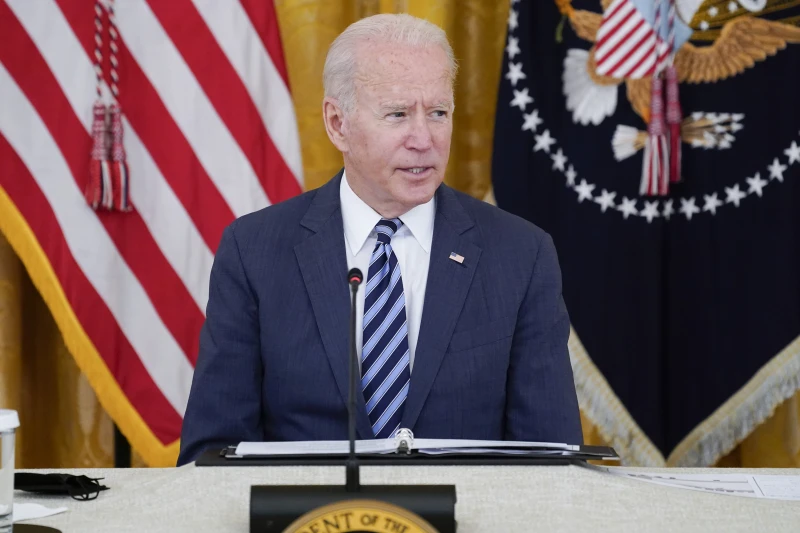
Joe Biden will publish a memoir titled “Promise Me, America” on Nov. 17, addressing his decision to seek a second term, his choice to eventually drop out of the 2024 race, and his record on the economy, according to publisher Little, Brown and Company.

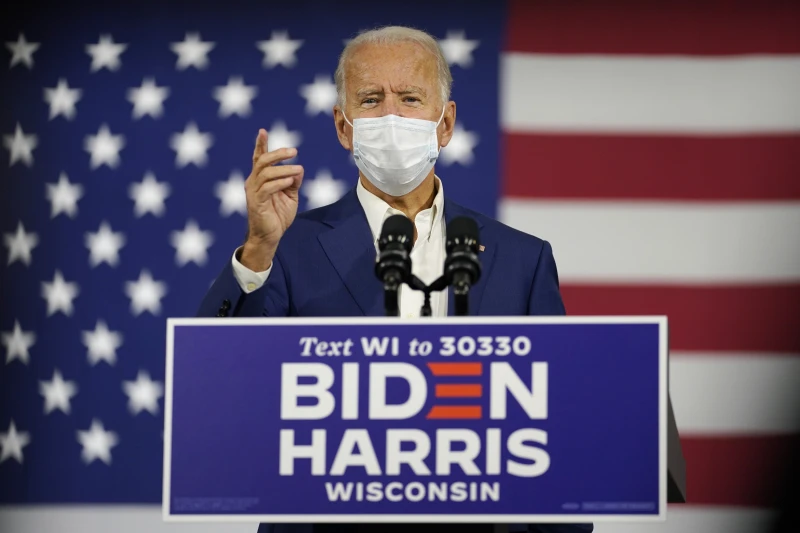
The release date falls two weeks after the November midterm elections, a timing that could complicate Democratic efforts to keep campaign attention on President Donald Trump rather than on Biden’s own legacy. Many Democrats blame Biden’s decision to run for reelection for Trump’s return to the White House, and party leaders have hoped to avoid distractions before votes are cast.

“‘Promise Me, America’ is about the challenges we faced as a nation. It’s about the decisions I made and why I made them,” Biden said in a video statement released Wednesday alongside the announcement. “It’s about why I chose to run for reelection and why I chose to step aside.”

Biden, who turns 84 three days after the book’s publication, worked with a small editorial team on the memoir, a common practice among modern presidents writing about their time in office. Little, Brown did not disclose financial terms for the book, though past presidential memoirs have typically sold for at least seven figures. Every president since Harry Truman has published a book about their White House years, with few exceptions.

The title mirrors Biden’s 2017 memoir, “Promise Me, Dad,” which focused on the death of his son Beau. His earlier books include “Promises to Keep,” published in 2007 to support his first presidential run, a campaign in which Barack Obama won the nomination and picked Biden as his running mate.

A presidency shaped by crisis and questions about his health

Biden took office in January 2021 during the COVID-19 pandemic and weeks after the Jan. 6 attack on the Capitol by Trump supporters trying to block certification of the 2020 election results. His term included the U.S. response to Russia’s invasion of Ukraine, conflict in the Middle East, and the passage of large infrastructure and economic aid packages.

Much of the public interest in the memoir is likely to center on his health during his final years in office, particularly his performance in the June 2024 debate against Trump that led him to abandon his reelection campaign. Then-Vice President Kamala Harris took his place on the ticket and lost to Trump in November.

Former first lady Jill Biden wrote in her own memoir, “View from the East Wing,” published in June, that her husband appeared so disoriented during the debate that she worried he was having a stroke. She noted that the White House initially attributed his performance to a cold. “The biggest lesson for us, I think, was that if you don’t explain something well enough then the question won’t go away,” she wrote. “There was never a satisfying enough explanation offered for Joe’s debate performance, and a lot of people never got over it.”

Biden was the oldest person to serve as president, and questions about his physical and mental fitness followed him through much of his term. Journalists Jake Tapper and Alex Thompson explored those questions in their 2025 book “Original Sin,” subtitled “President Biden’s Decline, Its Cover-Up, and His Disastrous Choice to Run Again.” That same year, Biden disclosed that he had been diagnosed with prostate cancer.

A crowded market for political books

“Promise Me, America” arrives during a slow year for nonfiction sales overall, with few political titles breaking through commercially. Exceptions this year have included Vice President JD Vance’s “Communion” and “Regime Change,” an account of Trump’s second term by New York Times reporters Maggie Haberman and Jonathan Swan.

A spokesperson for Little, Brown said Biden plans to promote the book through a tour and media interviews. In his video statement, Biden addressed his health directly, telling viewers that many people had asked how he was doing.

“I’ve been spending a lot of time with my family. I’m dealing with a cancer diagnosis, been getting treatment, and it’s going really well,” he said. “I want to thank all those who have offered their prayers and support and well-wishes. It’s meant the world to me and to Jill.”

Political stakes for Democrats

The book’s release date puts Biden back in the news cycle just as Democrats look to capitalize on midterm gains and shift attention toward Trump’s second-term record. Party strategists have generally preferred that Biden stay out of the spotlight since leaving office, given how divisive his decision to seek reelection remains within the party.

Biden has largely avoided the public eye since January 2025, making the book tour one of his first extended returns to public commentary on his presidency. How Democratic voters and lawmakers respond to that renewed visibility, so soon after an election in which the party is trying to define itself apart from Biden’s legacy, remains to be seen.

The memoir will likely reopen debate over how Biden and his advisers handled questions about his age and capacity while he was in office, a subject that drew criticism from both parties throughout 2024. Whether “Promise Me, America” offers new detail on those decisions, or on the internal deliberations that led to his withdrawal from the race, is something readers won’t know until the book reaches shelves in November.

ADVERTISEMENT
Scroll to Top