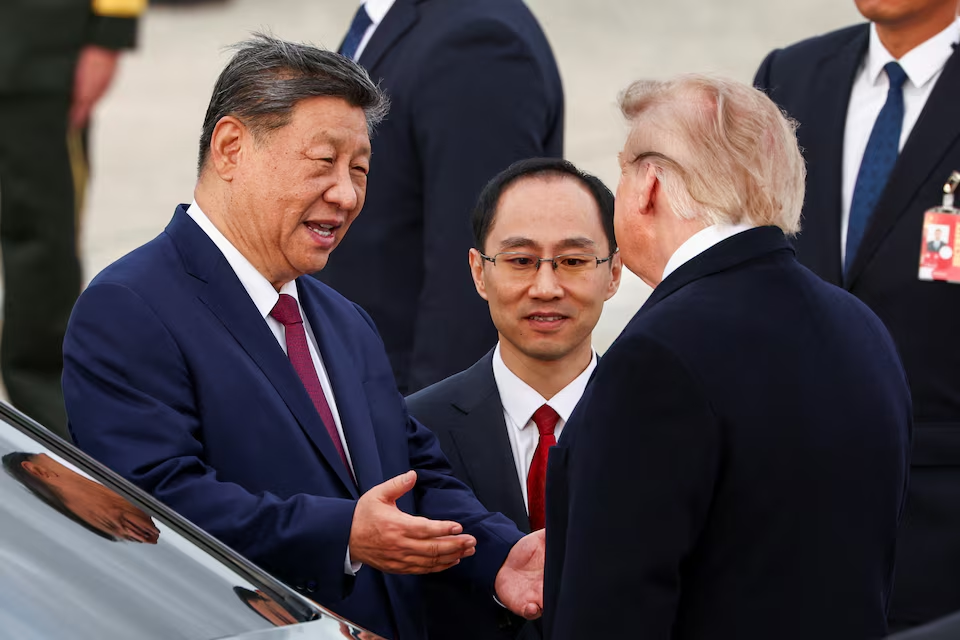

Russian President Vladimir Putin said on Saturday that he believes the war in Ukraine could be approaching its conclusion, offering one of his clearest indications yet that Moscow may be open to a broader diplomatic settlement after more than four years of devastating conflict.
The remarks came only hours after Putin delivered a defiant speech during Russia’s annual Victory Day commemorations in Moscow, where he again pledged that Russia would ultimately prevail in what the Kremlin continues to describe as its “special military operation” in Ukraine.
“I think that the matter is coming to an end,” Putin told reporters during a Kremlin briefing, referring to the war that has reshaped global security and triggered the deepest confrontation between Russia and the West since the Cold War.
Victory Day Overshadowed by War Fatigue
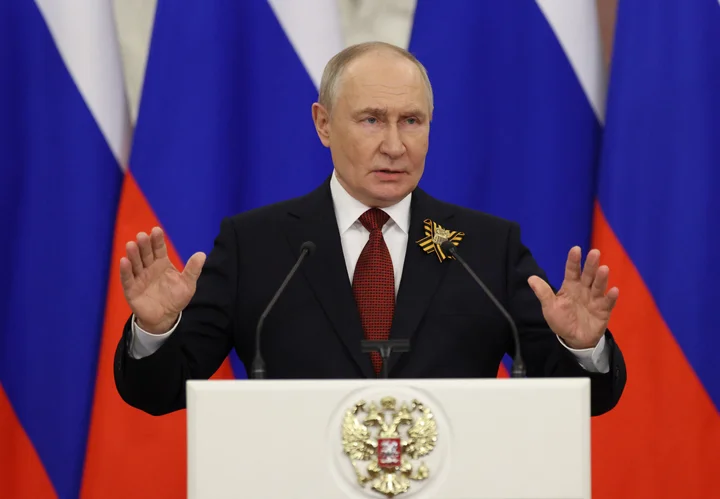
Putin’s comments followed a noticeably subdued Victory Day parade on Red Square, traditionally one of Russia’s grandest displays of military power.
The May 9 celebration commemorates the Soviet Union’s victory over Nazi Germany during World War II and honors the estimated 27 million Soviet citizens who died in the conflict. However, this year’s ceremony appeared more restrained than in previous years.
Instead of large columns of tanks, intercontinental ballistic missiles and advanced military hardware rolling through Moscow’s streets, giant digital screens displayed footage of Russian military operations. Analysts viewed the scaled-back presentation as a reflection of the prolonged demands the Ukraine war has placed on Russia’s military resources and economy.
Russian troops have now been fighting in Ukraine longer than Soviet forces fought in what Russia calls the Great Patriotic War between 1941 and 1945.
Putin Blames West for Conflict
During his remarks, Putin repeated long-standing Kremlin arguments that Western governments provoked the war by expanding NATO eastward after the collapse of the Soviet Union.
According to Putin, Western leaders violated earlier assurances made to Moscow following the fall of the Berlin Wall in 1989 by encouraging closer political and economic ties between Ukraine and Europe.
He accused “globalist” leaders in the West of attempting to pull Ukraine into the orbit of the European Union and NATO while ignoring Russia’s security concerns.
Russia launched its full-scale invasion of Ukraine in February 2022, triggering widespread international condemnation, sweeping sanctions and billions of dollars in military aid for Kyiv from the United States and European allies.
Western governments argue the invasion represents an unprovoked attack on a sovereign nation, while Moscow insists it acted to defend its strategic interests and Russian-speaking populations in eastern Ukraine.
Ceasefire Brings Brief Pause in Fighting
Putin’s remarks coincided with a temporary ceasefire announced by U.S. President Donald Trump, which both Russia and Ukraine agreed to observe from Saturday through Monday.
The truce followed days of accusations from both sides over alleged violations of separate unilateral ceasefires.
The latest agreement also includes plans for a large prisoner exchange involving 1,000 detainees from each side, marking one of the biggest humanitarian arrangements since the war began.
Trump described the war as one of the deadliest conflicts in modern history and expressed hope that the temporary ceasefire could eventually evolve into a broader peace process.
“I’d like to see it stop,” Trump said during remarks in Washington. “It’s the worst thing since World War Two in terms of life.”
No major ceasefire violations were immediately reported by either Moscow or Kyiv.
Russia Faces Mounting Pressure
Despite recent Russian territorial gains, the war has taken a heavy toll on both countries.
Hundreds of thousands of soldiers and civilians are believed to have been killed or wounded, while vast areas of Ukraine have been destroyed by fighting and missile strikes.
Russia currently controls nearly one-fifth of Ukrainian territory, though military advances have slowed considerably in recent months. Ukrainian forces continue to defend heavily fortified positions in parts of the eastern Donbas region.
The war has also strained Russia’s economy and deepened its political isolation from Europe.
Relations between Moscow and Western capitals have deteriorated to levels not seen since the height of the Cold War, with European leaders continuing to accuse Putin of aggression and war crimes.
Russia dismisses those accusations and argues that NATO countries have prolonged the conflict by supplying Ukraine with weapons, intelligence and financial support.
Putin Signals Openness to European Security Talks
In a potentially significant diplomatic signal, Putin said he remains willing to discuss future European security arrangements with Western leaders.
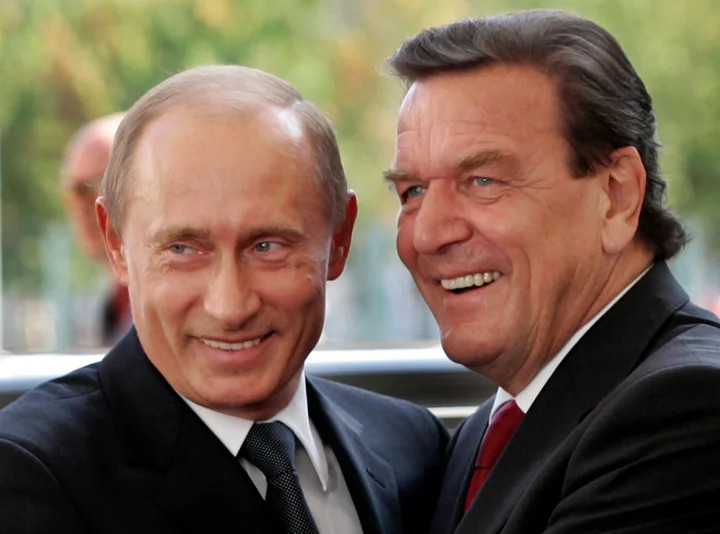
He specifically identified former German Chancellor Gerhard Schroeder as someone he would prefer to engage with in negotiations.
Schroeder, who maintained close ties with Russia after leaving office, has long been viewed as one of the few senior European political figures with a direct line to the Kremlin.
European officials have recently suggested that discussions about Europe’s long-term security framework may eventually become necessary if a ceasefire evolves into formal peace negotiations.
However, many European leaders remain deeply skeptical of Moscow’s intentions and insist that any settlement must preserve Ukraine’s sovereignty and territorial integrity.
Uncertain Road to Peace
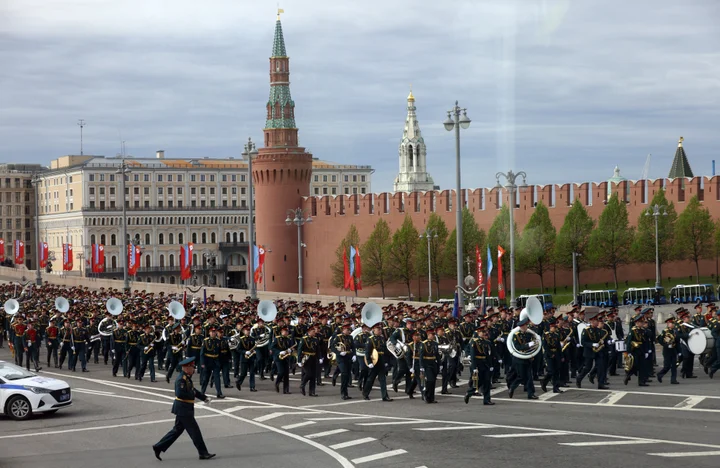
Putin also commented on the possibility of direct talks with Ukrainian President Volodymyr Zelenskyy, saying such a meeting could only happen once a lasting peace agreement had been reached.
For now, the conflict remains unresolved, with diplomacy continuing behind the scenes amid fragile ceasefire efforts and ongoing international pressure.
Still, Putin’s acknowledgment that the war may be nearing an end is likely to fuel speculation that both Moscow and Kyiv — after years of brutal warfare — may increasingly be searching for a path toward a negotiated settlement.