
The growing intersection between cryptocurrency, geopolitics and presidential business interests has come under renewed scrutiny after blockchain data showed that Iran’s largest cryptocurrency exchange, Nobitex, processed at least $2.3 billion through the Tron and BNB Chain networks since 2023.
The transactions, analyzed using public blockchain records, highlight how digital financial systems continue to operate across geopolitical fault lines—even as tensions between Iran, the United States and Israel escalate.
The revelations have also drawn attention because both blockchain ecosystems are tied to major figures who later became supporters of World Liberty Financial, the crypto venture launched by U.S. President Donald Trump and members of his family.
While there is no indication that Trump’s businesses were aware of Nobitex’s activity or involved in the transactions, the development underscores the increasingly complex overlap between private commercial interests and public office in the crypto era.
Nobitex Emerges as a Key Player in Iran’s Digital Financial System
Founded as a domestic cryptocurrency exchange, Nobitex has grown into Iran’s dominant digital asset platform, becoming an important gateway for crypto trading inside the country.
The exchange plays a significant role in Iran’s alternative financial ecosystem at a time when Western sanctions continue to limit access to global banking networks.
Blockchain analysis indicates that since January 2023, Nobitex users moved more than $2 billion through the Tron blockchain, while an additional $317 million flowed through BNB Chain, bringing the combined total above $2.3 billion.
The transactions continued even after the outbreak of the recent Iran conflict.
Since hostilities escalated earlier this year, blockchain records indicate that approximately $22.6 million moved through BNB Chain, while at least $550,000 traveled through Tron-linked channels.
Industry researchers believe the actual volume could be considerably higher because blockchain tracing only captures wallet addresses publicly linked to Nobitex.
Iranian exchanges have previously acknowledged rotating wallet addresses to make transactions harder to trace.
Understanding Tron and BNB Chain
The crypto networks at the center of the discussion are not exchanges themselves but blockchain infrastructures—digital ledgers that record transactions and support the transfer of cryptocurrencies.
Tron, created by crypto entrepreneur Justin Sun, became one of the fastest-growing blockchain ecosystems due to its low transaction fees and efficiency in moving stablecoins such as Tether.
BNB Chain, initially developed within the Binance ecosystem, similarly evolved into a major blockchain platform supporting decentralized finance and digital asset transfers.
Users pay fees to process transactions across both networks.
These systems operate publicly and are designed as permissionless infrastructures, meaning anyone can interact with them without centralized approval.
Representatives connected to both ecosystems maintain that they function as open technologies rather than managed financial platforms.
Spokespeople associated with BNB Chain emphasized that the network operates independently through global validators and is not directly controlled by Binance.
Tron representatives similarly stated that the network acts as technology infrastructure and cannot individually review every transaction taking place on-chain.
Links to Trump-Backed Crypto Venture Draw Attention
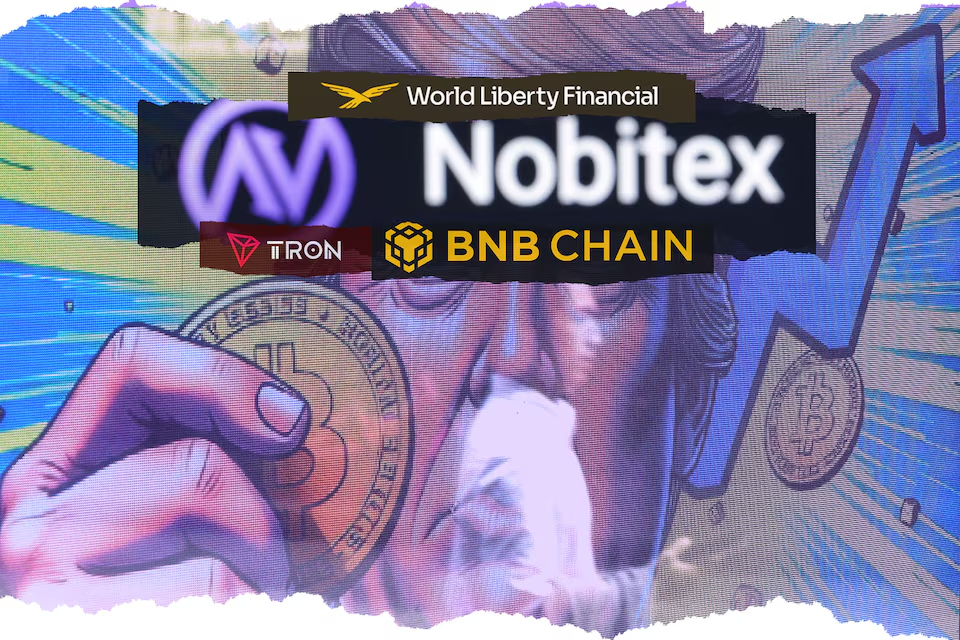
The issue gained broader political significance because Justin Sun and figures connected to Binance later emerged as supporters of World Liberty Financial, the crypto company co-founded by Trump and his family.
World Liberty launched during Trump’s broader embrace of cryptocurrency as part of his second-term economic agenda.
The project initially struggled to gain momentum after its launch but later attracted major investors.
Sun became one of its earliest supporters, investing heavily in WLFI tokens, providing credibility and visibility to the startup during its early stages.
Separately, Binance later supported the rollout of USD1, a stablecoin linked to World Liberty’s ecosystem.
The developments strengthened connections between leading crypto figures and Trump-affiliated digital ventures.
Critics argue that these overlapping relationships create difficult questions regarding conflicts of interest when private business operations intersect with geopolitical events.
The White House has rejected such concerns, arguing there is no connection between Trump’s businesses and Iranian financial activity.
Officials described attempts to link the president’s crypto ventures to Iranian transactions as unfounded.
Iran’s Use of Crypto Reflects Broader Sanctions Strategy
For years, Iran has increasingly turned toward digital assets as sanctions complicated access to conventional financial systems.
Cryptocurrency offers an alternative channel for moving value internationally without relying on banks.
Researchers tracking sanctions evasion say digital assets have become part of a wider effort by sanctioned economies to reduce dependence on traditional payment networks.
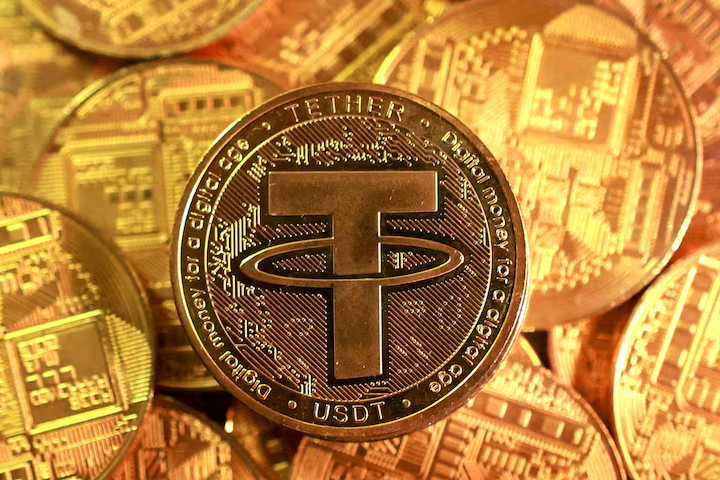
Analysts specializing in Iran’s crypto ecosystem say institutions connected to the country increasingly adopted stablecoins—particularly Tether (USDT)—because of their dollar-pegged value and global liquidity.
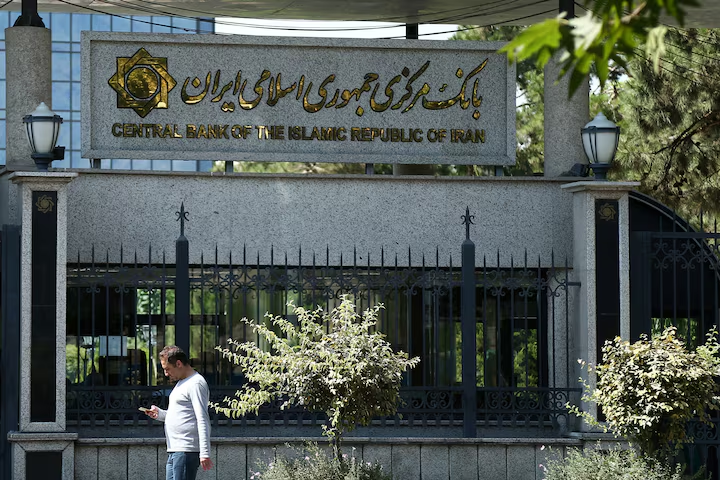
Reports indicate the Central Bank of Iran acquired more than $500 million in Tether through Tron-based transactions between late 2024 and mid-2025.
Investigators say portions of those assets later moved through exchanges including Nobitex.
The Iranian central bank has faced U.S. sanctions since 2019.
Analysts also claim digital asset movements involved entities linked to the Islamic Revolutionary Guard Corps (IRGC), another sanctioned institution.
Neither Iranian authorities nor related organizations publicly commented on the claims.
Blockchain Transparency Creates Both Visibility and Challenges
Unlike traditional banking systems, cryptocurrency transactions are recorded permanently on public blockchains.
This transparency allows analysts to reconstruct financial flows years after they occur.
However, tracing activity remains difficult because users can generate new wallet addresses endlessly.
Researchers argue this creates a paradox:
Blockchain networks are transparent by design, yet identifying who controls wallets often requires external intelligence.
Experts tracking Iranian activity believe known Nobitex addresses likely represent only part of total flows.
Some analysts estimate real transaction volumes may significantly exceed current public calculations.
Crypto Industry Faces Growing Regulatory Questions
The revelations arrive as governments worldwide debate how to regulate decentralized finance.
Supporters argue blockchains are neutral technologies similar to the internet and cannot discriminate between users.
Critics counter that open systems can become tools for sanctions avoidance, illicit finance and geopolitical maneuvering.
Questions surrounding compliance responsibilities remain unresolved.
Tether, issuer of the world’s largest stablecoin, stated that it freezes wallets when required by authorities and had restricted several addresses associated with Nobitex following requests linked to Israeli investigations.
The company added that exchanges and trading platforms hold primary responsibility for compliance in secondary-market activity.
A Crypto-Friendly White House Changes the Landscape

Trump’s return to office accelerated the political mainstreaming of digital assets.
His administration adopted a notably crypto-friendly stance, promoting innovation and easing regulatory pressure on parts of the sector.
At the same time, Trump-linked ventures expanded rapidly.
The Trump family entered multiple crypto businesses ranging from tokens and stablecoins to broader financial platforms.
These ventures generated significant attention and investment.
Supporters view the strategy as positioning the United States as a global digital finance leader.
Critics argue it blurs the line between public leadership and private gain.
The issue intensified after regulatory agencies softened enforcement approaches and settled several high-profile crypto cases.
Meanwhile, Binance continued integrating World Liberty’s stablecoin ecosystem into its trading infrastructure.
Blockchain data later showed billions in holdings tied to Trump-associated digital assets.
Digital Finance Meets Geopolitical Reality
The Nobitex transactions reveal more than just cryptocurrency activity.
They illustrate how digital finance increasingly operates independently of geopolitical divisions.
Even as sanctions intensify and conflicts escalate, blockchain networks continue processing transactions globally without borders.
For governments, that raises difficult questions about enforcement.
For crypto advocates, it demonstrates resilience and decentralization.
For policymakers, however, the overlap between political leadership, private ventures and global financial systems may become one of the defining debates of the next phase of digital finance.
As cryptocurrency moves deeper into mainstream politics and international commerce, the Nobitex case highlights a new reality: geopolitical conflicts no longer unfold only through banks, trade routes and diplomacy—they increasingly play out on blockchain ledgers visible to the entire world.