Clicxpost

Effects of the shutdown on the economy, federal programs, and employees

Effects of the shutdown on the economy,

The government shutdown is on the verge of reaching its third week with no end in sight, careening towards the second-longest on record in U.S. history. Some members of Congress are warning it will soon surpass the 35-day record during Donald Trump’s first presidential term, another political confrontation with mammoth nationwide consequences.

As the shutdown continues, its impacts are being felt across almost every aspect of American life — from federal employees going without paychecks to small businesses losing funds, and from air travel disruptions to millions of Americans facing uncertainty over healthcare.

A Political Stalemate with High Consequences
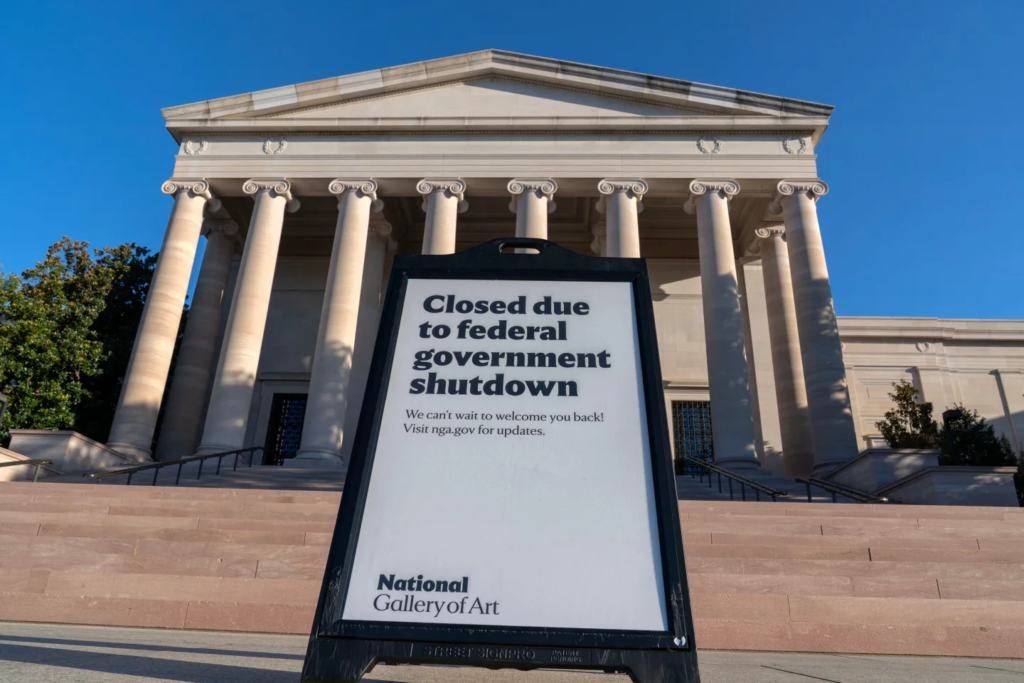
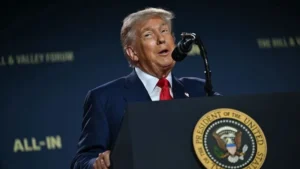
The October 1 shutdown was sparked by an intense fight between Democratic lawmakers and President Trump over the federal budget.

The Trump administration has framed the shutdown as an opportunity to reshape priorities for the government, advancing conservative policy priorities and cutting programs it deems wasteful or politically motivated. Democrats have countered, insisting that any follow-up spending deal must include protections for access to healthcare for millions of Americans who would lose their coverage or face skyrocketing premiums if no deal is reached.

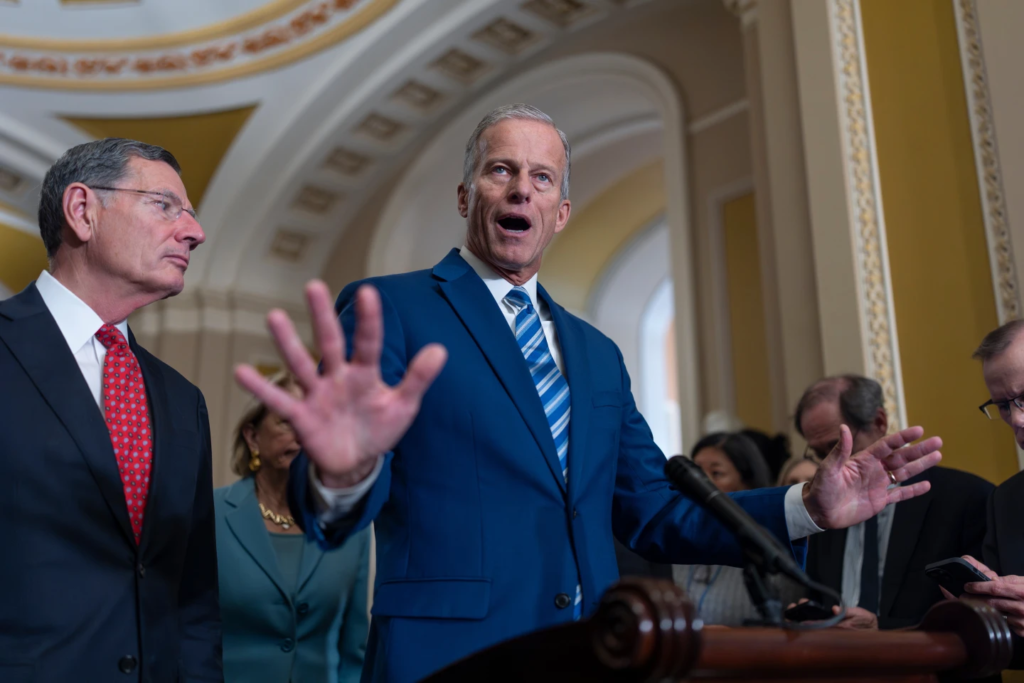
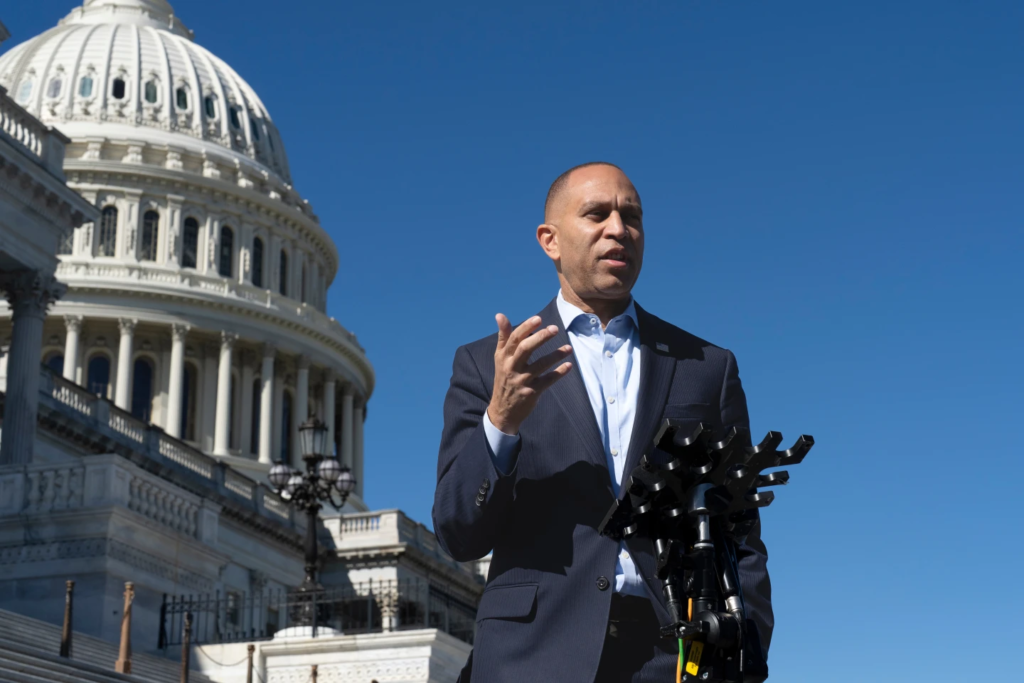
Neither side is showing signs of compromise. “We’re not conducting negotiations in a hostage situation,” said Senate Majority Leader John Thune (R-S.D.), while House Democratic Leader Hakeem Jeffries (D-N.Y.) declared, “We are not going to bend and we’re not going to break. We’re standing up for the American people.”

Federal Workforce: A Nation on Pause
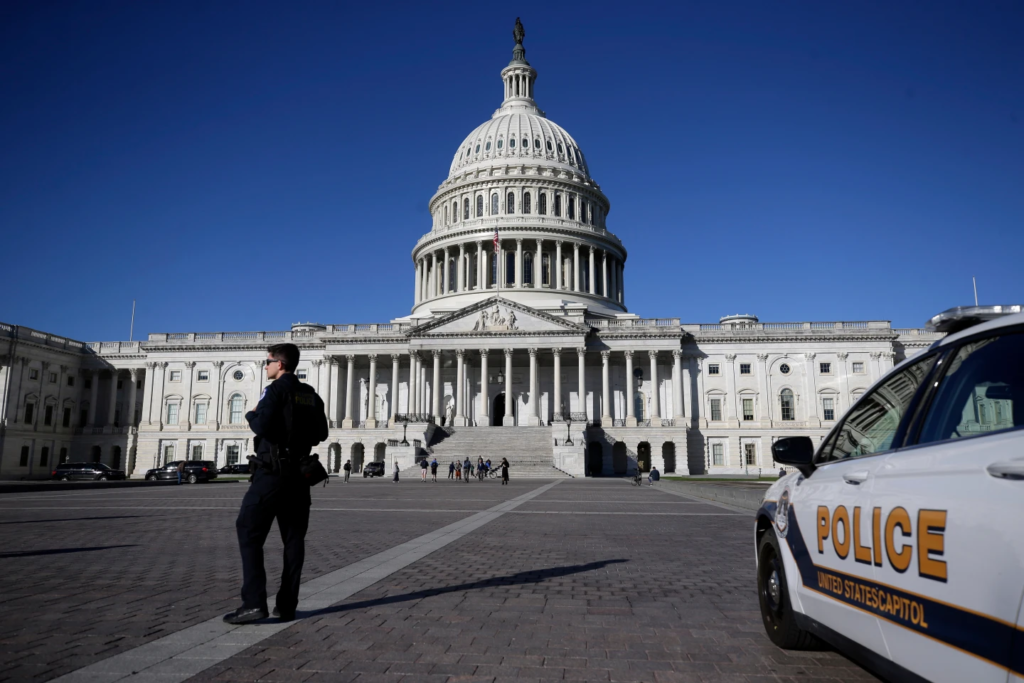
The federal government, reports the Congressional Budget Office (CBO), has about 2.3 million civilian employees. Of those, about 750,000 workers are furloughed every day, meaning they are prevented from coming to work until the government is reopened.

Others, being “essential,” have to keep working without getting paid right away — including providing critical services like national security, air traffic control, and public safety.

Both military and civilian employees are guaranteed retroactive pay, but that’s little comfort for those who have mounting missed mortgage payments, utility bills, and rent. “People can’t pay their bills with IOUs,” said one furloughed employee at the Environmental Protection Agency in Virginia.
The Pentagon, though, did manage to reallocate funds to cover one skipped paycheck for the nation’s 1.3 million active-duty personnel, although officials say a second deferment is not likely.

The cost of compensating idle workers is prohibitive. The CBO estimates that the shutdowns cost taxpayers around $400 million a day in back pay.

Trump Administration’s Aggressive Strategy
Unlike past administrations, Trump officials have been using the shutdown to enact draconian staff cuts at big agencies. The White House Office of Management and Budget revealed proposals to eliminate more than 4,000 federal jobs, primarily in the Treasury, Health and Human Services, Education, and Housing and Urban Development Departments.

White House budget chief Russ Vought said during an appearance on The Charlie Kirk Show that the administration’s goal is to permanently “shutter the bureaucracy.”

“We’re not just cutting funding — we’re cutting the bureaucracy itself,” Vought said. “We now have an opportunity to do that.”

A federal judge, however, has provisionally suspended the dismissals, finding that they appear politically motivated and were enforced without procedure. White House Press Secretary Karoline Leavitt stated that the administration is “100% confident” the courts will eventually uphold the dismissals.

Human Impact: Food Banks Step In
The majority of government employees survive paycheck to paycheck, and as the shutdown continues, food insecurity becomes progressively more difficult to address.

The Washington, D.C., Capital Area Food Bank also reported emergency food distributions to aid affected federal contractors and employees. Similar programs are under way in cities from Atlanta to Seattle as community groups anticipate an increase in demand.

“This is not about politics anymore — it’s about families who can’t feed their children,” said Maryland food bank volunteer Monica Reyes.

Economic Ripple Effects

The longer the shutdown continues, economists warn, the more catastrophic the damage to the national economy.

Oxford Economics estimated the possible cost at 0.1 to 0.2 percentage points of U.S. growth for each week of the shutdown. If it continues through an entire fiscal quarter — a first — growth would decline by up to 2.4 percentage points.

Pivotal industries already are feeling the pinch

Tourism: The U.S. Travel Association puts losses at $1 billion a week, with travelers canceling visits to closed national parks, museums, and monuments — all Smithsonian Institution ones and the Washington National Zoo.

Small Business: The U.S. Chamber of Commerce reports the Small Business Administration (SBA) has halted about $860 million in loans a week to about 1,600 small businesses.

Real Estate: The closure has frozen federal flood insurance renewals, keeping home purchases and mortgage closings across the country at a standstill.

Air Travel: Shortages of air traffic controllers at busy airports like Boston, Atlanta, Houston, and Philadelphia are indicated by the Federal Aviation Administration (FAA), triggering downstream effects of delays across the country.

“This is larger than a Washington problem,” stated Georgetown University economist Dr. Laura Greene. “It’s a Main Street problem that affects families, tourists, and small business owners alike.”

Political Fallout: Whose Fault Is It?

The public is also decidedly split on responsibility for the crisis.

A new Associated Press-NORC poll found that 61% of Americans hold Trump and congressional Republicans largely responsible for the shutdown, and 54% hold Democrats at least partly accountable for refusing to give in to compromises.

In the past, the party conceding on border wall policy in a shutdown has suffered the larger political blow — as Republicans did in 2013 and 2018. But this time could be different, as the Trump administration uses the shutdown to refocus federal priorities and shift money away from Democratic states.

Already, the White House has

Freezing $18 billion in federal money for a new Hudson River rail tunnel between New Jersey and New York City;

Canceling $7.6 billion in grants supporting clean energy projects in 16 Democratic-leaning states.

The moves, authorities claim, have nothing to do with the shutdown, but opponents accuse the trend of partisan targeting and an endgame struggle for control of national policy.

A Deepening Divide, No End in Sight

With every day that passes, the shutdown becomes more expensive — not only in dollars, but in politics. Both sides are dug in, neither wanting to be seen as weak to voters before the next election cycle.

“This is not just a budget war; it’s a battle over America’s future direction,” commented Dr. Marcus Hill, a political historian at Howard University. “The outcome will decide how far presidents will be able to go in using shutdowns as leverage for ideological change.”

For the time being, federal employees wait, companies draw in their belts, and millions of Americans prepare for the trickle-down effects of a government coming to a standstill — with no end in sight.


RECOMMENDED

UP NEXT

White House ballroom

Court Halts Trump’s $400M White House Ballroom, Says President Can’t Rebuild It Alone

Federal appeals judges in Washington told the Trump administration on Friday to halt above-ground construction of a $400 million ballroom rising on the site of the demolished White House East Wing, a ruling that hands the president one of his sharpest legal defeats yet over his authority to alter federal property. The U.S. Court of Appeals for the District of Columbia Circuit split 2-1 in backing a lower court order that froze the project. Circuit Judges Patricia Millett and Brad Garcia wrote the majority opinion, stating that “each President is a temporary tenant, not the owner, of the White House,” and that no occupant of the office can remake the building without Congress signing off. The case began last year when the National Trust for Historic Preservation filed suit after crews tore down the East Wing and started work on a 90,000-square-foot addition, roughly 8,360 square meters, without asking lawmakers for approval. The majority wrote that “whether or not a massive ballroom should be constructed is for Congress to decide and is not a matter for Executive self-help.” Judges gave the administration a 14-day window before the order takes effect, time meant to let the White House seek emergency relief from the Supreme Court. Trump said he intends to do exactly that. Writing on Truth Social hours after the ruling, Trump called the decision “horrendous” and accused the panel of acting on political grounds. He argued the outcome puts him, his staff and White House visitors at greater risk, describing the ballroom as a “military center” rather than a banquet hall. “This unjust decision must be overturned by the Supreme Court in its entirety,” he wrote, adding that the design folds in bomb shelters, medical facilities and defenses against drones and missiles, features he described as “all tied together as one big, expensive, and very complex unit.” Brent Leggs, president of the National Trust, welcomed the ruling in a statement, calling it “a great day for our country and for the American people’s right to voice their opinions about the historic places they cherish, including the White House.” A LONGER FIGHT OVER ONE BUILDING Friday’s ruling is the latest turn in a dispute that started with U.S. District Judge Richard Leon, appointed to the bench by former President George W. Bush. Leon twice blocked construction above ground on the East Wing site while permitting underground work to proceed, a split ruling that neither side fully accepted. Trump’s legal team appealed, setting up Friday’s decision from the three-judge appellate panel. The ballroom sits alongside other Trump-era changes to buildings and monuments across central Washington. A judge ruled separately in recent weeks that Trump’s name was added illegally to the exterior of the Kennedy Center and ordered it taken down, a decision that added to a pattern of court pushback against changes made to federal landmarks without the usual legislative sign-off. The administration has defended the ballroom as a functional necessity, saying the White House needs a venue for large formal events and additional security infrastructure. Justice Department attorney Yaakov Roth told the appellate judges during arguments on June 5 that courts have no business second-guessing a privately funded construction project. He said the National Trust was pressing an “architectural preference” that should not override the government’s stated security concerns, arguing that evidence showed the old East Wing left the president and others exposed. The majority rejected that framing. National security claims “are not an automatic get-out-of-law-free card,” the opinion said. Millett and Garcia went further in their written ruling, stating that “the bold assertion that the Executive can act with utter lawlessness, destroying treasured national landmarks and harming the interests of individuals, and that no court can stop it flouts our constitutional order.” The two judges in the majority were both appointed by Democratic presidents. Circuit Judge Neomi Rao, appointed by Trump during his first term, dissented. She wrote that the trial court’s injunction “is beyond the proper province of the federal courts” and argued construction should have been allowed to continue while the case played out. “The district court seized supervision of construction at the White House, and my colleagues affirm this judicial overreach,” Rao wrote. The judges in the majority were careful to note that their order does not shut the door on a ballroom permanently. It only pauses work above ground while the underlying lawsuit continues, and until the administration secures the congressional approval the court says the project requires. COST QUESTIONS PERSIST Money has followed the project since planning began. The price tag has roughly doubled from initial estimates, a jump Trump addressed directly in a Truth Social post in May. He said the increase reflected a building that is “approximately twice the size, and a far higher quality, than the original proposal,” and promised the finished structure “will be magnificent, safe, and secure.” Court filings and public statements have not settled how the administration plans to fund the difference between the original estimate and the current $400 million figure, and neither the National Trust nor the Justice Department addressed that gap directly in Friday’s proceedings. The dispute over cost sits alongside the legal question of authority, giving Congress a second avenue to weigh in if lawmakers choose to hold hearings on the funding source once the appeal process runs its course. For now, the practical effect of Friday’s order is narrow but immediate. Crews working above ground on the East Wing site must stop within the 14-day window unless the Supreme Court intervenes first. Underground work, which Judge Leon’s earlier rulings already allowed to continue, is not addressed by the new appellate order and can proceed unless a future ruling says otherwise. Both sides are now watching the Supreme Court’s calendar. Trump’s legal team is expected to file for emergency relief before the two-week clock runs out, seeking to keep builders on site while the broader legal fight over presidential authority to remake the White House works its way through the courts.

Read More »
Ceuta migrant crossing deaths

How Israel and the European far right tried to exploit Ceuta

Thousands of people attempted to cross from Morocco into the Spanish enclave of Ceuta in recent days, and the crossing left dozens dead. What began as a humanitarian tragedy shifted almost immediately into a different kind of story, one dominated by political narratives rather than the deaths themselves. Within hours of the crossings, social media filled with warnings of an “Islamic invasion.” The hashtag #StopIslam spread quickly across far-right networks. Politicians who have campaigned against immigration for years pointed to the events in Ceuta as evidence that Europe faces a civilizational challenge rather than a border management problem. Calls for stricter border enforcement followed, and Italy announced it would reintroduce border checks with Spain. Investigators had not yet established the full circumstances of the crossings. Many of those who died had not yet been identified. Even so, prominent politicians, commentators and online campaigners had already settled on an interpretation of what happened. Who benefits from the narrative That speed of interpretation raises a straightforward question: who benefited from how Ceuta was framed in its immediate aftermath. Europe’s nationalist parties gained fresh material to support existing warnings about migration and Islam. Anti-Muslim campaigners found another opportunity to present Muslim communities as an internal security threat. The events also fed into a broader argument advanced by the Israeli government and echoed by its political allies across Europe, one that links Muslim immigration, criticism of Israel and concerns about anti-Semitism together as a single interconnected issue. That argument has grown more prominent since the war in Gaza began. As public criticism of Israel’s military campaign has intensified across Europe, Israeli officials have argued that shifting European attitudes stem less from the scale of destruction in Gaza and more from demographic change and the expanding political influence of Muslim communities. Israeli Prime Minister Benjamin Netanyahu has advanced this position in public remarks, describing Israel and Europe as partners facing a shared threat from radical Islam, mass migration and what he calls a broader challenge to Western civilization. In that framing, Israel is not only defending itself but defending Europe as well. Political consequences This framing carries significant political weight. It moves the conversation away from Israel’s conduct in Gaza and toward the identity of the people criticizing that conduct. Opposition to Israeli policy stops being treated primarily as a response to humanitarian catastrophe, occupation or violations of international law, and instead gets framed as a byproduct of demographic change and Muslim political influence. Political leaders including Viktor Orban, Geert Wilders and Marine Le Pen have adopted this narrative, combining strong support for Israel with hardline anti-immigration platforms. In Britain, figures such as Tommy Robinson have made a similar argument, presenting Israel as the front line in a wider civilizational struggle against Islam. Support for Israel has increasingly become tied to a broader political project built around opposition to immigration, multiculturalism and Islam. The overlap between these movements is notable. For segments of Europe’s nationalist right, backing Israel offers a way to present themselves as defenders of Jewish communities while pursuing policies targeting Muslim minorities and migrants. For Israel’s current government, these same movements provide consistent diplomatic support and reinforce a narrative connecting criticism of Israel to broader public anxiety about migration and security. The two sets of political interests differ, but they reinforce each other in practice. Security framing spreads The effects extend beyond electoral politics. Across Europe, discussions about Palestine increasingly get filtered through the language of security. Demonstrations against the war in Gaza are sometimes treated less as political dissent and more as potential public order concerns. Muslim organizations get evaluated through a counter-extremism lens. Campaigns for Palestinian rights are, in some cases, presented not as movements rooted in human rights or international law but as vehicles for imported anti-Semitism. None of this diminishes anti-Semitism as a real and persistent form of racism that requires ongoing attention wherever it appears. But there is a meaningful distinction between combating anti-Semitism and expanding its definition to include criticism of Israeli government policy. When that line blurs, legitimate political debate narrows, and a tool meant to identify genuine anti-Semitism risks losing effectiveness through overuse. Viewed through this lens, Ceuta represents more than a migration story. The speed with which politicians, commentators and activists converged on the same interpretation suggests the political framework for understanding such events was already in place before Ceuta happened. Whether that convergence was coordinated or emerged independently across separate political movements, the practical effect is the same. Fear of migration fuels hostility toward Muslim communities. That hostility makes solidarity with Palestinians appear suspect by association. Once support for Palestinian rights gets recast as a security concern rather than a political or humanitarian position, scrutiny of Israel’s actions becomes easier to dismiss. A question of legitimacy The stakes go beyond border policy. The underlying question concerns legitimacy: whose voices count as credible, whose suffering gets acknowledged, and which political causes are treated as legitimate. If solidarity with Palestinians can be attributed to demographic change rather than a response to conditions in Gaza, attention shifts away from the actions of governments and toward the identities of the people raising concerns. Ceuta should have been remembered as a humanitarian tragedy first. Instead, it became another episode in Europe’s ongoing culture wars, with the deaths of those attempting the crossing receiving less sustained attention than the political narratives built around the event. When humanitarian disasters get understood primarily through the political narratives they can support rather than the lives lost, the underlying facts risk becoming secondary to political usefulness. Fear stops functioning as a reaction to specific events and starts operating as a standing political framework.

Read More »
El-Obeid Sudan red alert

Why genocide keeps repeating in Sudan

United Nations High Commissioner for Human Rights Volker Turk issued a “red alert” for el-Obeid last month, warning that the central Sudanese city risks becoming the latest casualty of a war that has already displaced more than 14 million people and pushed over half of Sudan’s 50 million residents into dependence on international aid. El-Obeid serves as a commercial capital and logistics hub in central Sudan, and it now sits on the front line of a 40-month conflict between the Sudanese army and the Rapid Support Forces, the paramilitary group known as the RSF. In June, the RSF launched 27 drone strikes on the city, the highest monthly total recorded since the war began. Most of those strikes hit fuel depots, water pumps and electrical infrastructure, cutting off basic services for the city’s 500,000 residents. The RSF has also blocked many of the routes leading out of el-Obeid. Seasonal rains are now making remaining roads difficult to pass, raising the possibility that residents could soon find themselves unable to leave the city at all. Sudan’s army recently recaptured the Sadarat highway connecting el-Obeid to the capital, Khartoum, creating a temporary opening in the RSF’s siege. A pattern with a name What is unfolding in el-Obeid follows a script that has already played out twice in this same war. Last year, the RSF besieged the North Darfur city of el-Fasher. A United Nations investigation found that more than 6,000 civilians were killed within days, while thousands more were tortured, raped, enslaved or forcibly disappeared. The investigation’s report, released last month, concluded that the RSF’s actions in el-Fasher constituted genocide. No significant international action followed. Earlier in the conflict, the RSF’s assault on el-Geneina in West Darfur produced what the UN also classified as genocide, after the group blocked humanitarian aid from reaching the city and prevented civilians from escaping. Then-US Secretary of State Antony Blinken applied the same label to those atrocities in January 2025. At the time, that designation carried the hope that it might trigger a coordinated international response before the violence spread further. That hope has not materialized. Echoes of Rwanda The current inaction recalls a nearly identical failure three decades ago. In 1994, the US government acknowledged that “acts of genocide” were occurring in Rwanda but took no meaningful steps to stop it. Then-Secretary of State Warren Christopher, pressed by a reporter on the distinction, asked, “How many acts of genocide make up a whole genocide?” That hesitation reflected the prevailing legal understanding at the time: that formally declaring a genocide obligated the international community to intervene. The failures in Rwanda, followed a year later by Bosnia, forced a period of reassessment among Western governments and international institutions responsible for genocide prevention. That reassessment produced the UN’s Responsibility to Protect framework, which holds that state sovereignty is not absolute and that the international community bears responsibility to intervene when a government cannot or will not protect its own population, or when the government itself is the aggressor. The same period saw the creation of the International Criminal Court, established to prosecute the individuals responsible for such crimes. In 2004, President George W. Bush’s administration used the term genocide to describe the killing then underway in Darfur, turning the label into a rallying point for international action in a region most policymakers did not consider strategically important. More than 20 years later, genocide is once again occurring across Sudan, this time in multiple locations rather than one, raising hard questions about what commitments like “Never Again” and “Save Darfur” actually accomplished. A weakened framework Over the past two decades, the willingness to act on genocide prevention has eroded considerably. The 2011 US-led intervention in Libya, widely viewed as having produced lasting instability, made military intervention politically toxic. President Barack Obama’s decision not to enforce his declared “red line” after chemical weapons use in Syria further signaled that such declarations carried little practical weight. The Trump administration has gone further, actively working against the institutions built to respond to genocide. This month, the administration announced what it called a full diplomatic campaign to dismantle the International Criminal Court’s capabilities, with officials saying they intend to do so “brick by brick if necessary.” That campaign runs counter to the administration’s own stated goal of ending the Sudan conflict and holding perpetrators accountable. US mediators have simultaneously engaged the RSF in ceasefire negotiations, talks that could ultimately grant the group a formal role in a future Sudanese government. Such an arrangement might pause the fighting in the near term, in what is currently the deadliest conflict for civilians anywhere in the world, but it risks setting the stage for renewed violence later. No coalition, no red line Unlike earlier genocides, no government or coalition is currently arguing for military intervention to stop the killing in Sudan. Nor does any current administration echo the position Obama articulated in 2016, when he described genocide prevention as “both a core national security interest and a core moral responsibility.” Sudan’s global neglect stems from a specific contradiction. The country holds enough wealth, size and regional significance to draw outside powers into its conflict, yet it remains too peripheral to the core interests of the US and European Union to justify committing serious diplomatic capital toward ending the violence or preventing the country’s fragmentation. Washington has instead allowed regional partners in Ankara, Cairo, Riyadh and Abu Dhabi to sell weapons, extract gold and provide tactical support that keeps both sides of the conflict fighting, even as those same capitals publicly criticize unnamed outside actors for fueling the war they are helping sustain. G7 foreign ministers recently condemned the RSF’s bombardment of el-Obeid and called on the warring parties to pursue ceasefire talks, while urging Sudan’s neighbors and foreign backers to halt their support for the conflict. That statement, like three years of similar declarations before it, stopped short of committing to anything beyond condemnation. Those condemnations are unlikely to prevent what could become the next genocide in el-Obeid, leaving open the question of how many genocides it will take before genocide prevention returns to the list of national priorities for the powers capable of acting.

Read More »
Google India data center

Google’s $15 billion India data center faces mounting legal and environmental opposition

Construction crews have already stripped a hillside above Google’s planned data center site in Andhra Pradesh down to bare red earth, cutting it into terraced steps as work moves forward on the company’s largest-ever investment in India. But the $15 billion project is now facing a wave of legal challenges and public protests over its impact on local water supplies and a nearby wildlife sanctuary. The southern state of Andhra Pradesh, led by a political ally of Prime Minister Narendra Modi, has called the project historic and transformational. State officials have rejected claims that approvals moved forward without adequately weighing risks to water resources and wildlife. Even so, the opposition is building into what could become an early test of Google’s ability to expand data center infrastructure in India, a market central to the company’s cloud and AI ambitions. The project faces multiple ongoing legal challenges centered on water usage and its proximity to a sanctuary that shelters leopards and pangolins. Protests spread through Visakhapatnam In recent weeks, activists and children have marched through the coastal city of Visakhapatnam carrying banners reading “We cannot drink DATA” and painting handcuff imagery over the Google logo, according to social media posts documenting the demonstrations. Reuters attended a public gathering on Sunday where organizers laid out plans for door-to-door awareness campaigns and beach protests in the coming days. Raja Rama Mohan Roy, founder of the nonprofit Green Visakha, addressed the crowd with statistics on the city’s water shortage. “Development should not be at the cost of livelihood of the people,” he said. Government figures show Visakhapatnam receives 410 million liters of water daily from its reservoirs and rivers, short of the 480 million liters the city of 2.5 million people needs. Water rationing is already routine there. The pushback in Andhra Pradesh mirrors a pattern playing out globally as data center construction accelerates to meet demand for cloud computing and AI. These facilities require large volumes of water for cooling servers and substantial amounts of electricity to run them, concerns that carry added weight in a developing country like India. In the United States, opponents staged 142 separate protests across 42 states in July over similar issues. Court proceedings and government response Andhra Pradesh’s High Court on Monday ordered the state government to respond to allegations raised by the activist group Jal Biradari, or Water Community, which argues the project will strain a nearby reservoir and reduce water availability in the surrounding area. The court is scheduled to hear the underlying public interest litigation on August 24. In a statement to Reuters, the state government described the activists’ concerns as incorrect and misleading, while stopping short of dismissing the protests outright. “Such protests are their democratic right. In case any of these claims are legitimate, government is committed to engage and provide factual clarifications and suitable redressal,” the statement said. Google, in its own statement, said the project would be built in compliance with applicable laws and that the company plans to use advanced air cooling systems specifically to limit strain on local water resources. When Reuters visited the site on Monday, earthmovers were still actively working the cleared ground, with construction showing no signs of slowing despite the legal proceedings. Adani partnership and job projections Google is developing the project alongside the Adani Group, the conglomerate led by Indian billionaire Gautam Adani, which is handling construction of the facility. The state government has projected the project could generate up to 188,000 jobs, though that figure has not been independently verified. Adani’s group did not respond to requests for comment. Wildlife sanctuary concerns Beyond water supply, the public interest litigation before the Andhra Pradesh High Court also raises concerns about the project’s effect on the Kambalakonda Wildlife Sanctuary, located just 860 meters from the construction site. Petitioners argue that heavy construction activity and ongoing noise could disturb the sanctuary’s ecosystem. Asked specifically about the site’s distance from the sanctuary, state officials said the project exceeds the legally required buffer distance. Google said it intends to implement sound-dampening measures at the facility, describing its approach as aiming to make the company “a quiet, unobtrusive neighbour.” Separately, the Human Rights Forum has filed three additional cases against the project in India’s environmental court, seeking to halt construction entirely. Court documents show the group argues that state authorities approved the project without properly evaluating its impact on a rural drinking-water scheme that supplies nearby communities. The state has pushed back on that claim, saying no water drawn for rural or residential use will be diverted to the data centers, and that the nearby reservoir cited by activists will not supply the facility either. A 20-year guarantee draws scrutiny Much of the activist concern centers on the state’s commitment to guarantee water supply to the project for 20 years, a pledge Green Visakha argues is difficult to reconcile with a city already experiencing shortages. “Who will be the sufferers? The people,” Roy said at Sunday’s gathering. The dispute leaves Google navigating a familiar tension for major infrastructure investments in fast-growing economies: balancing the economic development promised by large-scale projects against the resource constraints already affecting local communities. With the High Court set to revisit the case later this month and additional litigation still pending in environmental court, the outcome could shape how future data center projects are reviewed and approved across India.

Read More »
DeepSeek Unitree investment

DeepSeek invests $20.8 million in robot maker Unitree, plans joint AI development for humanoids

Chinese AI startup DeepSeek has taken a stake in humanoid robot maker Unitree and agreed to jointly develop AI models for the company’s machines, according to a filing with the Shanghai Stock Exchange. DeepSeek put 140.8 million yuan, or roughly $20.8 million, into Unitree and received 933,399 shares in return. That allocation represents 2.31% of the shares set aside for strategic investors in Unitree’s Shanghai initial public offering. Both companies are based in Hangzhou, a major technology center in eastern China. Under the agreement, DeepSeek will contribute its work on AI language models while Unitree, also known by its Chinese name Yushu Technology, brings its expertise in mechanical engineering, motion control and embodied intelligence, the term used in robotics for systems that learn to interact with and adapt to the physical world. The filing outlines a preferential arrangement between the two companies. Unitree will give priority to DeepSeek when it needs model-training services or technical solutions. DeepSeek will do the same for Unitree when it needs to purchase robots or pursue projects involving embodied AI. Targeting the robot “brain” problem The partnership addresses a problem that has slowed progress across the humanoid robotics industry: giving robots a “brain” capable of interpreting unfamiliar environments and translating spoken or written instructions into precise physical movement. Chinese manufacturers have already built robots that walk, run and execute choreographed routines at relatively low cost. Turning those machines into workers capable of independent, useful labor is a different challenge. It requires AI models trained on physical-world data, and that kind of data is far scarcer than the text and images used to train most large language models. To collect it, several Chinese robot makers now operate dedicated facilities where human workers guide humanoid robots through repetitive tasks such as folding laundry or opening doors, generating the demonstration data needed to teach the machines how to handle everyday objects and situations. DeepSeek’s track record and its gap DeepSeek built its reputation on language models that perform well on coding, mathematics and reasoning benchmarks, and it has competed aggressively on price against larger rivals. That strength has stayed concentrated in text-based language models rather than in a multimodal system that can process visual information alongside language in a single commercial product. The company has released standalone vision-language research models, including one called VL2, but none of that work has been folded into its main commercial model. In April, a DeepSeek researcher published a separate project focused on improving visual reasoning through points and bounding boxes, a technique for identifying and interpreting objects within an image. The paper and its accompanying GitHub repository were withdrawn shortly afterward without explanation from the company. The Unitree deal gives DeepSeek a path to close that gap. Access to Unitree’s robots and the physical-world data they generate could help DeepSeek build out the vision and spatial-reasoning capabilities it currently lacks in a commercial product, positioning the company to compete more directly in embodied AI rather than staying confined to text-based applications. What the partnership means for Unitree For Unitree, the arrangement secures a committed AI partner as the company works to move beyond demonstration robots and into machines capable of genuinely autonomous tasks. Unitree has built a public profile around videos of its robots performing acrobatics and coordinated movement, but the harder commercial problem is enabling robots to operate reliably in spaces they haven’t been specifically trained for. The preferential purchasing terms in the filing suggest both companies expect the relationship to extend well beyond the initial investment, with Unitree treating DeepSeek as its default AI supplier and DeepSeek treating Unitree as its default hardware platform for embodied-AI experiments. The deal also reflects a broader pattern in China’s technology sector, where AI model developers and robotics manufacturers are increasingly pairing up rather than trying to build every layer of the technology stack independently. Software companies get access to physical robots and the real-world data those robots generate. Hardware companies get access to AI models without having to build large research teams from scratch. Context for the IPO The investment came through the strategic placement portion of Unitree’s Shanghai IPO, a mechanism that allows select investors to buy shares ahead of the broader public offering, typically in exchange for a commitment to hold the stock for a set period. DeepSeek’s stake, while a small percentage of the total offering, signals confidence in Unitree’s approach at a moment when investor interest in humanoid robotics has grown sharply across China’s public markets. Unitree’s ticker, 688836.SS, places it on Shanghai’s STAR Market, a board created to list technology companies, including firms that are not yet consistently profitable but show strong growth potential. The filing did not disclose additional financial terms of the AI development agreement beyond the share allocation and the preferential-purchasing arrangement. Neither company detailed a timeline for releasing jointly developed AI models or robots, and the filing did not specify which of DeepSeek’s existing model architectures would form the basis of the collaboration. Analysts tracking China’s robotics sector will likely watch for follow-up announcements detailing specific products, given that both companies now have a direct financial incentive to show results from the partnership.

Read More »
Fauci contempt of Congress

Senate panel votes to hold Fauci in contempt after he invokes Fifth Amendment

A Senate committee voted along party lines Thursday to hold Dr. Anthony Fauci in contempt of Congress, escalating a Republican-led push to force the former top infectious disease official to answer questions about his handling of the COVID-19 pandemic. The Homeland Security and Governmental Affairs Committee approved the contempt referral 8-7, with every Republican voting in favor and every Democrat against. The move follows a hearing last week in which Fauci, 85 and retired since 2022, declined to answer more than 100 questions by invoking his Fifth Amendment right against self-incrimination. Committee Chair Rand Paul, a Kentucky Republican and one of Fauci’s most persistent critics in Congress, pushed for the referral as part of a multi-year investigation into the origins of the coronavirus. Paul and other Republicans have long argued that Fauci concealed information about how the virus emerged and misled the public about the government’s pandemic response. The vote lands amid a wider effort by the Trump administration and congressional Republicans to revisit decisions made during the pandemic and assign blame to the officials who directed it. Health Secretary Robert F. Kennedy Jr., who has restructured federal health agencies around skepticism of pandemic-era science, has cast his changes as a response to what he describes as coercive public health mandates. Kennedy and Paul have both written books criticizing Fauci directly. Democrats push back Democrats on the committee introduced five separate motions to delay the vote, and each failed along party lines. One motion, brought by ranking member Gary Peters of Michigan, would have required Paul to commit to sending any referral through a full Senate vote rather than routing it directly to the Justice Department. Peters described the underlying investigation as rushed and one-sided, arguing that punishing a witness for asserting a constitutional right would damage the committee’s credibility. Democrats also said they had been denied sufficient access to documents related to the probe, an accusation Paul disputed. Fauci led the National Institute of Allergy and Infectious Diseases for 38 years and became the public face of the U.S. pandemic response, a role that made him a lightning rod for criticism as COVID-19 killed more than 1.1 million Americans nationwide. President Trump and many conservatives attacked his guidance on lockdowns, masking and social distancing, along with his backing of vaccines, even though public health agencies worldwide endorsed those same measures based on the scientific evidence available at the time. David Schertler, an attorney representing Fauci, dismissed the contempt vote as political theater. “A crude political stunt intended to punish Dr. Fauci for exercising his constitutional rights,” Schertler said, calling on the full Senate to reject what he termed a “meritless and politically motivated contempt resolution.” Schertler pointed to Paul’s public statements over the years as evidence of personal animus. “For years, Senator Paul has proclaimed to anyone who would listen that Dr. Fauci should be prosecuted and put in prison,” he said. “Dr. Fauci has committed no crime, and Senator Paul knows it.” Pardon complicates legal picture Former President Joe Biden issued Fauci a preemptive pardon in January 2025, intended to shield him from what Biden’s administration called unjustified and politically motivated prosecution tied to his COVID-19 role. That pardon does not extend to any conduct after it was granted. Paul has argued the pardon undercuts Fauci’s Fifth Amendment claim entirely, reasoning that a person already immune from prosecution for past conduct has nothing left to incriminate himself on. Paul has also contended that Fauci waived any remaining protection simply by choosing to testify at last week’s hearing. Fauci told the committee that Paul had summoned him only to manufacture testimony that would support the senator’s repeated public statements calling for his imprisonment. New details emerged Wednesday night when the Wall Street Journal reported that the committee had obtained a backup copy of Fauci’s iPhone covering his time as NIAID director, including the period in 2020 when he helped lead the first Trump administration’s pandemic response. Senator Ron Johnson of Wisconsin, who chairs the committee’s Permanent Subcommittee on Investigations, told the Journal his office had obtained the backup, which the Department of Health and Human Services had transferred to the committee. What happens next A contempt referral ordinarily requires approval from both the originating committee and the full Senate, where passage would likely need 60 votes. That threshold would require Democratic support, which appears unlikely given the party’s near-unanimous defense of Fauci throughout the process. Paul has signaled he may try to bypass that step. He told Fox News he could send the contempt referral directly to the Justice Department along with a legal brief, without waiting for a floor vote. His office did not respond to a request for comment on the plan. If the referral does reach the Justice Department, it would fall to the U.S. Attorney’s Office in Washington, currently led by Trump ally Jeanine Pirro, to decide whether to pursue a grand jury indictment. Congress is not the only venue where Fauci faces legal exposure. West Virginia recently joined Louisiana, Florida and Alabama in opening state-level investigations into his conduct during the pandemic. Because Biden’s pardon applies only to federal charges, it offers no protection against prosecution at the state level. The committee’s action marks one of the most direct moves yet by Republicans to hold a former pandemic official personally accountable through the contempt process, and it sets up a test of how far GOP lawmakers are willing to push the case without Democratic cooperation in the Senate.

Read More »
Russia gold reserves

Russia’s gold reserves fall to lowest level since 2022 invasion as Kremlin covers war costs

Russia has drawn down a substantial share of its gold reserves in 2026, part of an effort by the Kremlin to raise cash and plug a growing hole in its budget as the war in Ukraine drags into its fifth year. The Russian Central Bank reported that gold holdings stood at 73.4 million troy ounces, or 2,282 metric tons, as of the start of July. That figure marks a drop of roughly 43.5 metric tons since January, pulling reserves down to their lowest point since before the full-scale invasion began in February 2022. The timing of the sell-off overlapped with a run-up in gold prices. The metal traded near $4,800 per ounce during the first four months of the year before slipping back to around $4,000. At that price range, Moscow’s sales have likely brought in more than $5 billion. Elina Ribakova, an economist at the Peterson Institute for International Economics, said the move points to a shrinking pool of options for the Kremlin. “The fact that they’re selling gold means that they’re running out of other more liquid assets,” she told DW. “So there is pressure on the deficit and also pressure on the sources to finance this deficit.” Defense costs strain the budget The bulk of the pressure traces back to military spending. Russia’s finance ministry warned the cabinet earlier this year that war-related overspending would hit at least $28 billion in 2026, with additional overruns expected in 2027 and 2028, according to reporting from the Financial Times. Defense outlays have more than quadrupled since 2021, reaching about 16 trillion rubles, or $204 billion, in 2025. Chris Weafer, a Moscow-based analyst with Macro-Advisory, said the scale of the gold sales is notable but shouldn’t be read as a sign of desperation. “It’s an extraordinary situation, but it’s a relatively normal trend,” he told DW. “It doesn’t represent any element of Russia going broke, running out of money, not having anything else and literally selling the household silver.” According to Weafer, most of the gold has moved through Russia’s finance ministry via the National Welfare Fund, rather than directly from the central bank. Gold became one of the few assets available to the fund after Western sanctions cut off access to US Treasuries and European government bonds following the 2022 invasion. “Since early 2022, gold was one of the assets that the National Welfare Fund could buy, because US treasuries and bunds weren’t available to them,” he said. He described the gold as a core liquid holding for the fund, one that exists precisely to be tapped in moments like this. “To that extent, one can argue it is serving the intended purpose,” Weafer said. Weafer estimated the National Welfare Fund’s total value at around $150 billion, with roughly $50 billion classified as liquid. Keeping that liquid cushion intact matters to the Kremlin beyond the immediate budget math, he said, because a shrinking buffer would invite speculation about a wider financial crisis and weaken Moscow’s negotiating position abroad. “It likes to portray the country as being very stable and very strong, and that $50 billion of cash is an important part of that,” Weafer said. One factor works in Russia’s favor: it ranks among the world’s top gold producers, meaning it can rebuild reserves by buying directly from domestic mining companies rather than on international markets. Russia currently holds the fifth-largest gold reserves in the world, in the same range as China, France and Italy, though well behind leaders Germany and the United States. Ribakova pointed to the same advantage. “Russia has an advantage,” she said. “It does produce gold itself. So when it was worried about sanctions, it allocated part of the money into the gold purchases, which they were buying from the domestic producers.” Oil revenue remains the deciding factor Russia’s federal budget deficit could exceed official targets by more than 1 trillion rubles, or roughly $12.85 billion, in 2026, based on recent government figures. The shortfall is currently projected at 1.6% of GDP, close to $40 billion, with room to widen further. Higher oil prices, driven in part by the war in Iran, have given Moscow some breathing room this year by boosting revenue from oil and gas exports. Ribakova said that revenue stream, more than any other factor, determines how long Russia can keep funding the war. “Everything hinges on that,” she said. “When the oil price is high, Russia gets revenues. It’s easier to borrow, its domestic financial system is healthier. If the oil price drops, say, to sixty or forty, then you immediately have a crisis.” Both economists agreed that despite the current strain, Russia has enough flexibility to keep financing the war for the foreseeable future by trimming spending outside the defense sector. “Putin can continue going for years in the current environment,” Ribakova said. “Maybe not making any progress on the front line, which we haven’t seen any progress for the last couple of years, but still being able to throw resources at the war with Ukraine.” Weafer offered a similar assessment of the near term. “Even if the deficit continues as is, Russia can still find the money and really won’t be in any sort of a financial crisis or a weak geopolitical position over the next 12 to 24 months,” he said. His outlook dims further out. Weafer pointed to the accumulating cost of running the economy on a war footing, and said the strain is now surfacing as friction inside the Russian government itself. “It is creating this huge distortion in the economy and creating this longer-term negative picture that’s now creating divisions in government,” he said. That divide, Weafer said, runs between officials focused on economic growth and the Kremlin’s wartime priorities. Those pushing for a return to normal economic conditions argue the current spending path cannot hold indefinitely, “if you want the economy to go back to a more normal trajectory after peace. That’s the bottom line,” he said.

Read More »
Strait of Hormuz reopening

Trump says Iran talks were productive as Strait reopening nears

Washington and Tehran edged closer to defusing the conflict over the Strait of Hormuz on Tuesday, with President Donald Trump describing marathon talks between the two sides as productive and predicting the blockaded waterway would reopen within days. “They had an all-day negotiation,” Trump told Fox News’ “@ Night” program, adding that the strait “is going to be open very soon.” He paired the optimism with a warning aimed at Tehran: “If they back out again, they are going to get hit really hard.” The comments landed as financial markets reacted swiftly. Oil prices dropped and Asian stocks climbed on Wednesday, extending gains from a record-setting session on Wall Street driven by investor bets that a deal to restore shipping through Hormuz could be finalized soon. The strait, controlled in part by Oman, normally handles about a fifth of the world’s oil and liquefied natural gas shipments, making any disruption there a direct hit to global energy markets. Axios reported Tuesday, citing two regional sources and a U.S. official, that Washington and Tehran are nearing an interim agreement to reopen the waterway with Oman’s involvement. According to the report, U.S. officials were pushing for an announcement as early as Wednesday. Iranian state media offered a more cautious account. Citing an informed source, state outlets said an agreement between Iran and Oman over the strait would be delayed “as long as the United States continues to threaten Iran,” a direct pushback against the tone of Trump’s remarks even as both sides describe the underlying talks as active. Qatar Points to Progress Trump’s public confidence follows months of similar predictions that have not yet translated into a ceasefire. Since the war began, the president has repeatedly threatened heavy military retaliation if Iran failed to reach terms, then pointed to negotiating progress that ultimately fell short of ending hostilities. Five months in, Trump has not secured the goals he laid out when the conflict started: dismantling Iran’s nuclear program, limiting its capacity to strike regional adversaries and creating pressure that could lead to the fall of its clerical government. Qatar has emerged as a parallel channel in the diplomatic effort. Doha said earlier this week that mediators were making headway toward ending the conflict, a claim that came shortly after Tehran had denied any talks were taking place. Qatar’s Emiri office said Trump and Emir Sheikh Tamim bin Hamad Al Thani spoke by phone on Tuesday about narrowing the gap between Washington and Tehran and improving the odds of a durable settlement. Iran’s Foreign Ministry offered its own confirmation of movement. Spokesperson Esmaeil Baghaei said talks with Oman over transit through the strait were positive and ongoing, with both sides working to establish safe shipping lanes. Baghaei said the proposed route was designed to protect the sovereign rights and national security of both Iran and Oman, according to state media. Control of the strait itself remains a sticking point. Iran has long argued it should share authority over the waterway with Oman, which sits on the opposite shore, but Tehran rejected an Omani proposal last week that would have created joint oversight and allowed voluntary fees to be collected from passing ships. Iran has kept most traffic through Hormuz halted during the standoff, while the United States continues to enforce a blockade on ships and ports linked to Iran. Red Sea Blockade Adds Pressure The conflict’s reach has extended beyond the Gulf. Yemen’s Houthi movement, which is aligned with Iran, has imposed its own naval blockade on Saudi Arabia in the Red Sea, cutting off another route for oil exports. In one recent incident, a projectile struck an India-flagged vessel near Yemen, causing it to capsize. Indian officials said all 14 crew members were rescued. Yemen blamed the Houthis for the attack. The human and economic toll of the war continues to climb. The United Nations’ International Maritime Organization has recorded at least 17 seafarer deaths across 64 incidents in the Strait of Hormuz since fighting began on February 28. Iran’s government has reported separate casualty figures tied to U.S. military action. Tehran says 50 people have been killed and 500 wounded in American strikes since hostilities resumed in late June. That toll was issued before Iran later said a U.S. strike on Qeshm in late July killed a husband, wife and their two-year-old son, a claim that would add to the death count if confirmed. Taken together, Iran has reported more than 3,400 deaths since the war began on February 28, when the United States and Israel launched their campaign. The U.S. military has reported 18 personnel killed over the same period. For now, the gap between public statements from Washington and Tehran remains wide even as both governments point to the same negotiating track. Trump’s prediction of an imminent reopening stands against Iranian state media’s warning that continued U.S. threats could stall any Oman agreement indefinitely. Whether Wednesday brings the announcement Axios’ sources described, or another round of delay, will likely hinge on whether either side is willing to soften its public posture to match the private progress both claim is underway.

Read More »
Ceuta Melilla migrant surge

Migrant Surge Reignites Spain-Morocco Dispute Over Enclaves

More than 50,000 migrants crossed into Spain’s North African enclave of Ceuta last week, reigniting a territorial dispute with Morocco that dates back centuries and putting fresh pressure on Madrid’s control over the last European-held territories on the African mainland. Most of those who entered Ceuta have since returned to Morocco, but several thousand remain in the enclave this week, and the surge has renewed long-standing questions about why Spain still holds these territories, why Morocco has never managed to reclaim them, and what residents living inside the enclaves actually want for their future. Two enclaves, a handful of islands, and the last trace of an empire Ceuta and Melilla sit on Morocco’s northern coast, along with a scattering of nearby islands known collectively as the Plazas de Soberanía. That group includes the Chafarinas Islands, the Alhucemas Islands, and the Peñón de Vélez de la Gomera. Together, these territories represent the only pieces of the old Spanish colonial empire still under Spanish control. Ceuta’s history under European rule stretches back to 1415, when it came under Portuguese control before passing to Spain in 1580. Melilla’s Spanish era began even earlier, in 1497, after a Spanish nobleman conquered the city. When Portugal broke away from Spanish rule in 1640 following years of war, Ceuta stayed with Spain rather than reverting to Portuguese control. Yolanda Aixelà Cabré, an anthropologist at IMF-CSIC in Barcelona, said Spain’s foothold in North Africa grew out of losses elsewhere. “Spain reached its greatest extent in Latin America, and with the loss of Cuba, Costa Rica and the Philippines in 1898, it shifted its influence to Africa, although most European colonial powers had already divided it among themselves,” Cabré said. By the time African decolonization swept through the continent in the twentieth century, Ceuta and Melilla were left standing as the only European-controlled territories remaining on the African mainland. Both are legally part of Spain today and sit inside the European Union’s external border, despite their location across the Mediterranean from mainland Spain. Cabré argued that Spain’s attachment to the territories runs deeper than strategy or economics. “For Spain, maintaining these enclaves is fundamental on a symbolic level because they reinforce Spanish grandeur, its imperial past which the State continues to consider a bearer of civilisation in contrast to barbarism, a notion perfectly encapsulated by the repetitive discourse that Columbus, representing the Catholic Monarchs, ‘discovered’ America,” she said. Why Morocco never got the territories back Morocco gained independence from France in 1956, and Spain recognized that independence while holding onto Ceuta and Melilla. Ever since, Morocco has argued that both cities, which it calls “Sebtah and Melilah,” along with the Plazas de Soberanía, belong within its borders. Selim Balouati Lakhloufi, a historian who studies North African history and the Rif region of northern Morocco, said the enclaves have persisted as separate territories because they existed long before the modern Moroccan state took shape. “They are enclaves that have been occupied for centuries,” he told Al Jazeera, adding that their age predates the country trying to reclaim them. Lakhloufi said the dispute has become a reliable talking point in Moroccan domestic politics. “This has always been used by the Moroccan political class as a point of criticism against Spain,” he said. Samir Bennis, a Washington-based political adviser and co-founder of Morocco World News who studies Moroccan foreign policy, said Morocco had chances early in its independence to press the issue internationally but chose not to. “Perhaps this issue would not have had the same detrimental effect on bilateral relations had Moroccan leaders shown greater determination in the early 1960s, during the height of the decolonisation period, to bring the matter before the United Nations and seek recognition of these two cities as colonial territories that should be liberated from any foreign presence,” Bennis said. Bennis pointed to two reasons Morocco held back. The scale of its territorial disputes with Spain was the first obstacle. “The first was the sheer scale of the territorial disputes between Spain and Morocco. Given the difficulty Morocco faced in simultaneously contesting Spanish control over several territories, the Moroccan government decided to proceed gradually in its efforts to recover the parts of Moroccan territory that remained under Spanish rule,” he said. The second factor, Bennis said, was Spain’s own approach to resolving disputes gradually rather than all at once. “The second factor that led the Moroccan leadership to postpone addressing the question of Ceuta and Melilla was the willingness shown by the Spanish authorities to resolve their territorial disputes with Morocco progressively. In the end, this strategy proved highly beneficial for safeguarding Spain’s interests in the two cities,” he said. A political claim, not a legal one Legal experts describe Morocco’s case for the territories as weak. Bennis said Morocco still has some ground to stand on despite that weakness, noting the country can point to historical, geographical and human arguments that complicate Spain’s position, even if those arguments do not amount to a strong legal claim. Jamie Trinidad, a fellow and director of studies in law at Wolfson College, Cambridge University, agreed that Morocco’s legal footing is thin. “It is a political, rather than a legal, claim, similar to Spain’s claim to Gibraltar, which lies across the strait from Ceuta,” Trinidad said. Gibraltar, controlled by Britain, sits on the opposite side of the Strait of Gibraltar from Ceuta. Trinidad said Morocco tried once to get international recognition of the dispute and was turned away. “In the 1970s, Morocco asked the UN to include the territories on the list of ‘Non-Self-Governing Territories’ overseen by the UN’s Special Committee on Decolonisation, but the Moroccan request was ignored by the UN,” he said. Life inside the enclaves, and what residents actually want Roughly 84,000 people live in Ceuta and 86,000 in Melilla. Ceuta’s population includes Christian and Muslim residents, both Spanish and Moroccan, along with day workers who cross the border regularly. Residents there have generally described their daily coexistence as peaceful, though last week’s migrant surge tested that balance directly. Hundreds of Ceuta residents rallied on Sunday, two days after the surge began, to block a planned far-right anti-migrant demonstration, and the pressure was enough to force organizers to cancel the event. Isabel, a Ceuta resident, described the strain the sudden influx placed on the enclave’s usual dynamic. “I am half Christian, half Muslim, as many in Ceuta are. We live peacefully together. But the numbers this time were scary,” she told Al Jazeera. Melilla’s population is similarly mixed, with Spanish and Moroccan residents alongside small Jewish and Sindhi communities. The Sindhi community traces back to Hindu merchants who arrived after India’s partition in 1947. The Plazas de Soberanía, by contrast, are populated mainly by Spanish military personnel rather than civilian residents. Despite the historical ties both cities maintain with Morocco, polling data shows most residents in Ceuta and Melilla want to remain part of Spain. Lakhloufi said that preference has held steady over time. “This has been reflected consistently in public opinion and in the absence of any significant political movement advocating a change in sovereignty,” he said. He added that the economic gap between Morocco and the enclaves plays a direct role in that preference. “Even the population with Moroccan origin want to stay as Spanish and European. This is because the social welfare difference between Morocco and the cities it’s really high,” he said. At the same time, Lakhloufi said, daily life in both cities remains tied closely to Morocco. “Both cities maintain strong historical, cultural and economic ties with Morocco, making cooperation across the border an important aspect of daily life,” he said. Special border rules set the enclaves apart from mainland Spain Ceuta and Melilla fall within the Schengen area, the zone that allows free movement across much of the European Union, but they operate under a special regime rather than the standard Schengen rules. Travel between the enclaves and mainland Spain requires separate border checks, according to the Spanish government. A Spanish government document explains how that, “Schengen checks are carried out on exit by sea or air, the only two routes available. Therefore, no one can travel from Ceuta or Melilla to mainland Spain without being identified by the National Police at the port or the airport. In addition, ferry operators and airlines are required to verify travel documents,” the document states. A shift on Western Sahara adds another layer In March 2022, Spanish Prime Minister Pedro Sánchez wrote to Morocco’s king confirming Spanish support for Moroccan sovereignty over Western Sahara, territory Spain had controlled until giving it up in 1975. Sánchez called the move “the most serious, realistic and credible” path toward resolving the long-running dispute over that region, and described it as opening “a new stage” in relations between Madrid and Rabat. Cabré said that shift, combined with the pressure created by last week’s migrant surge, could eventually push Spain toward giving up its own claim on Ceuta and Melilla. “Their mere presence is an unsustainable historical anomaly at a time when the decolonisation of European states is being promoted at all levels, like European countries returning of items stolen during colonialism and recognising the citizenship rights of their former colonies,” she said. Lakhloufi does not see that happening anytime soon. He said any changes coming out of last week’s crisis are more likely to affect border management than sovereignty itself. “What may change is the way Spain manages its relationship with Morocco, particularly regarding border management, migration and security cooperation. However, tactical adjustments should not be confused with a shift in Spain’s long-standing position on sovereignty,” he said. He also pointed out where the pressure in this relationship typically originates. “It’s usually Morocco that puts pressure on the borders, not Spain,” he said. What happens next With several thousand migrants still in Ceuta and tensions inside the enclave still elevated after Sunday’s counter-protest, Spain faces pressure to respond on two fronts at once: managing the immediate aftermath of the border surge and deciding how, if at all, that event reshapes its broader relationship with Morocco. Based on the assessments of researchers who study the dispute, a change in day-to-day border and security cooperation looks far more likely in the near term than any shift in Spain’s underlying claim to the territories. Public opinion inside Ceuta and Melilla, which has consistently favored remaining Spanish, gives Madrid little domestic incentive to alter that position regardless of how the migration crisis develops in the weeks ahead.

Read More »
Ivory Coast cocoa harvest 2026

Ivory Coast Cocoa Farmers Warn of Risks Ahead of Harvest

Cocoa farmers across Ivory Coast say their trees are showing strong early growth this season, but several warned that the crop’s fate over the coming weeks will depend heavily on whether they can apply fertilizer and pesticide in time and whether rainfall in September stays within a manageable range. Ivory Coast, the world’s largest cocoa producer, is currently in the middle of its rainy season, which typically runs from April through mid-November. Farmers interviewed across multiple growing regions described a season that has been promising so far, but one that remains vulnerable to both disease and cold stretches if conditions shift in the wrong direction over the next month. Soil moisture holds, but treatment window is narrowing Several farmers said soil moisture levels remain high enough to support tree development for several more weeks, even in areas where rainfall has come in below the five-year average. That moisture has kept trees growing, but farmers stressed that growth alone will not guarantee a strong harvest without proper crop treatment in the coming weeks. Kouassi Kouame, who farms near Soubre in the western region, said the temperature swings this season have made timely treatment more urgent than usual. “It can get very cold at times. Now is the time to treat the crops, otherwise there will be significant losses,” Kouame said. His region received just 0.6 millimeters of rain last week, 11.6 millimeters below the five-year average for that period. Kouame’s warning points to a recurring theme among farmers this season: strong current conditions do not eliminate the need for active management. Fertilizer and pesticide application this month, farmers said, will determine whether the fruit currently developing on the trees survives to harvest or dies before it can be picked. Southern and eastern regions report abundant fruit In the southern regions of Agboville and Divo, and in the eastern region of Abengourou, farmers reported plenty of fruit still developing on the trees despite below-average rainfall in those areas. The consistency of fruit growth across regions with different rainfall totals suggests the moisture reserves built up earlier in the season have so far been sufficient to carry trees through drier stretches. Farmers in these regions said that if weather conditions stay favorable through September, the harvest for the main crop should become abundant starting in mid-October and continuing through December at a minimum. That timeline lines up with the typical harvest window for Ivory Coast’s main cocoa crop, though farmers were careful to frame it as dependent on what happens in the weeks ahead rather than a guaranteed outcome. Central and west-central regions flag a different risk: too much rain The picture shifts somewhat in Daloa, in the west-central region, and in Bongouanou and Yamoussoukro in central Ivory Coast. Farmers in these areas, which have also seen below-average rainfall this season, said their plantations have yielded well so far. But unlike farmers further south, they are more concerned about the opposite problem: too much rain arriving in September. Albert N’Zue, who farms near Daloa, described fruit that is currently growing well in size, but he warned that a wet September could undo that progress. “Many fruits are growing in size, promising a bountiful harvest. However, if there is heavy rain in September, there will be a risk of disease in the plantations,” N’Zue said. His area recorded just 2.4 millimeters of rain last week, 17 millimeters below the five-year average. The concern in these regions centers on disease, which tends to spread more easily in cocoa plantations when heavy rainfall follows a drier stretch, creating the kind of humid conditions that allow fungal infections to take hold in the pods. Farmers in Daloa, Bongouanou and Yamoussoukro appear to be watching the same weather pattern that farmers further south are hoping continues, but from the opposite angle: for them, the current dry conditions are actually protecting the crop, and a sudden increase in rainfall next month is the bigger threat. A season defined by regional contrasts Taken together, the reports from across Ivory Coast’s growing regions describe a crop that is developing well overall, but one where the specific risks vary significantly by location. In the west, near Soubre, the concern is cold temperatures and the need for timely fertilizer and pesticide treatment. In the south and east, around Agboville, Divo and Abengourou, the outlook is largely positive, with farmers expecting a strong main crop harvest if conditions hold. In the west-central and central regions, including Daloa, Bongouanou and Yamoussoukro, the worry is reversed: farmers there need the current dry pattern to continue, at least through September, to avoid a spike in plantation disease. Weekly temperatures across the country ranged between 24.4 and 27.4 degrees Celsius, or 75.9 to 81.3 degrees Fahrenheit, a range that farmers in cooler areas like Soubre say is already testing crop resilience even without accounting for further swings later in the season. What comes next The next several weeks will likely determine how this season’s main crop turns out. Farmers who need treatment applied, like those near Soubre, are racing against the calendar to get fertilizer and pesticide into their plantations before cold snaps or fruit loss set in. Farmers watching rainfall patterns in central and west-central regions are hoping September stays dry enough to avoid disease outbreaks that could undercut what has so far been a productive growing season. If both groups get the outcomes they are hoping for, the main crop harvest starting in mid-October is expected to be strong. If not, the abundance farmers are currently describing on the trees may not fully translate into the volumes reaching market by December.

Read More »
Scroll to Top