Clicxpost

The Missing half of Mediation: why the US-Iran ceasefire fell apart

US Iran ceasefire collapse

What weeks of military confrontation could not accomplish seemed briefly possible on June 17 when the United States and Iran signed a memorandum of understanding. It lengthened the truce, opened a path back to negotiations and raised hopes of restoring stability to one of the world’s most strategically important regions.

At first things looked good. Commercial shipping through the Strait of Hormuz, which carries about a fifth of the world’s oil trade, began to recover. Oil flows rose and Iranian exports more than doubled from wartime lows under a temporary sanctions waiver. The week of June 22-28 was the busiest since hostilities began on Feb. 28, with about 340 commercial vessels passing through the Strait. For a moment it appeared that diplomacy was working.

Within weeks ships were disappearing again from the strait. Military exchanges resumed and soon mediators were calling for another temporary truce just to save the original deal. What seemed like a breakthrough had become another fragile ceasefire. Its collapse revealed a flaw in the mediation: the parties had agreed on a political text, but not on the mechanisms to make it work, and the states that brokered the deal lacked the leverage to make them do so.

Not implementation, signatures
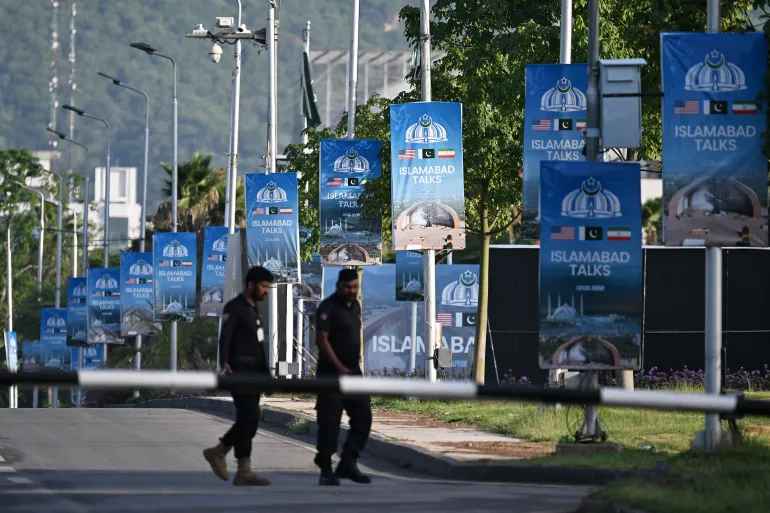
Part of the problem was that the signing of the agreement became the end rather than the beginning. The U.S. and mediators worked on drafting a political text both sides could live with. They measured success by signatures and public declarations, not paying enough attention to what actually happens when governments, militaries, regulators, banks, insurers, shipping companies and regional allies try to implement an agreement. Questions about interpretation, sequencing, verification, dispute resolution and confidence-building were deferred rather than resolved.

The June MoU, like many cease-fire arrangements, was based on constructive ambiguity. Then it all made sense. Both Washington and Tehran needed sufficient political wiggle room to sell the deal to domestic audiences as a win while leaving hard issues unresolved. Ambiguity can move diplomacy forward when a complete agreement isn’t possible.

Ambiguity only works if there are clear mechanisms to deal with the ambiguity. Without it, divergences simply move from the negotiating table to the implementation stage, where trust is less and the political cost of failure is greater. The MoU was about keeping a nuclear “status quo,” not defining what activities were or were not permitted. It offered to ease sanctions but did not say which restrictions would be lifted, by what legal authority or on what timeline. It pointed to frozen Iranian assets but gave no details on how the funds would be released, controlled or monitored. Roughly $12 billion was reportedly on the table, yet disputes quickly surfaced over whether that money would sit in supervised escrow accounts or move under unrestricted Iranian control.

A Strait Without Rulebook

The maritime provisions were equally defective. The deal required Iran to “make arrangements using its best efforts for the safe passage of commercial vessels” and to discuss with Oman the future administration and maritime services of the Strait of Hormuz “in accordance with applicable international law and the sovereign rights of the coastal states.But it did not create a common framework for navigation, maritime security, inspection procedures, routing, or dispute resolution. The wording left room for Tehran to interpret the accord as recognizing a future Iranian role in the management of the strait.

There was an initial recovery in commercial traffic as markets reacted to news of the ceasefire. But confidence remained fragile, because the institutional arrangements needed to sustain normal shipping had never been agreed. Washington said it would temporarily waive sanctions for 60 days for limited sales of oil, banking, insurance and shipping. But many insurers, refiners and shipping firms remained cautious anyway. The two-month legal window was not enough to justify the resumption of billions of dollars in commercial relations.

The respite, while it lasted, was a boon to Iran. The waiver period is estimated to have exported some 70 million barrels of oil, worth roughly $5 billion to $6 billion. But oil shipped to tankers does not turn immediately into unrestricted cash in Tehran’s hands. Sanctions, escrow arrangements and banking procedures were not clear, and commercial recovery did not bring the economic relief the agreement was meant to provide.

The ceasefire also gave both sides time to prepare for the possibility of diplomacy failing. The U.S. increased its military stockpiles and moved assets around the region. Iran used the pause to engineer a political transition and project continuity through the funeral of the supreme leader. Mediators had hoped that time would bring political progress. Instead, both governments used it to strengthen their own position in case negotiations failed. That is the key lesson: implementation is not an administrative afterthought to successful diplomacy. It’s diplomacy, but done differently. If an agreement is to stick, continued mediation is needed for every disagreement about sequencing, sanctions, verification, compliance or interpretation.

More mediators, same leverage problem

The shortcomings of the MoU’s implementation were not simply a matter of poor drafting. This was symptomatic of a broader problem with the mediation process itself: the states that brokered the agreement had enough trust to bring the parties together, but not enough leverage to compel them to resolve disputes or follow through on commitments once implementation began.

One good thing is that the mediatory effort has expanded. What began as a predominantly Pakistani endeavor has evolved into a wider diplomatic coalition with Qatar, Egypt and other regional partners now backing efforts to restore the ceasefire and get talks back on track. The expansion spreads the political, financial and logistical burden of mediation, gives access to more regional stakeholders, including Israel and Hezbollah, and makes the process more resilient if any one channel gets blocked.

But growth alone will not solve the underlying problem. New mediators are trusted interlocutors, with close regional ties like the original mediators, but limited leverage over the strategic calculations of Washington and Tehran. They can help encourage dialogue, diffuse misunderstandings and keep negotiations on track. They aren’t able to implement it themselves.

The latest proposals highlight the point. Mediators are discussing opening a southern route backed by the U.S. that was hit by Iranian attacks, and a “Iran-approved” northern shipping route that is now affected by the U.S. naval blockade. “They are also looking at options for transit fees, such as a jointly run fund or a system that would allow Iran to collect fees related to maritime security and environmental services.” Such ideas might help revive the MoU but are unlikely by themselves to secure a durable ceasefire, restore confidence in commercial shipping or sustain meaningful sanctions relief.

What would a durable implementation require

Sustainable implementation requires a different kind of international support. “Stronger external guarantors will become more important as the negotiations move from agreeing principles to enforcing obligations. Major powers with genuine economic, political and strategic weight can provide inducements, reassurance and, when appropriate, pressure that smaller mediating states cannot generate on their own. They will not be replacing the current mediators, who are vital for their credibility and relationships in the region. It would be a complement to that work in providing the leverage that is necessary to sustain implementation and assure both sides that commitments will in fact be honored.

The next phase of diplomacy isn’t just about enlarging the circle of mediators. It’s about diversifying who is in that circle. Washington and Tehran could be brought together by trusted regional mediators. But without guarantors able to ensure implementation and impose real costs for non-compliance, any new agreement is in danger of meeting the same fate as the June MoU: signed with optimism, briefly observed and quickly undone.


RECOMMENDED

UP NEXT

Gaza ceasefire violation deaths

Israeli strikes kill at least four in Gaza despite ceasefire

At least four people were killed and dozens more wounded in Israeli attacks in Gaza during the previous day, Gaza’s Ministry of Health said, the latest breach of a ceasefire deal that has regularly failed to hold since it came into effect over ten months ago. In the 24 hours leading up to Thursday, hospitals across the Gaza Strip received six bodies and 34 injured patients, the ministry said. That number includes four new deaths, one person who died of earlier injuries and one body pulled from the rubble. An Israeli air attack in the southern city of Khan Younis killed a father and an eight-year-old kid, health officials told Reuters. The strike hit a tent encampment housing people displaced by Israel’s siege that has damaged the homes of more than 1.2 million Palestinians, or about 60% of Gaza’s population. An airstrike on a residence in the Bureij refugee camp in central Gaza killed an 18-month-old baby and wounded eight others. A attack in Gaza City killed a Palestinian guy on a bicycle and wounded 10 more. “Chaos after a separate strike on the Shati refugee camp Wednesday evening,” Al Jazeera’s Hind Khoudary reported from Gaza City. The targeted building was located between two makeshift tent camps, and both were damaged in the blast, leaving families that had been sheltering there homeless, she said. When the explosives went off there were 35 households in the area, said Khoudary. Cairo negotiations stall on withdrawal, disarmament The current wave of strikes comes as Hamas officials are meeting with mediators from Egypt, Qatar and Turkiye in Cairo, ironing out specifics of the second phase of the ceasefire agreement with Israel. Two concerns have stalled the talks: Israel has not withdrawn its troops from Gaza or halted its military operations there, and Hamas has refused to disarm on the parameters that Israel has set. A Hamas official told Reuters on Thursday that the group would deliver what he called a positive and good response, but he did not elaborate on what it would contain. Hamas reportedly wants to change some parts of the current deal, such as protections for the rights of Palestinian government employees under existing Palestinian law. The group has also proposed handing over its weapons to a Palestinian body rather than surrendering them directly to Israel, the reports say. Israel, meanwhile, has not fulfilled several of its own obligations under the ceasefire it signed in October of 2025. The deal provides for 600 trucks of humanitarian aid to enter Gaza daily, but Israeli authorities have continued to limit the flow of supplies below that number. Khoudary said Al Jazeera has been following the violations since the ceasefire was signed. “Air strikes are increasing, and attacks continue all over the Gaza Strip, despite the fact that there is a ceasefire,” she said, adding that Israeli forces have carried out strikes that have killed more than 1,000 Palestinians and injured more than 3,000 since October. Death toll exceeds 73,000 since war started The strikes follow a rising death toll since October 7, 2023, when Israel launched its military campaign in Gaza. Israeli attacks have killed at least 73,341 Palestinians and wounded 174,086 others since the war began, according to Gaza’s Ministry of Health. Human rights organizations and United Nations officials have used the term genocide to describe the campaign, a characterization Israel denies. The ceasefire that took effect in October 2025 was supposed to interrupt that pattern of bloodshed and offer a route for ending the conflict. Instead, strikes have continued in the months following, targeting tent camps, refugee shelters, and residential buildings across the territory. For families in Khan Younis, Bureij, and Gaza City, the previous 24 hours delivered a familiar cycle: a strike, casualties recorded by local hospitals, and a statement from Gaza’s health ministry registering the dead and wounded. The eight-year-old died in Khan Younis and the 18-month-old murdered in Bureij were among the youngest victims in Thursday’s total, though health officials did not specify how many of the 34 injured were youngsters. Displacement has aggravated the toll of the strikes itself. With more than a million Palestinians previously moved out of demolished houses, many now dwell in the same tent encampments that have come under recurrent bombardment, including the site bombed in Khan Younis on Wednesday. Khoudary’s reportage from Shati camp revealed a similar pattern, with tent shelters grouped near a structure that was targeted, leaving those families relocated twice over in the span of a single attack. The Cairo negotiations are likely to continue as mediators seek to bridge the gap between Israel’s demands for Hamas to disarm and Hamas’s insistence on Israeli departure and a halt to the strikes. Until an agreement solves both issues, Palestinians in Gaza are likely to continuing confronting the kind of violence detailed in the ministry’s latest tally, even as the truce remains legally in effect.

Read More »
federal assault charges dismissed

Prosecutors drop nearly a third of Federal assault cases tied to Trump Immigration crackdown

Christian Garcia says he tossed an empty water bottle at federal authorities defending a facility outside Los Angeles during an immigration protest last summer. He said the bottle hit no one, not even close. Instead it was blown back at him on a blast of wind. But federal authorities nabbed him nevertheless. He was locked up for three days and might be facing a year behind bars. Garcia, a 32-year-old amateur photographer, said he lost both of his jobs, one as a security guard and another as an undercover shopper, when his employers told him that investigators had contacted them. Then, without more public explanation, the prosecutors dropped the case. Garcia’s incident is part of a pattern playing out across the country. The Trump administration filed criminal charges against at least 851 people accused of abusing or obstructing federal officers and then dropped those charges at a rate considerably beyond historical norms. A Reuters study of federal court data shows that 31% of completed cases in this group ended in dismissal, compared with 8% of all federal criminal cases statewide, records compiled by the Federal Judicial Center show. Reuters obtained records of everyone accused with assaulting or obstructing a federal officer from January 2025 through March 2026 and documented the progress of each prosecution. Much of the charge stemmed from the administration’s crackdown on immigration, but the group also included assaults on other federal workers, including postal personnel. Dismissals were significantly more frequent in cases directly connected to protests over immigration. Prosecutors dismissed almost 45% of the 86 protest-related cases that had been resolved by the end of May, a Reuters review has revealed. “The administration’s position is that anyone who assaults or obstructs law enforcement will be prosecuted to the fullest extent of the law,” said a spokesman for the Department of Homeland Security. “Prosecutors should hold people accountable for these assaults,” said Justice Department spokesman Kiersten Pels, but when mitigating elements arise in a case, she said, prosecutors must inform the court and in some cases reduce or abandon the charges. Whatever the outcome of the proceedings, the cost has been incurred by those caught up in the charges. Six people told Reuters of lost jobs, legal fees and in some cases, barrages of internet threats that came after federal officials announced their arrests. Garcia said he never got his jobs back even after prosecutors dropped his case. He alleged an agent took his phone during the arrest and never returned it. “It’s like I didn’t get no justice at all,” he remarked. “One day changed everything in my life.” The original criminal sheet against Garcia says he was seen tossing an object at cops and others in the crowd threw rocks and water bottles that impacted officers’ shields. Reuters has examined thousands of court files nationwide and interviewed more than 15 investigators, prosecutors and defendants about the administration’s pursuit of people who disagreed with law enforcement – and the consequences. Their stories suggest a Justice Department prepared to file federal charges for confrontations that in previous administrations would have resulted in no arrests or prosecutions. Among those instances: a lady who backed her SUV into an agent’s car at low speed, a man who challenged an agent to a boxing bout but didn’t throw any punches, and another who leaped on top of a Homeland Security agent’s vehicle during a demonstration. Prosecutors also charged a Washington man in connection with sandwich rebounded off an immigration agent’s body armor. That’s not all cases. Some of the assaults Reuters studied were bad enough that they likely would have led to prosecution under any administration, including an instance in Minnesota in which a woman was accused of chewing off the tip of a federal agent’s finger in January. But those involved with the campaign say the scale and velocity of the administration’s prosecutions, and a lower bar for bringing cases to court, represent a departure from traditional Justice Department practice. Two people familiar with internal guidelines said the Justice Department notified prosecutors last year that any decision to decline one of those cases had to be justified to Washington. The need forced prosecutors to file charges they may have otherwise ignored. In May, acting U.S. Attorney General Todd Blanche informed immigration officials in Arizona that the agency would pursue any assault on an officer “regardless.” cases fall off at a rate not often seen in a federal court Federal prosecutors generally win their cases. Records from the Federal Judicial Center show that around 90% of those charged with a federal felony are convicted in most years. That pattern is notably broken by the administration’s prosecution of assault cases. Prosecutors won convictions in 65% of the 481 completed cases in Reuters’ examination, with the majority of the rest dropped at the prosecutors’ request. The other cases are still pending out of the 851 reviewed. The dismissal rate shows authorities are rushing to build cases the right way, said Kyle Boynton, a former federal prosecutor and FBI agent with experience investigating assault cases. In most cases prosecutors offered no specific explanation for dismissing the charges other than the interests of justice. That’s the reason offered to Lizzie Rose, charged in January with backing her car into an SUV carrying immigration authorities after she followed the vehicle through Minneapolis. A neighbor recorded the incident on camera, depicting a slow speed accident. The Department of Homeland Security publicized Rose’s mugshot on social media and said the agency would not be intimidated. Her picture was in the press media as well. The deluge of threats that followed forced Rose to leave her own home and send her two children to live with their father, she said. “It took over our lives,” she said. The answer: “Everyday.” Rose, 42, has been put on leave from her employment with a Minneapolis nonprofit. video proof disproves agents’ sworn statements In Chicago, the presiding judge said the arresting officer swore under oath that he had studied video evidence supporting his assertion that 21-year-old Luci Mazur grabbed his arm and resisted arrest when prosecutors dropped assault charges against Mazur. The judge indicated body camera footage had a role in prosecutors’ decision to drop the case. Four law enforcement officials, both current and retired, warned that the prosecutors’ readiness to bring cases in which agents’ stories subsequently turn out to be false risks undermining the trust that judges have traditionally given government lawyers. Michael Rabbitt, a local Democratic political official in Chicago, was at a morning demonstration last September outside an ICE processing facility in nearby Broadview, a site that became a focal point of the administration’s immigration enforcement in the region. “People were moving out of the way for cars to get by at the direction of the Broadview Police,” Rabbitt claimed, “but the ICE car didn’t wait for the crowd to clear.” A video of the event showed Rabbitt had his hand on the side of the automobile for roughly 30 seconds as it crept forward. A month later, Rabbitt was in Portugal with his wife on vacation to honor their 30th wedding anniversary when he got a call from an FBI agent telling him he’d been indicted and needed to give himself in. The accusations included a misdemeanor count of impeding the agent’s car, and a felony allegation of conspiracy to hinder or injure authorities. “It’s ridiculous,” Rabbitt said. Prosecutors dismissed the conspiracy accusation in early May but nevertheless pursued the case against him for blocking the ICE car. Federal judge criticizes grand jury practices Just days before Rabbitt’s trial was to begin, a federal judge in Chicago rebuked prosecutors for their handling of the case. The judge accused them of “stacking” the federal grand jury in their favor by excusing potential jurors who looked unlikely to vote to indict, of wrongly telling jurors they could rely on the prosecutor’s credibility rather than weighing the evidence themselves, and of communicating with jurors outside the grand jury room. All accusations against Rabbitt were dropped by the Justice Department later. In an extraordinary measure, prosecutors agreed not to oppose a defense request that the department pay a share of the legal bills for Rabbitt and other defendants charged in the same protest. “I think most government lawyers are operating in good faith and trying to do the right thing,” said Judge April Perry, who normally gives prosecutors a presumption of regularity. But in this situation, she argued, that trust has been breached.

Read More »
car leasing decline

Car leasing collapse pushes American buyers toward seven-year loans

Car leasing has dropped from its historic role as one of the quickest paths onto a new car lot, and the data indicate how far the shift has gone. Before the pandemic, nearly 30% of new-vehicle deals in the United States were leases, according to JD Power. That proportion decreased to 17% during the post-pandemic inventory deficit and has only partially recovered subsequently. In the first half of 2026, leases made roughly 23% of new car transactions. The fundamental factor for the reduction is straightforward: automakers ceased paying the rock-bottom monthly payments that once made leasing an easy sell. Customers who return at the conclusion of a lease term now frequently discover quotations on their next lease ranging a few hundred dollars higher per month than what they were paying before. “The customer still has a desire to lease,” said David Ferraez, a General Motors dealer in New Jersey. “The big challenge is getting the customer to accept the much higher payment.” The retreat has reverberated beyond the showroom floor. Fewer affordable leases means fewer returning customers strolling back into dealerships when their agreements expire, and it has pushed some purchasers toward stretching their vehicle loans out to seven years simply to keep monthly payments manageable. why automakers stopped supporting leases A lease works by having the buyer make monthly payments, often over three years, with an option to purchase the car at a specified resell price once the contract finishes. If the buyer passes on that option, the vehicle goes back to the lender, usually the automaker’s own finance arm. Leasing has always given purchasers a lower monthly payment than financing an item altogether. “It’s a worse deal for the automakers because the automakers make less money on a lease per vehicle, but it kept new-car deliveries coming and brought customers back to the lot every three years.” Leasing was particularly prevalent among luxury manufacturers, whose purchasers tended to seek the latest style and technology rather than long-term ownership. That was the case with the computer-chip bottleneck that curtailed car supply from 2021 to 2023. Automakers recognized that a leaner dealer lot meant fewer discounts, rebates and inexpensive lease terms to sell inventory. Many stuck with that leaner approach even after the chip scarcity eased, and increasing interest rates on top of that have made leasing more expensive across the board. The divide between leasing and financing hasn’t gone away. JD Power estimates that the average lease cost is roughly $650 per month compared with $800 to finance a new vehicle. Ivan Drury, head of insights at Edmunds, said the math has changed for consumers. “They’re still a long way behind the old days,” he remarked. The repercussions is shown in the figures from Edmunds : 23% of new-vehicle purchases in the second quarter of 2026 were financed with 84-month loans, seven years of payments once rare in the auto industry. And Honda has witnessed its own consumers head off in that way. The automaker’s 84-month purchase loans have increased but its 26% lease rate in the second quarter remains above the industry average and below its pre-pandemic rate. “Leasing was a lower price point. That may not be the case anymore,” said Lance Woelfer, Honda’s vice president of automotive sales. dealers watch a once dependable customer pipeline dry up The drop has had a direct impact on dealers, who have benefited from the predictable cycle of returning purchasers with three-year lease periods. Dealers say many of those same consumers now resist when they realize what a new lease will really cost. John Luciano, owner of a Volkswagen dealership in Amarillo, Texas, said leasing had dropped from approximately 65% of his new-vehicle sales in 2022 to roughly 30% now. For example, he said, an Atlas SUV costs $130 more a month to lease than it did a couple of years ago. “It creates a lot of defection,” Luciano remarked. The brand is still committed to leasing and we recognize the value that leasing has in customer loyalty and future vehicle sales, a Volkswagen representative said in a statement. Dealers say a similar pattern is occurring across brands. Customers used to be comfortable with a set lease payment and now they see offers $100 to $200 higher per month and walk away instead of signing, interrupting a cycle that used to draw them back automatically every three years. used-car prices are getting squeezed by the leasing downturn, too The decrease in leasing has implications that go far beyond new-car lots. Leased cars usually wind up on a dealer’s used car lot, making leasing one of the main sources of supply for the used vehicle market. There are less leases that started three years ago, so less of those vehicles are coming back now and the shortfall has been felt in the used-car market.” The average selling price of a used vehicle that’s three years old has jumped 43% since before the epidemic, according to Edmunds statistics, a surge the firm attributes directly to fewer off-lease vehicles entering the market. ““There is a reason why used vehicles are so expensive, and it’s because there are so few leases,” Drury said. The result is a used-car market still working through a supply crisis that began with computer chips years ago and has been compounded by automakers’ unwillingness to return to their old lease playbook. Buyers who had previously used leasing as an inexpensive means to get a new vehicle, and used-car shoppers who depended on those leased vehicles cycling back onto lots, are now being hit with increasing pricing without a clear schedule for relief.

Read More »
Pavel Durov terrorism charges

Russia charges telegram founder Durov with facilitating terrorism, claims app aided Ukrainian sabotage recruits

Russia on Wednesday accused Telegram founder Pavel Durov of assisting terrorism, saying Ukrainian intelligence used his messaging app to plot attacks inside Russia. Within hours, the official Telegram account on X replied with a picture of the Russian-born billionaire giving the obscene middle finger gesture. The charges, which Russia’s Federal Security Service announced, stem from a long-running investigation into Dubai-based Durov and the platform he created. Moscow has already throttled access to Telegram in Russia in a wider crackdown on foreign tech platforms, forcing Russian users to rely on VPNs to access the app while state institutions including the Kremlin and the defence ministry continue to post to it on a daily basis. A dating chatbot was implicated in the case The FSB and Russia’s Investigative Committee said in statements that a Telegram chatbot called “Daivinchik/Leo” had been used by Ukrainian special services to recruit young Russians into sabotage and terrorist operations. The chatbot is a popular dating tool in Russia after Tinder was banned. The statement said Ukrainian operatives posed as young women on the chatbot to contact Russians, building relationships before coercing them into committing crimes. Over the past year, 46 Russians aged 12 to 22 have been detained after being recruited in this way, who, according to the FSB, allegedly carried out attacks on law enforcement officers or set fire to transport, energy, communications and financial infrastructure. Ukraine did not immediately respond to the accusations. telegram as a weapon of war by either one Telegram has been dubbed a “virtual battlefield” in the war between Russia and Ukraine, with government officials, soldiers and influential military bloggers on both sides using the platform to share information, coordinate and shape public narratives around the conflict. The dual use by both governments, even as Russia moves against its founder, underscores the platform’s unusual position as a tool Moscow relies on for its own messaging, while also accusing it of being a platform for attacks against the state. an international wanted list, but not a clear process The FSB said Durov was being placed on an international wanted list, but did not say how Russia intends to pursue that designation. The global police organization Interpol did not immediately respond to a request for comment. A source familiar with the situation said it is unlikely that process will move quickly if Moscow seeks a Red Notice through Interpol. Durov lives in Dubai, an emirate with friendly relations with Moscow and growing links in energy, business and finance. But handing Durov to Russian authorities could hurt Dubai’s reputation as a center for global enterprise and technology, an image the emirate has carefully constructed by luring entrepreneurs and tech executives from across the globe. Durov said last week he was in Georgia, but his current whereabouts is unknown. a founder with a history of friction with the russian government Born in Russia, Durov founded VKontakte, often called Russia’s answer to Facebook, before selling his remaining stake in the company in 2014 under pressure from Russian authorities. He currently holds citizenships of the United Arab Emirates and France. His problems with law enforcement are not limited to Russia. In 2024, Durov was arrested by French authorities on charges that Telegram did not do enough to police criminal activity on its platform and failed to cooperate with law enforcement requests. He was soon allowed to leave France as the investigation continues. The case is still open. Durov has denied any wrongdoing, saying Telegram has gone above and beyond its legal obligations in moderating content and cooperating with authorities to fight crime on the platform. months of red flags from Moscow The charges on Wednesday were not unexpected. In February, a Russian government newspaper reported that Durov was under investigation in a terrorism-related case. In April, Durov wrote on Telegram that a summons addressed to “Suspect P.V. Durov” had been delivered to an apartment in Russia where he lived two decades ago. He met that summons with defiance rather than concern. “They must be suspecting me of defending articles 29 and 23 of the Russian Constitution, guaranteeing freedom of speech and the right to private correspondence. “Guilty and proud of it!” At the time, Durov wrote that the investigation was not a legitimate criminal matter but “retaliation for my refusal to give in on user privacy protections.” Durov, for now, remains outside of Russian jurisdiction, and the path to arresting him is murky, given his current location and the diplomatic headache any extradition request would cause with Dubai or Georgia. The designation as an international wanted person gives Russian authorities a formal basis to seek him, but without cooperation from the country where he is, the charges may serve more as a political statement than an immediate legal threat. Durov is now being investigated in another jurisdiction for how Telegram is used and moderated, adding to a growing list of countries where he is under scrutiny following his unresolved legal exposure in France. Durov’s exposure to actual practical risk, apart from the reputational and diplomatic pressure the charges have already generated, will likely depend on whether Russia’s terrorism charges find traction internationally, or whether Interpol refuses to act on a Red Notice request due to the political nature of the case. Telegram itself has not shown any intention to change its ways in response to the allegations. The platform’s blunt public response on X – a photo of Durov’s obscene gesture rather than any sort of official statement – suggests the company will dismiss Moscow’s accusations as illegitimate rather than address them on their merits.

Read More »
Ethiopian Airlines Bishoftu airport

U.S. seeks role in Ethiopia’s $12.5 billion airport project as rivalry with China deepens

The United States is seeking to secure a role for American firms in Ethiopian Airlines’ $12.5 billion Bishoftu airport project, a senior U.S. Commerce Department official said on Wednesday, as Washington competes with China and other powers for influence over infrastructure and investment across Africa. Construction began in January on the four-runway airport, some 45 kilometers southeast of Addis Ababa. Ethiopian officials have said they hope to make the site the “Dubai of Africa” when it opens in 2030. “Washington is very actively engaged in trying to get U.S. participation,” said Mark Mitchell, the U.S. deputy assistant secretary of commerce for the Middle East and Africa. He made the comments at a virtual press briefing from the Africa Logistics and Communications Symposium in Addis Ababa where he said he met with officials from Ethiopian Airlines. Mitchell did not specify what form U.S. involvement might take but said “more Boeing aircraft powered by GE Aerospace engines” could be one result of greater American engagement with the airline. Boeing’s swelling order book Ethiopian Airlines has already been growing its relationship with Boeing. In April, the carrier agreed to purchase six additional 787-9 Dreamliners atop 20 jets it already ordered. The carrier has built its long-haul fleet strategy heavily around Boeing widebody jets, and more orders tied to the airport expansion could deepen that commitment. Ethiopian Airlines CEO Mesfin Tasew said in April that U.S. financial institutions had “expressed interest” in participating in the Bishoftu project, but he did not name any specific banks or describe what that participation might entail. Financing still in the works The African Development Bank has committed $500 million for the airport and is spearheading the larger push to raise $8.7 billion needed to finish construction. That still leaves a sizable funding gap to be filled, and the airport’s backers have been courting a mix of multilateral lenders, private investors and foreign governments to fill it. One reason the project has become a point of competition between global powers is the scale of the financing need. Over the past ten years, Chinese banks have lent money to African governments and airlines for infrastructure, and Chinese companies have signed contracts for construction projects. Ethiopian Airlines has worked with Chinese companies on projects in the past. Washington’s drive for a stake in Bishoftu is part of a wider trend of U.S. officials trying to counter Chinese influence on the continent, with American financing, equipment and expertise on offer. AI cooperation also on agenda Mitchell said the Commerce Department also was looking to deepen ties with Ethiopia’s Artificial Intelligence Institute, beyond the airport. He said the outreach was part of a wider U.S. effort to promote exports of American AI technology to African markets, where Washington has been trying to stake an early foothold as governments across the continent begin to develop digital infrastructure and regulatory frameworks for AI adoption. The AI outreach and the airport push are part of a pattern the Commerce Department has followed in several African countries this year: combining traditional infrastructure and aviation deals with efforts to introduce American technology companies into markets where Chinese firms have often gone first and fast. Significance of Bishoftu The airport itself is meant to address a capacity problem Ethiopian Airlines has suffered from for years. Addis Ababa’s current Bole International Airport has had trouble coping with the airline’s growth, and Ethiopian Airlines has established itself as the dominant carrier connecting Africa to the rest of the world, especially through its hub-and-spoke model, routing passengers from smaller African cities through Addis Ababa to international destinations. A four-runway facility able to accommodate the traffic volumes officials are seeking would provide the airline room to keep growing that model for decades. Officials have described it as the “Dubai of Africa”. But the comparison refers to ambitions which go way beyond aviation. There are reportedly plans for retail, logistics and hospitality development around the airport site to generate revenues beyond ticket sales and cargo fees. The project’s appeal for U.S. companies goes well beyond aircraft sales. A big airport like that will likely need contracts for everything from air traffic control systems to ground equipment to construction materials, and U.S. firms compete in many of those areas with European, Chinese and Gulf-based rivals. A Test for U.S.-Africa Strategy The Bishoftu project has become something of a bellwether for how aggressively Washington is willing to compete for African infrastructure business under this administration. But Commerce Department officials have been increasingly emphasizing the strategic importance of African markets, both for their economic potential over the long run and as a way to counter Chinese and Gulf state influence in a region where those powers have often outpaced American investment. Ethiopian Airlines has largely avoided exclusive alignment with any single foreign power, working with Chinese, European and American partners on different projects depending on financing terms and equipment needs. That strategy has given the airline leverage in negotiations, as it can play potential partners off against each other, rather than committing itself to the technology and financing ecosystem of one bloc. Whether Mitchell’s meetings in Addis Ababa will translate into concrete contracts, remains to be seen. The African Development Bank is still trying to raise the $8.7 billion it wants and neither side has publicly detailed what role U.S. companies would have, as suppliers of equipment, financiers or construction partners. For now, the airport is a work in progress with a target completion date of 2030 and both the financing picture and the mix of international partners involved are likely to keep changing as the project progresses. Mitchell’s comments Wednesday suggest that Washington is not backing off from wanting a larger role, but the size of that role will depend on decisions still being negotiated among Ethiopian Airlines, its lenders and governments that want to be part of one of the biggest infrastructure projects in the continent in recent years.

Read More »
Iran China missile deal

iran to receive up to 400 chinese missile launchers within weeks, sources say

The first batch of as many as 400 Chinese-made shoulder-fired air-defense missile launchers is expected to reach Iran within weeks, three sources familiar with the deal told Reuters. The purchase is one of the biggest known attempts by Tehran to rebuild its short-range air defences since war broke out with the United States and Israel earlier this year. The deal, valued at $60 to $70 million, covers 300 to 400 man-portable air defense systems (MANPADS) including Chinese-made QW-12 and FN-16 missiles, the sources said. The deal was signed with Hong Kong-based Zhongqing Baoshang International Investment, which sources described as an intermediary between the Iranian side and the Chinese supplier. The sources were not identified because of the sensitivity of the matter. Iran’s foreign ministry did not respond immediately to a request for comment. The Chinese Foreign Ministry challenged the reports. There is no basis whatsoever for the relevant reports. “China has always played a role in promoting peace and resolving the conflict,” the ministry said in a statement. Zhong Qing Bao Shang Group, based in Beijing and the parent of Zhongqing Baoshang International Investment, did not respond to an email request for comment on Tuesday. After months of strike, rebuilding Months of fighting in which the United States and Israel have hit facilities linked to its missile, drone and air-defense programs mean Iran needs to rearm. Tehran retaliated with a barrage of its own ballistic missiles and drones. The war demonstrated the difficulty for Iran to defend fixed military and strategic locations against advanced aircraft and guided weapons. Washington abruptly suspended two weeks of bombardment on Saturday, but President Donald Trump said strikes would resume if talks failed to end the five-month conflict that has been technically under a ceasefire since April. One shipment containing hundreds of MANPADS would significantly boost Iran’s stockpile of short-range air-defense weapons and signal closer military cooperation between Tehran and Beijing. The sources cautioned that even though the deal is signed, delivery schedules, quantities, and other details could change before shipments begin. Under the current plan, the deliveries will initially travel by air from Urumqi in western China, then transit through Pakistan into Iran, the sources said. They did not mention whether the journey onwards from Pakistan would be by air or by road. The ISPR, the military’s public relations wing, denied any involvement. “The speculations about Pakistan’s involvement in the supply of Air Defence weapons to Iran from China are absolutely concocted and false,” the agency said in a statement. A spokesman for Pakistan’s foreign ministry did not immediately respond to requests for comment. China, Iran discuss land routes Iran has developed its missile, drone and radar capabilities over the past two decades, but military experts say portable air-defense systems serve a different purpose. They can be moved frequently and deployed rapidly by small units, making them harder targets than fixed air-defence batteries. “His country’s authorities were monitoring a number of contracts being negotiated for the sale of QW-series MANPADS to Iran, including the QW-12, QW-18 and QW-19 systems,” said a European security source. Iran was actively looking for QW-12 and QW-18 missiles, but there was no sign that a deal had been concluded, said a second security source based in the Middle East. The QW-12 and FN-16 are portable, infrared-guided, surface-to-air missiles designed to target low-flying aircraft, helicopters and drones. They are mobile, meaning they can be quickly deployed around military installations, energy infrastructure and other sensitive sites. “Defense analysts say the QW-12 is viewed as less capable than newer QW variants, like the QW-18 and QW-19, but it can still offer a useful layer of short-range protection against drones and low-flying threats. Tehran had also looked at overland routes for transporting Chinese military supplies and dual-use components, to reduce the chance of interception and make the shipments less visible, two Western intelligence sources and an Iranian official said. Foreign procurements in spite of sanctions The deal shows Iran remains reliant on a mixture of domestic weapons production and foreign suppliers, even after years of sanctions and limits on defense-related imports. Separately, Reuters reported that Iran was close to a separate deal with China, this time for anti-ship cruise missiles, according to people familiar with the talks. That agreement was not clearly concluded. The MANPADS purchase comes as Iran works to patch holes in its air-defense network revealed during the war. The fighting demonstrated Iran’s air defense infrastructure is vulnerable during a sustained air campaign and the strikes by Israel and the U.S. directly targeted sites connected to Iran’s missile and drone programs. Shoulder-fired systems can’t replace the fixed batteries Iran lost or had degraded during the conflict, but they give ground forces a way to protect specific sites without relying entirely on radar-guided systems that can be jammed or targeted first. The intermediary role of Zhongqing Baoshang fits a familiar pattern in Iranian arms procurement where trading companies in Hong Kong or mainland China act as intermediaries rather than Chinese state-run defense firms selling directly to Tehran. That, in turn, provides Beijing some insulation from transactions that could otherwise bring international attention or sanctions exposure while its Foreign Ministry denies involvement in providing weapons to either side of the conflict. Pakistan’s denial of any role in the transit route adds to the complexity. If deliveries do go through Pakistani territory as the sources described, Islamabad would be in an awkward position given its own relations with Washington and Gulf states that have taken a harder line against Tehran during the conflict. The shipment is still in its early stages for now with the sources warning details could still change before any missiles reach Iranian territory. But the order’s size, possibly hundreds of launchers, indicates Tehran is treating air defense holes as an urgent priority and not a problem it can solve in bits and pieces. How quickly Iran can rebuild the kind of layered air-defense posture it had before the war began is likely to be shaped by whether the deal goes through as planned and whether additional shipments follow the anti-ship missile talks Reuters previously reported.

Read More »
Aeon mall explosion Japan

Mall explosion kills 3 after Quake shakes Southern Japan, dozens still trapped

A magnitude-7.1 earthquake rocked southern Japan Tuesday, sending shoppers sprawling and filling a crowded shopping mall with dust. That was just the beginning. Just over an hour later an explosion rocked the same building killing at least three people and leaving rescue crews working through the night to reach others trapped in the rubble. The blast blew holes in the mall’s steel frame, debris scattering across the parking lot as hundreds of shoppers and employees, already evacuated once for the earthquake, looked on from a distance. First responders were hesitant at first, afraid to enter a building that could still collapse. By early Wednesday morning, eight people had been retrieved from the wreckage. There were three deaths. The condition of three store workers unknown. Mall operator Aeon (8267.T) said it was looking into the possibility of a gas leak. “It’s a race against time to save those still trapped in the mall and elsewhere in the earthquake-devastated region,” Prime Minister Sanae Takaichi said of the rescue effort. Around 170 soldiers took part in Wednesday’s search.**A blast like a bomb 41-year-old Takateru Sonoda runs a hair salon and cafe near the mall. “I thought a bomb had gone off,” Sonoda told the Jiji Press news agency. “It felt like an attack.” “People were telling others to get out, and the sirens were going off. “It was a panic situation, roads around were gridlocked. Some 300 meters from the mall, Kazuya Tsurunaga was washing broken dishes and glasses in a pub when the blast occurred. He was already cleaning up after the earthquake. ‘A huge cloud of smoke was billowing up and because the wind happened to be blowing, and the wind direction was toward the shop, it was like volcanic ash was falling around us,’ he told broadcaster TBS. Even before the explosion, the scene inside the mall was chaotic. The Yomiuri newspaper quoted one worker in one of the 200 stores at the mall as saying the earthquake shook the building for 10 seconds and knocked him to his knees. The quake struck about 4:30 p.m. (0830 GMT), raising a cloud of dust and adding to the panic among shoppers trying to escape, said a 22-year-old employee at the mall cinema.Thousands evacuated, but some didn’t make it out Aeon President Akio Yoshida told reporters Wednesday employees were able to evacuate 3,000 shoppers within 30 minutes after the earthquake. Some employees had gone back inside when the explosion occurred about 50 minutes later. “We confirmed all the customers had been evacuated. We thought that employees had also evacuated, but it later turned out that some people had stayed inside or returned for some reason,” Yoshida said. One survivor was found injured in a bathroom, he said. A video shot by a police officer inside the mall early Wednesday shows large portions of the ceiling had collapsed, storefronts were blown open and furniture was strewn across the floor. One small bit of good news: All 25 cats left behind in a cat cafe during the evacuation were rescued Wednesday. “Thank you to the rescue workers,” the store owner wrote in a post on social media. Police and firefighters stayed away from the rubble for hours after the explosion because of the risk of further collapse. Aftershocks continued to come. More than 100 had been registered in Kumamoto prefecture by Tuesday evening, a police official said. A mall rebuilt after the last catastrophe The mall, the largest in Kumamoto prefecture, had just reopened last month after a renovation to mark its recovery from a previous earthquake. The 7.3 magnitude Kumamoto earthquake badly damaged the building in April 2016. When it reopened, Aeon cited safety upgrades, including seismically reinforced ceilings, in its redevelopment. Those upgrades didn’t stop Tuesday’s quake from causing damage, or, investigators say, from setting off a chain of events that led to an explosion. Gas in investigators’ sights Some rescuers at the scene reported smelling gas, Japan’s government spokesperson Minoru Kihara told reporters Wednesday. A TV reporter at the scene reported that an emergency vehicle was repeatedly telling people to stay away from the mall because of a possible leak. The mall was running on LPG, or liquefied petroleum gas, which was pumped in from an outdoor storage tank, not piped gas from the network, officials at the mall told the Associated Press. Video of the scene showed the tank appeared intact after the explosion. The LPG system had passed a safety check as recently as last month, officials said. In Japan, if seismic activity exceeds a threshold or a line breaks, the piping system is automatically shut off. LPG systems have similar safeguards, an official with Japan LPG sales association said. Microcomputer controlled meters will automatically shut off supply when leaks or abnormal pressure changes are detected. Meters are designed to shut down during major earthquakes. In an emergency, gas suppliers and safety service providers can also shut off the supply remotely by radio, the official said. A gas-related cause for the explosion was “very high” in likelihood but a full investigation was needed to determine what went wrong, Yoshida said Wednesday, stopping short of confirming it. “We did not expect an explosion of this nature to happen,” Yoshida said. “We have not had an accident like this in the years that we have operated Aeon mall.” What’s next Engineers assessed how stable the rest of the structure was, while rescue teams continued their search through the wreckage Wednesday for the three missing store workers. The cause of the gas system failure is still unknown despite safeguards, but aftershocks continue to rock the area and investigators have a limited time to figure out what triggered the blast before evidence becomes more difficult to access in the collapsed areas. The explosion poses tough questions for Aeon about a building the company had just spent months rebuilding and promoting as safer than before. For the people of Kumamoto, it’s the second disaster involving the same mall in 10 years, a disaster that began with the ground shaking and ended with a fireball that few who lived through it will ever forget.

Read More »
Germany sick leave rules

Germany’s sick-leave debate misreads the real problem, researchers say

Germany is preparing to tighten its rules on medical certificates for sick employees, but researchers who study the country’s rising absenteeism rates argue the government may be targeting the wrong cause. They point instead to mental health pressures and worsening conditions in fields such as nursing, care work and teaching. German workers took roughly 22 sick days on average in 2024, one of the highest rates among wealthy nations. The figure comes from BKK, an association representing company health insurers, and it jumped in 2022 after Germany introduced electronic sick-note reporting, a shift that captured short-term absences more accurately than the paper system it replaced. Chancellor Friedrich Merz’s coalition wants to scrap telephone sick notes and let employers demand medical certificates starting on the first day an employee calls in sick. Officials frame the change as part of a broader effort to lift productivity in an economy dealing with an aging workforce and years of sluggish growth. Where the sick days concentrate Researchers who study labor markets and mental health say the absenteeism data points somewhere specific: professions marked by chronic understaffing, low pay, thin career advancement and heavy emotional demands. BKK figures for 2024, the most recent year with sector-level breakdowns, show women in healthcare and social work took 27 sick days on average and teachers took 24. Workers in finance took 18 and those in communication took 16. Johannes Siegrist, an emeritus professor at the University of Duesseldorf, said the underlying issue often falls short of a clinical diagnosis. “It doesn’t need to be a full-blown depression,” he said. “It can also be a state of exhaustion or burnout as a result of problematic working conditions.” Mental disorders account for just 4.8% of sickness cases, according to AOK, Germany’s largest health insurer. But when they do occur, they lead to an average of 28 days away from work. AOK data also shows sick days linked to mental health issues among its members have climbed 47% since 2014, making mental health the second-largest driver of absence after respiratory illness. A mismatch between demands and rewards Siegrist described the specific strain facing healthcare, education and social services workers as a combination of high responsibility and low compensation. “They have jobs with high responsibility, they need to combine task performance and social interaction and they have to deal with emotional problems, but also with physical stressors, including violence,” he said. “And often these are low-paid people with a rather low socioeconomic status.” Occupational health scholars have a term for this pattern: effort-reward imbalance, where employees face intense demands without corresponding pay, status or job security. A substantial body of international research links that imbalance to mental health problems and extended absences from work. It has also been tied to a higher risk of coronary heart disease. Germany’s schools show the pattern clearly. The 2024 German School Barometer found that nearly half of teachers reported psychological or physical violence among students at their school. More than a third said they felt emotionally exhausted several times a week. Nursing shows a similar strain. Staff shortages remain acute across the sector, yet recent German studies have found wage growth has stayed limited, particularly in hospitals and public institutions, even as the workload on remaining staff intensifies. Germany’s health ministry declined to comment when asked why absenteeism runs highest in the sectors facing the heaviest mental health and emotional pressures. Little evidence of abuse None of this means mental health alone explains Germany’s absenteeism levels. Sick leave rates depend on a mix of factors, including demographics, workplace conditions, social norms and differences between national institutions, which makes comparing countries directly difficult. Germany’s sick-pay system is also among the most generous anywhere. Employers replace 100% of wages starting on the first day of illness, for up to six weeks. Even so, seven OECD countries, Norway, Slovenia, Spain, Finland, France, Portugal and Belgium, report higher rates of sick leave among full-time employees than Germany does. Sofia Malinai Domagk, a researcher at the OECD, said sick leave rules explain only part of the picture. “What we can say is that sick leave rules are one factor among many, and we would caution against reading too much into direct country comparisons of sick leave rates,” she said. Researchers who have examined Germany’s absenteeism increase say they have found little sign of widespread abuse of the system. A joint study by the health insurer DAK and the IGES institute concluded that the sharp rise in recorded absences in 2022 came mainly from improved electronic reporting combined with unusually strong waves of respiratory illness and COVID-19 infections. Sick day totals have leveled off since then. The same study found no evidence that telephone sick notes, introduced in 2020 during the pandemic, contributed to the surge. Researchers concluded that neither phone-based certification nor routine misuse of the system accounted for the record sickness levels recorded in recent years. Enzo Weber of the Institute of Employment Research summarized the findings directly. “The available scientific studies suggest that sick leave by phone has not led to an increase in sick leave reports,” he said. Unions and doctors push back The government’s proposed changes have drawn criticism from Verdi, the services union, which said the plan reflects a “culture of mistrust” toward workers. Associations representing doctors said requiring certificates from the first day of absence would be “absolutely disastrous” for medical practices already stretched thin. Facing that pushback, the government said it would give companies flexibility. Employers can choose whether to adopt the new first-day certificate requirement or stick with the existing rule requiring a doctor’s note starting on the fourth day of illness. The debate leaves Germany with an open question. Whether tighter documentation requirements can meaningfully reduce absenteeism remains unproven, while the sectors driving the country’s sick-leave numbers, healthcare, education and care work, continue to face the staffing shortages, pay stagnation and emotional strain that researchers say sit at the root of the problem.

Read More »
Ghana's tallest man dies

Ghana’s tallest man Awuche dies weeks after Ibrahim Mahama pledged to fund his treatment

Abdul-Samed Sulemana, known widely as Awuche and recognized as Ghana’s tallest man, has died from complications linked to gigantism. He passed away in the early hours of Monday, July 27, 2026, at the Tamale Teaching Hospital, where doctors had been treating him after his condition deteriorated in recent weeks. He was 33 years old. His death comes just weeks after businessman and philanthropist Ibrahim Mahama pledged to cover the full cost of his medical treatment, a commitment made after a public appeal drew attention to his worsening health. A worsening condition Awuche’s health declined sharply after complications tied to gigantism set in. Doctors at the Baptist Medical Centre in Nalerigu referred him to the Tamale Teaching Hospital for specialized care once his condition passed beyond what the facility could manage. His family said doctors at the referral hospital later recommended amputating his left leg. A severe infection had caused extensive tissue damage, and physicians determined the limb could not be saved. For years, Awuche lived with gigantism, a condition caused by excess growth hormone production that leads to abnormal skeletal growth. He stood at approximately 7 feet 8 inches, a height that made him a recognized figure across Ghana and earned him the distinction of the country’s tallest man. He was a native of Gambaga in the North East Region. Despite the severity of his illness, he could not afford the specialist treatment he needed. Public appeals eventually drew national attention to his case, generating an outpouring of support and prompting Mahama’s intervention. Mahama’s pledge of support Rafik Mahama, an aide to the businessman, confirmed the commitment in a Facebook post, saying he had personally reached out to Awuche and his family. “On behalf of Mr. Ibrahim Mahama, I have reached out to Awuche and his family to assure them of our full support during this challenging time,” he wrote. He said the businessman had agreed to fund both surgery and other treatment costs. “Mr Ibrahim Mahama has pledged to fully cover Auche’s hospital bills, including the costs of his medical treatment and surgery,” Rafik Mahama added. According to Rafik Mahama, arrangements were made to transfer Awuche to the Tamale Teaching Hospital on Tuesday, July 8, 2026. He was admitted there and began undergoing treatment shortly after. The pledge offered a measure of hope after months in which Awuche’s inability to pay for specialist care had drawn sympathy from Ghanaians who followed his story. His case became a rallying point for public fundraising efforts as his health continued to decline, and it eventually reached Mahama, whose intervention gave the family and the wider public reason to believe recovery was possible. Tributes follow his death News of his death spread quickly on social media, where Ghanaians shared tributes and expressed sorrow that the medical intervention arrived too late to save him. Many who had followed his story since the initial appeal for help described a sense of disbelief that his fight ended despite the support he ultimately received. Awuche’s case had become a symbol of the gap between the cost of specialist medical treatment and what many Ghanaian families can afford on their own. His public appeal, and the response it generated, put a spotlight on gigantism, a rare condition that few in the country had discussed openly before his story spread. He leaves behind family, friends, and a community that rallied around him during his final weeks. Members of that community had followed each update on his condition, from his referral to Tamale Teaching Hospital to the amputation recommendation and, finally, to Mahama’s pledge of support. No further details about funeral arrangements had been released at the time of this report. Family members had asked for privacy in the immediate aftermath of his death, while continuing to express gratitude for the support Awuche received during his final weeks, including the medical intervention funded by Mahama. His story, from the public appeal that drew national attention to the businessman’s pledge to cover his treatment, remains a widely discussed example of how public pressure and private philanthropy intersected in an attempt to save a life that ultimately could not be saved.

Read More »
Uganda UN nomination

Uganda’s Otunnu becomes seventh candidate in race to lead the United Nations

Ugandan diplomat Olara Otunnu has joined the contest to become the next secretary-general of the United Nations, the seventh contender to succeed Antonio Guterres when he steps down at the end of this year. Otunnu, a former U.N. under-secretary-general who served as special representative for children and armed conflict, was nominated by Uganda in a letter dated July 24 to the presidents of the General Assembly and Security Council. General Assembly President Annalena Baerbock and Security Council President Zenon Ngay Mukongo forwarded the nomination and supporting documents to all 193 member states the following day, formally placing Otunnu in the race. At 75, he is the oldest of the current candidates for a role Guterres has held for two five-year terms, and his entry comes unusually late in the campaign. Candidates already in the race took part in a public town hall hosted by the General Assembly on July 23, where they laid out their platforms and fielded questions from member states and civil society groups. Otunnu did not take part because his candidacy had not yet been announced. A career that spans the UN system and Ugandan opposition politics Otunnu served as U.N. Under-Secretary-General and Special Representative for Children and Armed Conflict from 1997 to 2005 under then-Secretary-General Kofi Annan, placing the protection of children in war zones on the Security Council’s agenda for the first time. Before that appointment, he served as Uganda’s permanent representative to the U.N. and briefly as the country’s foreign minister, from 1985 to 1986. He later led the International Peace Academy, now known as the International Peace Institute, as its president from 1990 to 1998. Uganda’s foreign ministry credits Otunnu with introducing the straw-balloting system used to narrow the field of secretary-general candidates, a procedure diplomats have called the “Otunnu Formula” that has guided the selection process since 1981. His nomination will now be tested by the same mechanism he helped design decades ago. Otunnu’s path to global diplomacy runs through Uganda’s opposition politics as much as its foreign ministry. He led the opposition Uganda People’s Congress and ran against President Yoweri Museveni in the 2011 presidential election, losing to the leader who has held power since 1986. His nomination by the same government he once challenged marks an unusual turn, since Uganda has not explained publicly how it arrived at the decision to back him. Otunnu holds a bachelor’s degree in jurisprudence from Oxford University and a master of laws from Harvard Law School. He received the Sydney Peace Prize in 2005 and the German Africa Prize in 2002. Seven candidates, no clear frontrunner The other candidates are Rafael Grossi of Argentina, director-general of the U.N.’s International Atomic Energy Agency; former Chilean President Michelle Bachelet; Rebeca Grynspan, a former vice president of Costa Rica; Maria Fernanda Espinosa, a former foreign affairs and defense minister of Ecuador; Carolyn Rodrigues-Birkett, a former foreign minister of Guyana; and Macky Sall, a former president of Senegal. Otunnu is only the second African candidate in the race, joining Sall, and his entry has revived debate over the U.N.’s informal practice of regional rotation. Many diplomats had expected the next secretary-general to come from Latin America or the Caribbean, the only regional group that has not yet produced a U.N. chief under the current rotation pattern. There has also been support in some quarters for choosing the first woman to hold the position. In his vision statement, Otunnu said he would prioritize institutional reforms already underway and would move immediately to support efforts to end major international conflicts, naming Ukraine, Gaza, Sudan, the Democratic Republic of Congo and Iran as areas requiring renewed diplomatic attention. He also proposed creating a dedicated U.N. body to oversee global rules on artificial intelligence and said climate action must move forward without undermining economic development in poorer nations. He described his goal as serving as “a bridge builder” able to “propose creative solutions in difficult situations.” Guterres’ successor inherits an organization diplomats describe as being in crisis, facing pressure to reform a bureaucracy widely seen as bloated and to cut duplication across its many overlapping agencies. Should Otunnu win the post, Uganda would become the first East African country to produce a U.N. secretary-general since the organization’s founding in 1945, a milestone that would raise the country’s diplomatic profile even though the office itself answers to all member states rather than any single government. The selection process moves into a more concrete phase this week with straw polls in the 15-member Security Council, intended to narrow the field of candidates. Other contenders can still enter the race before that process concludes. Diplomats say no candidate currently holds a clear advantage, and the outcome will likely hinge on avoiding a veto from any of the Security Council’s five permanent members, particularly China, Russia or the United States.

Read More »
Scroll to Top