
A Ukrainian drone attack on an oil refinery inside Moscow has raised new concerns about how far Kyiv’s strike campaign can now reach. The fighting just got a lot closer to Russia’s political and economic core.
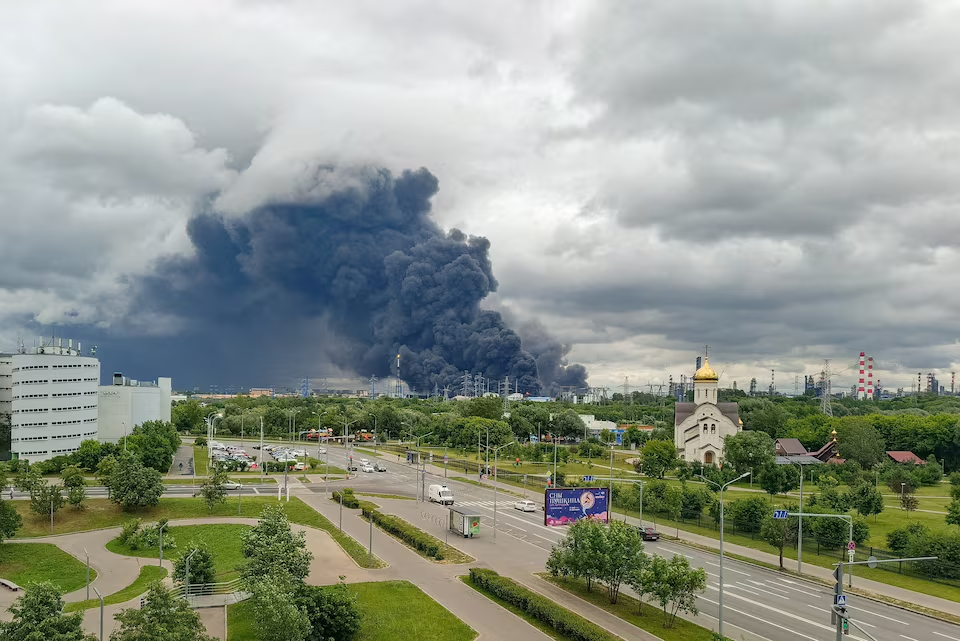
The strike hit a major oil storage facility in southeast Moscow on Thursday. It triggered an explosion big enough to send the disc-shaped lid of a storage tank flying, and the resulting fire was visible for miles. Black smoke columns rose over the capital while emergency crews fought to contain it. This was the second successful hit on that same facility in three days.
The refinery sits about 16 kilometers from the Kremlin, inside Moscow’s ring road. It’s one of the most significant strikes on energy infrastructure in the capital since the war started, and it’s raising real questions about how well Russia’s air defenses are actually working.
Ukraine Is Going After Russia’s Oil Money
This strike fits a pattern. Ukraine has spent the war increasingly targeting refineries, storage depots, fuel terminals, and transport networks, the infrastructure that keeps Russia’s energy exports flowing. Those exports are one of the Kremlin’s biggest revenue sources.
Hitting targets far from the front line does two things for Kyiv: it squeezes Moscow economically, and it proves Ukraine can now reach places that used to be out of range. Ukrainian officials have said for a while that energy infrastructure is a fair military target, since oil money helps pay for the war.
This particular strike seemed aimed at more than just industrial damage. Ukraine’s Foreign Minister Andrii Sybiha posted a message directed straight at Moscow residents after the attack. “Your country started a war against ours and has been killing our people for years,” he wrote. “Now that you see what is happening, ask your leadership when it plans to end the war.”
Moscow Residents Get a Rare Dose of the War
Most of the conflict has felt distant to people in Moscow, even as fighting has raged thousands of kilometers away. Russian authorities still call it a “special military operation,” and polling suggests many Russians have managed to keep that distance, emotionally and otherwise.
Thursday broke that pattern. Flights were suspended at every airport serving Moscow. Roads around the refinery were shut down. Sheremetyevo, the country’s busiest airport, was evacuated.
People online described confusion as the attack unfolded. Many complained that air raid sirens either came too late or never sounded at all. A Moscow-based outlet reported that some suburban residents said rain after the explosion left an oily film on their cars and windows. Officials haven’t confirmed that, but it’s added fuel to a broader conversation Russians are having about how the war is starting to show up in daily life.
Russia’s Air Defenses Are Getting Tested
Moscow has multiple layers of radar, missile batteries, and electronic warfare systems protecting it, more than almost any other Russian city. Ukrainian drones keep getting through anyway.
The first direct drone attack on the Kremlin happened in May 2023, and it barely caused any damage. Since then, Ukraine has kept improving the range and precision of its drones, and Thursday’s strike shows how far that’s come. Military analysts point out that even strong air defense systems struggle when they’re facing a swarm of cheap drones coming at once. Hitting the same critical facility twice in a week will likely set off a domestic debate in Russia about whether its defenses are keeping up.
The Economic Damage Is Starting to Show
There are signs this is bleeding into the economy too. Gasoline shortages have hit several Russian regions in recent weeks, partly because repeated refinery strikes have cut into processing capacity and disrupted distribution.
Russia is still one of the world’s biggest oil producers and exporters. But industry sources say the country may start importing certain fuel products by sea this month, which is unusual for a country that’s historically been an exporter, not an importer, of fuel.
Moscow officials say supplies in and around the capital are fine. Consumers seem less convinced. Russia’s federal anti-monopoly agency has opened an inquiry into fuel pricing after one major retailer reportedly raised prices on the country’s most common gasoline grade by close to 19 percent in a single week.
The Footage War Is Its Own Battle
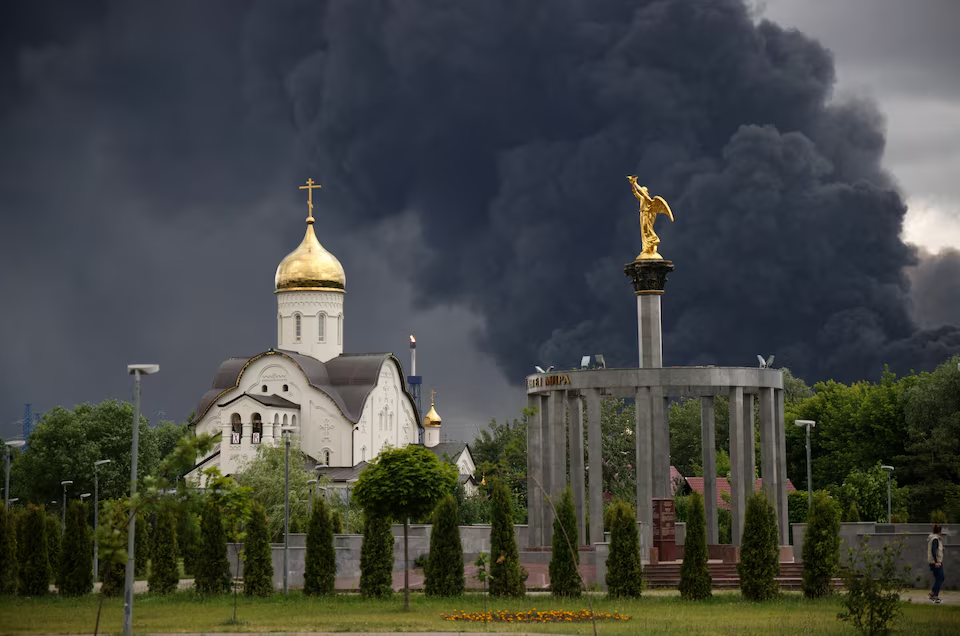
The attack spread fast online, with explosion and fire footage racking up millions of views within hours. Ukrainian social media users treated it as proof that Russia can no longer keep its capital insulated from the war.
Pro-government commentators in Russia pushed back hard against people sharing that footage. Andrei Medvedev, a Russian TV presenter and government supporter, argued on Telegram that posting attack videos helps Ukraine fine-tune future targeting. He’s calling for criminal investigations into anyone who uploads strike footage, framing it as assisting the enemy. That argument is part of a bigger fight inside Russia over how much information about attacks should be allowed to circulate, with authorities increasingly trying to clamp down on images of damaged infrastructure.
What This Strike Actually Changes
One drone strike won’t shift the war’s military balance on its own. But the symbolism matters. For Ukraine, hitting Moscow proves a point: it has the technical capability to do this, it chips away at the idea that Russian security is airtight, and it reminds ordinary Russians that the war isn’t confined to a distant battlefield anymore.
For Russia, it’s a harder problem to manage. The government has to reassure people the capital is safe while also addressing real gaps in how it protects key infrastructure.
This war is heading into another year with no resolution in sight, and Thursday’s strike suggests both sides are willing to push the boundaries of where this fight takes place. The fire over Moscow will go out. The questions it raised about Russia’s defenses, and about how much longer this can stay a war fought “elsewhere,” probably won’t.