


Jane and Alan Kelvey had been sailing the English Channel for years. They knew the water, knew the traffic, knew how to read a busy shipping lane. Nothing about Tuesday morning suggested it would be different.
Then a Russian Navy frigate fired warning shots near their yacht, and everything changed.
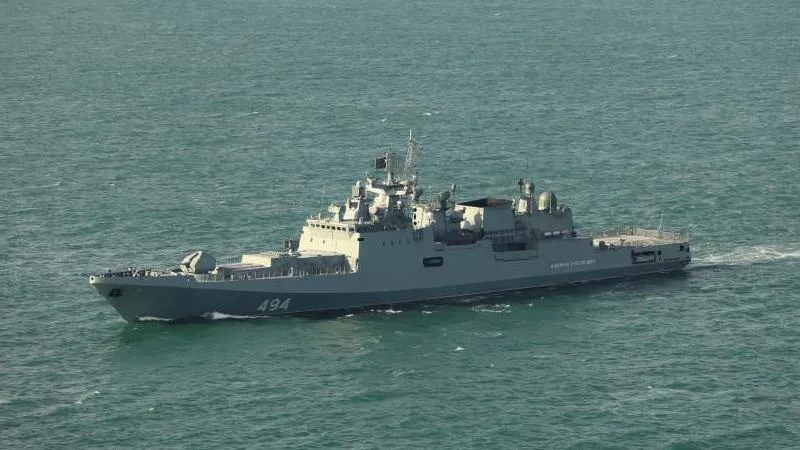
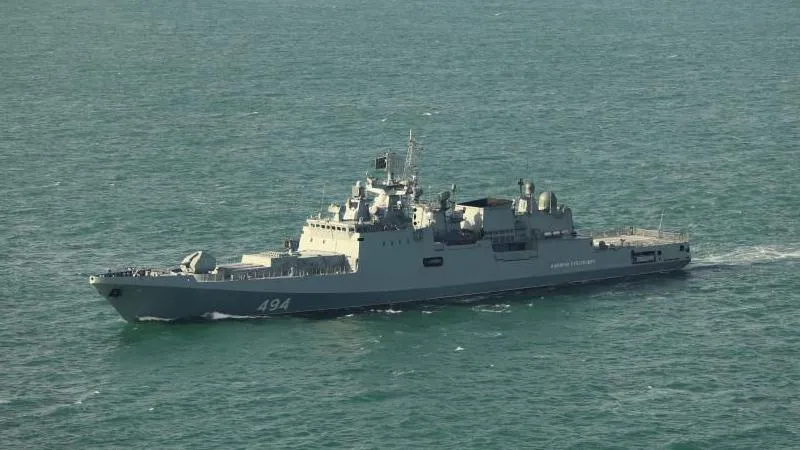
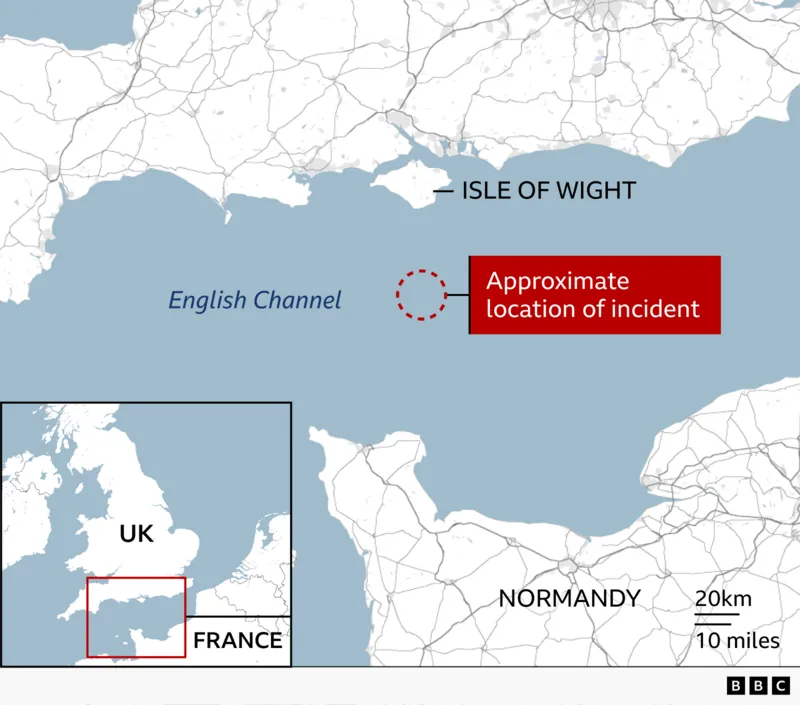
The couple were aboard Bright Future, their UK-registered sailing vessel, when they found themselves within close range of the Admiral Grigorovich, a Russian Navy frigate, approximately 23 miles south of the Isle of Wight. Speaking to BBC Newsnight afterward, they described how a situation that began as what seemed like routine maritime navigation turned into something neither of them had ever experienced.
“It was surreal,” Jane Kelvey said. “You don’t expect to be sailing and suddenly hear gunfire nearby.”
Five Horn Blasts, Then Shots
The encounter began with sound. The frigate issued five horn blasts, a standard signal at sea indicating uncertainty about whether another vessel has noticed you. Jane altered course slightly to show they had seen the warship. Standard procedure. She thought the exchange was over.
It wasn’t.
The frigate repeated the horn signal. Then came what appeared to be small-arms fire, discharged into the air above the water.
“That wasn’t aimed at us,” Jane said. “It was warning fire, we believe. But it was still shocking.”
Alan Kelvey was more direct in his assessment. Their yacht was not on a collision course. They were sailing a clear, safe path. The response, in his view, was unnecessary. A Royal Navy patrol vessel made contact with the couple shortly after to check on their safety and begin gathering information about what had happened.
Two Accounts, One Incident
Russia’s version of events is different.
The Russian Defence Ministry said the Bright Future had approached the warship in a dangerous manner and failed to respond adequately to radio communications. According to Moscow, the frigate issued multiple warnings before firing, including radio calls and visual signals, and acted within international maritime safety rules throughout.
UK officials dispute parts of that account. The Ministry of Defence said its initial assessment suggests the warning shots were not directed at the yacht but were intended to prevent a potential collision. An MoD spokesperson said the Russian vessel had been signalling that it was drifting or operating with limited manoeuvrability, a technical situation that may have caused the confusion on both sides.
HMS Tyne, a Royal Navy patrol vessel, was dispatched to the area to collect evidence and ensure the Kelveys were safe. The incident took place in international waters, outside UK territorial jurisdiction, but well within a corridor the Royal Navy monitors continuously.
Investigations are ongoing. Neither government has closed the matter.
Not a Routine Stretch of Water
The English Channel is one of the busiest shipping routes in the world. Russian naval vessels pass through it regularly, and the Royal Navy tracks them. That much is routine.
What makes this week different is the context surrounding it.
Days before the Kelveys’ encounter, Royal Marine Commandos intercepted a tanker believed to be part of Russia’s shadow fleet, a network of vessels used to transport sanctioned oil around Western restrictions. Officials say the two incidents are not directly connected. But they happened within days of each other, in the same general stretch of water, during a period of heightened enforcement activity by British forces against Russian-linked shipping.
NATO-linked assessments indicate the Admiral Grigorovich has been active in escort operations for commercial and sanctioned vessels passing through European waters. Satellite imagery reviewed by defence analysts shows the frigate has been supported by auxiliary vessels that allow it to stay at sea for extended periods. Royal Navy ships have been following it. The ship was not simply passing through.
A Miscalculation, Not an Attack
Former Royal Navy Rear Admiral James Parkin offered a measured reading of what happened. He said the incident looked more like a miscalculation than a deliberate act of aggression.
“In situations like this, armed force is always a last resort and typically used only for self-defence,” he said. He pointed to the difficulty of managing vessel interactions in busy international waters, particularly when one ship is manoeuvring with limited control and communication between the two parties breaks down.
His view is that what happened south of the Isle of Wight was confusion compounded by proximity, not a calculated decision to intimidate a civilian sailing yacht.
But he also acknowledged something harder to dismiss. The timing of the incident, coming in the immediate aftermath of British enforcement actions against Russian-linked shipping, places it inside a broader picture of friction between London and Moscow at sea. That context doesn’t explain the warning shots. It does make them harder to set aside as a simple navigational misunderstanding.
What This Illustrates
The MoD has confirmed it is investigating the incident. UK officials have reiterated that Russian naval movements through the Channel are tracked and managed under international maritime law. Outgoing defence officials have recently warned publicly about what they describe as growing Russian assertiveness in maritime operations near European waters.
No one was hurt. Bright Future was not damaged. By some measures, this was a minor incident.
By others, it was not. A civilian yacht crewed by two retired British sailors was close enough to a Russian naval frigate to hear warning shots fired into the air. That happened in one of the most trafficked stretches of ocean in the world, a few miles off the English coast, on an otherwise ordinary Tuesday morning.
The Channel has always mixed civilian and military traffic. What’s changed is the temperature of the relationship between the navies operating in it.
For Jane and Alan Kelvey, the geopolitical analysis can wait. They heard gunfire while sailing. That’s what they’ll remember.