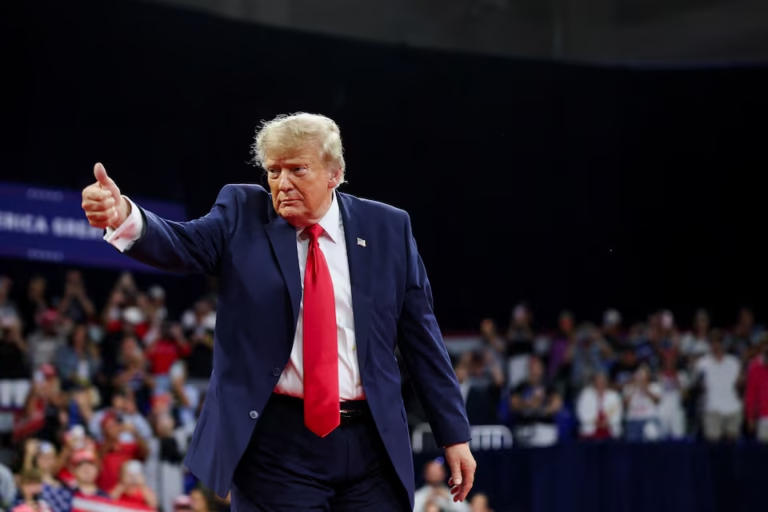

The U.S. Senate delivered a significant victory to President Donald Trump early Friday after approving a $70 billion immigration enforcement package that would dramatically expand resources for federal agencies responsible for border security and deportation operations.
The measure passed in a narrow 52-47 vote following hours of heated debate, procedural maneuvering, and disagreements that extended well into the night. The legislation now heads to the House of Representatives, where lawmakers are expected to take up the bill next week.
While Republicans celebrated the vote as a critical step toward strengthening immigration enforcement, Democrats condemned the package as an expensive expansion of the administration’s deportation agenda and raised alarms about a separate fund they say could be used to benefit Trump allies.
The vote underscores how immigration remains one of the most politically charged issues in Washington, particularly as lawmakers prepare for the high-stakes midterm elections later this year.
Bill Would Supercharge Trump’s Immigration Agenda
At the heart of the legislation is a substantial funding increase for the Department of Homeland Security, particularly Immigration and Customs Enforcement (ICE) and U.S. Border Patrol.
The additional money would help fund immigration enforcement operations over the next three years, allowing agencies to expand staffing, detention capacity, deportation efforts, and border security programs.
The Trump administration has made immigration enforcement a central pillar of its policy agenda, arguing that stronger border controls and increased deportations are necessary to maintain national security and uphold immigration laws.
Republicans say the funding package is essential for agencies already facing growing demands.
Supporters argue that without additional resources, federal authorities will struggle to carry out the administration’s plans to remove undocumented migrants and secure the southern border.
“This legislation provides the tools our law enforcement agencies need to do their jobs effectively,” Republican lawmakers repeatedly argued during floor debate.
Democrats Push Back Against Deportation Funding
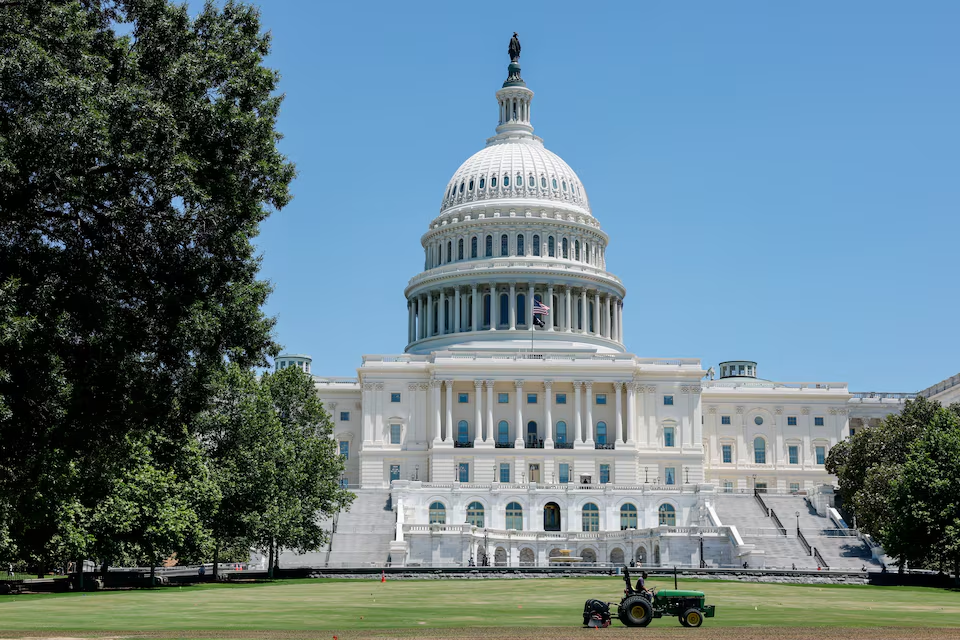
Democrats strongly opposed the measure, arguing that the administration is seeking billions of dollars for enforcement agencies without providing adequate oversight or accountability.
They also challenged Republican claims that immigration agencies have been underfunded.
Democratic senators pointed out that ICE and Border Patrol already have access to significant unspent funds from previous appropriations packages approved by Congress.
According to critics, lawmakers should first examine how existing resources are being used before committing tens of billions of dollars in additional funding.
Many Democrats also warned that increasing enforcement spending without broader immigration reform does little to address the underlying challenges facing the nation’s immigration system.
The disagreement reflects the broader divide between the two parties on immigration policy, with Republicans prioritizing enforcement and border security while Democrats continue pushing for a more comprehensive approach.
Controversial Fund Dominates Senate Debate
Although immigration was the focus of the legislation, much of Thursday’s debate centered on a separate issue that nearly overshadowed the bill itself.
Lawmakers spent hours arguing over a proposed $1.8 billion “anti-weaponization” fund that critics claim could be used to compensate individuals who allege they were unfairly targeted by federal agencies.
Democrats have repeatedly described the proposal as a potential political slush fund and sought to permanently eliminate it from the legislation.
Senate Democratic Leader Chuck Schumer led efforts to block the fund, arguing that Congress should not leave open any possibility that taxpayer money could be directed toward political allies of the president.
His proposal ultimately failed, but not before exposing divisions within Republican ranks.
The issue became particularly sensitive because several Republican senators facing competitive reelection races expressed concerns about how voters might view the fund.
Republicans Split on Fund’s Future
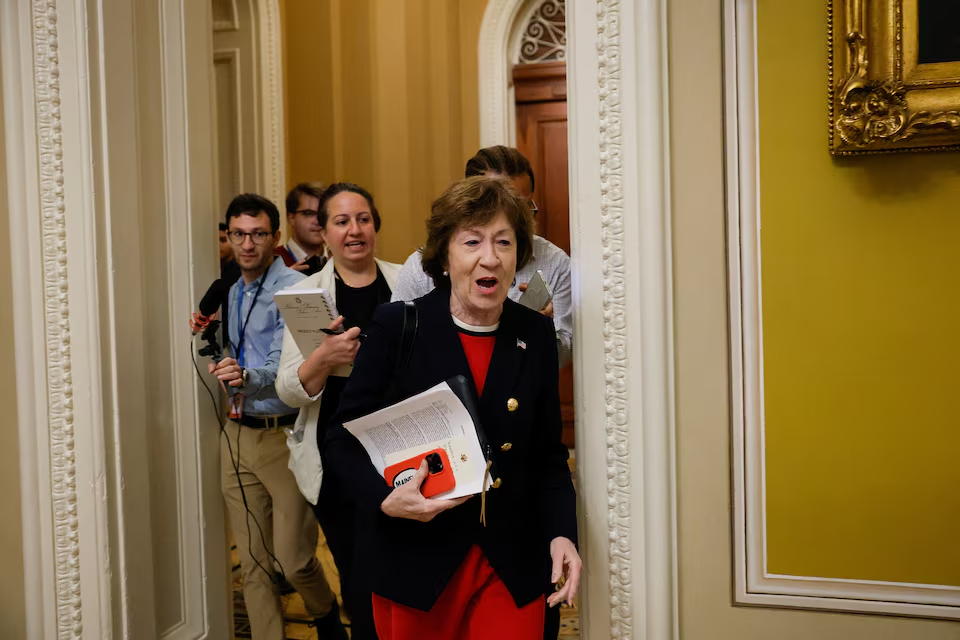
The debate revealed rare signs of disagreement among Senate Republicans.
Several GOP lawmakers broke with party leadership to support efforts aimed at restricting or eliminating the controversial fund.
Among them were Senators Susan Collins, Jon Husted, and Dan Sullivan, all of whom supported procedural moves that challenged the administration’s position.
Their votes highlighted growing unease among some Republicans who worry that the fund could become a political liability heading into the November elections.
Republican leaders, however, insisted the controversy had largely been resolved.
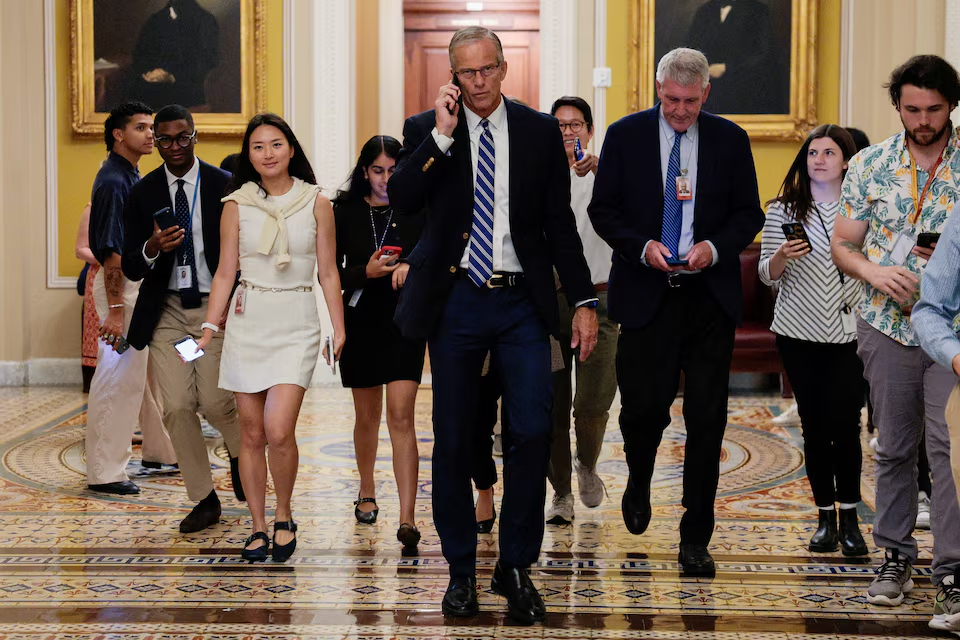
Senate Republican Leader John Thune pointed to testimony from acting Attorney General Todd Blanche, who told lawmakers the Justice Department had no intention of moving forward with the program.
Thune argued that Blanche’s assurances should be enough to settle concerns.
“I find it very hard to believe that someone would make those statements publicly and then reverse course,” Thune told reporters after the vote.
But Democrats remained unconvinced, arguing that verbal promises are no substitute for legally binding restrictions.
White House Ballroom Project Also Draws Scrutiny
Adding to the political drama were several amendments unrelated to immigration that focused on President Trump’s broader spending priorities.
One proposal sought to prohibit federal funds or private donations from being used to support construction of a lavish ballroom planned for the White House grounds.
The proposed structure, reportedly spanning around 90,000 square feet, has drawn criticism from lawmakers who argue taxpayer resources should be focused elsewhere.
While those amendments generated significant discussion, none received enough support to be included in the final legislation.
The debate illustrated how immigration legislation has increasingly become a battleground for broader political disputes involving government spending, executive authority, and campaign-year messaging.
Legal Questions Continue to Loom
The controversy surrounding the anti-weaponization fund has already extended beyond Capitol Hill.
Senator Bill Cassidy, a Republican, joined Democratic Senator Cory Booker in supporting legal efforts aimed at maintaining a federal court order that currently blocks the program.
In court filings, they argued that the fund raises serious constitutional concerns and could undermine Congress’s authority over federal spending decisions.
Their unusual bipartisan alliance reflects the level of concern some lawmakers have regarding the potential implications of the program.
Meanwhile, Trump has continued to defend the idea publicly.
When asked this week whether the fund had been permanently scrapped, the president declined to provide a direct answer, saying only that he believed it was “very important.”
His comments have added further uncertainty about the initiative’s future.
House Battle Awaits
With Senate approval secured, attention now shifts to the House of Representatives, where the bill faces another round of scrutiny.
Republican leaders are optimistic that the legislation will ultimately pass and reach the president’s desk. However, lawmakers are expected to continue debating the controversial provisions that sparked divisions in the Senate.
The outcome could have major political consequences as both parties seek to convince voters they are best equipped to handle immigration, government spending, and national security.
For Trump, the Senate vote represents a significant step forward in advancing one of his signature policy priorities.
For Democrats, it offers another opportunity to challenge an immigration strategy they argue is overly focused on enforcement while ignoring broader reforms.
As the House prepares to take up the measure, the debate is likely to remain at the center of Washington politics in the months leading up to the elections.