
The United States has announced a new wave of tariffs on imports from dozens of countries, arguing that many of its trading partners are not doing enough to prevent goods linked to forced labour from entering global supply chains.
The move, unveiled by the Trump administration, will impose import duties ranging from 10% to 12.5% on products from 60 countries and economic blocs, including some of America’s closest allies such as the United Kingdom, the European Union, Canada, and Japan.
The decision marks one of the most significant trade actions taken by Washington this year and is expected to reignite debate over the role tariffs should play in tackling labour abuses and protecting domestic industries.
U.S. officials say the measures are designed to hold countries accountable for weak enforcement against forced labour practices. Critics, however, warn the tariffs could increase costs for businesses and consumers while creating new tensions in global trade.
Why the US Is Taking Action
According to the U.S. Trade Department, the tariffs follow an extensive investigation launched earlier this year into the labour practices of America’s largest trading partners.
The review focused on whether countries had laws in place to block imports produced through forced labour and whether those laws were being effectively enforced.
After several months of analysis, U.S. officials concluded that all 60 economies under review had fallen short of Washington’s expectations.
The department said the countries had either failed to establish strong legal prohibitions against forced-labour imports or had not effectively enforced existing regulations.
As a result, the administration argued that goods produced under questionable labour conditions continue to flow through international supply chains, creating unfair competition for American businesses and workers.
Protecting American Workers
The White House has framed the tariff decision as both an economic and moral issue.
Administration officials argue that companies operating in countries with weak labour protections often benefit from lower production costs, allowing them to sell products more cheaply on international markets.
U.S. Trade Representative Jamieson Greer said this places American workers at a disadvantage because they must compete against goods produced under conditions that would be illegal in the United States.
“American workers should not have to compete with products made through exploitation,” Greer said while defending the administration’s decision.
Supporters of the tariffs believe economic pressure can encourage governments and businesses around the world to strengthen labour standards and improve oversight of supply chains.
The administration also maintains that stronger enforcement could help reduce the presence of forced labour in industries ranging from manufacturing and mining to agriculture and textiles.
Major Trading Partners Caught in the Crossfire
One of the most surprising aspects of the announcement is the broad range of countries affected.
Rather than focusing solely on nations with a history of labour-rights concerns, the tariffs extend to many of America’s largest and closest economic partners.
The United Kingdom, Canada, Japan, and member states of the European Union are all included on the list, despite longstanding trade relationships with Washington.
Together, the 60 countries account for nearly all goods imported into the United States, making the policy one of the most far-reaching trade actions in recent years.
Trade analysts say the move demonstrates the administration’s willingness to use tariffs aggressively, even when dealing with allies.
It also reflects growing concern among policymakers about the complexity of modern supply chains, where components and raw materials often pass through multiple countries before reaching consumers.
Concerns Over Rising Prices
While the administration argues the tariffs will create fairer competition, many economists remain skeptical.
Trade experts warn that import duties often increase costs for businesses, which are then passed on to consumers in the form of higher prices.
Retailers, manufacturers, and importers that rely on foreign goods may face rising expenses, particularly in sectors heavily dependent on global supply chains.
Some economists point to previous tariff rounds as evidence that consumers ultimately bear much of the financial burden.
With inflation remaining a concern for many households, critics argue the new tariffs could put additional pressure on family budgets.
Business groups have also expressed concern that the policy may disrupt trade flows and complicate efforts to stabilize supply chains that have already faced challenges in recent years.
A New Chapter in Trump’s Trade Strategy
The latest tariff announcement comes months after the Trump administration suffered a legal setback when the U.S. Supreme Court struck down several previous trade measures.
The court ruled that tariffs introduced under the administration’s “Liberation Day” initiative exceeded presidential authority, forcing the White House to rethink parts of its trade strategy.
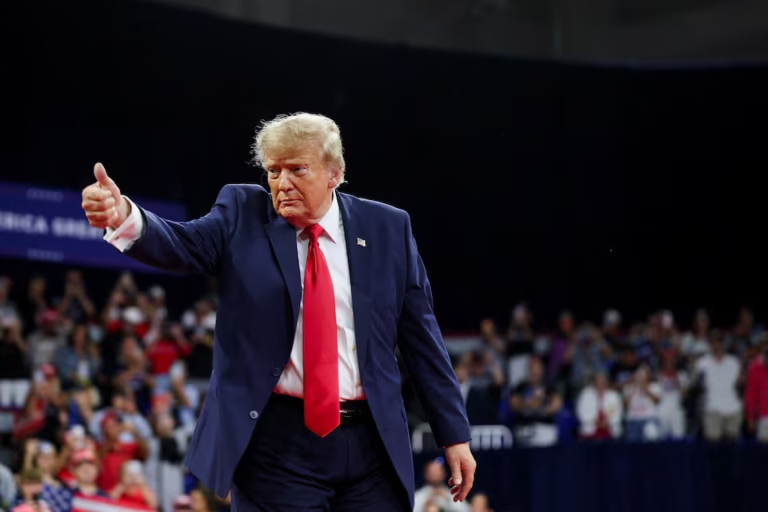
President Donald Trump strongly criticized the ruling at the time, arguing that it weakened America’s ability to defend its economic interests.
Despite the court decision, the administration has continued searching for new ways to pursue its trade agenda.
The forced labour investigation provided one such avenue, allowing officials to justify fresh tariffs under a different legal framework.
The move signals that trade policy remains a central pillar of Trump’s economic approach heading into the coming months.
Global Response Closely Watched
The announcement is likely to trigger responses from governments around the world.
Some affected countries may seek exemptions or attempt to negotiate alternative arrangements with Washington. Others could challenge the tariffs through international trade institutions or consider retaliatory measures.
Markets are also watching closely for signs of broader economic fallout.
Although investors have largely anticipated tougher trade policies from the Trump administration, uncertainty remains over how countries will react and whether the measures could escalate into wider trade disputes.
For now, the tariffs represent another major step in Washington’s effort to reshape global trade relationships and pressure foreign governments to strengthen labour protections.
Whether the strategy succeeds remains uncertain.
Supporters argue the policy sends a strong message that forced labour has no place in modern commerce. Critics counter that tariffs alone are unlikely to solve complex labour issues and may create unintended economic consequences.
As businesses, governments, and consumers adjust to the new reality, the impact of the tariffs will likely be felt far beyond U.S. borders, influencing trade discussions and supply-chain decisions for months to come.