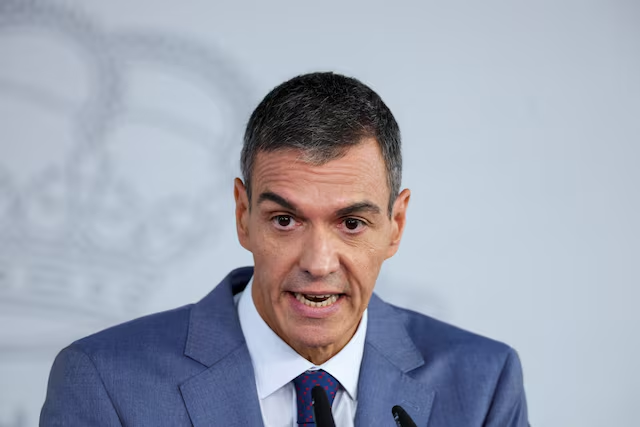

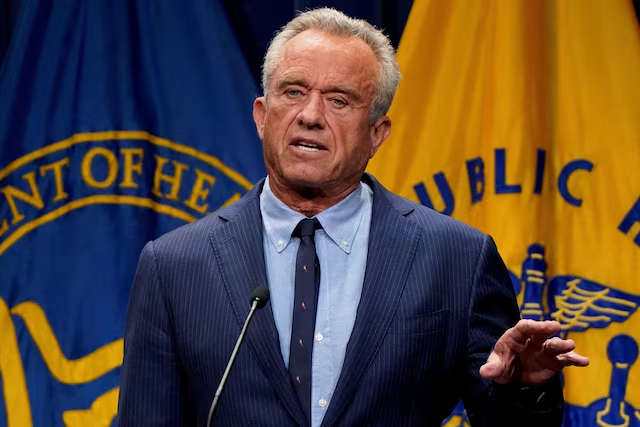
The leadership of one of the United States’ most influential medical advisory bodies has been abruptly reshaped after U.S. Health Secretary Robert F. Kennedy Jr. dismissed the chair and vice chair of the panel responsible for recommending preventive healthcare services that insurers must cover at no cost to patients.
The move affects the U.S. Preventive Services Task Force (USPSTF), an independent volunteer body whose recommendations influence screening programs and preventive services across the U.S. healthcare system.
The dismissals have triggered concern among healthcare professionals, who warn that disruptions to the panel could delay critical guidance on cancer screening, cardiovascular disease prevention, and other major public health issues.
Task Force Leadership Removed
According to letters dated May 11 and reviewed by Reuters, Kennedy removed panel chair Dr. John Wong, a professor at Tufts University School of Medicine, and vice chair Dr. Esa Davis, a professor at University of Maryland School of Medicine.
The Department of Health and Human Services (HHS) later confirmed the removals.
Wong’s appointment had been scheduled to continue until March 2027, while Davis’ term was expected to run until March 2028. Despite the remaining time on their appointments, both officials received notices stating their departures were “administrative in nature.”
The decision marks another major shift under Kennedy’s leadership at HHS as he continues reshaping federal health institutions.
Preventive Care Panel Has Been Largely Inactive
The task force, which generally operates with around 16 volunteer experts, has faced increasing uncertainty over the past year.
Its regularly scheduled meetings were canceled after Kennedy took office, and the body has reportedly not held a formal meeting in more than a year. In addition, five members whose terms expired in December have not yet been replaced.
This has reduced the panel’s active membership and raised concerns over its ability to maintain normal operations.
Medical experts say the prolonged inactivity has already slowed progress on updating recommendations for preventive screenings and treatments involving major illnesses.
These recommendations directly affect millions of Americans because insurers are required to cover many services endorsed by the panel without co-pays or additional costs.
Why the Task Force Matters
The USPSTF plays a central role in U.S. healthcare policy.
Its independent experts evaluate scientific evidence and issue recommendations on preventive services such as:
- Cancer screening programs
- Heart disease prevention measures
- Diabetes monitoring
- Maternal and child health services
- Mental health assessments
- Vaccination-related preventive guidance
Recommendations from the task force often determine which tests and screenings become standard components of insurance coverage.
Because of this influence, any disruption to the panel can have ripple effects across healthcare providers, insurers, and patients.
Healthcare analysts warn that delays in updating evidence-based recommendations may affect early detection efforts for diseases where timely intervention is critical.
Kennedy Seeks Structural Changes
In the termination letters, Kennedy indicated the department intends to establish new “standard operating procedures” for the panel while safeguarding its long-term credibility.
The HHS has also opened applications for new task force members, with submissions accepted through May 23.
Wong later confirmed that both he and Davis had reapplied to continue serving, though he acknowledged concerns about the process.
He said the applications were submitted “with trepidation around the validity of the process,” signaling uncertainty over how future appointments may be handled.
The department has previously stated it is seeking clinicians and researchers from specialties including cardiology, oncology, pediatrics, obstetrics and gynecology, family medicine, and health economics.
However, officials have not clarified whether additional remaining members could also be replaced.
Growing Concerns From Medical Community
Healthcare organizations have increasingly voiced concern over the future independence of the task force.
Last year, more than 100 medical groups—including the American Medical Association and the American Academy of Pediatrics—urged lawmakers to preserve the panel’s independence and scientific integrity.
The organizations warned that political interference could undermine confidence in evidence-based preventive care recommendations.
Experts note that the task force traditionally operates independently despite members being appointed directly by the health secretary without Senate confirmation.
Administrative support for the panel is provided through the Agency for Healthcare Research and Quality.
Supreme Court Ruling Expanded Secretary’s Authority
Kennedy’s authority over the task force received legal reinforcement earlier this year after the Supreme Court of the United States upheld preventive care coverage requirements while confirming the health secretary’s ability to oversee and review the panel’s recommendations.
The ruling preserved insurer obligations to cover preventive services but also clarified executive authority over the task force’s operations.
That decision has now taken on added significance as the administration moves to reshape the panel’s leadership.
Uncertainty Over Future Preventive Care Policy
The removal of the task force’s top officials comes at a time when the U.S. healthcare system is confronting rising chronic disease rates, aging demographics, and increasing demand for preventive medicine.
For now, the future direction of the USPSTF remains unclear.
Whether Kennedy appoints a new generation of experts, restructures the panel’s operations, or pursues broader reforms could influence how preventive healthcare recommendations are developed in the years ahead.
Healthcare leaders say maintaining scientific independence will be essential as the panel navigates its next phase.