

Health authorities around the world are continuing to monitor a rare hantavirus outbreak linked to the expedition cruise ship MV Hondius, as new details emerge about the illness, its transmission, and the potential risks to passengers and crew.
The outbreak has already claimed the lives of three passengers and left several others ill, drawing international attention to a virus that many people know little about. Medical experts say the situation, while serious, remains relatively contained and does not currently pose a major threat to the general public. Still, the incident has sparked renewed concern over how hantavirus spreads, how long symptoms can take to appear, and why the Andes strain identified aboard the ship is particularly significant.
The Dutch-flagged vessel, operated by Oceanwide Expeditions, departed from Argentina in early April for an Antarctic-themed voyage before reports of illness began surfacing among passengers and crew. Since then, health officials in multiple countries have coordinated emergency response measures as the ship continued its journey through the Atlantic.
Three Deaths Confirmed as Investigation Continues
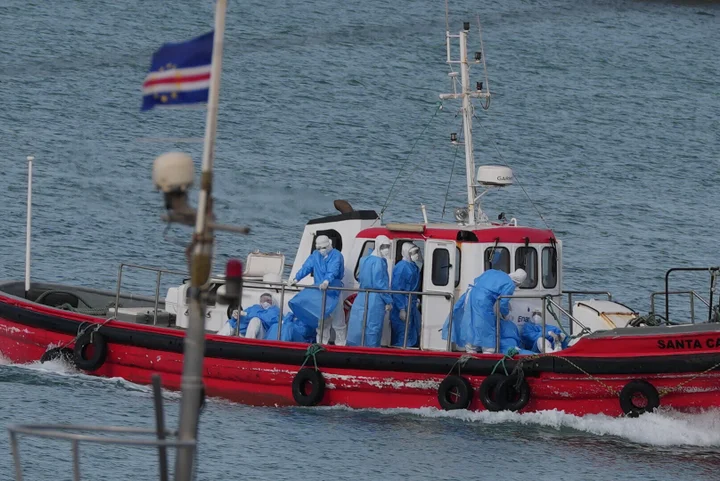
Authorities have confirmed that three passengers connected to the cruise died after developing symptoms associated with hantavirus infection. Several additional individuals were also reported sick, prompting medical evacuations and emergency assessments as the ship approached waters near Cape Verde.
According to international health officials, at least eight confirmed or suspected cases of hantavirus have been identified in connection with the voyage. Patients tested positive for the Andes strain of the virus, a rare subtype primarily found in South America.
The outbreak has led to growing concern because the Andes virus differs from most other hantaviruses in one important way: it is the only known strain capable of limited human-to-human transmission under certain circumstances.
Medical teams and epidemiologists are now conducting contact tracing to determine how exposure occurred and whether infections happened through environmental contamination, direct contact, or close interaction between passengers.
Understanding Hantavirus and How It Spreads
Hantavirus refers to a family of viruses typically carried by rodents. Humans generally become infected after inhaling particles contaminated with rodent urine, saliva, or droppings.
Experts say transmission most often occurs in enclosed spaces where infected rodent waste becomes airborne. Rural cabins, poorly ventilated buildings, campsites, and storage facilities are among the environments most commonly associated with exposure.
Kari Moore Debbink, a teaching professor in molecular microbiology and immunology at the Johns Hopkins Bloomberg School of Public Health, explained that there are more than 20 different hantavirus strains worldwide.
Most hantaviruses do not spread easily between humans. However, the Andes strain — identified in this outbreak — has shown evidence of human-to-human transmission through close contact involving respiratory secretions or bodily fluids.
Scientists are still working to determine exactly how passengers aboard the ship contracted the virus. One theory is that exposure may have occurred during land excursions in South America, where the Andes strain naturally circulates among rodent populations.
Another possibility is that infected rodents or contaminated areas aboard the vessel contributed to transmission.
Incubation Period Can Last Several Weeks
One of the biggest concerns surrounding hantavirus is the long incubation period, which can delay diagnosis and complicate containment efforts.
Experts say symptoms of the Andes virus can take anywhere from one to six weeks to appear after exposure. Some studies suggest the average incubation period is around 18 days, though cases involving person-to-person transmission have shown symptom onset ranging from 12 to 27 days.
Because symptoms can emerge weeks after infection, public health authorities are carefully monitoring passengers and crew even after they leave the ship.
The uncertainty surrounding incubation timelines has also complicated decisions about quarantine measures and medical observation protocols.
Health experts note that there is currently no universally established international protocol for monitoring individuals exposed to the Andes strain in cruise ship settings, making this outbreak particularly challenging for authorities.
Early Symptoms Often Resemble the Flu
Medical specialists warn that hantavirus symptoms initially resemble common viral illnesses, making early detection difficult.
Patients often experience:
- High fever
- Severe headaches
- Muscle aches
- Fatigue
- Chills
- Nausea
As the illness progresses, more serious respiratory symptoms can develop rapidly. These include coughing, chest tightness, shortness of breath, and fluid accumulation in the lungs.
In severe cases, patients may develop Hantavirus Pulmonary Syndrome (HPS), a potentially fatal condition that affects the lungs and breathing capacity.
Doctors say the disease can deteriorate quickly once respiratory complications begin.
According to the U.S. Centers for Disease Control and Prevention, hantavirus infections can carry mortality rates between 30% and 40% in advanced pulmonary cases.
Another form of hantavirus disease, known as Hemorrhagic Fever with Renal Syndrome (HFRS), primarily affects the kidneys and is more commonly associated with hantavirus strains found in Europe and Asia.
Why Experts Say the Public Risk Remains Low
Despite the alarming nature of the outbreak, infectious disease specialists stress that the risk to the wider public remains low.
Dr. William Schaffner, a preventive medicine expert at Vanderbilt University Medical Center, described the incident as a “localized and contained” health event.
Public health experts say several factors reduce the likelihood of a broader outbreak:
- Hantavirus is relatively difficult to transmit compared to airborne viruses like influenza or COVID-19.
- Human-to-human spread of the Andes strain appears limited and typically requires close contact.
- The virus is not known to spread casually in public settings.
- Authorities quickly isolated symptomatic individuals and initiated medical response measures.
The World Health Organization has also stated that there is currently no reason for travel restrictions or public panic.
Still, officials continue monitoring passengers closely because symptoms may not appear immediately.
South America Remains the Primary Risk Zone
Experts note that the Andes strain of hantavirus is found mainly in parts of Argentina and Chile, where certain rodent species naturally carry the virus.
People who work in rural settings, agriculture, forestry, or outdoor tourism activities are generally considered at higher risk of exposure.
Tourists participating in hiking expeditions, camping trips, or remote travel in affected regions can also face increased risk, particularly if they enter poorly ventilated shelters or areas contaminated by rodents.
In the United States, the most common hantavirus strain is the Sin Nombre virus, primarily found in the Southwest region.
Health officials emphasize that hantavirus infections remain rare overall, especially compared to more common respiratory diseases.
Cruise Industry Faces Renewed Health Scrutiny
The outbreak aboard the MV Hondius has once again placed global cruise operators under intense health scrutiny.
Since the COVID-19 pandemic, cruise lines have expanded disease monitoring systems and emergency response procedures. However, experts say rare infections like hantavirus present unique challenges because symptoms can appear long after exposure and are often mistaken for common illnesses in the early stages.
Oceanwide Expeditions has stated that it is cooperating fully with international health authorities and implementing precautionary measures aboard the ship.
Passengers continue to await further medical guidance as the vessel heads toward Spain’s Canary Islands.
Meanwhile, epidemiologists say the incident serves as a reminder of how quickly infectious diseases can emerge in international travel environments — especially when voyages involve remote destinations, wildlife exposure, and extended travel periods.
For now, health authorities say vigilance, rapid diagnosis, and continued monitoring remain the best tools for preventing further spread.