
American manufacturers are once again caught in the middle of Washington’s trade battles, as President Donald Trump’s sweeping global tariffs face a major legal test at the U.S. Supreme Court this week.
For Bill Canady, chief executive of Ohio-based OTC Industrial Technologies, the tariff war has already upended years of careful supply chain planning. His company, which builds factory automation and production equipment, relied for years on low-cost sourcing from China and India. But with Trump’s tariffs now expanding to new regions, that strategy no longer works.
“We moved things out of China and went to some of those other countries, and now the tariffs on those are as bad or worse,” Canady told Reuters. “We just have to hang on and navigate our way through this so we don’t all go broke in the short run.”
Canady’s frustration reflects a growing sentiment across American industry — one shared by trade lawyers, economists, and foreign governments — that the U.S. may be entering a new, permanent era of protectionism.
Supreme Court to Decide on Trump’s Emergency Tariffs

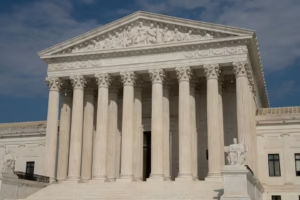
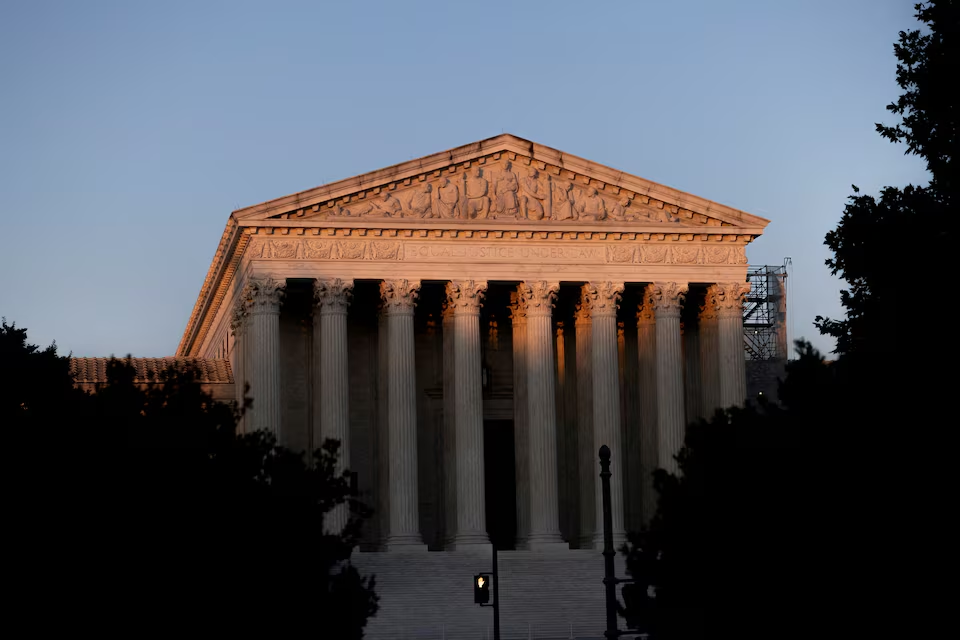
On Wednesday, the Supreme Court will hear oral arguments in a case that may decide whether Trump’s use of emergency economic powers to impose broad global tariffs is constitutional.
The lower courts had ruled uniformly against Trump, saying he exceeded his authority under the 1977 IEEPA — a law originally written for focused sanctions against hostile nations — to justify the application of tariffs against allies and partners alike.
The administration appealed, and now, with the Court’s 6-3 conservative majority, Trump’s team is confident the tariffs will stand.
“If we don’t have tariffs, we don’t have national security,” Trump told reporters aboard Air Force One on Sunday. “The rest of the world has used tariffs against us for years and took advantage of us. Not anymore. Tariffs have brought us tremendous national security.”
The Legal and Political Stakes
Trump is the first U.S. president to use the IEEPA as a tool for large-scale trade tariffs. He declared a national emergency in 2024, citing the $1.2 trillion U.S. goods trade deficit and the fentanyl crisis as threats to national security.
A Supreme Court ruling against Trump, legal experts say, could upend the president’s trade agenda-but Treasury Secretary Scott Bessent insists the administration has fallbacks.
“You should assume they’re here to stay,” Bessent said, noting that if IEEPA tariffs are struck down, the administration could pivot to Section 122 of the Trade Act of 1974 – which allows temporary tariffs up to 15% – or Section 338 of the Tariff Act of 1930, permitting duties up to 50% on discriminatory trade partners.
Bessent added that countries with negotiated deals should “honor their agreements,” while those without should expect tariffs to continue.
Tariffs as a Cornerstone of Trump’s Economic Policy
Even beyond IEEPA, Trump’s team has utilized other statutes, including Section 232 of the Trade Expansion Act of 1962 and Section 301 of the Trade Act of 1974, to target industries and nations. These tariffs now encompass a vast range of products, from autos, semiconductors, and copper to pharmaceuticals and aircraft components.
“This administration is committed to tariffs as a cornerstone of economic policy,” said Tim Brightbill, co-chair of the trade law firm Wiley Rein. “Companies and industries should plan accordingly.”
The administration counters that the tariffs have driven major economies like Japan and the European Union to the negotiating table, where they have yielded concessions to the U.S.
The most recent frameworks to be finalized include Vietnam, Malaysia, Thailand, and Cambodia, with tariff rates locked at approximately 19%–20%. South Korea has promised a $350 billion investment package in exchange for reduced tariffs of 15% on chosen exports.
China Talks: Limited Truce, Strategic Tension
Negotiations with China remain tense, however. Beijing has resisted pressure, sometimes retaliating with restrictions on exports of rare earth minerals critical to U.S. tech manufacturing and defense production.
In a meeting in South Korea last week, Trump and Chinese President Xi Jinping reportedly reached a provisional understanding whereby the U.S. would reduce tariffs on Chinese goods associated with the production of fentanyl from 20% to 10%, while delaying new restrictions on exports of technology for one year. In exchange, Beijing agreed to renew U.S. soybean purchases and to suspend its new export licensing rules on rare earth materials.
Economic Risks and Revenue Addiction
While the Trump tariffs have generated significant revenue for the government, economists warn they could become an addictive fiscal tool. According to Treasury data, IEEPA tariffs collected more than $100 billion this year, accounting for a large portion of a $118 billion rise in customs receipts that helped offset ballooning spending on healthcare, Social Security, and defense.
“It’s a real political economy risk that we get addicted to tariff revenue,” said Ernie Tedeschi, senior fellow at Yale University’s Budget Lab. “It makes it harder for any future administration to scale them back.”
If the Supreme Court were to invalidate the tariffs, the Treasury would have to refund billions of dollars — an unwieldy and unprecedented task for U.S. Customs and Border Protection. Refunds would involve individual importers’ filing post-summary corrections, a process that could drag on for years.
Inflation and Corporate Strain
To date, many importers have absorbed the tariffs rather than pass them on to consumers, keeping the rate of inflation contained but eroding corporate profits.
tariffs added 0.4 percentage points to the U.S. CPI in September, according to Oxford Economics, keeping consumer inflation above the Federal Reserve’s 2% target.
But Corporate America is feeling the pinch: Tariffs have cost companies more than $35 billion so far this year.
The question for firms like OTC Industrial Technologies is now where to rebuild. Some, such as Canady, are considering reshoring high-end production to the U.S. while moving lower-value parts to Mexico, balancing cost and compliance.
“I think the new normal is going to be 15%,” Canady said. “They’re going to call it whatever they need to call it so it can’t be challenged.” The New Trade Reality The tariffs, whether court upheld or struck down, have fundamentally reshaped America’s trade landscape. They altered corporate strategies, strained global supply chains, and blurred the line between economic policy and national security. As the Supreme Court is set to decide, one thing is clear: the age of free trade is giving way to a new protectionist era in which tariffs will no longer be temporary tools but permanent pillars of U.S. economic policy.