Clicxpost

Ukraine wants Russia to clarify everything before determining how to proceed with the discussions in Turkey

clarify everything

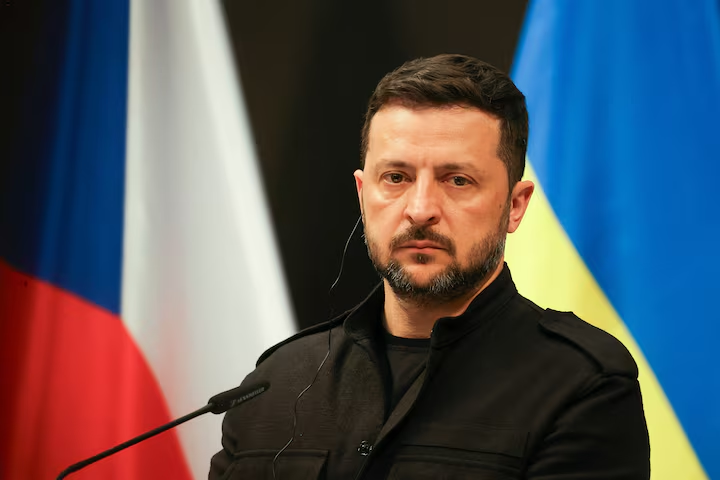
As the world watches with bated breath, Ukraine has positioned its participation in the upcoming Istanbul peace talks squarely on Vladimir Putin’s personal attendance. This strategic move by President Zelenskyy creates a dramatic diplomatic showdown that could either break the negotiation deadlock or reveal the true limitations of current peace efforts.

Key Developments:

  • Conditional Participation: Ukraine’s leadership awaits confirmation of Putin’s attendance before finalizing its approach
  • Historic Opportunity: Potential first Zelenskyy-Putin meeting since December 2019
  • U.S. Involvement: President Trump considering surprise appearance during Middle East tour

The Diplomatic Chessboard: Understanding the Stakes

Ukraine’s Strategic Position

  • 30-Day Ceasefire Demand: Zelenskyy’s non-negotiable precondition for substantive talks
  • Psychological Warfare: Public challenge to Putin’s willingness to negotiate face-to-face
  • Western Backing: Silent support from NATO allies while maintaining diplomatic independence

Russia’s Calculated Response

  • Delegation Confirmed: Kremlin verifies Russian presence but keeps composition ambiguous
  • Putin’s Dilemma: Personal attendance risks legitimizing Ukraine’s position; absence appears weak
  • Historical Context: Recall of March 2022 Istanbul talks that failed to prevent escalation

Expert Analysis: Why This Moment Matters

Military Considerations

  • Battlefield Stalemate: Neither side achieving decisive advantage after winter campaigns
  • Spring Offensive Preparations: Both militaries potentially using talks as operational pause
  • Weapons Supply Race: Western arms deliveries versus Russian mobilization efforts

Economic Factors

  • Sanctions Fatigue: Growing pressure on European economies
  • Ukrainian Resilience: Remarkable economic adaptation despite devastation
  • Russian War Economy: Surprisingly durable but showing long-term stress fractures

The Trump Factor: Wildcard in Diplomatic Calculus

President Trump’s potential involvement adds an unpredictable dimension:

  • Mediation Credentials: Previous claims of “understanding” Putin
  • Middle East Itinerary: Convenient geographical proximity
  • Domestic Calculations: Balancing isolationist base with desire for foreign policy win

Possible Outcomes and Their Implications

Scenario 1: Putin Attends (Breakthrough Potential)

  • Face-to-Face Dynamics: Personal chemistry could overcome bureaucratic obstacles
  • Ceasefire Agreement: Possible 30-day pause with monitoring mechanisms
  • Prisoner Exchanges: Confidence-building measures

Scenario 2: Putin Sends Delegates (Status Quo)

  • Limited Progress: Lower-level agreements on humanitarian corridors
  • Continued Fighting: Both sides prepare for intensified spring campaigns
  • Diplomatic Frustration: Erosion of international mediation credibility

Scenario 3: Talks Collapse (Escalation Risk)

  • Military Surges: Race to gain advantage before mud season ends
  • Civilian Suffering: Renewed attacks on infrastructure
  • Global Repercussions: Energy market volatility, food security concerns

The Bigger Picture: War Fatigue vs. Strategic Patience

As the conflict approaches its third year, both nations face critical calculations:

  • Ukrainian Morale: Maintaining Western support while preserving sovereignty
  • Russian Endurance: Balancing imperial ambitions with economic realities
  • Global Impact: Testing the limits of international security architecture

Why These Talks Could Be Different

Several unique factors distinguish this diplomatic initiative:

  1. Clear Preconditions: Zelenskyy’s specific ceasefire demand
  2. Neutral Ground: Turkey’s balanced position as mediator
  3. Leadership Dynamics: Potential for direct principal-level negotiations
  4. Timing Considerations: Before spring campaigning season

What to Watch For in Coming Days

Key indicators of progress or breakdown:

  • Travel Manifests: Aircraft tracking for high-profile arrivals
  • Pre-Talk Statements: Shifts in rhetorical tone
  • Battlefield Activity: Local ceasefires or intensified fighting
  • Market Reactions: Energy and commodity price movements

This developing situation represents perhaps the most significant opportunity for conflict resolution since the war began, but also carries substantial risks of diplomatic failure and renewed escalation. The world awaits Putin’s next move with profound consequences hanging in the balance.

RECOMMENDED

UP NEXT

Ivory Coast cocoa harvest 2026

Ivory Coast Cocoa Farmers Warn of Risks Ahead of Harvest

Cocoa farmers across Ivory Coast say their trees are showing strong early growth this season, but several warned that the crop’s fate over the coming weeks will depend heavily on whether they can apply fertilizer and pesticide in time and whether rainfall in September stays within a manageable range. Ivory Coast, the world’s largest cocoa producer, is currently in the middle of its rainy season, which typically runs from April through mid-November. Farmers interviewed across multiple growing regions described a season that has been promising so far, but one that remains vulnerable to both disease and cold stretches if conditions shift in the wrong direction over the next month. Soil moisture holds, but treatment window is narrowing Several farmers said soil moisture levels remain high enough to support tree development for several more weeks, even in areas where rainfall has come in below the five-year average. That moisture has kept trees growing, but farmers stressed that growth alone will not guarantee a strong harvest without proper crop treatment in the coming weeks. Kouassi Kouame, who farms near Soubre in the western region, said the temperature swings this season have made timely treatment more urgent than usual. “It can get very cold at times. Now is the time to treat the crops, otherwise there will be significant losses,” Kouame said. His region received just 0.6 millimeters of rain last week, 11.6 millimeters below the five-year average for that period. Kouame’s warning points to a recurring theme among farmers this season: strong current conditions do not eliminate the need for active management. Fertilizer and pesticide application this month, farmers said, will determine whether the fruit currently developing on the trees survives to harvest or dies before it can be picked. Southern and eastern regions report abundant fruit In the southern regions of Agboville and Divo, and in the eastern region of Abengourou, farmers reported plenty of fruit still developing on the trees despite below-average rainfall in those areas. The consistency of fruit growth across regions with different rainfall totals suggests the moisture reserves built up earlier in the season have so far been sufficient to carry trees through drier stretches. Farmers in these regions said that if weather conditions stay favorable through September, the harvest for the main crop should become abundant starting in mid-October and continuing through December at a minimum. That timeline lines up with the typical harvest window for Ivory Coast’s main cocoa crop, though farmers were careful to frame it as dependent on what happens in the weeks ahead rather than a guaranteed outcome. Central and west-central regions flag a different risk: too much rain The picture shifts somewhat in Daloa, in the west-central region, and in Bongouanou and Yamoussoukro in central Ivory Coast. Farmers in these areas, which have also seen below-average rainfall this season, said their plantations have yielded well so far. But unlike farmers further south, they are more concerned about the opposite problem: too much rain arriving in September. Albert N’Zue, who farms near Daloa, described fruit that is currently growing well in size, but he warned that a wet September could undo that progress. “Many fruits are growing in size, promising a bountiful harvest. However, if there is heavy rain in September, there will be a risk of disease in the plantations,” N’Zue said. His area recorded just 2.4 millimeters of rain last week, 17 millimeters below the five-year average. The concern in these regions centers on disease, which tends to spread more easily in cocoa plantations when heavy rainfall follows a drier stretch, creating the kind of humid conditions that allow fungal infections to take hold in the pods. Farmers in Daloa, Bongouanou and Yamoussoukro appear to be watching the same weather pattern that farmers further south are hoping continues, but from the opposite angle: for them, the current dry conditions are actually protecting the crop, and a sudden increase in rainfall next month is the bigger threat. A season defined by regional contrasts Taken together, the reports from across Ivory Coast’s growing regions describe a crop that is developing well overall, but one where the specific risks vary significantly by location. In the west, near Soubre, the concern is cold temperatures and the need for timely fertilizer and pesticide treatment. In the south and east, around Agboville, Divo and Abengourou, the outlook is largely positive, with farmers expecting a strong main crop harvest if conditions hold. In the west-central and central regions, including Daloa, Bongouanou and Yamoussoukro, the worry is reversed: farmers there need the current dry pattern to continue, at least through September, to avoid a spike in plantation disease. Weekly temperatures across the country ranged between 24.4 and 27.4 degrees Celsius, or 75.9 to 81.3 degrees Fahrenheit, a range that farmers in cooler areas like Soubre say is already testing crop resilience even without accounting for further swings later in the season. What comes next The next several weeks will likely determine how this season’s main crop turns out. Farmers who need treatment applied, like those near Soubre, are racing against the calendar to get fertilizer and pesticide into their plantations before cold snaps or fruit loss set in. Farmers watching rainfall patterns in central and west-central regions are hoping September stays dry enough to avoid disease outbreaks that could undercut what has so far been a productive growing season. If both groups get the outcomes they are hoping for, the main crop harvest starting in mid-October is expected to be strong. If not, the abundance farmers are currently describing on the trees may not fully translate into the volumes reaching market by December.

Read More »
SpaceX first earnings report

SpaceX Posts 92% Revenue Growth in First Earnings Since IPO

SpaceX posted a 92% jump in quarterly revenue on Tuesday in its first earnings report since going public, with the company crediting rapid growth in its Starlink satellite internet business and its expanding artificial intelligence operations for the surge. The company reported $7.8 billion in revenue for the second quarter, beating analyst expectations, even as it posted a net loss of $541 million for the period. The results mark the first real test of how investors will judge SpaceX now that its finances are subject to public scrutiny rather than the private disclosures the company relied on for two decades. A rocky start as a public company SpaceX shares have pulled back sharply since the company’s stock market debut, as investors weighed whether a valuation of 77 times expected revenue can hold up over time. That kind of multiple puts SpaceX in territory usually reserved for early-stage software companies rather than a business built on rockets, satellites and heavy infrastructure spending, and some investors have questioned whether the numbers justify the price. Tuesday’s earnings report gives those investors their first hard data since the IPO to test that skepticism. A revenue jump of 92% is a strong number by almost any standard, but the accompanying net loss shows that SpaceX is still spending heavily to build out the businesses driving that growth, particularly its satellite network and its newer AI ventures. Starlink and AI drive the numbers Starlink has grown from a niche satellite internet service into one of SpaceX’s core revenue engines, and the company pointed to that business as a primary driver of the quarter’s growth. The unit provides internet access through a constellation of low-orbit satellites, a model that has expanded well beyond its original use case of connecting remote areas and now serves customers ranging from individual households to airlines and government agencies. SpaceX also cited its AI business as a contributor to the revenue increase, though the earnings materials released so far do not break out exactly how much of the $7.8 billion came from each unit. That lack of detail is likely to be a focus for analysts on Tuesday’s call, given how closely investors are watching whether the company’s spending on AI and space projects can be supported by the profits Starlink generates. Leadership set to face investor questions SpaceX leaders were scheduled to host a webcast at 4:30 p.m. in New York, 2030 GMT, to walk through the results and take questions. Chief executive Elon Musk, president Gwynne Shotwell and chief financial officer Bret Johnsen were all set to speak on the call. The session gives Musk his first opportunity as a public-company CEO to defend SpaceX’s spending plans directly to shareholders, a dynamic that did not exist when the company operated as a private business answerable mainly to a smaller group of institutional investors and insiders. Analysts are expected to press the leadership team on whether Starlink’s margins are strong enough to keep funding the company’s ambitions in AI and deep space projects without further diluting shareholders or taking on additional debt. The size of the quarterly net loss, even against a large revenue beat, suggests that question will not go away regardless of how strong the growth numbers look on the surface. Merger talk with Tesla looms over the call Investors are also expected to raise questions about a potential merger between SpaceX and Tesla, an idea that has circulated with increasing seriousness in recent months. Complicating that prospect is Tesla’s business footprint in China, which adds regulatory and political layers to any combination between the two companies that Musk also leads. A merger of that scale would tie together two of Musk’s largest ventures under one corporate structure, something that has no clean precedent given the different regulatory environments each company operates under. Tesla is an automaker with significant manufacturing and sales operations in China, a market where SpaceX has essentially no presence due to national security restrictions on satellite and launch technology. Any merger discussion would need to navigate that gap carefully, and it remains unclear how far talks have actually progressed beyond public speculation. Executives may address the merger question directly on the earnings call, given how much attention it has drawn from investors trying to understand SpaceX’s long-term corporate structure now that it trades publicly. What the numbers mean going forward Tuesday’s report gives the market its clearest picture yet of how SpaceX’s underlying businesses are actually performing, separate from the hype that surrounded its IPO. A 92% revenue increase signals real demand for Starlink and the company’s AI offerings, but the accompanying loss shows SpaceX has not yet reached the point where that growth translates into profit. For a company trading at nearly 80 times expected revenue, that gap between growth and profitability is likely to remain the central question for investors in the coming quarters. Tuesday’s webcast, and any details Musk, Shotwell or Johnsen offer about spending plans, margin timelines or the Tesla merger question, will shape whether Wall Street views the pullback in SpaceX shares since the IPO as a temporary correction or the start of a longer reassessment of the company’s valuation. The next earnings report will show whether the growth pace seen this quarter can continue, and whether the losses tied to AI and space spending begin to narrow as those businesses mature.

Read More »
Pezeshkian resignation denial

Iran’s Pezeshkian Denies Resignation Claims Amid Hormuz Talks

Iranian President Masoud Pezeshkian has publicly denied claims that he repeatedly offered to resign, pushing back against hardline critics as his government edges toward a deal with the United States over shipping access through the Strait of Hormuz. The denial came during a television interview marking two years since Pezeshkian took office, a broadcast that was meant to showcase progress but instead turned into a defense of his authority. “If I want to resign, I will officially announce that I have resigned. I will not resign, I will stand,” Pezeshkian said, accusing unnamed rivals of trying to create division inside the country. A resignation claim with a powerful source The allegations against Pezeshkian did not come from a minor figure. Mohammad Bagher Kharazi, who is connected by marriage to Mojtaba Khamenei, Iran’s new supreme leader, told Iranian media that Pezeshkian had grown frustrated at being shut out of major decisions. Kharazi said the president had offered to resign so many times, both verbally and in writing, that Khamenei eventually warned him he would accept the next threat as final. Khamenei’s office rejected the claim outright on Tuesday, calling it “fundamentally false and untrue.” Kharazi’s account gained traction partly because of who he is related to. He is the brother-in-law of Massoud Khamenei, the supreme leader’s younger brother. Iranian reporters who cover the government say Kharazi has previously made allegations that were never substantiated, and it remains unclear whether he has met with the supreme leader since Khamenei’s appointment to the role in March. The timing of the dispute matters. Mojtaba Khamenei took over the supreme leader position after his father was killed in an Israeli bombing on the first day of the war between the two countries. Khamenei has not appeared or spoken publicly since, and his exact location has been withheld, according to Kharazi’s claims, out of concern that foreign intelligence services could track him. Officials close to Pezeshkian call the claims lies Mehdi Tabatabaei, a senior member of the president’s office, dismissed the resignation reports as “complete nonsense and lies.” Writing on social media, he described the source of the allegations as a “sinister coalition of lying, deceitful and reckless extremism” and argued its backers were still trying to overturn results from an election they lost two years ago. “They have become puppets of Iran’s enemies,” Tabatabaei wrote. Ahmad Zeidabadi, a reformist journalist inside Iran, said the claims served no purpose beyond stoking tension between factions already at odds over how to handle relations with Washington. A dispute over the Strait of Hormuz sits behind the politics The resignation controversy erupted as the United States and European governments push for a deal to reopen the Strait of Hormuz, one of the world’s most important oil shipping routes. Under the arrangement being discussed, ships would enter the strait along a path close to Iranian territory but would exit through a route running through both Iranian and Omani waters. American and European officials are pressing Oman to accept a temporary version of the agreement. Officials in Muscat are reportedly concerned that the terms would leave Iran with lasting control over a channel that much of the world’s oil trade depends on. Pezeshkian addressed the broader US relationship on Sunday, describing a memorandum of understanding reached with Washington in June as a foundation for Iran’s future foreign policy. He said Iran “must strive to compel the enemy to remain committed to what it has signed,” a comment aimed at reassuring skeptics that the agreement would not simply be discarded by the American side. That reassurance has done little to satisfy Iran’s hardline establishment. On Monday, the conservative-dominated Assembly of Experts issued a statement calling any hope for a settlement with the US “futile.” The body went further, describing what it called “whispers of capitulation in the name of defending peace” as an “unforgivable betrayal,” and said trusting the current American government was nothing more than a mirage. Khamenei himself weighed in on the broader question of talks with Washington back in April, saying he opposed negotiations with the US in principle but had allowed them to proceed out of deference to Pezeshkian. Pezeshkian defends his record on the military and January protests During the same interview, Pezeshkian said he remained in full agreement with Iran’s military leadership, pushing back on any suggestion that he had been sidelined by war-time commanders. He also addressed casualty figures from protests in January, saying that claims of 30,000 deaths were never backed up by anyone willing to provide evidence. The interview appeared designed to counter a growing perception in Tehran that Pezeshkian’s preference for consensus-building amounts to weakness, particularly at a moment when hardline factions are gaining louder platforms to argue against any accommodation with Washington. What comes next The dispute over Pezeshkian’s future leaves Iran’s government publicly split at a delicate moment in the Hormuz negotiations. With Oman under pressure to accept terms it views warily, and with hardliners inside Iran calling any US deal a betrayal, Pezeshkian’s ability to hold his position, both politically and literally, may determine whether the shipping agreement moves forward or stalls entirely. His office has made clear it intends to fight the resignation narrative directly rather than let it stand unanswered, a sign that the coming weeks are likely to bring further public clashes between his government and its hardline critics.

Read More »
UK heatwave farming impact

Heatwaves scorch England’s apples, starve cattle and cut grain yields

England’s summer heatwaves are pushing fruit growers, cattle farmers and grain producers into a season of shrinking harvests, spoiled crops and tough financial choices, with growers in Kent, Surrey and West Horsley all reporting damage that in some cases has cut yields by nearly half. At Amsbury Farm near Maidstone, Kent, Clive Baxter manages roughly 200 acres (81 hectares) of fruit trees. He says the repeated spells of extreme heat this summer have hit nearly every part of his operation. “Everything is suffering now in the heatwaves,” Baxter said. Bramley apples, a variety long associated with English cooking, are proving especially vulnerable. “Bramley apples are very susceptible to sunburn so we are spraying them with a clay substance that acts like suncream,” Baxter said. He explained that traditional English varieties, including Bramleys and Coxes, were never bred to withstand the kind of sustained heat the region has experienced this year. The damage becomes severe once temperatures climb past a certain threshold. “Once the temperature gets to 30 degrees and above, if there is no wind, the juice starts to boil in the apples and cooks the fruit,” Baxter said. “When this happens it means the fruit is of no value at all.” To protect what remains of the crop, Baxter’s team has started thinning the trees, deliberately removing some fruit so the rest has a better chance of surviving. He said the trees themselves are showing signs of strain. “So stressed” is how he described them, adding that the practice, while necessary, means lower yields and smaller apples overall. Cattle farmers run out of grass The heat is creating a different kind of pressure eighty miles away in Brockham, Surrey, where Nellie Budd raises 247 cows. For Budd, the central problem this summer has been simple: there is not enough food for the herd to eat. “We have had 47 days now with no rain,” Budd said. “Grass normally is so resilient, once we cut it for hay or cut it for silage it will come back and we can continue grazing, but, this year, with the heat, there has been no let up.” With pasture failing to regrow, Budd has started feeding her cattle hay that was meant to carry them through winter, a move that leaves her with a shortfall she will need to make up before the cold months arrive. The shortage is already changing the size of the animals she can bring to market. “With limited food to eat, the carcasses are just not getting big enough which means they are not going to be the size for what we want because they are beef cattle,” Budd said. Cutting the size of her herd is not something she is willing to consider, even as costs rise. “We have been putting an overlay in our grasslands to try and help but, this year, with no moisture in the ground, we couldn’t do anything,” she said. Reducing cattle numbers, she added, is not an option, because her family “could not afford to live” if she scaled back. Budd said she is left hoping conditions change before next year’s growing season begins. “Everything is a gamble for farmers and we just hope weather patterns cause a wetter year next year,” she said. Grain yields down by a third or more Further west, at Woolgars Farm in West Horsley, arable farmer and contractor Peter Knight is currently harvesting around 2,000 acres (809 hectares), and the numbers coming in are worse than he expected. He traces the trouble back to the first heatwave in May, which struck right as his spring barley, a crop used mainly for brewing beer, needed steady moisture to establish itself. “Spring barley, which is used for making beer, is planted in March and it has had very little rain on it since then,” Knight said. The timing compounded the damage. “The crops flower in early June but, at that time the heat puts it under stress, which means we immediately know the yield is going to be impacted,” he said. Knight said the dry spell never really let up through the grain-filling period, the weeks when kernels normally bulk up in size and weight. Without rain during that window, the plants simply could not put on the growth needed for a strong harvest. He is now watching a pattern repeat itself. “We are very worried because three out of the last five years we have had very similar weather patterns in terms of drought-like conditions and trying to manage our way through that is very difficult,” Knight said. Unlike some fruit and vegetable operations, arable farms of this scale have few tools to fight back against drought. Knight said irrigating thousands of acres of grain is not realistic given the cost and infrastructure it would require. Instead, he has adjusted his methods where he can. “We are doing our best by trying to sow earlier in the spring and we are doing less cultivations which helps preserve moisture but this year the yield here is reduced by around 30-40% on what we would normally expect,” he said. Knight said the consequences extend beyond his own farm. If the current weather pattern continues to disrupt arable output across the country, he expects Britain will need to lean more heavily on imported grain to make up the difference. A season of adjustments across the industry Baxter’s spraying regimen, Budd’s early dip into winter feed stores, and Knight’s earlier sowing and reduced cultivation all point to the same reality: farmers across different sectors are making real-time changes to how they operate, not waiting for the season to end before responding. None of the three describe the heat as a one-off. Knight’s reference to three drought-affected years out of the last five suggests a pattern rather than an isolated bad summer, and Budd’s decision to protect her herd size despite the financial strain signals she expects to need that stock again once conditions improve. For now, the fruit that survives will carry a higher cost of production, the cattle coming to market will run smaller than usual, and the grain harvest at Woolgars Farm will fall well short of a typical year. Whether next year brings the wetter conditions farmers are hoping for remains the open question hanging over the rest of the 2026 growing season.

Read More »
Trump Iran talks

Trump Says US-Iran Talks Underway as Tehran Denies Negotiations

Confusion over the state of talks between the United States and Iran deepened on Tuesday, as conflicting statements from Washington and Tehran left the trajectory of their five-month war unclear, even as a fresh attack on shipping in the Strait of Hormuz underscored how much is still at stake for global energy markets. President Donald Trump told reporters Monday that negotiations with Iran were actively under way, framing the moment as a final opportunity for Tehran to reach an agreement. Iranian officials, however, flatly denied that any such talks were happening, let alone planned. Two governments, two very different accounts “They are going on right now,” Trump said during an Oval Office event when asked about the status of negotiations. He said the discussions were taking place at the request of several regional powers, including Iran itself, along with Saudi Arabia, the United Arab Emirates and Qatar. “This is a last chance for them to sign a good document,” he added. The remarks followed Trump’s decision over the weekend to call off what he described as “massive attacks” he had authorized against Iran, citing the prospect of talks as the reason for standing down. It was not the first time he has taken that approach. Over the course of the conflict, Trump has repeatedly threatened major military action only to pull back at the last moment, often pointing to diplomatic openings as justification. Iran’s account of events told a different story entirely. Foreign Ministry spokesman Esmail Baghaei said earlier Monday that no negotiations with the United States were taking place and that none were scheduled. He said Iran had no intention of hosting foreign delegations or dispatching negotiators abroad in the near term. According to Baghaei, every Iranian negotiator remained inside the country, with the exception of Foreign Minister Abbas Araqchi, who was on a religious pilgrimage in Iraq at the time. The only active discussions Iran acknowledged, he said, involved Oman, and concerned management of the Strait of Hormuz rather than any broader settlement with Washington. A dangerous strait grows more dangerous While the two sides disputed whether talks existed, activity in the Gulf offered its own signal. A cargo vessel reported being struck by an unidentified projectile near the strait off Oman’s coast, according to the United Kingdom Maritime Trade Operations agency. The incident added to an already tense standoff in the waterway, which handles roughly a fifth of the world’s crude oil and natural gas shipments and has seen transit slow to a crawl since Iran effectively blockaded the route earlier in the conflict. Shipping data from Kpler showed just six vessels, three tankers and three bulk carriers, passed through the strait on Monday, down from seven the day before. The steady decline in traffic reflects how thoroughly the conflict has disrupted one of the world’s most important energy corridors, even as diplomatic signals suggest the two sides may be inching toward some kind of resolution. Markets respond to hope, not certainty Despite the mixed messages out of Washington and Tehran, financial markets moved as though de-escalation were within reach. Brent crude futures dropped roughly 7 percent Monday, settling around $83.77 a barrel, while the Dow Jones Industrial Average closed at a record high. Asian stocks and oil prices ticked higher again on Tuesday, suggesting investors were, for the moment, betting on easing tensions rather than further conflict. That optimism sits somewhat uneasily alongside the assessment offered by regional analysts, who argue Iran is playing a longer game. Gulf officials and outside experts say Tehran appears to be counting on its ability to outlast Washington by using the region’s trade routes, shipping lanes and energy infrastructure as leverage, steadily raising the cost of continued confrontation until the United States and its allies conclude that accommodation is cheaper than containment. “Their big advantage is that they can hurt the regional states and the global economy,” said Michael Knights of the Washington Institute, describing the strategic logic behind Iran’s approach to the standoff. Trump’s Truth Social broadside Later Monday, Trump escalated his rhetoric toward Tehran in a post on Truth Social, describing Iran’s leadership as “unbelievably duplicitous.” He claimed Iranian officials had requested a meeting and that additional talks were scheduled for the “immediate future,” a claim that stood in direct contradiction to Baghaei’s statement earlier the same day. Trump also reiterated his assertion that the U.S. Navy maintains full control over the Strait of Hormuz, writing: “‘The United States Wall of Steel!’ Nothing gets through to Iran, unless we want it to, and nothing will get through, unless a Deal, or Total Surrender, is accomplished.” The statement reflects the maximalist framing Trump has used throughout the conflict, even as the practical reality in the strait, marked by attacks on shipping and sharply reduced vessel traffic, suggests a more contested and volatile picture than “total control” would imply. A pattern that keeps repeating Monday’s contradictory signals fit a broader pattern that has defined the war since Trump launched “Operation Epic Fury” alongside Israel more than five months ago. Trump has threatened significant military escalation on multiple occasions, only to step back and cite diplomatic contacts as the reason. Iran, for its part, has publicly refused to negotiate with Washington since a memorandum of understanding the two countries signed in June collapsed in early July. That collapse remains a central point of dispute between the two governments. Washington has argued the memorandum required Iran to reopen the Strait of Hormuz to normal shipping traffic. Tehran counters that the agreement’s text explicitly preserved Iran’s authority over traffic through the waterway, leaving the two sides with fundamentally incompatible readings of the same document. Five months into the conflict, Trump has yet to achieve any of the objectives he laid out at its outset: dismantling Iran’s nuclear program, curbing Tehran’s capacity to strike regional rivals, and creating the conditions for Iranians to overthrow their clerical leadership. Each round of U.S. pressure has instead been met by escalating Iranian responses targeting American forces in the region, Washington’s Gulf Arab allies, and commercial shipping, responses that have, so far, each ended with Trump stepping back from further escalation rather than following through. What comes next remains uncertain The disagreement over whether talks are even taking place captures the broader difficulty of assessing where the conflict stands. Trump’s public statements point toward imminent diplomacy and a possible resolution. Iran’s public statements point toward continued stalemate, with only narrow, technical discussions occurring through Oman regarding the strait itself. Markets, for now, appear to be pricing in the more optimistic version of events. But the attack on shipping near Hormuz, combined with the sharp drop in vessel traffic through the strait, suggests that whatever diplomatic movement may or may not be occurring, the practical risks to global energy flows have not meaningfully eased. Until Washington and Tehran can agree on the basic facts of their own negotiations, let alone the substance of any deal, the strait, and the wider region, are likely to remain a flashpoint capable of unsettling markets on short notice.

Read More »
Bangladesh Hasina India

Bangladesh Presses India Over Hasina’s Planned Address From New Delhi

Bangladesh has pressed India for clarity over former Prime Minister Sheikh Hasina’s planned virtual address to a New Delhi audience, warning that continued political activity by the ousted leader risks damaging relations between the two countries just as they attempt to rebuild ties. The appeal, delivered publicly for the first time, comes ahead of an August 5 event organized by the Foreign Correspondents’ Club of South Asia in the Indian capital. The gathering marks the second anniversary of the student-led uprising that forced Hasina from power, and organizers say she is expected to address attendees by video link alongside her son, Sajeeb Wazed Joy, and other speakers. Dhaka draws a line Bangladesh’s State Minister for Foreign Affairs, Shama Obaed Islam, told reporters late Monday that her government wants India to state its position clearly. “We are moving forward with India with a forward-looking approach. We don’t want that progress to be affected,” she said. “India has to be clear about its stance.” Islam said Dhaka has repeatedly raised concerns with New Delhi over political statements made by Hasina and other Awami League figures while residing on Indian soil. “We do not want India-Bangladesh relations to be harmed by statements from fugitive accused individuals,” she said, adding that Indian officials had previously signaled they did not expect exiled figures to engage in political activity from within India’s borders. She was careful to note that the New Delhi event itself was not organized by the Indian government, but said Dhaka would pursue the matter through diplomatic channels if the appearance goes forward as planned. The Foreign Correspondents’ Club of South Asia did not immediately respond to questions about Bangladesh’s objections, and India’s foreign ministry had not issued a response as of Monday night. A fugitive who says she’ll return Hasina, 78, has lived in India since fleeing Bangladesh in August 2024 as mass protests brought down her government after more than a decade in power. Despite the extradition request Dhaka has pursued since her departure, and despite a 2025 death sentence handed down over her role in the deadly crackdown on demonstrators, Hasina told Reuters in a recent interview that she intends to return to Bangladesh in December. That crackdown, according to United Nations estimates, killed as many as 1,400 people during weeks of unrest that ultimately toppled her administration. Hasina has rejected the death sentence as legally void, maintaining her innocence even as Bangladeshi authorities continue building a case for her return. Her continued presence in India, and her willingness to speak publicly on political matters from there, has become a recurring irritant in the relationship between the two countries. The upcoming address is expected to touch on the same uprising that ended her rule, adding a symbolic edge to Dhaka’s objections. A relationship in repair The dispute surfaces at a delicate moment for India-Bangladesh relations. Ties frayed significantly following Hasina’s ouster, but both governments have moved more recently toward renewed engagement since Tarique Rahman’s administration took office after February’s election. That shift has included efforts on both sides to expand cooperation and stabilize a relationship that had grown tense during the transition period. Bangladesh’s latest comments suggest officials in Dhaka view Hasina’s planned appearance as a test of how far that rapprochement extends. By publicly calling on India to clarify its position, rather than raising the issue solely through private diplomatic channels, Bangladesh appears to be signaling that it expects New Delhi to actively discourage political activity by exiled Awami League figures, not merely tolerate it as a private matter beyond its control. Whether India responds directly to that expectation, or continues treating events like the FCCSA gathering as outside its jurisdiction, may shape how quickly the two countries can move past the friction that has defined the relationship since Hasina’s departure. What comes next For now, the event is still scheduled to proceed on August 5, and there is no indication that Indian authorities intend to intervene. Islam’s comments leave open the possibility that Dhaka will escalate its concerns diplomatically if the appearance goes ahead as planned, though she did not specify what form that escalation might take. The broader extradition effort remains unresolved as well. Bangladesh has pursued Hasina’s return since 2024, a process complicated by her continued residence in India and the lack of any public indication that New Delhi plans to act on the request. Her own stated intention to return in December, delivered independently of any formal extradition process, adds another layer of uncertainty to how and when she might actually face the charges pending against her at home. As the second anniversary of the uprising approaches, the dispute over her planned address underscores how unresolved questions about Hasina’s status, both legal and political, continue to shape the terms on which Bangladesh and India are trying to rebuild their relationship. The coming days are likely to clarify whether India intends to address Dhaka’s concerns directly or leave the matter to play out through the correspondents’ club event as scheduled.

Read More »
Japan defence white paper

Japan Frames Military Buildup as Path to Prosperity Amid China Tensions

Japan’s Defence Ministry has begun making an argument that would have seemed unusual just a few years ago: that building more weapons is not simply about safety, but about making the country richer. The claim appears throughout the ministry’s newly released annual white paper, which frames the country’s expanding military buildup as a driver of economic growth rather than a drain on public resources. The document arrives as Japan continues to shed decades of postwar restraint on military activity, restrictions that once capped defence spending and limited the scope of what Japanese forces could do. This year’s assessment calls for the country to lean harder into defence-related technology, funnel support toward startups working in the sector, and rely more heavily on commercial components when building weapons systems, an approach that mirrors how militaries elsewhere have tried to speed up production while cutting costs. A pitch aimed at the public purse According to a Defence Ministry presentation accompanying the report, the white paper “stresses that investment in defence benefits the wider economy and people’s lives.” That framing is not incidental. It tracks closely with Prime Minister Sanae Takaichi’s broader economic approach, which has leaned on large-scale state spending as a tool to stimulate growth across multiple sectors, defence now among them. The messaging shift is visible even on the cover of the document itself. Rather than the soldiers, weapons hardware and military insignia that have marked previous editions, this year’s white paper features an anime-style illustration of a smiling family set against a gleaming, futuristic city skyline. A Defence Ministry official said the artwork was chosen deliberately to project a “futuristic image,” a marked departure from the more traditional, hardware-focused visuals Japan’s defence establishment has used in the past. The redesign signals an attempt to soften how the buildup is presented to ordinary citizens, positioning it less as preparation for conflict and more as an investment in national advancement. China named as the central concern Beneath the rebranding, the substance of the white paper remains focused on regional threats, particularly from China. The report states plainly that “China’s military activities and other actions are a matter of serious concern to Japan and the international community, and represent Japan’s greatest strategic challenge.” That language lands amid an already tense diplomatic backdrop. In November, Chinese officials reacted angrily after Takaichi suggested that Japan’s Self-Defense Forces could be deployed if a Chinese attack on Taiwan also threatened Japan’s own survival. Beijing labeled the comment “egregious” and demanded she withdraw it, a sign of how sensitive the Taiwan question has become for Tokyo’s relationship with its largest regional rival. Military analysts expect Takaichi’s government to build on that concern in a forthcoming national security strategy, which is widely anticipated to call for further increases in defence spending. The core rationale, according to those familiar with the government’s thinking, is deterrence: convincing Beijing that any move against Taiwan would carry costs steep enough to avoid, given the risk that such a conflict could draw Japan into a prolonged and direct confrontation. The financing question remains open Japan’s military expansion is already the largest since the Second World War, and financing it has required a mix of tax increases, spending reforms, and one-off revenue measures. That combination has helped push defence-related spending to roughly 2 percent of gross domestic product, a threshold that would have been politically difficult to reach even a decade ago. What remains unresolved is how Takaichi’s government plans to fund any additional expansion beyond that level. Japan’s public finances are already under considerable strain, and the prime minister has not laid out a clear plan for covering further increases without adding to that pressure. The scale of competing budgetary demands is evident in the government’s recent fiscal decisions. Takaichi’s administration secured a record 122.3 trillion yen budget for the fiscal year running through March 2027, then followed it with a supplementary package worth 3.1 trillion yen intended to help households and businesses absorb higher energy costs. Balancing that kind of household relief spending against a growing defence budget will likely become a defining fiscal challenge for her government in the years ahead. Where the money is going The bulk of Japan’s new defence spending to date has been directed toward long-range missile systems, particularly those capable of striking targets more than 1,000 kilometers, or about 621 miles, away. That capability marks a significant shift for a country that long avoided developing strike capacity beyond its own borders, reflecting how far Tokyo’s security posture has moved from its postwar defensive-only stance. Looking ahead, officials expect a growing share of any additional spending to shift toward drones and other unmanned systems, a category of weaponry that has taken on outsized importance since Russia’s invasion of Ukraine. Ukrainian forces have relied extensively on unmanned systems throughout that conflict, both for reconnaissance and direct strikes, and Japanese planners appear to be drawing lessons from that experience as they consider how future conflicts, including any potential crisis over Taiwan, might unfold. A buildup with economic ambitions Taken together, the white paper reflects a Japan trying to do two things simultaneously: respond to a security environment its own government describes as increasingly dangerous, and convince a public wary of past militarism that the resulting spending will pay economic dividends rather than simply draining the treasury. Whether that argument holds up will depend largely on how Takaichi’s administration answers the financing question it has so far left open, and on how the security picture in East Asia continues to evolve in the months ahead.

Read More »
Trump Exxon Chevron

Trump Blasts Exxon and Chevron for “Too Much Money” as Gas Prices Surge

President Donald Trump turned his sights on two of America’s largest oil companies this week, accusing ExxonMobil and Chevron of pocketing excessive profits while ordinary drivers pay more at the pump. The rebuke marks an unusual rift between the president and an industry he has otherwise championed since returning to the White House. Speaking to reporters on Monday, Trump singled out both companies by name just days after they posted strong second-quarter results. “I don’t like it,” he said. “Chevron, too much money. ExxonMobil, too much. Too much money.” The comments came as the war in Iran continues to push oil prices upward, squeezing consumers even as producers report some of their best quarters in years. Neither Exxon nor Chevron responded immediately to requests for comment following Trump’s remarks. A familiar tactic, an unfamiliar target Public pressure on corporate America is nothing new for Trump. During his first term, he leaned on automakers to keep factories running domestically, criticized defense contractors over pricing, and pushed pharmaceutical firms to bring down drug costs. He has revived that playbook since taking office again, frequently using his platform, whether at press briefings or on social media, to shape corporate behavior without resorting to formal regulatory action. What sets this episode apart is the target. Oil and gas producers have largely benefited from Trump’s energy agenda, which has favored expanded drilling and looser permitting. Now the same administration pushing companies to pump more is also demanding they charge less, a contradiction that has started to show. Earlier in the day, Trump took aim at Chevron chief executive Mike Wirth directly, criticizing his Sunday appearance on Fox News for failing to credit the administration’s role in supporting the oil sector. In a post on Truth Social, Trump wrote that Wirth had “conveniently forgot to mention” the administration’s contribution, adding: “without the genius, foresight, strength, and stability, of the TRUMP Administration, the Oil Industry, and our Country itself, would be DEAD!” He also referenced Chevron’s return to Venezuela, writing that the company was “thrown out” of the country before coming back “far bigger and stronger than ever before, expecting to make a fortune!” Chevron’s long history in Venezuela Trump’s Venezuela comments touch on a relationship stretching back more than a hundred years. Chevron kept its operations running in the country even after former President Hugo Chavez nationalized oil assets in 2007, a period when rivals including ExxonMobil and ConocoPhillips chose to withdraw entirely. That decision to stay has shaped Chevron’s position in Venezuela’s oil sector for nearly two decades, one that has alternated between sanctions, waivers, and renewed access depending on shifts in Washington’s foreign policy. Industry representatives, meanwhile, have pushed back on the idea that individual companies are to blame for rising prices. A spokesperson for the American Petroleum Institute said current price pressures stem from broader market forces rather than corporate decision-making. “Today’s higher prices are driven by global supply, demand and continued uncertainty around the Strait of Hormuz and other critical shipping lanes, not by any one company,” the spokesperson said. Pressure builds ahead of the midterms Trump’s frustration comes at a politically sensitive moment. Retail gasoline prices are now averaging around $4.10 a gallon nationwide, up more than 30 percent since the United States and Israel struck Iran earlier this year. That increase has landed just months before the November midterm elections, when Republicans are fighting to hold their congressional majority. Rising costs at the pump, layered on top of broader concerns about the cost of living, could become a liability for the party heading into the vote. Trump told reporters he expects relief once tensions with Iran ease. “They better cut the retail price, the consumer price,” he said, predicting that oil prices would “drop through the floor” once the conflict winds down. Global crude prices did fall after Trump called off what he had described as a planned “massive attack” on Iran over the weekend. But retail gas prices typically lag behind shifts in crude markets, meaning drivers may not see relief as quickly as the president suggests. Record earnings tell a different story The numbers behind Trump’s frustration are hard to ignore. Last week’s earnings reports from ExxonMobil, Chevron, Valero Energy, and Marathon Petroleum all pointed to the same trend: higher crude prices and wider refining margins have translated into stronger profits since the war began in February. Valero posted its best quarterly profit since the 2022 energy crisis that followed Russia’s invasion of Ukraine. Chevron, for its part, reported its highest quarterly earnings in at least six years. That earnings strength puts oil executives in an awkward position. The same market conditions driving up costs for consumers, a tightening Strait of Hormuz, sustained conflict in the Middle East, and constrained supply, are the ones fattening company balance sheets. For an administration that has staked much of its economic messaging on lowering costs for everyday Americans, the optics of record oil profits arriving alongside a 30 percent jump in gas prices are difficult to reconcile. Whether Trump’s public criticism translates into any policy action remains unclear. His administration has not signaled plans for windfall taxes, price controls, or other formal measures against the industry. For now, the pressure remains rhetorical, a continuation of the same public-shaming strategy Trump has used against other sectors in the past. But with gas prices weighing on voters and an election on the horizon, the gap between his energy expansion policy and his profit complaints may only grow harder to paper over.

Read More »
Capital One Trump Organization lawsuit

Capital One says money laundering review, not politics, drove Trump account closures

Capital One Financial hit back Friday against a lawsuit challenging its decision to close the Trump Organization’s bank accounts years ago, saying the closures followed a review by the bank’s anti-money laundering team. The court filing marks the first time a bank has formally connected money laundering concerns to President Donald Trump’s family business. Capital One is asking a federal court to dismiss the case, arguing the Trump Organization cannot support its claim that the bank illegally debanked the company by cutting off services for religious or political reasons. The Trump Organization and Capital One did not immediately respond to requests for comment. Capital One has not accused the Trump Organization of illegal money laundering. But Friday’s filing states that “documents and Plaintiffs’ own allegations make clear that Capital One closed Plaintiffs’ accounts for anti-money laundering (“AML”) reasons.” The bank said the closures came after “months of analysis and a careful review by Capital One’s AML team in accordance with bank policies and regulatory guidance.” Capital One notified the Trump Organization in March 2021 that it planned to close more than 300 Trump-affiliated bank accounts. Four years later, in March 2025, the Trump Organization and Eric Trump, the president’s son, sued the bank in federal court in Florida. Their complaint alleged Capital One closed the accounts because of the bank’s “woke” beliefs and a desire to capitalize on the political climate following the January 6, 2021 riot at the U.S. Capitol. Capital One calls allegations ‘misguided’ The Miami federal court has already dismissed two versions of the complaint, allowing the plaintiffs to file amended versions each time. Capital One said the latest complaint, filed in July, “suffers from the same fundamental flaws as their prior two pleadings.” In Friday’s filing, Capital One called the Trump Organization’s claims of political motive “misguided” and said they rest on “cherry-picked quotations unsupported by the full context” of the documents submitted to the court. “The transaction patterns identified by Capital One are among the types of activity flagged by federal banking guidance,” the filing said. The case unfolds against a backdrop of mounting pressure on major banks since Trump began his second term. His administration has amplified conservative complaints that financial institutions deliberately target customers based on political affiliation. Trump signed an executive order in August 2025 that bars discriminatory debanking practices. In January, he filed a separate suit against JPMorgan Chase over similar allegations, adding to the uncertain regulatory environment banks are navigating under his administration. The dispute with Capital One has roots in Trump’s first term. In 2019, he sued both Capital One and Deutsche Bank in an attempt to block them from turning over his financial records to Congress, which Democratic lawmakers were probing at the time. Anti-money laundering staff at Deutsche Bank had reportedly flagged a set of transactions connected to Trump, though bank executives allegedly did not act on the warnings. Deutsche Bank disputed that account when the report surfaced. The current lawsuit centers on whether Capital One’s 2021 decision was a legitimate compliance action or a political one. Banks are required under federal law to monitor accounts for suspicious activity and file reports when transactions raise red flags, regardless of the account holder’s identity or political standing. Capital One’s filing leans on that framework, arguing its AML team followed standard procedure rather than singling out the Trump Organization for its political ties. The Trump Organization’s suit, by contrast, points to the timing of the closures, which came roughly two months after the Capitol riot, as evidence the bank acted out of political calculation rather than compliance concerns. The company has argued that Capital One’s public statements and internal communications from that period show an intent to distance itself from Trump amid public backlash following January 6. Capital One’s response Friday pushes back directly on that narrative, saying the documents the plaintiffs cite do not support the conclusion they draw from them. The bank maintains that its review process took months and followed established regulatory guidance rather than reacting to a single news cycle or public pressure campaign. The outcome could carry weight beyond this single case. Trump’s fight with JPMorgan Chase raises similar questions about where banks draw the line between legitimate compliance decisions and alleged political targeting. Both cases arrive as Trump’s administration pushes banks to explain past account closures involving conservative figures and organizations, part of a broader effort that predates his return to office but has gained new momentum since January. Wall Street executives have said privately that the debanking fights complicate an already difficult compliance landscape, where banks face regulatory penalties for failing to flag suspicious transactions but now also face lawsuits and political scrutiny when they do act on those obligations. For now, the Miami federal court will decide whether the Trump Organization’s amended complaint clears the bar Capital One says it has twice failed to meet. If the court dismisses the case again, the plaintiffs would need to file yet another amended version or drop the suit. Capital One’s filing asks the court to end the matter at this stage, arguing no further amendments would fix what it calls fundamental flaws in the plaintiffs’ legal theory. Neither the Trump Organization nor Capital One has indicated whether they expect the dispute to reach trial or settle before then. Court records show no hearing date has been set for the motion to dismiss.

Read More »
Trump Iran attack cancel deal

Trump says U.S. will hold off new Iran strike if deal comes quickly

President Donald Trump said the United States will pause plans for a fresh attack on Iran, provided a deal comes together fast enough to stop Tehran’s nuclear program and fully reopen the Strait of Hormuz. Trump made the announcement late Saturday on Truth Social, writing that Iran and other Middle Eastern countries had asked for time to finish a deal that would produce “the Immediate, Complete and Total” reopening of the strait and “an end to Iran’s nuclear threat.” He did not identify which countries made the request. The post came after a phone call with Saudi Crown Prince Mohammed bin Salman. “Based on this request, I have agreed, for the future benefit of the WORLD and, likewise, the survival of a successful and prosperous Iran, to cancel the attack, subject to being able to rapidly make a DEAL,” Trump wrote. He added that Israel “joins me in this commitment.” Iran’s state news agency IRNA reported Sunday that talks between Tehran and Oman over the strait had entered their final stages. The agency cited Iranian Foreign Minister Abbas Araqchi. Foreign Ministry spokesperson Esmaeil Baghaei said the negotiations center on establishing a new route through the strait and have no connection to whether the strait itself stays open or closed, calling that “a separate discussion.” Iran publicly rejected an earlier proposal last month. That plan, floated by Oman and backed by Gulf states, would have put the strait under shared management. People familiar with the matter told Reuters the proposal called for collecting voluntary fees from vessels using the waterway. Iran says it is boosting deterrence Trump’s apparent pullback follows days of threats from both sides and marks the latest shift in a war the U.S. and Israel launched five months ago. Fighting has since spread beyond the Gulf, reaching the Red Sea and a facility in Egypt along the Mediterranean. Iran has largely shut the Strait of Hormuz, a passage that carried 20% of the world’s oil and liquefied natural gas before the conflict began. The closure has pushed energy prices higher and added to broader inflation pressures. Eli Cohen, Israel’s energy minister and a member of Prime Minister Benjamin Netanyahu’s security cabinet, said Israel and the U.S. are coordinating closely on intelligence and security across the region. He added a warning of his own. “With or without an agreement, and regardless of any external commitments, if Iran attempts to renew its nuclear programme or advance its ballistic missile industries, we will be there. We will take action, and we will strike,” Cohen said. Trump and Netanyahu met Tuesday in Washington. An Israeli official said the two discussed every option for stopping Iran’s nuclear program, from diplomacy to economic pressure to military force. Iran denies it is pursuing a nuclear weapon. Iran’s acting defense minister, Brigadier General Majid Ebn Al-Reza, described the recent U.S. threats as “psychological and cognitive warfare,” according to Press TV, but said Tehran is treating them seriously. He said Iran will increase its preparedness and deterrence rather than wait passively or get caught off guard. During his call with Trump, the Saudi crown prince pressed for dialogue to ease tensions in the region, Saudi Arabia’s state news agency reported. A White House official confirmed to Reuters that the call took place but gave no further details. Oil prices surged last month Trump told his cabinet Friday that he believes his negotiating team, which includes son-in-law Jared Kushner, special envoy Steve Witkoff and Secretary of State Marco Rubio, can still reach a deal with Iran. The war’s April ceasefire broke down last month, and benchmark Brent crude jumped 24% in response. Analysts surveyed by Reuters expect prices to climb further this year. Trump has said his goal of blocking Iran from obtaining nuclear weapons is worth the near-term cost at the pump, though rising fuel prices have added political pressure on him to bring the conflict to a close. The threat to global shipping has widened elsewhere too. Iran’s Houthi allies in Yemen have begun threatening the Bab el-Mandeb strait in recent days. That waterway sits at the opposite end of the Red Sea from the Suez Canal and serves as another export route for Saudi crude. The United Kingdom Maritime Trade Operations said Saturday it received reports of two separate incidents off the coast of Oman. In the first, an unidentified projectile struck a tanker and damaged its engine room. In the second, a tanker’s master reported seeing a large splash and an explosion near the vessel, though the ship sustained no reported damage.

Read More »
Scroll to Top