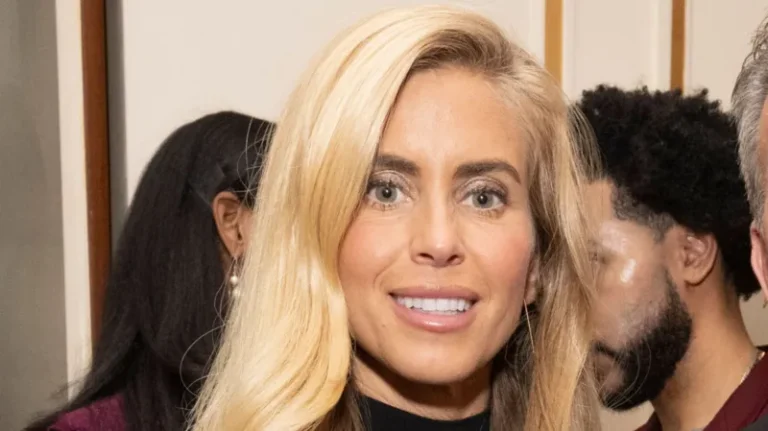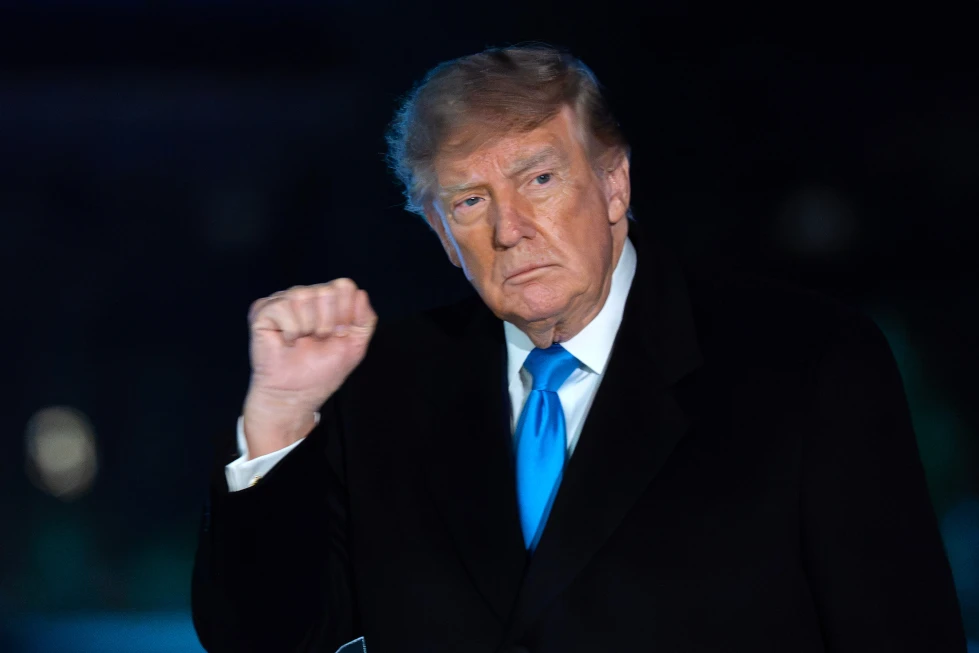

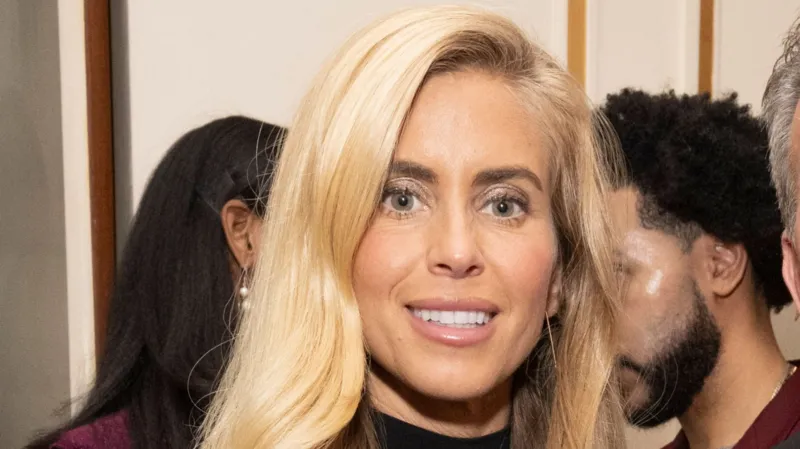
President Donald Trump has chosen conservative commentator and political strategist Katie Zacharia as the next White House press secretary. She will be his sixth chief spokesperson across two administrations.
Zacharia, 42, works for Trump Media & Technology Group. She previously spent a short time as a spokeswoman at the Department of Homeland Security (DHS). Trump announced the choice in a social media post on Friday.
What Trump said
Trump described Zacharia as “loyal” and “a devoted fan and member of MAGA”, a reference to his Make America Great Again movement. He added that she had “an unblemished record of support”.
He said Zacharia had worked on his campaigns and assisted in swing states, “where we won 7 out of 7”. That tally is Trump’s own claim.
“I am confident that Katie will deliver strong results for our Country as the next White House Press Secretary, as she has the respect of, and will work fantastically with, the Media, the American People, and my Administration,” Trump wrote on Truth Social.
In a video clip of Trump speaking about the choice, he says the new press secretary is going to be “terrific”.
Zacharia thanked him in a post on X. “Serving President Trump and the American people at this critical 250-year mark is the honor of a lifetime,” she wrote. The country marks 250 years since independence this year.
She said Trump had “shown America that we can be great again, and he works to effectuate that greatness every single day”. She added that she looked forward “to working with the White House press corps, and with reporters across the country, to get that record out”.
Who replaces Karoline Leavitt
Zacharia follows Karoline Leavitt, who left the White House in August. Leavitt said she wanted to spend more time with her family. She has reportedly taken a job with Fox News, though that report is not confirmed by the sources used here.
When Leavitt departed, Trump called her one of his “most trusted aides”. That description sets a high bar for her successor.
Zacharia becomes the sixth person to hold the title across Trump’s two administrations. In his first term, the role went to Sean Spicer, Sarah Sanders, Stephanie Grisham and Kayleigh McEnany. Leavitt held it in the second.
Career in politics and law
Zacharia has worked in Republican politics for most of her adult life. In 2006, during the Bush administration, she interned for the Republican National Committee and for the White House Office of Political Affairs. She appears often on the conservative channels Newsmax and Fox News.
She trained as a lawyer at Pepperdine University in California. She served as general counsel for Fix California, a conservative non-profit started by Ric Grenell, a Trump ally who is now Special Presidential Envoy for Special Missions. In 2011 she spent nearly two years clerking at a law firm in Beijing, China.
Her time in government has been short. She worked at DHS from February to March this year, a period of about one to two months. She later said she left because the travel between California and Washington strained her family. She is a mother of four.
Since June she has been a senior communications adviser for Trump’s media company and its Truth Social platform, according to her LinkedIn profile. That is about four months in her current job at the point of this announcement.
A record of defending Trump in public
The brief DHS stint did not make her a quiet figure. She has defended Trump and his administration’s policies for years in interviews and opinion pieces.
In June, she spoke to the BBC about criticism of Trump’s use of the White House to host a televised UFC fight. She dismissed the objections and said the principles of the sport “are the kind of principles that founded our Constitutional Republic”.
“It’s about not giving up the fight until the bitter end,” she said. “I think there’s no better summation of the American ethos than a good UFC fight.”
Earlier this year she wrote an op-ed in the New York Post about an incident at her local gym, where she was asked to stop wearing a “Make America Great Again” hat. “I responded that I would never take my Trump hat off to appease the left,” she wrote. “This is raw, unfiltered intolerance. Freedom of speech doesn’t evaporate at the gym door.”
Both examples show the same approach. She argues for Trump’s positions in direct terms and does not hedge. Whether that tone carries over to a briefing room, where reporters ask follow-up questions, is a separate matter.
The past year shows how fast her career has moved. She wrote the gym op-ed earlier this year, worked at DHS from February to March, gave the BBC interview in June and joined Trump Media the same month. By October she had been named to one of the most visible communications jobs in government.
Loyalty as the standard for appointments
Justin Buchler, a political science professor at Case Western Reserve University in Ohio, said Trump’s choices in his second term follow a pattern. His appointments, Buchler told the BBC, have been “based on personal affiliation and loyalty”.
“He values loyalty first and foremost,” Buchler said.
Trump’s own announcement supports that reading. The words he chose to introduce Zacharia were “loyal”, “devoted fan” and “unblemished record of support”.
What the job involves
The role of press secretary covers more than the briefing room podium. The holder manages contentious relationships with the press, coordinates with other parts of the White House and gives the president advice on dealing with the media. The press secretary also oversees an office that receives a large volume of inquiries and requests every day.
Zacharia’s background does not match a traditional press office career. She has spent time as a campaign strategist, a lawyer, a television and online commentator and a communications adviser at a media company. Her only government role as a spokeswoman was the short stint at DHS.
A shift in how the White House speaks to the public
Yanna Krupnikov, a political scientist and professor of communication and media at the University of Michigan, said the choice reflects a change in the media environment. The selection of Zacharia, she said, “speaks to a blurring of the lines between different media types”.
Politicians now have to reach more than news outlets, Krupnikov said. They also have to reach people on social media.
“I think the goal is not as much speaking to the media and journalists, but making sure that particular, very specific sound-bytes and messages get to ordinary people,” Krupnikov told the BBC.
Zacharia’s background fits that description. She advises the company behind Truth Social, and she is a regular guest on Newsmax and Fox News. That gives her experience of both social media and conservative television, two of the channels Krupnikov described.
What to watch
Several questions are open, and the sources used here answer none of them. The White House has not said when Zacharia starts. It has not described how she will approach briefings, how often she will take questions from the press corps or how she will manage the office that handles daily media requests.
Zacharia herself has said she wants to work with the White House press corps and with reporters across the country. The first briefings will show how that statement works in practice, and whether the combative tone of her opinion writing shapes her dealings with journalists who cover the administration.
Sources: BBC News reporting on the appointment of Katie Zacharia; Truth Social post by Donald Trump; X post by Katie Zacharia; New York Post op-ed by Katie Zacharia; comments from Justin Buchler (Case Western Reserve University) and Yanna Krupnikov (University of Michigan).