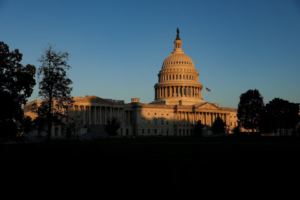

Federal prosecutors announced upgraded charges against Rahmanullah Lakanwal, the 29-year-old Afghan man accused of opening fire on two National Guard members near the White House — an attack that has escalated political tensions and prompted President Donald Trump to declare a freeze on migration from what he called “Third World Countries.”
Charges Upgraded as Investigation Expands

U.S. Attorney for Washington, D.C., Jeanine Pirro said Friday that Lakanwal will be charged with first-degree murder, with additional counts expected to be forthcoming as investigators continue their work. Authorities say Lakanwal ambushed two Guardsmen from West Virginia on Wednesday in a deliberate attack that officials are now treating as a potential act of terrorism.
In a Thanksgiving Day call with American service members, President Trump referred to the shooting as a “terrorist attack,” and federal officials acknowledged an active terrorism investigation.
“This crime was unmistakably premeditated,” Pirro said in an interview with Fox News. “The evidence supports upgrading the initial charges to first-degree murder.”
One Guardsman Killed, Second Critically Injured
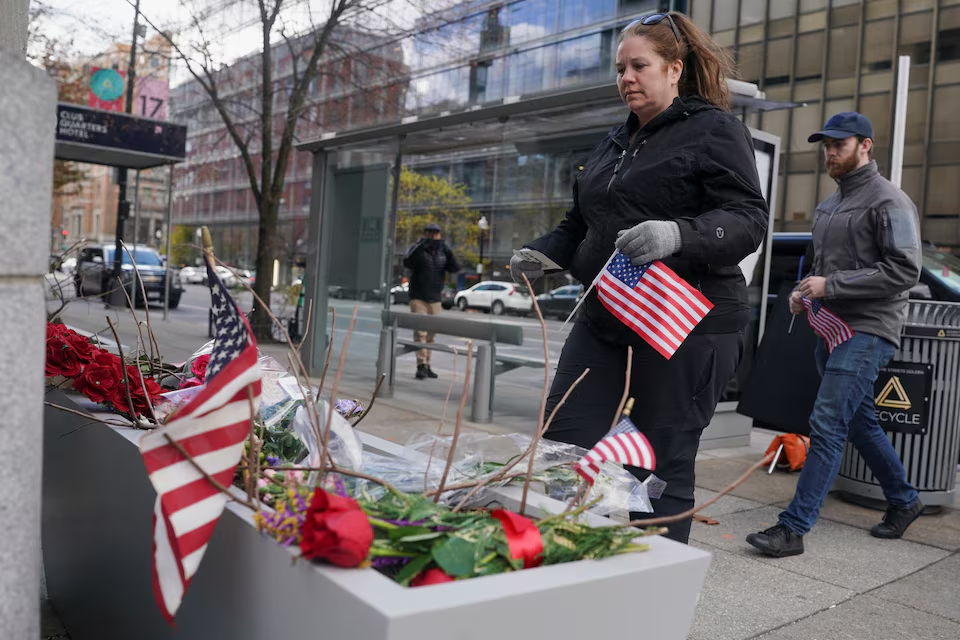
Sarah Beckstrom, 20, died of her injuries Thursday. Her fellow Guardsman, Andrew Wolfe, 24, remains in critical condition, Pirro said.
The attack, at one of the most highly secured areas of Washington, D.C., heightened the political scrutiny of US immigration and asylum programs.
Trump Raises Rhetoric on Immigration
In the hours immediately after the shooting, President Trump called for an immediate halt to migration from unspecified “Third World Countries” and accused his predecessor of creating vulnerabilities within the immigration system.
“I will permanently stop migration … end millions of Biden illegal admissions … and remove anyone who is not a net asset to the United States,” Trump wrote on Truth Social.
The Department of Homeland Security pointed reporters to a list of 19 countries, including Afghanistan, subject to travel restrictions issued in June, though the administration has not identified which countries are covered by the new freeze.
Lakanwal entered the U.S. under Biden’s Afghan resettlement program.
Lakanwal arrived in the United States in 2021 under Operation Allies Welcome, the program launched by President Biden to resettle tens of thousands of Afghans who assisted U.S. forces and feared Taliban retaliation after the withdrawal.
More than 70,000 Afghans have since been resettled across the country.
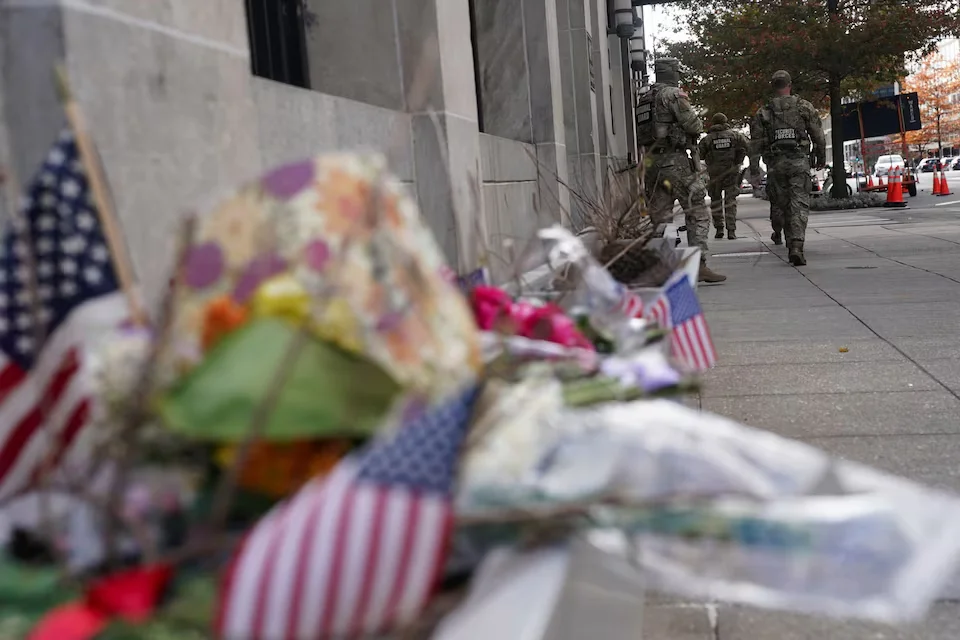
According to officials, Lakanwal served in a CIA-backed Afghan security unit before settling in the United States. He was granted asylum earlier this year during Trump’s presidency, according to internal government records reviewed by Reuters.
According to investigators, he moved cross-country from Washington state, where he lived with his wife and five children, before he conducted the shooting with a .357 Magnum revolver.
Asked if Lakanwal’s family faced the possibility of deportation, Trump responded that his administration was “looking at the whole situation.”
Administration Orders Broad Policy Reviews
Less than a day after the shooting, Trump officials began sweeping reviews of:
Asylum cases approved under the Biden administration
Green cards issued to citizens from the 19 listed countries
Security vetting procedures for current and past applicants
The administration claims the attack reflects risks across legal avenues to entry, such as asylum, a claim immigration experts strongly dispute.
International Rights Groups Push Back
Global organizations quickly called on the U.S. to adhere to international protections for asylum seekers.
Farhan Haq, a spokesperson for the U.N. secretary general, reminded Washington of its obligations under the 1953 Refugee Convention, saying asylum seekers are “entitled to due process.”
The U.N. human rights office said likewise, emphasizing that isolated incidents should not be driving broad punitive policies.
Migration scholar Jasmin Lilian Diab cautioned that across-the-board freezes on Afghan applications, or retroactive reviews, threaten to destabilize communities that have already resettled and erode confidence in the U.S. immigration system. “While the recent incident is tragic, using it to justify mass restrictions contradicts evidence showing no correlation between refugee arrivals and increased crime,” said Diab.