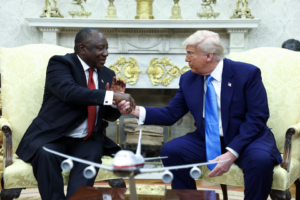

A fragile two-week ceasefire has been reached between the United States, Iran, and Israel, offering a brief pause in a conflict that has raised global tensions. The agreement, brokered through Pakistani mediation, is expected to pave the way for direct talks between American and Iranian officials scheduled for Friday, where both sides will attempt to negotiate a more lasting solution.
Despite the breakthrough, deep divisions remain, suggesting that the road to a long-term agreement could be challenging.
Competing Proposals Reveal Key Disagreements
At the center of the upcoming negotiations are two competing frameworks: Iran’s 10-point proposal and a more extensive 15-point plan previously presented by Washington.
U.S. President Donald Trump has described Tehran’s proposal as a “workable basis” for discussion. However, analysts note that there is little alignment between the two plans, especially on critical security issues.
One major sticking point is Iran’s insistence on continuing uranium enrichment, a position the United States has firmly opposed. Additionally, Iran’s proposal does not address its ballistic missile program, which both Washington and Israel consider a serious threat that must be significantly reduced.
These unresolved issues highlight the complexity of the negotiations ahead.
Pakistan’s Role in Securing the Ceasefire
The ceasefire was publicly announced by Pakistani Prime Minister Shehbaz Sharif, who stated that both sides had agreed to halt military actions immediately across all fronts, including Lebanon, where Israeli forces have been active.
However, Sharif’s announcement provided limited insight into the details of the agreement. It did not clarify how the differing proposals would be reconciled or outline Israel’s formal commitments under the ceasefire.
A Pakistani official familiar with the discussions indicated that Iran could potentially gain concessions in areas such as post-conflict reconstruction, financial compensation, and relief from economic sanctions. Still, the official emphasized that Tehran is unlikely to win approval for uranium enrichment, a long-standing point of contention.
U.S. Conditions and Strategic Objectives
In a statement shared on his Truth Social platform, President Trump confirmed that U.S. military operations would be paused during the ceasefire period. This suspension is conditional on Iran ensuring the safe and immediate reopening of the Strait of Hormuz, a vital global shipping route for oil.
Trump also expressed optimism about the progress of negotiations, stating that both sides were moving closer to a broader agreement that could bring long-term peace to the Middle East. While he acknowledged Iran’s proposal as a starting point, he did not provide detailed information about its contents.
According to Israeli sources, the earlier U.S. proposal outlined several strict requirements, including the dismantling of Iran’s stockpile of highly enriched uranium, a complete halt to enrichment activities, restrictions on its missile program, and an end to financial support for regional allied groups.
Iran’s Position and Strategic Goals
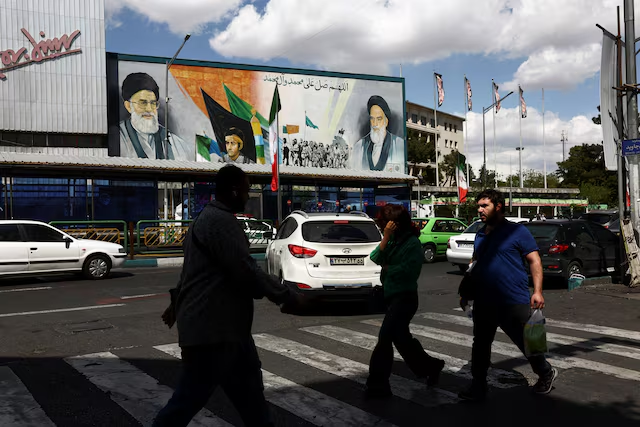
Iranian Foreign Minister Abbas Araqchi stated that Iran had agreed to suspend what it described as “defensive operations,” provided that attacks against its territory also cease.
He added that navigation through the Strait of Hormuz would remain open during the ceasefire, although it would be managed in coordination with Iranian forces and subject to operational limitations.
Iran’s Supreme National Security Council outlined a broader set of expectations, claiming that the United States had shown willingness, in principle, to consider several key demands. These include commitments to non-aggression, recognition of Iran’s control over the Strait of Hormuz, acceptance of its right to enrich uranium, and the lifting of both U.S. and international sanctions.
The council also called for the removal of resolutions imposed by the United Nations and nuclear regulatory bodies, the withdrawal of U.S. forces from the region, and a halt to hostilities involving Iran-aligned groups, including those in Lebanon.
Before the ceasefire, Iranian officials had also suggested the possibility of imposing transit fees on ships passing through the Strait of Hormuz — a move that could spark international debate given the waterway’s global importance.
Israel’s Position Remains Firm
Israel has confirmed its participation in the ceasefire but made it clear that the agreement does not extend to halting its military operations in Lebanon.
An Israeli official stated that the ceasefire had been coordinated with the United States in advance, but rejected claims that Iran had secured major concessions. According to the official, Iran’s agreement to reopen the Strait of Hormuz does not include guarantees on ending the conflict, receiving compensation, or achieving sanctions relief.
The official further noted that during the upcoming negotiations, Washington is expected to maintain a firm stance, pushing for the elimination of Iran’s nuclear materials, a complete halt to uranium enrichment, and the dismantling of its ballistic missile capabilities.
A Temporary Pause with Uncertain Outcomes
While the ceasefire provides a short-term reduction in hostilities, it remains a fragile arrangement with no guarantee of lasting peace. The significant differences between the positions of the United States and Iran suggest that negotiations will be difficult and potentially prolonged.
As diplomatic efforts move forward, the outcome of the planned talks will play a crucial role in determining whether this temporary truce can evolve into a stable and lasting agreement — or whether tensions in the region will escalate once again.