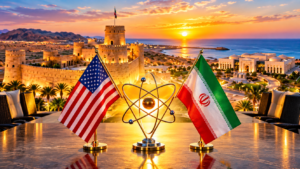


Fresh details of a preliminary agreement between the United States and Iran surfaced Tuesday, giving the clearest picture yet of a framework both sides hope will end months of conflict and reduce tensions across the Middle East.
The interim deal, brokered after intense negotiations and expected to be signed in Switzerland later this week, extends the current ceasefire by 60 days. It also opens talks on some of the most contested issues between Washington and Tehran. The agreement has already moved markets, drawn reactions from governments across the region, and set off debate among analysts about what it actually delivers and what it leaves out.
Trump Claims a Win
Trump, speaking at the G7 summit in France, called it a major diplomatic achievement. The framework, he said, explicitly blocks Iran from developing a nuclear weapon. He described the arrangement as a barrier that prevents Tehran from crossing a critical threshold while negotiators work toward a more comprehensive deal.
He also signaled openness to congressional review of any final settlement, responding to lawmakers who want a formal role in evaluating the long-term agreement. The full text, he said, would be made public at a signing ceremony expected within days.
His comments appear aimed at reassuring both domestic critics and international partners that the deal contains real, enforceable restrictions. That’s a direct response to skeptics who worry the framework is more political optics than a binding commitment.
Iran Gets Access to Oil Markets, With Conditions

One of the most significant parts of the deal involves Iran’s return to global energy markets. Senior U.S. officials confirmed that Iran can begin selling oil and fuel products as soon as the agreement takes effect. The framework also restores access to shipping, insurance, and banking services needed to move those exports internationally.
That’s a substantial economic concession. Iran’s economy has been under heavy pressure from years of sanctions, and oil revenue is its most direct path to recovery.
But U.S. officials were firm on one point: the benefits are conditional. Iran keeps access to those economic opportunities only if it fully complies with every commitment in the memorandum. That includes curbing uranium enrichment, addressing concerns about existing nuclear material stockpiles, and keeping the Strait of Hormuz open to international shipping.
Washington made clear the economic incentives are tools to encourage compliance, not unconditional rewards handed over in advance.
Markets React, But Recovery Won’t Be Instant
Global energy markets responded quickly. Oil prices fell more than 2% on Tuesday, following a drop of nearly 5% the day before when the deal was first announced. Investors are pricing in the return of Iranian exports and reduced risk to shipping routes through the Gulf.
The numbers reflect real relief. Fears of a prolonged supply disruption had been building for months, and the agreement has taken significant pressure off the market.
Analysts are more cautious about the longer-term picture, though. Infrastructure damage from the conflict, combined with logistical challenges across the region, means full production recovery could take several months. Shipping companies are holding back too. Industry leaders say restoring normal traffic levels will be gradual as insurers, operators, and governments assess actual security conditions on the ground.
The market reaction is optimistic. The operational reality is more complicated.
The Harder Talks Are Just Starting

The ceasefire extension and economic provisions have drawn most of the attention, but negotiators are clear about what comes next: the difficult part.
Iranian Foreign Minister Abbas Araqchi confirmed a new round of talks will begin in Switzerland after the signing. Those discussions will focus on Iran’s nuclear program, which has been the central point of tension between Tehran and the West for decades.
Uranium enrichment levels, inspection mechanisms, existing stockpiles of nuclear material, and long-term monitoring arrangements are all still unresolved. These are exactly the issues that derailed previous diplomatic efforts, including the 2018 collapse of the JCPOA after the U.S. withdrew. Getting agreement on the technical details of nuclear restrictions has historically been slow, contentious work.
Trump expressed confidence that talks would move quickly, arguing both countries now have strong incentives to normalize relations. Iranian officials have indicated a willingness to continue, while maintaining their nuclear program is entirely for peaceful purposes.
That gap in framing alone signals how much ground still needs to be covered.
Missiles and Regional Proxies Left Out
Notably absent from the current framework are two issues that Washington and Israel have repeatedly flagged as core security concerns: Iran’s ballistic missile program and its financial and military support for regional armed groups.
Neither appears to be part of the immediate negotiations. That omission has raised questions among analysts and governments in the region who argue any serious agreement with Tehran has to address both.
Israel and several Gulf states have long maintained that Iran’s missile capabilities and its backing of organizations like Hezbollah represent a direct threat, regardless of what happens on the nuclear file. Leaving those issues out of the current framework doesn’t make them go away. It pushes them into a later phase of talks where they could easily become dealbreakers.
Whether they eventually make it into a final settlement is an open question. For now, negotiators appear to be focusing on areas where agreement is more achievable.
Lebanon Adds Friction
Lebanon is already creating problems. Iran has insisted the agreement requires a complete halt to hostilities between Israel and Hezbollah. Israeli Prime Minister Benjamin Netanyahu has flatly rejected that interpretation, stating that Israeli forces will remain in southern Lebanon and retain the right to respond to security threats.
That disagreement exposes a broader challenge. The U.S. and Iran can reach understandings between themselves, but translating those into regional stability requires buy-in from other actors, including Israel, which has its own calculations and red lines.
Trump has publicly expressed frustration with Israel’s military operations in Lebanon, a visible sign of growing tension between Washington and Jerusalem on regional strategy. How that plays out over the next 60 days will matter.
Tehran Is Cautious
Iranian President Masoud Pezeshkian welcomed the agreement but kept his expectations public and measured. Writing on social media, he described the framework as a positive step while acknowledging that a final agreement capable of delivering lasting peace hasn’t been negotiated yet.
That’s a careful position. Iranian officials have framed the deal as a diplomatic win that protects national interests and creates room for economic recovery. At the same time, they face real domestic pressure to show tangible results after a conflict that cost thousands of lives and deepened an already strained economy.
The next 60 days will show whether the agreement holds or becomes another short-lived ceasefire. The framework creates an opening. What happens inside that window depends on negotiations that haven’t started yet and compromises that neither side has agreed to make.