Clicxpost

Africa

New Term, Old Challenges: Malawi’s Mutharika Pledges Anti-Corruption Drive

Malawi's Mutharika Pledges Anti-Corruption Drive

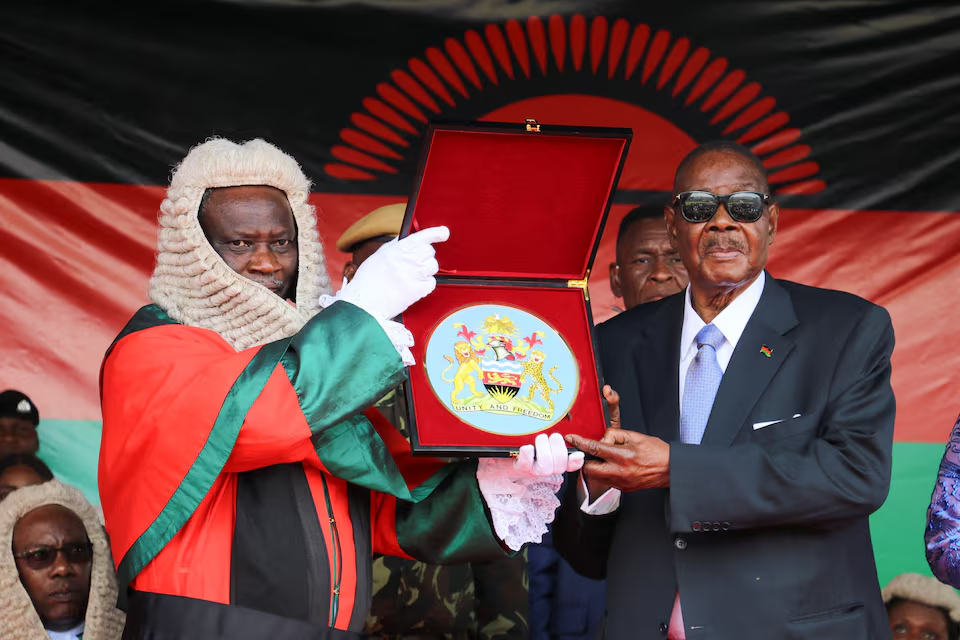
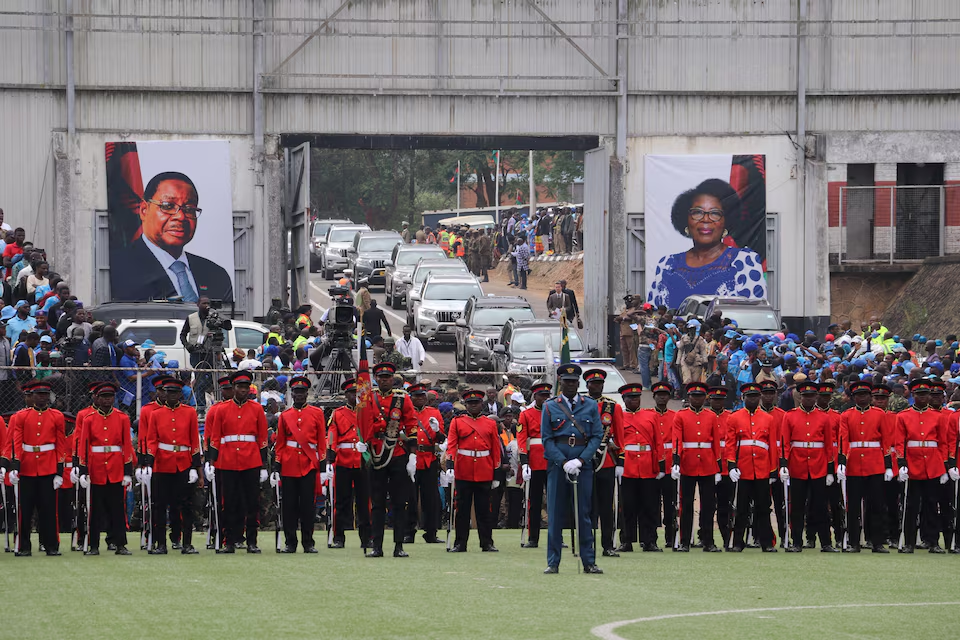
BLANTYRE, Malawi – Peter Mutharika took the oath of office as President of Malawi for a second term on Saturday in a vibrant ceremony that was full of optimism and gloominess, before then vowing to combat deep-rooted corruption and lead the country out of a severe economic crisis.

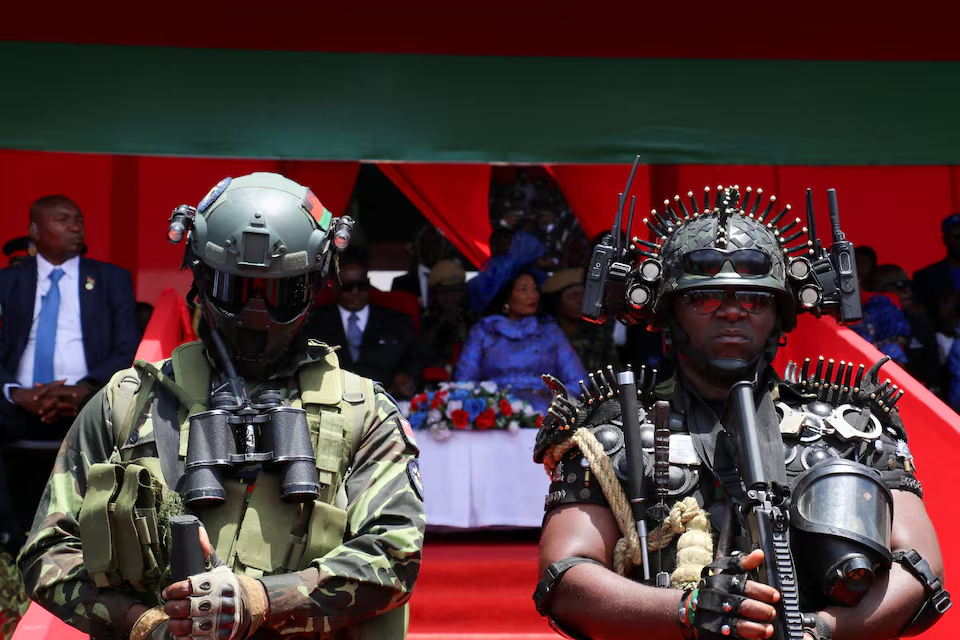
The 85-year-old leader of the Democratic Progressive Party (DPP) addressed a crowd of chanting supporters in the commercial capital Blantyre. Government ministers and other African heads of state were at the event, which was vastly different from the challenges that he had laid out in his inaugural address.

A Vote for Change Amid Economic Despair
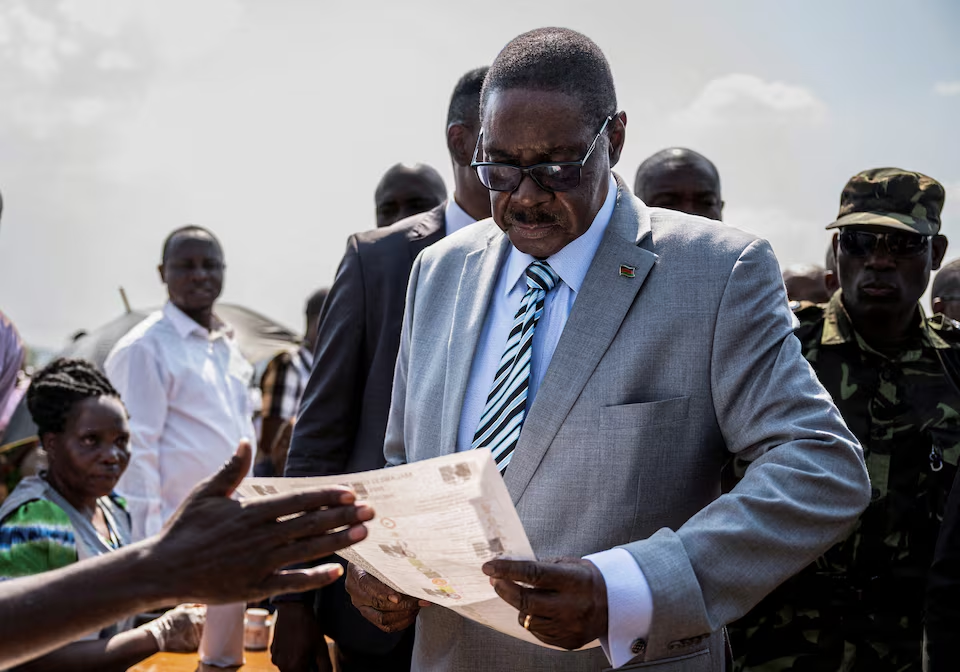
Mutharika’s return to the presidency is a political volte-face. He scored a landslide victory in the September 16 poll, taking over 56% of the vote. His nearest rival, incumbent President Lazarus Chakwera of the Malawi Congress Party (MCP), mustered just 33%. The poll was the fourth direct presidential battle between the two veteran warhorses, but it was all about one, pressing issue: the economy.

During Chakwera’s five-year rule, Malawi, which is among the world’s least developed nations, saw its economic situation deteriorate drastically. Voters expressed their ire at the polls, replacing an opponent with an administration that hadn’t been able to curtail inflation, provide jobs, and shore up the currency.

Inheriting a Nation in Crisis

President Mutharika was not afraid to characterize the state of the country he will preside over for the next half-decade. “We are inheriting a nation in economic crisis,” he said, painting a dark landscape for what they are inheriting.

He presented a trifecta of key issues:

Severe Food Insecurity: There is widespread hunger among most Malawians through a combination of climate shocks and economic volatility.

Out-of-Control Cost of Living: galloping inflation has deprived citizens of purchasing power, making even staples beyond the reach of the average citizen.

Essential Foreign Exchange Shortages: an endemic shortage of US dollars has paralysed business, hindering imports and fueling the endemic fuel shortages that have become the hallmark of Malawian existence.

“We will repair this country,” Mutharika promised, adding a blunt critique of the government’s finances: “There is no cash in government. There is a lot of borrowing, and no one is aware of where the borrowed money went.”

A Promise of Austerity and Accountability
With a tone of gritty realism, the President promised a government of hard work and difficult decisions. “I don’t promise you milk and honey. I promise you hard work, tough and painful decisions,” he told the nation.

His most powerful promise was a direct attack on corruption that has hounded the country for decades. “The honeymoon of looting government is over!” he stated, signaling a new emphasis on accountability and transparent governance.

Reaching Out to the Global Community
In an attempt to realize that everything may not be left to the local efforts, President Mutharika went ahead and sought cooperation and investment from the international community. Untraditionally, he went ahead and directly approached former U.S. President Donald Trump with a pledge to send a delegation shortly to Washington. The action appears in an attempt to revive diplomatic relations and open up new sources of help, particularly after slashing American foreign aid.
In a gesture of political graciousness, the outgoing Malawi Congress Party published a message wishing Mutharika’s “success and good health,” even as the outgoing president did not attend the inauguration. With President Mutharika beginning this new tenure, hopes are high, and the road to economic recovery will be an uphill struggle.

RECOMMENDED
Africa

Heavy rains lead to Senegal floods, government reports several deaths

By George Mensah 3 min read

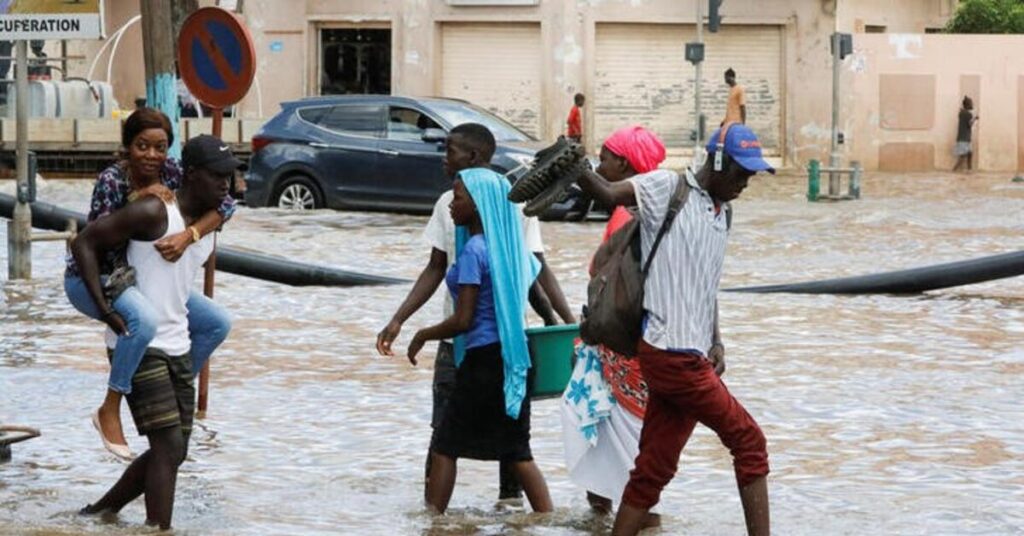
Heavy rain flooded roads and destroyed buildings across Senegal over the weekend, and the government said several people were killed and that more rain is coming. Flash floods in the capital, Dakar, and other areas disrupted traffic, and Prime Minister Ahmadou Al Aminou Lo warned that the school year, due to start this week, could be postponed if the water does not recede.

The floods come less than four weeks before Dakar hosts the 2026 Summer Youth Olympics, which start on October 31.

Deaths reported in Dakar and Matam

Senegal’s Interior Ministry reported deaths and injuries in Dakar and in Matam, a town in the northeast. It said a building collapsed in Kaolack, a town in the south. The reports did not give a death toll.

Local media reported that a mother and her child died in the Parcelles Assainies area of Dakar after their home flooded.

More rain forecast for Monday to Wednesday

Lo said there is a high probability of more rain on Monday, Tuesday and Wednesday. The forecast covers the same days on which many families would be preparing children for the start of term.

He said the school year could be postponed if floodwaters have not receded. The government has not yet announced a new date.

How much rain fell

Senegal’s meteorological agency, ANACIM, published rainfall totals for 24 hours. Rufisque, a town just outside Dakar, and Ranerou, in the Matam region, each recorded 142 mm. Dakar’s Yoff district recorded 138 mm.

The two places with the highest totals are about as far apart as two parts of the country can be, which suggests the rain covered a wide area and was not limited to the capital.

For comparison, after floods in Dakar in 2020, then-Water Minister Serigne Mbaye Thiam said 124 mm of rain had fallen, about what the city normally gets over the whole rainy season from July to September. The measuring stations and years differ, so the figures are not an exact match. Even so, both totals reported this weekend are above that 2020 number, and they were recorded within one day.

The Youth Olympics clock

Senegal is preparing to host the first Youth Olympic Games ever held in Africa. The event runs from October 31 to November 13, 2026.

The government expected flooding to be a risk for the event. On July 3, Lo chaired an interministerial meeting on flood preparedness and management, and the government approved measures to protect the venues and infrastructure. A dedicated task force was set up to handle flooding and waste at competition and accommodation sites, according to Ecofin Agency

That work followed Law No. 2026-381 of May 19, 2026, which strengthens the role of local authorities in flood prevention and management. The law is not specific to the Games. The task force works with the organising committee and the International Olympic Committee’s coordination commission.

This weekend’s rain is the first major test of those plans. The reports so far do not say whether any Olympic venues were affected, so that question remains open.

A problem that comes back each year

Floods in Dakar are not new. In 2020, the government faced criticism over a slow response to flooding that killed at least six people. A local resident told FRANCE 24 at the time that every flood brings food rations, but that what residents need is drainage and sanitation.

Dakar has a record of flooding after heavy local downpours, according to a European Space Agency hazard map, which classes the risk using flood events over the past 10 years. This weekend adds another event to that record.

What happens next

Three things will show how serious the situation is. The first is the rainfall on Monday, Tuesday and Wednesday, and whether floodwater drains from the streets of Dakar and Matam. The second is the government’s decision on the start of the school year. The third is whether the Interior Ministry publishes a full death toll and the number of damaged buildings.

With the Youth Olympics less than four weeks away, how quickly Dakar’s roads reopen will also be watched by organisers, athletes and visitors planning to travel.

Africa

Ethiopia Retakes Mekelle Airport as Tigray Fears War’s Return

By George Mensah 4 min read

Ethiopia’s federal military has recaptured the main airport in Mekelle, the capital of the northern Tigray region, three sources told Reuters on Saturday, October 3. If confirmed, the move is a major setback for an opposition alliance in its stronghold. Reuters could not verify the claim, and the region’s ruling party, the Tigray People’s Liberation Front (TPLF), could not be reached for comment.

The airport is Alula Aba Nega Airport, about 10 km (6 miles) from the centre of Mekelle. It was one of three airports in Tigray that opposition forces seized when fighting began on September 23. That fighting is the most serious escalation of violence in northern Ethiopia since the 2020-2022 civil war.

What the three sources said

One source with knowledge of events in the city and a humanitarian source told Reuters that troops from the Ethiopian National Defence Forces had regained control of the airport. A third source, a Mekelle resident who asked not to be named for security reasons, confirmed that government forces took it. This resident said gunfire could be heard outside the city centre.

The resident also described scenes inside the city. Some Tigrayan Defence Force fighters were leaving their posts and heading home, the resident said, and government facilities were being looted.

A source close to the TPLF told Reuters that government troops and allied militias had encircled the city.

AFP, citing a local journalist and residents, reported that TPLF fighters and leaders were seen leaving Mekelle. The journalist told AFP that federal forces had not yet been seen inside the city. Al Jazeera reported that media access in Ethiopia is heavily restricted and that communications blackouts have limited reporting. Those limits are the context for why the accounts so far rest on anonymous sources.

How the fighting reached Mekelle

Last month, rebels announced a seven-party coalition led by the TPLF, the same group that fought federal forces in the 2020-2022 war, according to Al Jazeera. The coalition began an offensive that seized three airports in Tigray. It also engaged in fighting on the borders with the Amhara and Afar regions.

The government is now mounting a counteroffensive, Al Jazeera reported, citing the Critical Threats Project at the American Enterprise Institute. That project says federal forces are pushing into Tigrayan territory along three routes toward Mekelle. Al Jazeera’s bureau chief in Ethiopia, Mohammed Taha Tawakel, reported on Friday that forces loyal to the federal government had taken several towns and were closing in on the city.

Al Jazeera reported that fighting is also raging in the Amhara and Afar regions, so the conflict is not confined to Tigray. AFP photographed TPLF members walking along a main road in Mekelle on September 23, the first day of the fighting.

A wider regional dispute

The fighting has raised fears of a wider conflict that could draw in neighbouring countries in the Horn of Africa and the Gulf, Reuters reported. The federal government in Addis Ababa cut diplomatic ties with Eritrea this week. It accused Eritrea of backing the rebel alliance, along with Sudan and Egypt. All three countries deny the accusation. Reuters published an analysis this week on why renewed fighting in Tigray risks a regional war.

The accusation matters because of what the 2022 Pretoria peace agreement required. That deal, which ended the earlier war, obliged the TPLF to disarm. It also called for the withdrawal of Eritrean and other non-federal forces from Tigray and for humanitarian access to the region, according to Newsy Today. The accusation against Eritrea therefore touches the terms of the agreement that ended the last war.

What history suggests

Analysts told Reuters that taking Mekelle would be unlikely to end the conflict on its own. The 2020 war shows why. Federal forces captured Mekelle within the first month of that war, and the TPLF took it back seven months later.

Taking the airport is also a different step from holding the city. AFP’s local journalist reported that federal forces had not yet entered Mekelle, and the resident who spoke to Reuters heard gunfire at its edges. The resident also said looting of government facilities was already under way, which points to a security gap in the city.

What to watch next

Three things will show how far the airport’s recapture changes the fighting. The first is whether federal troops enter Mekelle itself or stay at its edge. The second is whether the TPLF confirms or denies the loss, since it had not commented when Reuters reported. The third is how Eritrea, Sudan and Egypt respond to the accusations after Ethiopia’s break with Eritrea.

Reuters said it could not verify the reports, and it and AFP are the main sources for updates. Until the government or the TPLF speaks publicly, the picture in Mekelle rests on anonymous sources.

ADVERTISEMENT
Scroll to Top