

Despite years of warning about China’s growing technological might, U.S. lawmakers have four times since September 2024 failed to close what they call a “blatant national security loophole.” The issue: Chinese companies are circumventing U.S. export bans on advanced artificial intelligence (AI) chips by renting them through American cloud services, including Amazon Web Services (AWS) and Microsoft Azure.
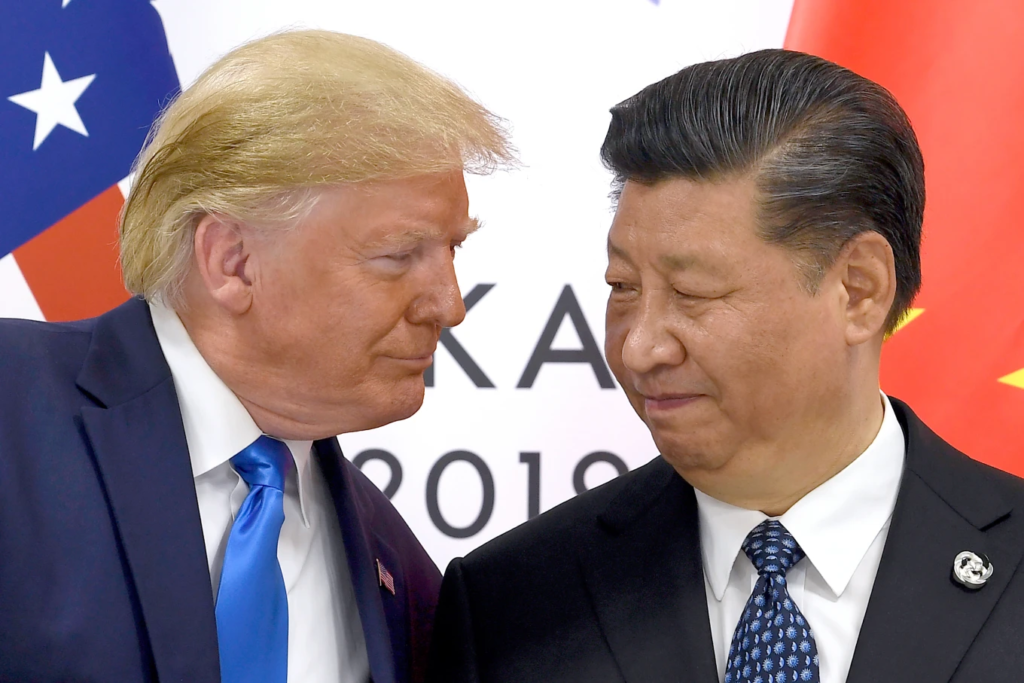
The back-to-back setbacks, driven by a rush of corporate lobbying and political gridlock, coincide with President Donald Trump and Chinese President Xi Jinping’s scheduled meeting in a highly anticipated showdown on Thursday — where U.S. technology exports will likely top the agenda.
A Battle Over AI Chips and Cloud Access
The U.S. has been blocking direct sales of advanced AI chips, such as Nvidia’s H100 and AMD’s MI300, to Chinese buyers for a while. Chinese firms have evaded the bans by accessing the same computing powers remotely through U.S.-based cloud services. These virtual rentals effectively allow Chinese AI researchers to train large-scale models that were meant to be blocked under U.S. export control rules.
The National Security Council and congressional panels have all likened this repeatedly to a “shadow export system” that undermines U.S. attempts to prevent China from developing military-grade AI systems. Yet every legislative attempt to close the loophole — most recently in September — has foundered under fierce industry pressure.
Over 100 lobbyists for U.S. technology giants and trade associations have pressured lawmakers to dilute or delay the suggested restrictions, based on federal lobbying disclosures reviewed by the Associated Press.
Lobbying and Corporate Interests Stall Reform
An investigation by the Associated Press found that hundreds of millions of dollars have been spent by tech and telecom companies over the past two decades to influence U.S.-China trade policy. Lobbyists argue that additional restrictions could hurt American competitiveness and accelerate China’s domestic chip manufacturing push.
“Blocking U.S. computing from commercial markets only helps foreign competitors and contradicts President Trump’s objective of making the economy grow,” Nvidia wrote in a statement, contending that it doesn’t build surveillance systems and doesn’t collaborate with Chinese police.
Intel, which recently inked a partnership with Chinese tech firms, was confirmed by sources close to the matter to hold a passive 10% ownership stake in the U.S. government valued around $11 billion, emphasizing the investment does not affect governance or decision-making.
AMD declined to comment, and the White House and Commerce Department were not immediately reachable to comment.
A History of U.S. Tech Feeding China’s Surveillance State
Even as Washington has for years warned of China’s human rights abuses and use of surveillance technologies, U.S. companies have been suppliers of key components and infrastructure that allowed Beijing to build one of the biggest digital surveillance dragnets on Earth.
An AP investigation earlier this year determined that American companies played a role in constructing China’s surveillance state, including technologies that were later used to track ethnic minorities such as the Uyghurs in Xinjiang.
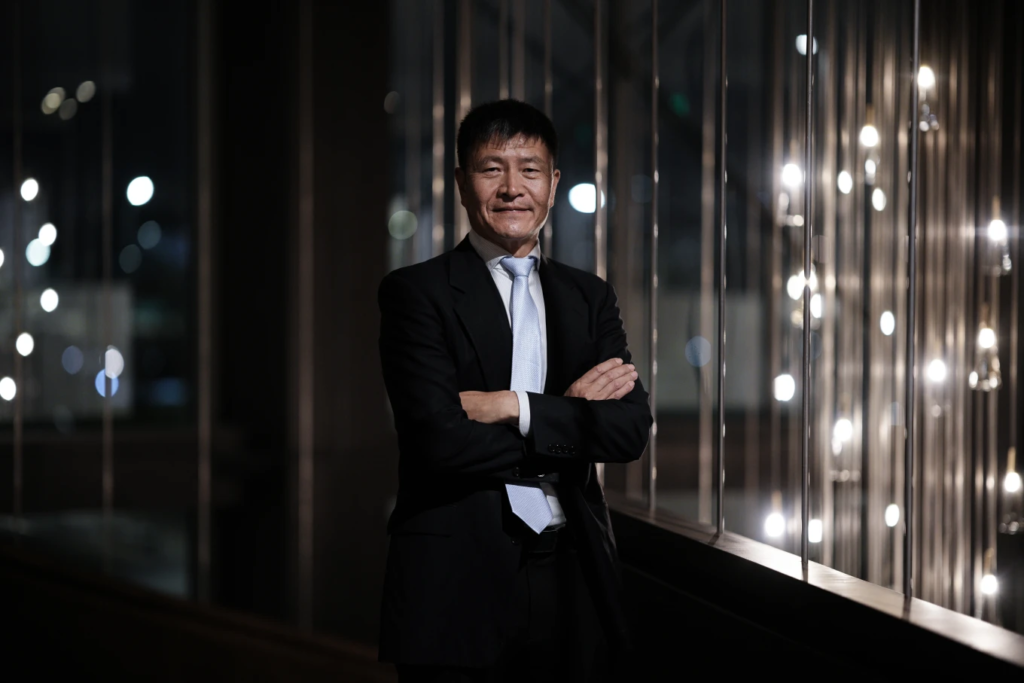
Zhou Fengsuo, a Tiananmen Square student leader who is now a U.S. citizen, has become one of the most vocal critics of this double standard.
It’s for profit, and that’s why strategic discourse has been quiet or deferred,” Zhou said. “The U.S. has allowed its corporations to facilitate Beijing’s repression — this is a strategic failure.”
Zhou, who testified before Congress in 2024, continues to call for an independent investigation into U.S. corporate involvement in Chinese state surveillance programs.
The Cloud Services Loophole: The New Backdoor
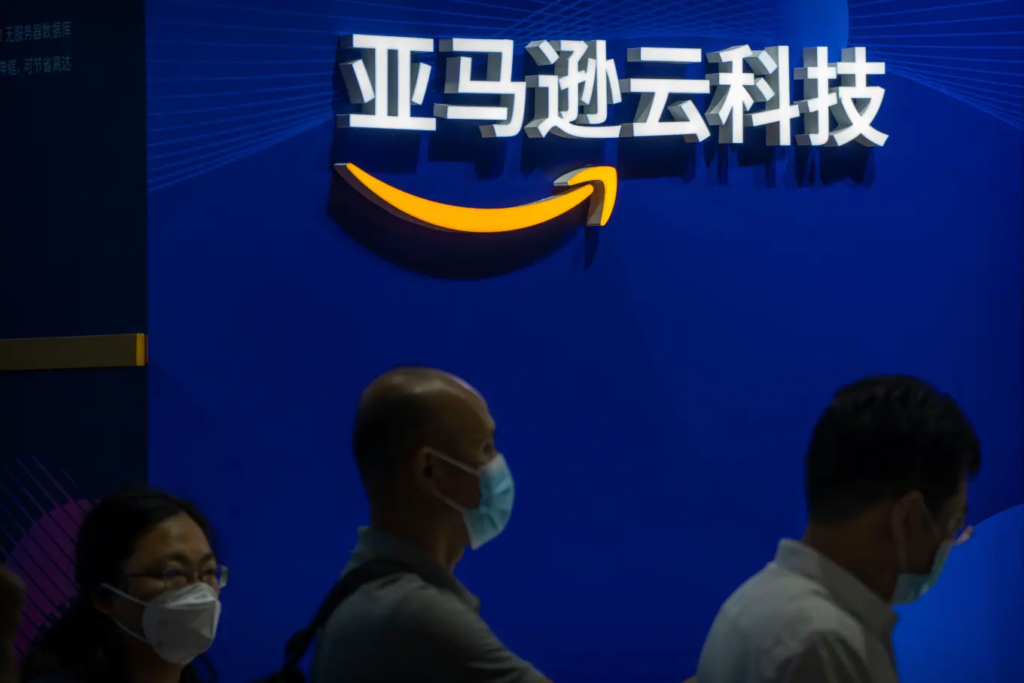
Even Chinese organizations under U.S. sanctions are reportedly acquiring AI computing through AWS and Microsoft Azure, albeit indirectly through third-party resellers or overseas subsidiaries.
SDIC Contech, a Chinese state-owned technology company, and the Shanghai Qi Zhi Institute, which performs encryption and AI research, have both sought access to cloud-based services and big data analytic tools offered by the U.S. companies.
Marketing materials procured by AP reveal that Hikvision and Dahua, two Chinese surveillance giants blacklisted by Washington for human rights abuses, continue to market cloud-based surveillance products hosted on AWS and Azure for global customers.
While Microsoft denied directly teaming up with Hikvision, and OpenAI emphasized compliance with U.S. law via its Azure integrations, analysts contend the system remains effectively impossible to police.
“Rented clouds are the new export loophole,” said one congressional aide familiar with the problem. “You can restrict physical chips, but you cannot just track who’s renting them virtually.”
Decades of Missed Opportunities and Political Inaction
Efforts to limit the export of AI and surveillance technology to China date back to the Tiananmen Square massacre in 1989, when the U.S. first banned exports of “crime control and detection equipment.” But the bans focused mostly on low-tech equipment like batons and shields — not facial recognition software, cameras, or computerized surveillance systems.
Over the years, bipartisan proposals to update these rules repeatedly failed amid industry pushback. Former Rep. Chris Smith (R-NJ), who authored several of the bills, said the U.S. has been “naive or complicit” in enabling China’s surveillance capabilities.
“We’ve been selling and conveying to a malevolent power the tools to destroy freedom itself,” Smith told reporters.
Democratic Senator Ron Wyden echoed the sentiment, adding, “What all these companies have in common is a big wallet. And that’s why we’ve made so little progress.”
American Firms Once Promoted Chinese Surveillance Markets
Documents obtained by AP through the Freedom of Information Act (FOIA) show that between the years 2004-2014, the Commercial Service of the U.S. Commerce Department actively pushed U.S. surveillance technologies to Chinese law enforcement agencies — at trade shows and webinars, among other venues.
American firms were encouraged by Republican and Democratic administrations to market facial recognition, biometric, and security systems to China’s growing “smart city” and “urban security” projects.
I would say to myself over and over, what is the scary potential of every product?” recalled Jeanette Chu, a former U.S. embassy official who helped organize a 2007 webinar on selling to China’s security sector.
Human Rights Activists Demand Accountability
Gulbahar Haitiwaji, a Uyghur survivor of China’s internment camps, testified to Congress in 2023, describing how U.S.-made technologies enabled her surveillance and detention.
It’s disappointing that the United States, a world superpower, would sell that kind of technology to China understanding the implications,” Haitiwaji said.
She and other human rights activists continue to call for greater accountability and an end to corporate complicity in China’s repression of ethnic minorities.
The Global Stakes: Tech Dominance and Moral Dilemmas
As Trump and Xi meet, the uproar over AI chips and surveillance technology highlights a deeper paradox in American policy: how to balance profit-driven innovation and moral and strategic responsibility.
China remains America’s most consequential AI rival, yet American firms are among its most important enablers. With cloud services providing a digital loophole too complex to close easily, Washington faces a dilemma that combines economics, ethics, and national security.
“This is not just about chips,” said one former Commerce Department official. “It’s about the future of global AI capability — and whether the U.S. can maintain leadership without empowering its most powerful competitor.”