


Artificial intelligence is transforming the way people work, communicate, and do business. From generating content and writing code to powering medical research and financial analysis, AI has quickly become one of the most influential technologies of the modern era.
But as governments and technology companies pour billions into AI development, researchers are warning that the industry’s rapid growth comes with a significant environmental price tag.
A new report reveals that data centres worldwide consumed 448 terawatt-hours (TWh) of electricity last year—more power than the entire nation of Saudi Arabia uses annually. About 20% of that energy demand was directly linked to artificial intelligence systems.
The findings highlight a growing reality that many people rarely see when using AI tools: behind every chatbot response, image generator, or machine-learning model is a vast network of servers, cooling systems, and energy-hungry infrastructure operating around the clock.
AI Is More Than Software
For years, AI has been viewed primarily as software running in the cloud. But experts say that perception hides the enormous physical infrastructure required to keep these systems running.
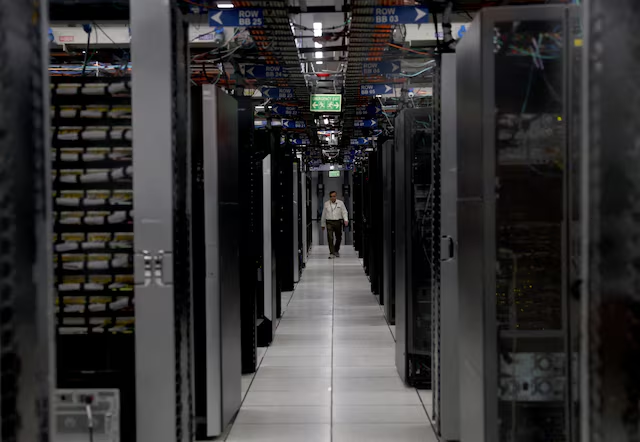
Behind the scenes are sprawling data centres filled with powerful processors that require huge amounts of electricity and water to operate efficiently.
“People often think of AI as something digital and invisible,” said Kaveh Madani, the lead author of the report. “But AI is also a physical system. It depends on data centres, electricity grids, cooling technologies, transmission networks, minerals, land, and water.”
As demand for AI services grows, so too does the need for the infrastructure that supports them.
The challenge is no longer just about developing smarter AI models—it is about finding sustainable ways to power them.
Water Consumption Reaches Staggering Levels
One of the report’s most striking findings involves water use.
Last year, data centres consumed approximately 4.5 trillion litres of water, primarily for cooling systems designed to prevent servers from overheating.
To put that figure into perspective, researchers estimate that amount of water could meet the annual needs of more than 600 million people living in Sub-Saharan Africa.
While water consumption varies by location and facility design, experts say the issue is becoming increasingly important as more data centres are built in regions already facing water stress.
The concern is not that AI will suddenly exhaust global water supplies, but that rapid expansion in certain areas could place additional pressure on communities already struggling with limited resources.
Electricity Demand Expected to Surge
The growth trajectory appears even more dramatic over the next several years.
Researchers project that electricity consumption from data centres will more than double by 2030, reaching approximately 945 terawatt-hours annually—roughly equivalent to Japan’s current electricity consumption.
Artificial intelligence is expected to account for nearly 40% of that total.
The surge is being driven by an intense global race among technology companies to build more powerful AI systems.
Major firms are investing heavily in advanced computing facilities capable of training increasingly sophisticated models, while businesses across virtually every industry are integrating AI into their operations.
As a result, demand for computing power is rising at a pace few anticipated just a few years ago.
Carbon Emissions Continue to Climb
The environmental impact extends well beyond electricity and water use.
According to the report, data centres generated around 189 million metric tons of carbon dioxide emissions last year.
If current trends continue, that figure could more than double to nearly 400 million metric tons by the end of the decade.
Many technology companies have pledged to achieve carbon neutrality and invest in renewable energy sources. However, experts warn that the speed of AI expansion may outpace those sustainability efforts.
In many regions, new facilities still rely heavily on traditional energy sources because renewable infrastructure has not expanded quickly enough to meet demand.
This creates a difficult balancing act for governments attempting to support technological innovation while pursuing ambitious climate goals.
The Physical Footprint Is Growing Too
The report also highlights another less-discussed consequence of the AI boom: land use.
Researchers estimate that the global footprint of data centres will expand from roughly 6,900 square kilometres last year to more than 14,500 square kilometres by 2030.
New facilities are being built across North America, Europe, Asia, and the Middle East as countries compete to become major hubs for AI innovation.
While these facilities create jobs and attract investment, they also require significant infrastructure, including power lines, water systems, roads, and communication networks.
In some communities, concerns are already emerging about how large-scale data centre projects could affect local resources and development plans.
Can AI Become Part of the Solution?
Despite the growing concerns, researchers stress that AI itself is not inherently harmful.
In fact, many experts believe artificial intelligence could play a crucial role in addressing environmental challenges.
AI-powered systems are already helping utilities manage electricity grids more efficiently, reducing energy waste, improving renewable energy integration, and optimizing transportation networks.
The technology is also being used to monitor climate change, improve weather forecasting, and identify opportunities for reducing industrial emissions.
These benefits could offset some of AI’s environmental costs over time.
However, researchers caution that efficiency gains alone may not be enough if overall demand continues growing at its current pace.
A Critical Moment for Sustainable Growth
Experts say the biggest challenge now is ensuring that AI expansion is guided by long-term planning rather than short-term competition.
Around the world, governments and technology companies are racing to build larger data centres and more powerful computing systems. But that race, researchers argue, sometimes overshadows important questions about sustainability.
“Right now, the drive to grow faster than competitors is often taking priority over responsible development,” Madani said.
He emphasized that the world is unlikely to simply run out of electricity or water because of AI. The greater risk is that rapid, poorly planned expansion could create serious local pressures on energy grids and water supplies.
As artificial intelligence becomes increasingly woven into daily life, experts believe the conversation must expand beyond innovation and profitability to include the resources required to support the technology.
The AI revolution may be digital, but the infrastructure powering it is very real—and its environmental footprint is becoming impossible to ignore.