
A U.S. federal jury has ruled against tech billionaire Elon Musk in his closely watched legal battle with OpenAI, dealing a major setback to the entrepreneur’s attempt to challenge the artificial intelligence company over its transformation from a nonprofit research lab into one of the world’s most valuable AI businesses.
The verdict, delivered Monday in federal court in Oakland, California, found OpenAI not liable for allegations that it had abandoned its original mission of developing artificial intelligence for the benefit of humanity. Jurors unanimously concluded that Musk filed the case too late, effectively ending the lawsuit at trial level.
The decision marks a pivotal moment not only for Musk and OpenAI but also for the wider AI industry, which is increasingly facing questions over ethics, governance, commercialization and control.
Jury Sides with OpenAI After Brief Deliberations
The jury deliberated for less than two hours before reaching a unanimous verdict in favor of OpenAI.
At the center of the ruling was the legal issue of timing. Jurors determined that Musk’s claims fell outside the applicable statute of limitations, meaning the lawsuit was filed after the legally permitted period had expired.
Following the verdict, U.S. District Judge Yvonne Gonzalez Rogers indicated that overturning the decision on appeal could prove difficult.
“There’s substantial evidence supporting the jury’s findings,” the judge reportedly said, suggesting the case faced significant procedural weaknesses.
Musk’s legal team signaled they may , though the court’s comments underscored the challenge ahead.
The outcome effectively shields OpenAI from one of the most significant legal threats it has faced since becoming a dominant force in generative AI.
Origins of the Dispute: Musk’s Early Role in OpenAI
The dispute traces back to OpenAI’s founding in 2015.
OpenAI was established by a group of technology leaders including Sam Altman, Elon Musk and Greg Brockman with the stated mission of ensuring artificial intelligence would benefit humanity broadly rather than serve narrow commercial interests.
Musk became one of the early financial backers and reportedly contributed approximately $38 million to support the organization’s development.
However, Musk left OpenAI’s board in 2018.
The following year, OpenAI created a for-profit arm to attract major investments and scale development of advanced AI systems. That transition eventually enabled partnerships worth tens of billions of dollars, including its landmark collaboration with Microsoft.
Musk argued that this restructuring betrayed the organization’s founding vision.
In his 2024 lawsuit, he accused OpenAI executives of misleading him during the company’s early days and later shifting toward profit-driven objectives.
He characterized OpenAI’s transformation as turning a charitable mission into a commercial enterprise.
OpenAI Defends Business Evolution
OpenAI rejected Musk’s claims throughout the trial, arguing that its evolution was necessary to fund increasingly expensive AI research.
The company maintained that advanced AI development requires enormous computing resources, infrastructure investments and engineering talent—costs that a traditional nonprofit model could not sustainably support.
OpenAI’s legal team argued that Musk understood these realities and waited too long before raising objections.
Defense attorneys also suggested Musk’s motivations were influenced by competition within the AI industry.
By the time the lawsuit was filed, Musk had already launched xAI, his own artificial intelligence venture designed to compete with OpenAI and other leading developers.
During closing arguments, OpenAI attorney William Savitt questioned Musk’s credibility in positioning himself as AI’s moral guardian.
“Mr. Musk may have the Midas touch in some areas, but not in AI,” Savitt argued.
The courtroom exchange reflected a broader rivalry between Musk and OpenAI leadership that has intensified over recent years.
Trial Focused Heavily on Sam Altman and Elon Musk
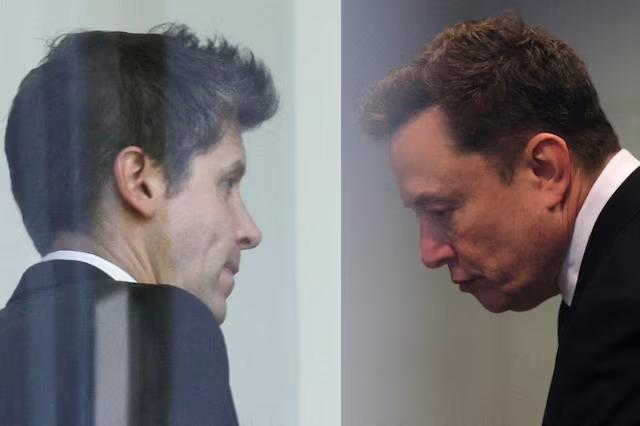
The 11-day trial featured repeated scrutiny of both Musk and OpenAI CEO Sam Altman.
Attorneys on each side challenged the motives, credibility and intentions of the opposing camp.
Musk’s lawyer, Steven Molo, argued that Altman’s trustworthiness was central to the case.
He reminded jurors that multiple witnesses had criticized Altman’s credibility during testimony.
“Sam Altman’s credibility is directly at issue,” Molo said during closing statements.
OpenAI, meanwhile, portrayed Musk as increasingly driven by commercial competition rather than public-interest concerns.
The clash highlighted the personal and ideological split between two figures who once collaborated on AI development but now lead competing visions for the industry.
Microsoft’s Role Also Comes Under Scrutiny
Microsoft was named in the lawsuit under claims that it aided OpenAI’s alleged shift toward commercialization.
The software giant has invested more than $100 billion into its AI partnership with OpenAI, according to testimony during the trial.
That partnership transformed OpenAI from a research-focused organization into a global technology powerhouse.
Microsoft welcomed the verdict.
A company spokesperson stated that the facts and timeline had long supported dismissal of the claims.
The ruling removes uncertainty surrounding one of Silicon Valley’s most influential alliances at a time when AI competition continues to accelerate globally.
OpenAI’s Growth and Future Plans
The verdict arrives as OpenAI enters a new phase of expansion.
The company now competes with major AI firms including Anthropic and xAI in a rapidly evolving market.
Industry reports suggest OpenAI is exploring a future initial public offering that could value the company near $1 trillion—making it one of the most valuable technology firms globally.
Its products have reshaped industries including education, healthcare, finance, legal services and media.
Yet growing adoption has also sparked debate over job displacement, misinformation, AI safety and governance.
These concerns formed the backdrop to Musk’s lawsuit.
He argued that profit incentives could undermine responsible AI development.
OpenAI countered that commercialization enabled innovation at scale.
Wider Implications for the AI Industry
The case represented more than a legal fight between former partners.
It reflected deeper tensions shaping artificial intelligence worldwide:
Commercial Growth vs Public Benefit
AI companies increasingly require massive capital investment, creating pressure to monetize technologies while balancing public-interest commitments.
Governance and Accountability
The trial renewed questions about whether nonprofit origins can survive rapid commercialization.
Competition Intensifies
Musk’s xAI, now integrated into his broader technology ecosystem including SpaceX, is positioning itself as a direct challenger to OpenAI.
Analysts expect competition among AI firms to intensify as investments surge.
What Comes Next?
While Musk may appeal, the jury verdict significantly weakens the legal challenge.
For OpenAI, the ruling removes a major obstacle as it pushes toward expansion and possible public listing.
For Musk, attention is likely to shift toward xAI and his own AI ambitions.
The case may be over for now, but the broader debate it raised—who controls artificial intelligence and who ultimately benefits from it—remains unresolved.
As AI becomes increasingly embedded in everyday life, that question is expected to define the industry’s next chapter.