

More than four centuries after it was first performed, William Shakespeare’s “Hamlet” is experiencing an extraordinary cultural revival. From major theater productions and modern film adaptations to TikTok performances and chart-topping music references, the tragedy of Denmark’s troubled prince has once again captured global attention.
The renewed fascination with Shakespeare’s masterpiece reflects more than nostalgia for classic literature. Artists, filmmakers and performers are reinventing “Hamlet” for a modern audience grappling with anxiety, identity, political unrest and emotional exhaustion. Whether staged in traditional theaters, reimagined through contemporary lenses or transformed into viral internet content, the play’s themes continue to resonate powerfully.
The current wave of “Hamlet”-inspired projects stretches across continents and mediums. Productions are drawing in younger audiences, marginalized voices are reclaiming the text, and digital creators are introducing Shakespeare to millions who may never have opened one of his books.
A New Generation Discovers “Hamlet”
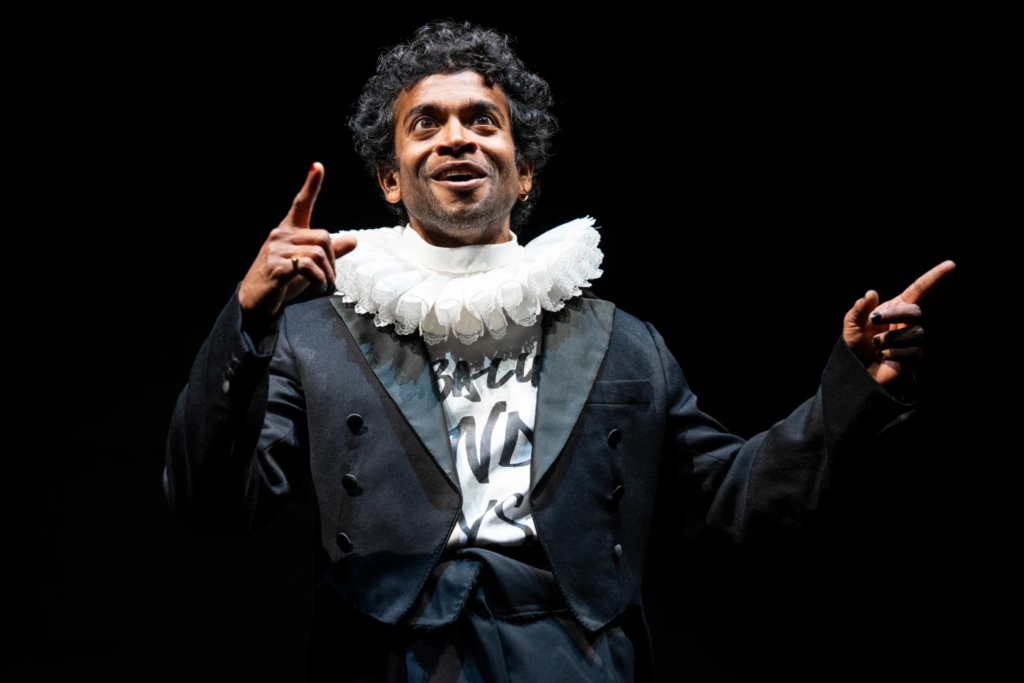
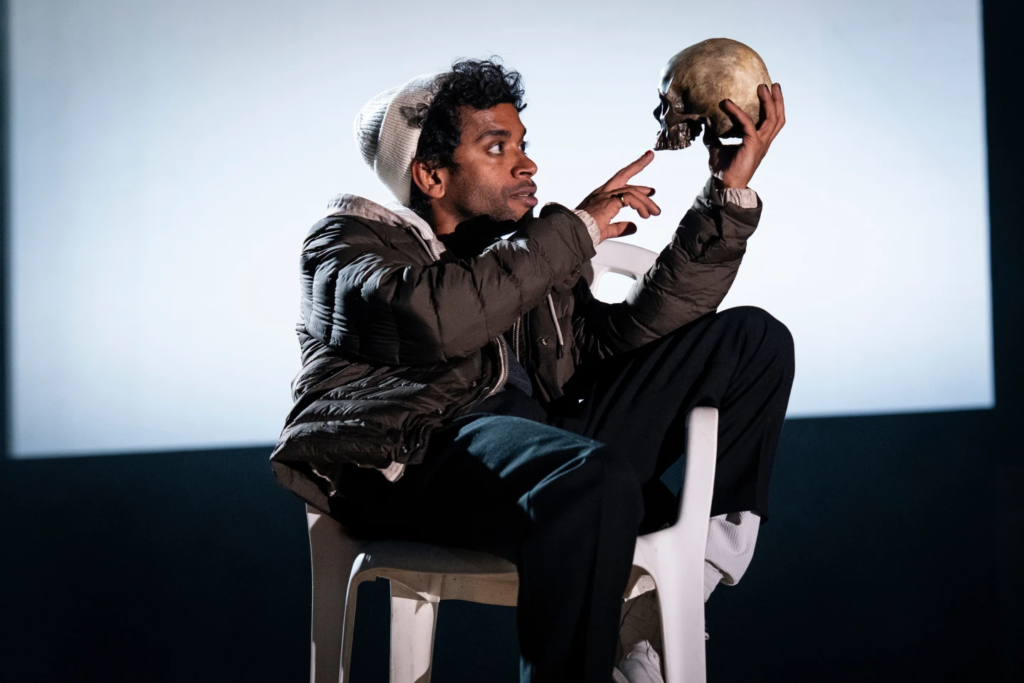
One of the most talked-about productions this year comes from the National Theatre, whose acclaimed staging of “Hamlet” recently arrived at the Brooklyn Academy of Music. The production stars Sri Lankan actor Hiran Abeysekera, whose playful and emotionally layered interpretation of the Danish prince has received widespread praise.

Unlike many traditional portrayals that emphasize Hamlet’s melancholy and philosophical weight, Abeysekera’s version brings humor, spontaneity and vulnerability to the role. Wearing casual modern clothing and frequently engaging directly with the audience, his performance makes the centuries-old text feel startlingly immediate.
Director Robert Hastie believes the play’s longevity comes from its ability to constantly evolve with each generation of actors and viewers.
“Every time new performers step into these roles, the play changes,” Hastie explained. “That’s why Shakespeare continues to survive. The words remain the same, but the emotional experience becomes something entirely new.”
Abeysekera’s interpretation focuses on Hamlet as a deeply human figure rather than an untouchable literary icon. His famous “To be, or not to be” soliloquy is delivered not as a grand theatrical moment, but as an intimate internal thought — a reflection of everyday emotional struggle.
The result is a version of Hamlet that feels more relatable to modern audiences facing uncertainty, mental stress and social instability.
Modern Film Adaptations Bring Shakespeare Into Contemporary Life
The latest cinematic adaptation of “Hamlet” also embraces modern storytelling techniques. Directed by Aneil Karia and starring actor Riz Ahmed, the film relocates Shakespeare’s tragedy into London’s South Asian community and explores themes of corruption, power and moral conflict through a contemporary lens.
The adaptation strips away royal palaces and medieval imagery in favor of modern urban settings, luxury cars and nightclub scenes. Yet despite the updated visuals, the emotional heart of the story remains unchanged.
Ahmed’s Hamlet is portrayed as a man trapped inside a corrupt system, questioning both his own morality and the world around him. One of the film’s most memorable scenes features Hamlet delivering the “To be, or not to be” speech while speeding through rain-soaked London streets in a BMW.
Director Karia said the adaptation was designed to make Shakespeare accessible to audiences who may have previously found the material intimidating.
“For many people, Shakespeare can feel distant or academic,” Karia said. “We wanted to show that these stories are still alive and still speaking directly to the world we live in today.”
The film reflects a broader trend among younger creators who view Shakespeare not as sacred material to preserve untouched, but as living art that can be reshaped for each generation.
“Hamnet” Expands the Shakespeare Universe
Another major contributor to the renewed fascination with Shakespeare is the growing popularity of “Hamnet,” the fictionalized story inspired by the death of Shakespeare’s son.
02Originally written as a bestselling novel by author Maggie O’Farrell, “Hamnet” has since been adapted into both a film and stage production. The movie adaptation recently earned actress Jessie Buckley major awards recognition, while a theatrical version by the Royal Shakespeare Company is now touring the United Kingdom.
The story explores grief, family loss and the emotional experiences believed to have influenced Shakespeare while writing “Hamlet.” By shifting focus away from the prince himself and toward the playwright’s personal life, “Hamnet” has opened a new emotional pathway into Shakespeare’s world.
Audiences appear drawn to the deeply human story behind one of literature’s most celebrated tragedies.
Neurodiverse and Inclusive Productions Redefine the Classic
Among the most innovative recent interpretations is a groundbreaking production by Peru’s Teatro La Plaza, which featured eight Spanish-speaking actors with Down syndrome.
Directed by Chela De Ferrari, the production used “Hamlet” to examine exclusion, identity and society’s treatment of people with disabilities. The performance challenged conventional ideas about who gets to tell classic stories and who belongs on major stages.
De Ferrari described the project as both artistic and deeply political.
“At its core, Hamlet is about a person trying to exist in a world that constantly misunderstands him,” she said. “That experience felt incredibly relevant for our actors.”
One of the production’s most emotional moments involved an actor attempting to recreate Laurence Olivier’s legendary version of the “To be, or not to be” speech while Olivier’s image appeared on screen behind him. The scene became a powerful statement about visibility, representation and the right to occupy cultural spaces.
The production received international praise for its originality and emotional depth, further proving the flexibility and enduring relevance of Shakespeare’s work.
Social Media Gives Shakespeare a Digital Rebirth
Beyond theaters and film festivals, “Hamlet” is also thriving online.
Social media creators are increasingly using TikTok, Instagram and YouTube to reinterpret Shakespeare for younger audiences. One group leading that movement is Mad Spirits Theatre Company, founded by performer Caitlin Cardile.
The troupe produces humorous and educational Shakespeare-themed videos using viral trends, popular songs and television references to make the material more approachable.
In one clip, dialogue from Disney’s “The Lion King” is reenacted by actors portraying Claudius and Hamlet. In another, a popular sitcom quote is humorously assigned to Ophelia.
Cardile said the goal is to remove the fear and elitism often associated with Shakespeare.
“We want people to realize Shakespeare can actually be fun,” she explained. “Once people stop feeling intimidated, they discover how emotional, funny and relatable these stories really are.”
The strategy appears to be working. Their videos have attracted large online audiences, introducing Shakespeare to viewers who might never attend a traditional theater performance.
Even legendary actor Anthony Hopkins recently joined the trend, delighting fans by reciting parts of Hamlet’s famous soliloquy on TikTok at the age of 88.
Why “Hamlet” Still Matters Today
The resurgence of “Hamlet” comes during a period of global uncertainty marked by political division, economic anxiety and social change. Many artists believe audiences are gravitating toward stories that openly confront fear, grief and existential confusion.
At its core, “Hamlet” remains a deeply psychological exploration of indecision, loss, betrayal and identity. The play asks timeless questions about morality, purpose and human suffering — themes that continue to resonate regardless of era or culture.
Critics and theater scholars argue that the play’s adaptability is precisely what has kept it alive for over 400 years. Every generation finds its own version of Hamlet, shaped by contemporary fears and experiences.
Whether performed in a grand theater, adapted into a modern film, reimagined through inclusive casting or transformed into internet comedy, Shakespeare’s tragic prince continues to evolve.
And as long as audiences keep searching for meaning in uncertain times, Hamlet’s voice — questioning existence itself — is unlikely to fade from the global stage anytime soon.