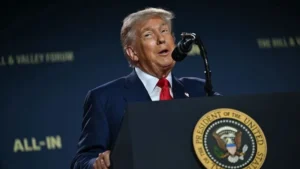

U.S. President Donald Trump has announced plans to increase tariffs on cars and trucks imported from the European Union, intensifying an already strained transatlantic trade relationship. The proposed move would raise duties to 25%—up from the previously agreed 15%—as early as next week, marking a significant shift in trade policy between two of the world’s largest economic blocs.
Trump justified the decision by accusing the EU of failing to uphold its commitments under a trade agreement reached last year. Writing on social media, he argued that the bloc had not complied with the terms of the deal, prompting the U.S. to act unilaterally. He added that companies manufacturing vehicles within the United States would not face tariffs, reinforcing his administration’s push to bring industrial production back to American soil.
Pressure on European Automakers to Shift Production
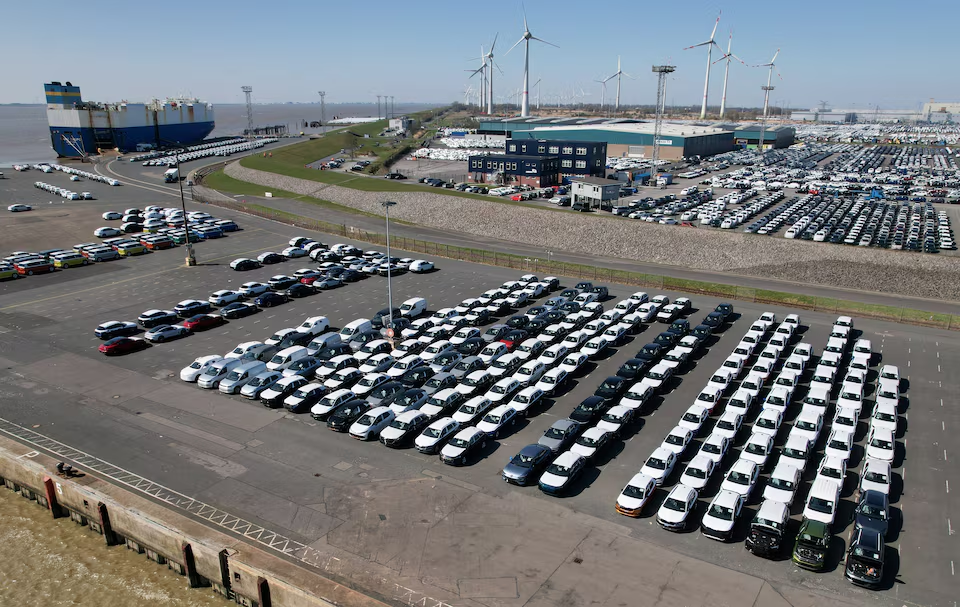
Speaking at the White House, Trump framed the tariff hike as both a corrective measure and a strategic lever to accelerate investment in U.S.-based manufacturing. According to him, higher import duties would incentivize European automakers to expand or relocate production facilities to the United States more quickly.
The policy aligns with a broader “America-first” trade agenda that prioritizes domestic industry and seeks to reduce reliance on foreign manufacturing. However, analysts note that such measures often come with trade-offs, including higher costs for consumers and potential retaliation from trading partners.
European carmakers, many of which already operate significant manufacturing plants in the U.S., now face renewed uncertainty. Companies have been weighing expansion plans carefully, balancing tariff risks against long-term investment strategies. The latest announcement could accelerate those decisions—but not necessarily in a predictable way.
Brussels Pushes Back Against U.S. Claims
Officials in Brussels swiftly rejected the accusation that the EU had failed to meet its obligations. The European Commission stated that implementation of the agreement is ongoing and follows the bloc’s established legislative processes, which require coordination among member states and the European Parliament.
EU representatives also signaled that they are prepared to respond if Washington moves forward with the tariff increase. While no immediate countermeasures were announced, officials emphasized that all options remain on the table to safeguard European economic interests.
The dispute underscores longstanding differences in how the two sides approach trade agreements. While the U.S. often expects rapid execution, the EU’s multi-layered decision-making structure can slow implementation, particularly for complex measures involving regulatory alignment.
Trade Deal Implementation at the Heart of Dispute
The current conflict stems from a broader agreement reached in August, which temporarily eased tensions after the U.S. imposed sweeping tariffs on global automotive imports under national security provisions. That deal reduced EU auto tariffs to a net 15% and included commitments from Brussels to eliminate duties on certain U.S. goods and align vehicle standards.
However, progress on the European side has been slower than anticipated. Legislative steps to formalize tariff reductions began earlier this year but are not expected to be finalized until mid-year. U.S. officials argue that the delay amounts to non-compliance, while EU leaders insist the process is proceeding as required under European law.
Trade experts say the disagreement reflects deeper structural challenges in transatlantic relations, where political timelines and institutional frameworks often clash.
Political Tensions Spill Into Trade Policy
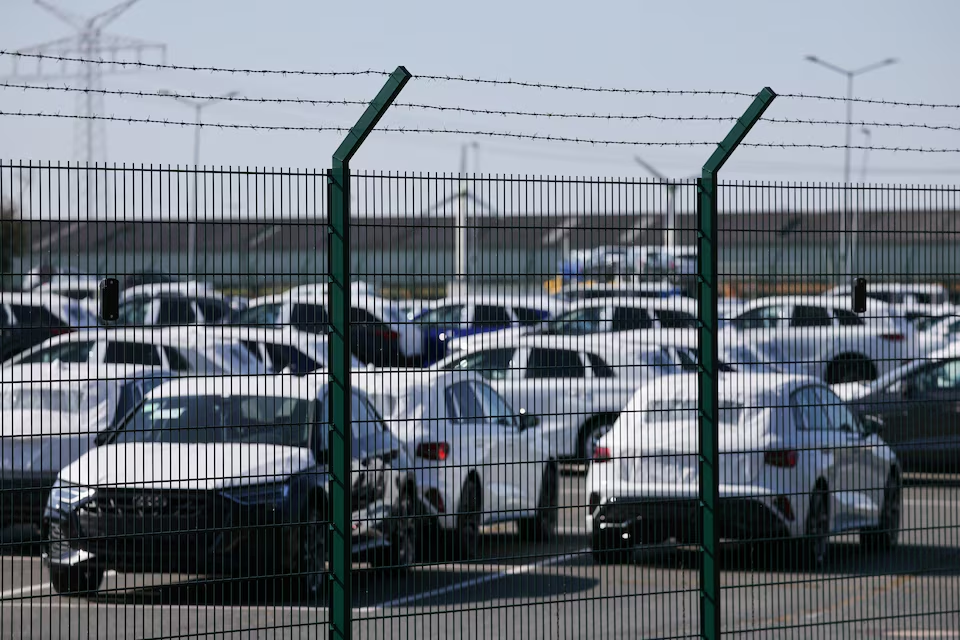
The tariff threat comes amid broader geopolitical friction between Washington and European capitals. Disagreements over Middle East policy, including the ongoing conflict involving Iran, have strained diplomatic ties. Trump has also raised concerns about European defense commitments and hinted at reducing U.S. troop deployments in countries such as Germany, Italy, and Spain.
These overlapping tensions have added a political dimension to what might otherwise be a technical trade dispute. Analysts warn that linking security and economic issues could complicate efforts to reach a resolution.
Market Reaction and Industry Concerns
Financial markets responded quickly to the announcement, with shares of major automakers declining on U.S. exchanges. Ford Motor, General Motors, and Stellantis all saw notable drops, reflecting investor concerns about rising costs and potential supply chain disruptions.
Industry groups on both sides of the Atlantic have urged restraint, warning that escalating tariffs could hurt manufacturers, workers, and consumers alike. Higher duties on imported vehicles are likely to increase prices, reduce competitiveness, and disrupt carefully balanced global production networks.
European manufacturers, including Mercedes-Benz, have already invested billions in U.S. operations, with further expansions planned. While these investments may help mitigate some tariff exposure, companies remain cautious about making major strategic shifts amid policy uncertainty.
Calls for Retaliation Grow in Europe
The U.S. move has sparked calls within Europe for a firm response. Some economists and policymakers are advocating for retaliatory tariffs or targeted measures against American industries, including technology firms. They argue that a strong reaction is necessary to deter further unilateral actions by Washington.
At the same time, others are urging both sides to return to negotiations to prevent a full-scale trade conflict. With billions of dollars in trade at stake, the economic consequences of escalation could be significant.
Uncertain Path Forward
Despite the sharp rhetoric, there remains a window for de-escalation. Trade experts note that the proposed tariff increase has not yet taken effect, leaving room for last-minute negotiations or compromises. Much will depend on whether the EU can accelerate its implementation timeline—or whether the U.S. is willing to extend the deadline.
For now, the dispute highlights the fragility of global trade relationships in an era of rising economic nationalism. As Washington and Brussels navigate their differences, businesses and investors are left grappling with uncertainty—and the possibility of a deeper rift between longtime allies.